政变与拉丁美洲的民粹主义
根据 Aline Helg 的演讲改编[1][2][3][4][5][6][7]
美洲独立前夕 ● 美国的独立 ● 美国宪法和 19 世纪早期社会 ● 海地革命及其对美洲的影响 ● 拉丁美洲国家的独立 ● 1850年前后的拉丁美洲:社会、经济、政策 ● 1850年前后的美国南北部:移民与奴隶制 ● 美国内战和重建:1861-1877 年 ● 美国(重建):1877 - 1900年 ● 拉丁美洲的秩序与进步:1875 - 1910年 ● 墨西哥革命:1910 - 1940年 ● 20世纪20年代的美国社会 ● 大萧条与新政:1929 - 1940年 ● 从大棒政策到睦邻政策 ● 政变与拉丁美洲的民粹主义 ● 美国与第二次世界大战 ● 第二次世界大战期间的拉丁美洲 ● 美国战后社会:冷战与富裕社会 ● 拉丁美洲冷战与古巴革命 ● 美国的民权运动
第一次世界大战后,民粹主义在拉丁美洲兴起,其根源在于复杂的社会和经济动态。民主体制薄弱,无力满足公民日益增长的需求,贫困现象普遍,不平等现象严重,这些都为民粹主义思想的滋生提供了肥沃的土壤。1929 年经济大萧条的破坏性影响加剧了原有的紧张局势,使该地区陷入前所未有的政治暴力和社会动荡时代。
在哥伦比亚,豪尔赫-埃利塞-盖坦(Jorge Eliécer Gaitán)的史诗般的故事是这一动荡时期的缩影。在民众支持浪潮的推动下,盖坦和他的运动俘获了弱势群体的想象力,承诺实现正义和平等。他在 1948 年惨遭暗杀,引发了 "暴力"--一段血腥而持久的内部冲突。
古巴也不甘示弱。20 世纪 30 年代,另一位自称捍卫工人阶级利益的魅力型领导人富尔亨西奥-巴蒂斯塔(Fulgencio Batista)横空出世。然而,腐败和专制侵蚀了他统治的合法性,为菲德尔-卡斯特罗 1959 年的革命铺平了道路。
在巴西,1930 年热图利奥-瓦加斯(Getúlio Vargas)的上台似乎预示着彻底的变革。瓦加斯以工人阶级和边缘化人群的福祉为中心,发起了渐进式改革。然而,其政府的专制倾向玷污了他的遗产,最终导致他于 1945 年被推翻。
在全球动荡的政治和经济背景下,本文旨在剖析民粹主义在拉美兴起背后的根本原因。本文通过对哥伦比亚、古巴和巴西的深入案例研究,对大萧条对该地区的影响进行了细致的分析,揭示了民粹主义的细微差别和各国的具体特点。
二十世纪二十年代 拉丁美洲历史的转折点
20 世纪 20 年代,拉丁美洲在瞬息万变的经济、政治和社会动态的推动下经历了一场变革。第一次世界大战结束后,该地区经济显著增长,通常被称为 "繁荣 "时期。这一时期的繁荣一直持续到本十年末,其主要原因是在全球经济复苏和工业扩张的刺激下,国际社会对南美产品的需求不断增长。对橡胶、铜和大豆等原材料的需求大幅增加,推动拉美经济步入增长轨道。在重建和扩张过程中,国际市场以前所未有的速度吸收了这些产品。因此,外资涌入,国内产业扩张,城市化进程加快,改变了该地区的社会和经济面貌。经济繁荣也带来了重大的社会政治变革。中产阶级的崛起和城市人口的增长为民主和社会改革创造了动力。公民们现在更加知情和参与,开始要求更多的政治参与和更公平的国家财富分配。然而,表面的繁荣掩盖了结构性的弱点。对世界市场和原材料的过度依赖使拉丁美洲对国际经济波动尤为敏感。1929 年的大萧条残酷地暴露了这些弱点,导致严重的经济萎缩、失业以及社会和政治动荡。
20 世纪 20 年代是拉丁美洲的黄金时代,常被称为 "百万人的舞蹈",这是一个空前繁荣的时代,其特点是经济飞速增长和乐观情绪感染力极强。国民生产总值的指数式增长和主要来自美国的外国投资者的热情,将该地区变成了商机和创新的沃土。这一繁荣时代是全球和地区经济因素偶然结合的产物。第一次世界大战后,欧洲和其他地区的重建刺激了对拉丁美洲自然资源和农业资源的需求。该地区各国拥有丰富的原材料,其出口额激增,带来了国家经济的扩张和繁荣。百万人的舞蹈 "不仅仅是一种经济现象。它渗透到了该地区的社会和文化精神中,给人们带来了乐观和愉悦的感觉。大都市百花齐放,艺术和文化蓬勃发展,人们明显感觉到拉丁美洲即将实现其尚未开发的潜力。然而,这种狂舞也带有模糊性。繁荣并不是平均分配的,社会和经济不平等持续存在,甚至有所恶化。外国资本的大量涌入也引发了对经济依赖性和外国干涉的担忧。世界市场的动荡和商品价格的波动使经济复苏变得脆弱。
百万人的舞蹈 "是拉丁美洲经济史上的一个标志性事件,说明了以外资涌入和经济多样化萌芽为特征的转型。虽然该地区传统上以农产品和矿产品为主的出口经济为基础,但全球形势为其重大调整打开了一扇机会之窗。第一次世界大战迫使欧洲减少出口,造成了一个真空地带,拉丁美洲新兴工业急于填补。拉美大陆自然资源丰富,但以前受限于工业能力低下,因此开始加速工业化进程。纺织业、食品业和建筑业取得了显著增长,标志着向更加自给自足和多元化的经济转型。外资的涌入,加上国内工业的增长,也带动了城市化的快速发展。城市不断发展壮大,城市中产阶级随之崛起,改变了该地区的社会和政治格局。这一新动态为经济注入了活力和多样性,但也凸显了结构性挑战和持续存在的不平等。尽管经济欣欣向荣,但对商品出口的持续依赖使该地区容易受到外部冲击的影响。繁荣建立在不稳定的平衡之上,"百万人的舞蹈 "既是对增长的庆祝,也预示着未来经济的脆弱性。
第一次世界大战后,美帝国主义在拉丁美洲崛起。当欧洲列强,尤其是英国忙于战后重建时,美国抓住机会扩大了对其南部邻国的控制。这种优势并非偶然,而是深思熟虑的战略结果。19 世纪初宣布的门罗主义在这一背景下找到了新的现实意义,其基本原则 "美国人的美国 "成为美国扩张的意识形态基础。帝国主义入侵的形式多种多样。在政治上,美国参与了政权更迭工程,扶植意识形态上与华盛顿一致、经济上从属于华盛顿的政府。直接军事干预、支持政变和其他形式的政治干预司空见惯。在经济上,美国公司在该地区如雨后春笋般涌现。它们的影响力不仅限于开采自然资源和农业资源,还扩展到支配当地和地区市场。香蕉种植园 "的概念已成为这个时代的象征,联合果品公司等公司在这里拥有相当大的影响力。在文化方面,拉丁美洲经历了强烈的美国化。美国人的生活方式、价值观和民主理想得到了推广,这往往损害了当地的传统和特性。美国在拉丁美洲的霸权影响深远。它建立了新的地区秩序,重新定义了未来几十年的美洲关系。虽然这种影响在某些领域带来了现代化和发展,但也产生了抵触、怨恨和政治不稳定。美国影响的双重性--既是发展的催化剂,又是制约的根源--继续占据着拉丁美洲的政治和文化想象。那个时代遗留下来的影响今天仍然清晰可见,证明了美帝国主义在该地区的复杂性和模糊性。
在 "百万人的舞蹈 "时期,拉丁美洲的社会结构因重大的经济和政治动荡而被重塑和重新定义。这种变革不仅体现在经济增长数字或外国投资率上,也体现在普通公民的日常生活中,席卷整个大陆的变革潮流改变了他们的生活。经济结构的变化在社会中产生了深刻的反响。曾经是经济支柱的农业实现了机械化,减少了对大量劳动力的需求,加剧了小农的衰落。大型庄园和商业性农业企业成为主导者,将许多小农和佃农赶出了祖祖辈辈生活的土地。农村人口外流,即从农村向城市大规模移民的现象,是这些经济转型的一个明显症状。昔日宁静、易于管理的城镇变成了繁华的大都市,人口增长带来了就业、住房和公共服务方面的复杂挑战。本已令人担忧的贫困和不平等现象更加严重,在繁荣的城市中心外围出现了棚户区和贫困街区。大量的欧洲移民,尤其是移民到阿根廷和巴西的欧洲移民,给这一酝酿已久的社会组合增添了另一层复杂性。它刺激了人口和经济增长,但也加剧了对工作和资源的竞争,并扩大了社会和文化矛盾。在这种快速且往往破坏稳定的变化背景下,为民粹主义意识形态的出现提供了肥沃的土壤。民粹主义领导人的言论以社会正义、经济公平和政治改革为重点,在心怀不满的群众中引起了特别的共鸣。对于那些流离失所、被边缘化、对经济繁荣的承诺无法兑现而感到失望的人来说,民粹主义不仅提供了答案,还提供了归属感和尊严。
工业化和城市化的加速使拉丁美洲的人口结构迅速变化,这体现了一场重大变革,从许多方面重新定义了该地区。人口从农村向城市中心的大规模转移不仅是一种物质迁移,也是一种文化、社会和经济转型。在阿根廷、秘鲁和中美洲等国,生活在农村地区的人口比例迅速下降,凸显了人口迁移的规模。城市已成为经济增长的主要引擎,工业扩张带来的就业和机会承诺吸引了大量农村移民。然而,这种快速增长也扩大了现有的问题,并带来了新的问题。城市基础设施对如此大量的人口涌入毫无准备,往往不堪重负。住房短缺、医疗和教育服务不足以及失业率上升成为长期存在的问题。城市是机遇的象征,但同时也存在着明显的不平等和城市贫困。对于传统精英来说,人口结构的动荡带来了复杂的挑战。面对快速增长、多样化且经常不满的城市人口,旧有的治理和维护社会秩序的方法已显得力不从心。我们需要新的社会、政治和经济管理机制来应对不断变化的现实。向城市社会的转变也产生了深远的政治影响。城市新移民的独特关切和需求改变了政治格局。能够表达和回应这些新需求的政党和运动变得越来越重要。正是在这种背景下,民粹主义凭借其对大众的直接号召力以及对社会和经济改革的承诺,逐渐占据了上风。这种快速转型的影响至今仍清晰可见。拉美城市是充满活力的文化、经济和政治中心,但也面临着贫困、不平等和治理等长期挑战。从农村向城市的移民是 "百万人之舞 "的一个决定性因素,它继续影响着拉丁美洲的发展轨迹,证明了这个多样化和快速发展地区的复杂性和动态性。
千百万人的舞蹈 "不仅是经济和人口的蜕变,也是思想和意识形态的激荡。贸易和通信网络的发展不仅密切了城市和地区之间的联系,也密切了国家和大陆之间的联系。拉丁美洲已成为一个思想和意识形态相互交融的大熔炉,为社会和政治创新以及抗议活动提供了肥沃的土壤。处于革命阵痛中的墨西哥成为进步和民族主义思想的输出国。与此同时,欧洲社会主义和法西斯主义以及布尔什维克俄国的影响也渗透进来,引入了挑战现有范式的概念和方法。每种思潮都有自己的追随者和批评者,为丰富该地区的政治话语做出了贡献。移民,尤其是逃离欧洲迫害的犹太移民的到来,为这一文化和思想马赛克增添了另一个维度。他们不仅带来了不同的技能和才能,还带来了独特的意识形态和文化观点,丰富了社会和政治话语。传统精英的地位岌岌可危。他们曾经不受挑战的权威,现在正受到日益多样化、受教育程度越来越高、参与度越来越高的人口的挑战。城市作为创新和竞争的中心,成为关于身份认同、治理和社会正义的激烈辩论的舞台。在此背景下,民粹主义找到了自己的时代和位置。民粹主义领导人善于表达大众的不满情绪,并大胆提出平等和正义的愿景,因此大受欢迎。他们能够在思想和意识形态的汪洋大海中游刃有余,针对贫困、不平等和排斥等紧迫挑战提出具体对策。由此可见,"百万人之舞 "是一个多层面变革的时期。它不仅重新定义了拉丁美洲的经济和人口结构,还开创了一个意识形态多元化和政治动态的时代,并将在今后几代人中继续影响该地区的命运。在这一充满活力的背景下,传统与现代、精英与大众以及不同意识形态之间的紧张关系,形成了我们今天所知的拉丁美洲独特而复杂的特征。
以 "百万人的舞蹈 "为特征的时期是拉丁美洲既有权力结构和社会规范受到深刻挑战的关键时刻。快速工业化、城市化和外国意识形态涌入的综合力量暴露了现有政权基础的裂缝,引发了对社会和政治秩序的重新评估。传统精英阶层和天主教会曾经是权威和影响力不可挑战的支柱,如今却面临着一系列前所未有的挑战。他们的道德和政治权威不仅因思想和信仰的多样化而受到侵蚀,也因他们显然无力缓解因经济快速转型而加剧的贫困和不平等而受到侵蚀。移民浪潮带来的新意识形态,在不断扩大的通信网络的推动下,绕过了传统的信息和知识守门人。社会主义、法西斯主义和布尔什维主义等思想在感到被边缘化和被现有体制遗忘的人群中得到了回应。城市中心的快速发展是变革的另一个催化剂。城市已成为多样性和创新的熔炉,但同时也是贫困和失望的中心。新进城的人们脱离了传统的农村生活结构,面对残酷的城市生活现实,他们乐于接受激进的思想和改革运动。正是在这片沃土上,民粹主义运动发芽并蓬勃发展。民粹主义领导人善于引导民众的不满情绪,表达公平正义的愿景,他们的出现成为传统精英的可行替代方案。他们为当时的紧迫问题提供了答案,尽管是有争议的答案:如何协调经济进步与社会正义?如何将不同的思想和身份整合成一个统一的国家愿景?
从农村向城市的大规模移民引发了一场文化和社会骚动,其影响至今仍在当代拉丁美洲产生共鸣。城市曾经是城市精英和殖民传统的堡垒,如今已成为不同阶层、种族和文化之间互动和融合的活跃场所。在蓬勃发展的城市中,棚户区和工人阶级社区成倍增加,居住着多样化和充满活力的人口。虽然这些地区以贫困和不稳定为特征,但它们也是创新的空间,在这里诞生了新的文化、艺术和音乐表现形式。音乐、艺术、文学甚至美食都在这种传统和影响的融合中发生了变化。每座城市都生动地反映了本国的多样性。在里约热内卢、布宜诺斯艾利斯和墨西哥城,农村地区的声音、风味和色彩已经渗透到城市生活中,形成了具有丰富而复杂特征的大都市。曾经在偏远乡村和农村社区中孤立存在的传统已经融合和演变,形成了独特而鲜明的文化形式。在社会方面,农村移民面临着残酷的城市生活现实。要适应城市环境,不仅需要调整经济和职业方向,还需要转变身份和生活方式。旧有的规范和价值观受到挑战,新移民必须适应不断变化的社会环境。然而,这些挑战也是变革的载体。移民社区一直是社会和文化变革的积极推动者。他们在城市话语中引入了新的规范、新的价值观和新的愿望。争取生存、尊严和认可的斗争为社会和政治运动注入了新的动力,加强了对权利、正义和公平的要求。
新与旧、农村与城市、传统与现代之间的对抗是 "百万人跳舞 "时期拉丁美洲变革的核心。农村移民虽然被边缘化,经常受到城市居民的蔑视,但他们实际上是变革的推动者,是社会和文化复兴的催化剂。移民促进了更深层次的民族融合。尽管存在歧视和困难,移民还是将他们的传统、语言和文化融入了大都市的结构之中。这种对比鲜明、充满活力的马赛克文化促进了互动和交流,逐渐消解了地区和社会壁垒,为更加一致和融合的民族身份奠定了基础。城市化还引发了一场教育革命。文盲现象一度十分普遍,但随着城市人口受教育程度和知识水平的提高,文盲现象开始逐渐减少。教育不再是奢侈品,而是必需品,接受教育为人们打开了通往经济和社会机遇的大门,也培养了积极开明的公民意识。广播和电影的出现标志着这一转变的另一个重要阶段。这些媒体不仅提供娱乐,还成为传播信息和思想的渠道。它们抓住了大众的想象力,建立了一个超越地理和社会界限的受众群体。大众文化曾经是细分的、区域性的,如今已成为全国性的,甚至是国际性的。这些发展侵蚀了传统的分裂,培养了集体认同和民族意识。挑战当然很多,但随之而来的是前所未有的表达、代表和参与机会。随着人口的迁徙,拉丁美洲不仅在物质上,而且在社会和文化上都在前进。以 "百万人的舞蹈 "为标志的岁月是一个充满矛盾的时代。这个时代充满了深刻的不平等和歧视,但同时也充满了创造力和社会活力,为现代拉丁美洲社会奠定了基础。在这个动荡的时代,为地区历史的新篇章奠定了基础,在这个篇章中,身份、文化和民族性将不断被协商、争论和重塑。
1910 年代和 1920 年代新中产阶级的出现是一种变革现象,颠覆了拉丁美洲传统的社会和政治动态。这个新的社会阶层受教育程度更高,经济更加多元化,是传统精英与工人和农村阶级之间的中间力量。这个中产阶级的特点是经济相对独立,受教育机会更多,不太愿意屈从于传统精英和外国资本的权威。它是民主愿望背后的推动力,主张治理和公共生活的透明、公平和参与。经济扩张、城市化和工业化刺激了这一中产阶级的崛起。公共部门、教育和小型企业的就业机会激增。随着经济和社会的发展,一种更强烈的身份认同感和自主意识逐渐扎根。这些人是新的意识形态和观点的传播者。他们寻求政治代表权、受教育机会和社会公正。他们通常受过教育,也是思想和文化的消费者和传播者,将本地和国际影响联系在一起。中产阶级对政治的影响是巨大的。它是民主化、多元化表达和公共辩论的催化剂。他们支持并经常领导改革运动,寻求重新平衡权力、减少腐败并确保资源和机会得到更公平的分配。在文化方面,这一新兴中产阶级是独特民族文化兴起的核心。他们是文学、艺术、音乐和电影的创造者和消费者,反映了各自国家的具体现实、挑战和愿望。
这些年轻大学生的涌入为拉美国家的学术和文化氛围注入了新的活力和激情。这些学生充满好奇心和雄心壮志,对自己在瞬息万变的社会中所扮演的角色有了更深刻的认识,他们往往站在知识创新和社会变革的最前沿。大学成为思想交流、辩论和抗议的沃土。教室和校园是挑战传统观念、探索和塑造新兴模式的场所。治理、民权、国家认同和社会正义等问题经常被讨论和辩论,并重新焕发出激情和活力。当时的学生并不是被动的旁观者,他们积极参与政治和社会活动。许多人受到了各种意识形态的影响,包括社会主义、马克思主义、民族主义和其他在一战后世界中蓬勃发展的思潮。大学成为了理论与实践交汇和融合的活动中心。经济环境在这一转变中也发挥了至关重要的作用。随着中产阶级的崛起,高等教育不再是精英阶层的专利。越来越多的中产阶级家庭渴望为子女提供受教育的机会,从而为他们的美好生活铺平道路,使其具有经济保障和社会流动性。学生群体的多样化也导致了观点和愿望的多样化。学生们渴望积极参与国家建设、确定自己的身份和塑造自己的未来。他们意识到自己作为变革推动者的潜力,决心在社会变革中发挥作用。
1918 年是拉丁美洲学生参与政治的一个重要转折点。在当地和国际动态的双重鼓舞和激励下,他们成为积极的政治参与者,就影响其国家的关键问题大胆发言。学生激进主义的兴起并不局限于传统政治,还包括教育、社会正义和公民权利等问题。大学自治是他们的核心诉求。他们向往不受外部政治和意识形态影响的高等教育机构,在那里,自由思想、创新和批判性辩论能够蓬勃发展。对他们而言,大学是学习和知识探索的圣地,是年轻人可以不受束缚地进行培训、质疑和创新的地方。多样化的意识形态激发了这些年轻人的活力和激情。墨西哥革命对正义、平等和改革的强烈呼吁引起了强烈共鸣。土著主义关注土著人民的权利和尊严,为他们的事业增添了另一层复杂性和紧迫性。社会主义和无政府主义为社会和经济秩序提供了另一种视角。这些学生并不只是被动地接受教育。他们认为自己是积极的伙伴,是变革的催化剂,是更加公正和公平的未来的建设者。他们深信,教育应该成为解放的工具,不仅是他们自己的解放,也是整个社会的解放,尤其是工人阶级和边缘化群体的解放。他们的行动和声音超越了大学的围墙。他们与社会进行了更广泛的对话,激发了公众辩论,影响了政策。他们的要求和行动揭示了对改革的深切渴求,对拆除压迫性结构和建设基于公平、正义和包容的国家的渴望。
二十世纪初,拉丁美洲社会运动蓬勃发展,工人运动尤其得到加强。在快速工业化和社会变革之后,新兴行业的工人发现自己的工作条件往往岌岌可危,因此迫切需要团结和动员起来,改善他们的生活和工作条件。20 世纪 20 年代,工会组织显著增加。在社会主义、无政府主义和共产主义思想的鼓励下,并往往在受到欧洲劳工运动影响的欧洲移民的引导下,拉美工人开始认识到集体行动的价值和力量。他们认识到,通过统一和有组织的组织,可以有效地保护和促进他们的权益。采矿、制造、石油和其他重工业等行业成为工人运动的据点。面对艰苦的工作条件、漫长的工作时间、不足的工资以及很少或根本没有社会保障,这些行业的工人特别容易接受团结和动员的号召。罢工、示威和其他形式的直接行动成为工人表达诉求、挑战剥削和不公正的常见方式。工会不仅是集体谈判和捍卫工人权利的重要平台,也是团结、政治教育和构建阶级认同的空间。这场运动并不是孤立的,它与拉美国家内外更广泛的政治运动有着内在的联系。左翼意识形态帮助塑造了工人的言论和要求,为他们的斗争注入了深刻的政治内涵。这些动态促成了拉丁美洲深刻的社会政治变革。曾经被边缘化和无权无势的工人已成为重要的政治参与者。他们的斗争推动了更具包容性政策的出现、公民权的扩大以及社会和经济权利的进步。
在这一动荡时期,军队不仅成为国防和安全机构,也成为拉丁美洲重要的政治角色。军队成为变革的能动推动者,往往是对被认为无法满足不同人群日益增长的社会和经济需求的政府的反应。军事政变层出不穷,领导政变的往往是雄心勃勃的军官,他们渴望改革,渴望建立秩序和稳定。这些干预措施有时受到因文职领导人腐败、无能和低效而感到沮丧的部分民众的欢迎。然而,它们也带来了新的权力和专制动态,对治理、人权和发展产生了复杂的影响。军队崛起的核心是一种内在的紧张关系。军队往往被视为现代化和进步的推动者,带来坚定的领导和必要的改革。与此同时,军队的崛起也意味着权力的集中以及对公民和政治自由的潜在压制。在墨西哥和巴西等国,军队的影响力是显而易见的。巴西的热图利奥-瓦加斯(Getúlio Vargas)等人体现了这个时代的复杂性。他们推行了重大的经济和社会改革,利用了民众的不满情绪,但同时也通过独裁手段进行统治。军方对政治的入侵与更广泛的经济和社会动态相互关联。1929 年的大萧条加剧了现有的紧张局势,使经济和社会面临考验。民粹主义意识形态大行其道,为复杂的结构性问题提供了简单而诱人的答案。
军队脱离拉丁美洲传统机构的影响和控制可归因于几个关键因素。一方面,社会经济和政治问题日趋复杂,需要一种更强有力的、往往是独裁的方式来维持秩序和稳定。另一方面,对快速现代化和结构改革的渴望促使军队将自己定位为自主和强大的政治行为体。传统政党和天主教会难以满足日益增长和日益城市化的人口不断变化的需求和愿望,这加剧了其影响力的削弱。传统精英和机构的声誉扫地,留下了一个真空地带,而军队则随时准备填补,以秩序、纪律和效率的堡垒自居。政变和军事干预成为调整国家政治进程的常用手段。干预的理由往往是腐败盛行、文官执政无能,以及需要一只强有力的手来引导国家走向现代化和进步。国家安全理论强调国内稳定,打击共产主义和其他 "国内威胁",在军队政治化的过程中也发挥了核心作用。这种理论往往受到外部影响(尤其是美国)的推波助澜和支持,导致该地区出现了一系列独裁政权和军事独裁。然而,军队成为一支占主导地位的政治力量并非没有后果。虽然许多军事政权最初往往因其改革和秩序的承诺而受到欢迎,但其特点却是镇压、侵犯人权和独裁。稳定和进步的承诺往往与公民和政治自由的减少相抵消。
军队作为一支新的政治力量在拉丁美洲的出现与中产阶级的崛起是共生的。军官通常出身贫寒,他们在社会和政治上的崛起与中产阶级在国家范围内的扩张和肯定是并行不悖的。军队作用的扩大不仅限于治理和政治,还延伸到了经济发展。在军官们看来,军事机构是推动经济快速现代化、打击地方腐败和建立有效治理的有效且纪律严明的机制,而这些特点往往被认为是以前的文职政府所缺乏的。军队的愿景超越了简单的维持秩序和安全。它包含了改造国家、推动工业化、实现基础设施现代化和促进经济平衡发展的雄心壮志。这种观点往往植根于民族主义意识形态,旨在减少对外国势力的依赖,维护国家主权和自主权。在这种格局下,军队被定位为能够超越党派分歧、部门利益和地区竞争的机构。它承诺团结、明确的领导和对共同利益的承诺,这些品质被视为在 20 世纪 20 年代及其后动荡的经济和政治环境中航行的基本要素。然而,这一新动态也对拉丁美洲的民主性质、三权分立和公民权利提出了严峻的问题。军方在政治和经济中的主导地位为专制主义和军国主义的蓬勃发展创造了环境,而这往往会损害政治和公民自由。
军方越来越多地参与拉美政治并不是一种孤立的动态;它是更广泛的社会政治变革的一部分,这种变革对传统的权力结构提出了挑战,并为更广泛的参与开辟了空间。尽管军事干预往往与专制主义联系在一起,但矛盾的是,在某些地区和背景下,军事干预与政治领域的扩大同时发生。这种开放最显著的表现之一就是以前被边缘化的群体逐渐被纳入其中。长期被排除在政治决策之外的工人阶级开始发出自己的声音。工会和工人运动在这一发展中发挥了关键作用,为工人权利、经济公平和社会正义而战。与此同时,妇女也开始争取自己在公共领域的地位。女权运动和女权团体应运而生,它们挑战传统的性别规范,争取性别平等、选举权以及在社会、经济和政治生活各个领域的公平代表权。这些变化受到多种因素的影响。在现代化、教育和全球通信的推动下,民主和平等主义思想越来越自由地传播。国际社会和政治运动也发挥了作用,各种思想和理想超越国界,影响着当地的言论。然而,民主和参与的扩大并不是一成不变的。它往往与专制和保守势力形成紧张关系,并取决于每个国家的具体动态。所取得的成果是有争议的、脆弱的,民主化的轨迹也远非线性的。
电影和广播等新兴技术融入拉美政治的同时,极右翼意识形态也在该地区抬头。这种融合创造了一种动态,使政治信息,尤其是那些与保守和独裁理念相一致的信息,能够以前所未有的方式得到放大和传播。对社会不稳定、经济紧张局势的担忧,以及对被视为对现有社会和经济秩序构成威胁的左翼意识形态的反感,使极右翼获得了影响力。这场运动的政治和军事领导人利用新媒体技术来宣传他们的意识形态,接触和动员支持群体,并影响公众舆论。广播和电影成为塑造政治和社会意识的有力工具。信息的设计和播出方式可以唤起人们的情感、强化集体身份并阐明特定的世界观。有魅力的人物利用这些媒体树立自己的形象,直接与大众沟通,并塑造公共话语。然而,媒体影响力的扩大也引发了有关宣传、操纵和媒体权力集中的批判性问题。特别是极右翼分子,他们往往采取信息操纵、媒体控制和压制不同声音的策略。这些动态对拉丁美洲的民主和公民社会产生了相当大的影响。一方面,信息获取渠道的增加以及广播和电影动员能力的提高在公共领域的民主化方面发挥了作用。另一方面,极右翼势力对这些技术的战略性使用也助长了专制意识形态的巩固和传播。在这种复杂的背景下,拉美的政治和媒体版图已成为一片充满争议的土地。对信息的控制、真理的定义和公众舆论的塑造与该地区的权力、权威和民主问题有着内在的联系。这一新兴传播和意识形态两极分化时代的共鸣至今仍在影响着拉丁美洲的政治和社会动态。
拉丁美洲民粹主义
Latin American populism from the 1920s to the 1950s was a complex phenomenon, uniting diverse masses around charismatic figures who promised radical change and the satisfaction of the people's needs. These popular movements drew on widespread discontent resulting from growing socio-economic inequalities, injustice and the marginalisation of large sections of the population. Populist leaders such as Getúlio Vargas in Brazil, Juan Perón in Argentina and Lázaro Cárdenas in Mexico capitalised on these frustrations. They created direct connections with their constituencies, often bypassing traditional institutions and elites, and introduced a leader-centred style of governance. Their rhetoric was imbued with themes of social justice, nationalism and economic redistribution. The period from the 1930s to the 1950s was particularly turbulent. Populist movements faced fierce opposition from conservative forces and the military. Coups d'état were commonplace, an indication of the tension between popular forces and the traditional, authoritarian elements of society. However, populism has left an indelible legacy. Firstly, it broadened political participation. Segments of the population that had previously been excluded from the political process were mobilised and integrated into national politics. Secondly, it anchored themes of social and economic justice in political discourse. Although the methods and policies of populist leaders were challenged, they highlighted issues of equity, inclusion and rights that would continue to resonate in Latin American politics. Third, it helped forge a political identity around nationalism and sovereignty. In response to foreign influence and economic imbalances, populists cultivated a vision of national development and dignity. However, Latin American populism at this time was also associated with considerable challenges. The cult of the leader and the centralisation of power often limited the development of robust democratic institutions. Moreover, although these movements carried messages of inclusion, they sometimes generated polarisation and deep conflict within societies. Populism continues to be a key feature of Latin American politics. Its forms, actors and discourses have evolved, but the fundamental themes of justice, inclusion and nationalism that it introduced continue to influence the political landscape, and still resonate in contemporary debates and conflicts in the region.
Juan Domingo Perón is one of the emblematic figures of Latin American populism, although he was not its initiator. When Perón came to power in Argentina in the 1940s, populism was already a major political force in Latin America, characterised by charismatic figures, an orientation towards social and economic justice and a massive base of support among the working classes. Perón capitalised on this existing movement and adapted it to the particular context of Argentina. His rise to power can be attributed to a combination of factors, including his role in the existing military government, his personal charisma and his ability to mobilise a wide range of social groups around his political programme. The Peronist doctrine, or 'justicialism', combined elements of socialism, nationalism and capitalism to create a unique and distinct 'third way'. Perón promoted the welfare of workers and introduced substantial social and economic reforms. His policies aimed to balance workers' rights, social justice and economic productivity. The first lady, Eva Perón, or "Evita", also played a central role in Peronist populism. She was a beloved figure who consolidated popular support for the Peronist regime. Evita was known for her devotion to the poor and her role in promoting women's rights, including the right of women to vote in Argentina. So, although Perón was riding a wave of populism that already existed in Latin America, he left his own indelible mark. Peronism continued to shape Argentine politics for decades, reflecting the persistent tensions between populist and elite forces, social inclusion and economic stability, and nationalism and internationalism in the region. Perón's legacy demonstrates the complexity of populism in Latin America. It is a phenomenon rooted in specific historical, social and economic contexts, capable of adapting and transforming itself in response to the changing dynamics of regional politics and society.
The populism that emerged in Latin America in the 1920s and 1930s was an attempt to unite the working class under a political banner while preserving existing social and political structures. It was a movement that sought to bridge different social classes, offering a voice to workers, rural migrants and the petty bourgeoisie while avoiding a radical transformation of the social order. The state played a central role as mediator in this type of populism. It acted as an intermediary to harmonise the often conflicting interests of different social groups. Populist governments were recognised for their ability to introduce social and economic programmes that responded to the immediate concerns of the masses. In this way, they sought to build and strengthen their legitimacy and win popular support. Charismatic leadership was another distinctive feature of populism in this period. Populist leaders, often endowed with remarkable personal charm, established a direct connection with the masses. They tended to bypass traditional political channels, presenting themselves as the true representatives of the people, and were often perceived as such by their supporters. However, despite these advances in terms of popular mobilisation and political engagement, the populism of this period did not seek to fundamentally overturn the existing social order. Power structures, although contested and modified, largely remained in place. Populist leaders made significant changes, but they also exercised caution to avoid radical ruptures that could lead to major instability. The evolution of populism in Latin America was the product of tensions between the imperatives of social inclusion and the realities of an entrenched social and political order. Each country in the region, while sharing common features of populism, manifested the phenomenon in a way that reflected its specific challenges, contradictions and opportunities.
Urban dynamics in Latin America, marked by rapid growth in urban populations and increased mobilisation of the working and middle classes, were perceived as a threat to the traditional social order. The new urban groups, with their distinct concerns and aspirations, had the potential to become radicalised, challenging the hegemony of the elites and posing significant challenges to the established order. In this context, populism emerged as a strategy for mitigating these threats while allowing a degree of social mobility and integration. Rather than opting for class struggle, an approach that could have led to a major social and political rupture, populist leaders adopted a rhetoric of national unity and solidarity. They advocated a corporatist state, in which each sector of society, each "corporation", had a specific role to play as part of an orchestrated social harmony. In this model, the state assumed a central, paternalistic role, guiding and managing the "national family" through hierarchical governance. Vertical patronage coalitions were essential to guarantee the loyalty and cooperation of different groups, ensuring that the social order remained in balance, even if dynamic. This populism, while responding to certain aspirations of the urban masses, therefore had the ultimate aim of containing and channelling their energies within an adjusted but preserved social order. Change was necessary, but it had to be carefully managed to avoid social revolution. This approach contributed to political stability, but it also limited the potential for radical social transformation and a profound challenge to structural inequalities. It was a delicate dance between inclusion and control, reform and preservation, characteristic of the Latin American political landscape at the time.

Populism in Latin America was often embodied in the figure of a charismatic leader who distinguished himself by his ability to establish a deep and powerful emotional bond with the masses. These leaders were more than politicians; they were living symbols of the aspirations and desires of their people. Their charisma lay not just in their eloquence or their presence, but in their ability to resonate with the everyday experiences and challenges of the working classes. Masculinity and strength were salient features of these populist figures. They embodied a form of machismo, a vigour and determination that were not only attractive but also reassuring to an audience looking for direction and stability in often tumultuous times. Authoritarianism was not seen negatively in this context, but rather as a sign of determination and the ability to take difficult decisions for the good of the people. These charismatic leaders were cleverly positioned, or positioned themselves, as the embodiment of the popular will. They presented themselves as quasi-messianic figures, champions of the disadvantaged and voices of the voiceless. They went beyond traditional politics and transcended institutional divisions to speak directly to the people, creating a direct, almost intimate relationship. In this environment, the emotional bond forged between the leader and the masses was crucial. This was not based on detailed political programmes or rigid ideologies, but on emotional and symbolic alchemy. The leader was seen as one of them, someone who deeply understood their needs, their suffering and their hopes.
In Latin America, the figure of the populist leader unfolded in a complex mix of benevolence and authoritarianism, a duality that defined his approach to governance and his relationship with the people. Perceived as a protective father, the populist leader embodied a paternalistic figure, winning the trust and affection of the masses through his apparent understanding of their needs and aspirations, and through his promise of protection and guardianship. However, this benevolence coexisted with overt authoritarianism. Opposition and dissent were often barely tolerated. The leader, seeing himself and being seen as the embodiment of the will of the people, regarded any opposition not as a democratic counterpoint, but as a betrayal of the will of the people. This type of leadership oscillated between tenderness and firmness, between inclusion and repression. The use of the mass media was strategic in consolidating the power of these populist leaders. Radio, newspapers and, later, television became powerful tools for shaping the leader's image, building and reinforcing his personal brand, and solidifying his emotional hold on the public. They were masters of the art of communication, using the media to speak directly to the people, bypassing intermediaries, and instilling a sense of personal connection. Ideologically, Latin American populism was often not characterised by doctrinal complexity or depth. Instead, it was based on broad, mobilising themes such as nationalism, development and social justice. Ideological precision was sacrificed for a mobilising narrative, with the leader himself standing at the centre as the indomitable champion of these causes. This cocktail of personal charisma, media narrative and authoritarian but benevolent approaches defined the essence of populism in Latin America. The leader was the movement, and the movement was the leader. It was less about politics and ideology than a delicate dance of emotions and symbols, where power and popularity were shaped in the intimate embrace between the charismatic leader and a people in search of identity, security and recognition.
State interventionism is a characteristic feature of populism in Latin America, a concrete manifestation of the populist leader's commitment to responding directly to the needs of the masses and shaping a social and economic order aligned with popular aspirations. The state, under the charismatic leadership of the leader, does not simply regulate; it intervenes, commits and transforms. Social programmes, economic initiatives and infrastructure projects become tools for translating personal charisma into concrete, tangible action. However, domestic social and economic challenges are often complex and deep-rooted, requiring nuanced, long-term solutions. For the populist leader, it therefore becomes tempting, and sometimes necessary, to divert attention from internal challenges to external issues, in particular by identifying common foreign enemies. Nationalism is then mixed with a certain xenophobia, as the populist narrative feeds on the clear demarcation between "us" and "them". Whether it is US imperialism, often denounced for its harmful influence, or diverse immigrant communities, targeted for their apparent difference, the populist narrative in Latin America channels popular dissatisfaction and frustration towards external targets. In such a context, national unity is strengthened, but often at the cost of marginalising and stigmatising the "others", those perceived as outside the national community. This strategy, while successful in mobilising the masses and consolidating the leader's power, can mask and sometimes exacerbate underlying tensions and challenges. Internal social conflicts, economic inequalities and political differences remain, often muted but always present. Latin American populism, with its flamboyance and charisma, is thus a delicate dance between the affirmation of national identity and the management of internal tensions, between the promise of a prosperous future and the reality of the deep-rooted challenges that stand in the way of realising that promise. It is a tale of hope and challenge, solidarity and division, revealing the complexity and richness of the region's political and social experience.
The authoritarian rule of Rafael Trujillo in the Dominican Republic, which lasted 31 years from 1930 to 1961, illustrates an extreme case of populism in Latin America. Trujillo, an officer trained by the US Marines, was a dominant figure, embodying an intense version of authoritarianism mixed with populist charisma. In 1937, Trujillo ordered one of the darkest episodes in Latin American history: the massacre of 15,000 to 20,000 Haitians. This atrocity revealed the immeasurable brutality and exacerbated xenophobia that defined his regime. Despite this crime against humanity, Trujillo managed to maintain a significant support base among certain sectors of the Dominican population. The strategic use of the mass media, combined with a carefully orchestrated cult of personality, transformed the despot into a leader perceived as strong and protective. The leader mastered the art of communication and, thanks to this, managed to shape an alternative reality in which he was seen as the indomitable protector of the Dominican nation against external threats, despite a macabre record. Trujillo's story highlights the complex and often contradictory nuances of populism in Latin America. A man who ruled for more than three decades, whose power was fuelled by a toxic mix of authoritarianism and populist charm, and whose legacy is marked by an atrocity that cost thousands of lives, while remaining an influential populist figure thanks to an effective media strategy.
The impact of the Great Depression on Latin America
Economic consequences
The Great Depression that began in 1929 sent shockwaves across the globe, and Latin America was not spared. The nations of this region, particularly those rooted in the export economy, were hard hit. Strong interdependence with the US and European markets amplified the impact of the financial crisis on Latin American economies. The economic contraction resulting from the abrupt fall in demand for export products was rapid and severe. Raw materials, the cornerstone of many of the region's economies, saw their prices plummet. This economic recession has hampered growth, increased unemployment and reduced living standards. Millions of people were plunged into poverty, exacerbating existing social and economic inequalities. The lasting effect of the Great Depression extended well beyond the decade of the 1930s. It not only disrupted the economy but also generated a climate of political and social discontent. Against this backdrop of economic instability, political ideologies became radicalised, and the stage was set for the emergence of populist and authoritarian movements. Charismatic leaders capitalised on public despair, promising reform and economic recovery. Latin America's post-depression economic landscape was marked by a growing distrust of the liberal economic model and a greater orientation towards domestic and protectionist economic policies. Governments adopted measures to strengthen the domestic economy, sometimes to the detriment of international trade relations.
The Great Depression, rooted in a financial crisis in the United States, had global repercussions, and Latin America was no exception. The decline in consumption in the United States hit Latin American countries hard, as their economies were heavily dependent on exports to the North American giant. The reduction in demand for these exports translated into falling incomes and a considerable economic shock. The economies of Latin America, already precarious and largely based on the export of raw materials, were hit hard. Commodity prices plummeted, exacerbating the impact of reduced demand. Export revenues plummeted, and foreign investment dried up. This devastating combination led to a rapid economic contraction, shaking the economic foundations of the region. Living standards, which had been rising during the previous boom period, fell precipitously. Unemployment and poverty rose, creating social tensions and exacerbating inequalities. Confidence in financial and political institutions eroded, opening the door to instability and unrest. The echoes of this economic instability reverberated well beyond the crisis years. Political and social unrest intensified, with economic challenges fuelling popular discontent and giving rise to movements for radical reform. The region's political systems were put to the test, and in many cases existing governments were unable to respond effectively to the crisis. Ultimately, the Great Depression left an indelible mark on Latin America, reshaping its economic, political and social landscape. The aftermath of this tumultuous period has influenced the course of the region's history, shaping its responses to future crises and altering the course of its economic and social development.
Social implications
The Great Depression marked a period of intense economic distress and social upheaval in Latin America. The ramifications of the global economic crisis were clearly visible in the daily fabric of life, particularly in the region's rural areas, which were severely affected by massive job losses. The agricultural and mining sectors, the backbone of rural economies, were in decline. The fall in commodity prices and the reduction in international demand hit these sectors hard, leaving thousands of workers unemployed. This wave of unemployment triggered a major migration to urban areas. Rural workers, desperate and distraught, flocked to the cities in the hope of finding employment and economic refuge. However, the cities, themselves mired in crisis, were hardly prepared to receive such an influx of migrants. Overcrowding, poverty and underemployment had become endemic. Urban infrastructure was inadequate to cope with the rapid increase in population. Shanty towns began to develop on the outskirts of major cities, embodying the hardship and deprivation of the time. Families and communities were hit hard. Widespread unemployment destabilised family structures, exacerbating the daily challenges of survival. The decline in living standards was not only an economic reality but also a social crisis. Economic distress deepened the income gap, exacerbating inequalities and sowing the seeds of social unrest. The Great Depression was thus a catalyst for considerable social change. It not only triggered an economic recession but also brought about a profound social transformation. The challenges and struggles of this period left an indelible mark on the social and economic history of Latin America, shaping the social and political dynamics of the decades to follow.
The Great Depression plunged Latin America into an economic and social abyss, but the manifestations of this crisis varied considerably from country to country. The diversity of economic structures, levels of development and social conditions in the region gave rise to a multiplicity of experiences and responses to the crisis. In Latin American countries already suffering from high levels of poverty, the impact of the Great Depression exacerbated existing conditions. Unemployment and misery increased, but in a context where precariousness was already the norm, the socio-economic transformations brought about by the crisis may not have been as abrupt or visible as in more prosperous nations. In the United States, by comparison, the crisis represented a severe and abrupt shock. The nation had gone from a period of unprecedented prosperity, marked by rapid industrialisation and economic expansion, to an era of misery, mass unemployment and despair. This abrupt transition made the crisis even more visible, making the economic and social ravages of the Great Depression a ubiquitous part of everyday life. In Latin America, resilience in the face of economic adversity and familiarity with precariousness may have mitigated the perception of the crisis, but they have not reduced its devastating impact. Economic contraction, escalating poverty and unemployment, and social upheaval have profoundly affected the region. Each country, with its own economic and social particularities, navigated the turmoil of the depression with distinct survival strategies, creating a complex patchwork of experiences and responses to an unprecedented global crisis.
Political consequences
The Great Depression created a climate of exacerbated economic crisis and social despair in Latin America, laying the foundations for considerable political instability. With poverty and unemployment reaching alarming levels, confidence in existing political regimes eroded, paving the way for radical changes in governance. Between 1930 and 1935, the region witnessed a series of overthrows of governments, oscillating between peaceful transitions and violent coups d'état. Disastrous economic conditions, exacerbated by the drastic fall in export prices and the contraction of foreign investment, fuelled widespread discontent. The popular masses, faced with hunger, unemployment and deteriorating living conditions, have become fertile ground for radical and authoritarian political movements. In this tumultuous context, authoritarian political figures emerged, capitalising on popular disarray and promising order, stability and economic recovery. These promises resonated deeply with a population desperate for change and an escape from daily misery. Democratic institutions, already fragile and often marked by elitism and corruption, succumbed under the weight of the crisis. Authoritarian and military regimes, presenting a façade of strength and determination, emerged as attractive alternatives. These political transitions not only shaped the political landscape of Latin America during the Depression, but also set precedents and dynamics that would endure for decades. The prevalence of authoritarian regimes contributed to a gradual erosion of democratic norms and human rights, and echoes of this tumultuous era can be identified in the region's political developments for years to come. Ultimately, the Great Depression was not just an economic crisis; it initiated a profound and lasting political transformation in Latin America, illustrating the deep interconnection between the economic, social and political spheres.
The Great Depression profoundly altered the dynamics of relations between the United States and Latin America. Mired in a devastating economic crisis, the United States was no longer in a position to exert its influence as predominantly or to provide the same level of financial support to Latin American nations. This reduction in American influence took place in the context of a "good neighbour" policy, a diplomatic strategy that advocated a less interventionist approach in the region. However, while the US was trying to deal with its own domestic challenges, Latin America was being swept along by its own whirlwinds of economic and social crisis. Already fragile political structures were exacerbated by mass unemployment, economic contraction and social insecurity. Against this backdrop, the absence of substantial support from the United States has accentuated the region's political vulnerability. Authoritarian leaders seized the opportunity to rise to power, exploiting public insecurity and popular demand for stability and strong leadership. These regimes often thrived in the absence of a significant US presence, and the "good neighbour" policy, while beloved in theory, proved powerless to stabilise or constructively influence Latin America's political trajectory during this critical period.
The case of Colombia: a crisis absorbed by coffee growers
Economic factors
The Great Depression put intense pressure on the Colombian economy, particularly on the coffee industry that was its mainstay. The country's dependence on coffee exports to the United States increased Colombia's economic vulnerability when US demand collapsed. Much of the economic impact was felt by the coffee growers themselves. They have had to navigate a difficult economic landscape, marked by plummeting prices and falling demand. However, despite this economic instability, Colombia managed to avoid the overthrows of government and violent revolutions that shook other Latin American nations during this period. It is possible that the country's political and social structure offered some resilience to external shocks, although this did not mitigate the scale of the economic crisis at an individual level, particularly for farmers and workers in the coffee sector. Colombia's coffee-growing regions have been hard hit. A combination of reduced incomes, economic instability and increased poverty has tested rural communities. This is likely to have had an impact on the long-term social and economic dynamics in these regions, possibly altering employment patterns, farming practices and social mobility. Colombia's ability to avoid a sudden shift in power during the Great Depression does not mean that the country was not profoundly affected. The economic, social and political challenges generated by this period left lasting scars and helped shape the country's economic and political landscape in the decades that followed. The country's political resilience during this period can be attributed to a complex mix of factors, including government structure, political responses to crises and social dynamics that may have offered some stability in an era of widespread uncertainty.
The Great Depression impacted Colombia as it did the rest of the world, but the country managed to navigate through this period with relative stability. The fall in the world price of coffee had a direct impact on the Colombian economy. The reduction in income for coffee growers, who were the driving force behind the economy, was a severe blow. However, Colombia has shown remarkable resilience. The fall in prices led to an economic contraction, but on a smaller scale than that seen in other countries in the region. The 13% fall in export volumes and 2.4% fall in GNP, while significant, did not lead to the political and social instability that characterised other Latin American nations during this period. Colombia's relative stability can be attributed to several factors. One could be the structure of its political and economic system, which has allowed a degree of flexibility and adaptation to external shocks. Another key factor was the historic transfer of power from the conservative to the liberal party in 1930. This transition took place in a context where the Liberal Party had been marginalised, with the Conservative Party dominating the Colombian political scene for more than half a century. The division within the conservative party paved the way for the election of a liberal president. This political change, while significant, was not the result of a coup or revolution, but rather of an electoral process. This illustrates Colombia's ability to maintain a degree of political stability despite the significant economic challenges of the time. This stability does not mean that Colombia has been spared economic hardship. Coffee growers, workers and the economy in general felt the impact of the depression. However, the way in which the country managed this crisis, avoiding major political instability and implementing political transitions via electoral processes, reflects the robustness of its institutions and its ability to absorb and adapt to economic and social shocks.
Historical experiences, such as those of Colombia during the Great Depression, are invaluable resources for understanding the potential dynamics at play during economic and political crises. These historical case studies offer valuable insights into resilience mechanisms, structural vulnerabilities, and how political, economic and social factors interact in times of crisis. Colombia, for example, has demonstrated a remarkable ability to maintain political stability during a period of intense economic turbulence. Understanding the factors that contributed to this resilience - be they the structure of the political system, economic flexibility, social cohesion or other elements - can provide valuable lessons for other countries facing similar challenges. In the current context of economic globalisation and potential volatility, the lessons learned from the Great Depression can inform responses to future crises. For example, they can help identify strategies that can strengthen economic and political resilience, understand the risks associated with dependence on exports or foreign markets, and assess the impact of political transitions in an uncertain economic environment. By analysing specific examples such as Colombia in depth, policymakers, economists and researchers can develop models and scenarios to anticipate future challenges and opportunities. They can also work to create adaptive policies and strategies to navigate effectively through economic crises, minimising the social impact and preserving political stability.
The transition of the Colombian economy during the Great Depression illustrates the importance of economic diversification and decentralisation. Spreading risk and having a multiplicity of economic players can mitigate the impact of global economic shocks. In the case of Colombia, the shift to small-scale coffee production has redistributed the risks associated with falling commodity prices and fluctuations in world markets. Instead of being concentrated in the hands of large landowners and companies, the risk has been shared among many smallholders. This decentralisation allowed a degree of flexibility. Smallholders could quickly adjust their production practices in response to market changes, a flexibility often less present in large-scale farming structures. It also favoured a more balanced distribution of income and resources, mitigating the economic inequalities that can exacerbate the social impact of economic crises. This scenario highlights the importance of adaptability and diversity in the economic structure. An economy that is not overly dependent on a particular sector, or mode of production, is often better equipped to withstand economic turbulence. This lesson is particularly relevant in the current context, where the world's economies are interconnected and susceptible to a variety of shocks, from financial crises to pandemics and climate change. An economy's ability to adapt, diversify and evolve in response to emerging challenges is a key factor in its long-term resilience. Studying historical responses to crisis, such as Colombia's during the Great Depression, can provide valuable insights for building global and local economic resilience in the uncertain future ahead.
The analysis of the situation of small coffee producers in Colombia during the Great Depression highlights a painful reality that remains relevant today: in times of economic crisis, vulnerable communities and small producers are often the hardest hit. Their lack of financial resources and dependence on a single source of income make them particularly vulnerable to fluctuations in world markets. In the specific case of Colombia, the crisis has revealed a clear dichotomy. The former large landowners, who had diversified their sources of income and were now involved in buying and exporting coffee, had financial leeway to absorb the shock of falling prices. They were not directly linked to production and could therefore navigate the crisis more easily. However, for small coffee producers, the fall in coffee prices meant a direct reduction in their income, with no margin to absorb the shock. They were forced to continue producing, often at a loss, in a market where production costs were higher than the income generated by the sale of coffee. These dynamics have exacerbated the economic insecurity of small farmers, plunging them deeper into poverty and debt. This reality exposes a critical issue that transcends time and region: the need for a robust system of protection for small producers and vulnerable communities in times of crisis. Mechanisms such as social safety nets, access to credit on favourable terms, and agricultural policies that stabilise prices can be crucial instruments for mitigating the impact of economic crises on the most vulnerable communities. The lesson learned from Colombia during the Great Depression reinforces the idea that the strength and resilience of an economy is measured not only by its overall growth or the wealth of its elites, but also by the protection and resilience of its most vulnerable members in the face of economic shocks and crises. Building an equitable and sustainable society requires careful attention to how economic benefits are distributed, particularly in times of crisis.
The adoption of semi-autarchic strategies, such as that observed among small coffee growers in Colombia during the Great Depression, highlights the resilience and adaptability of communities in the face of adverse economic conditions. The ability to produce some of their own food via kitchen gardens acted as a buffer against volatile market fluctuations, providing a form of food insurance in the face of uncertainty. This example highlights an old and widespread practice: in times of crisis, households often return to more self-sufficient modes of production to ensure their survival. This not only reduces their dependence on markets, which are often unstable, but also brings a degree of stability to the daily lives of households. Self-production also has the advantage of reducing the pressure on limited financial resources, by enabling families to save what they would have spent on food. However, this solution is not without its challenges. While it offers a degree of resilience in the short term, semi-autarchy is often not sustainable in the long term. It cannot fully compensate for the loss of income due to the fall in prices of export products such as coffee. What's more, it does not address structural challenges such as inequality, land concentration or trade barriers. The lesson here is twofold. Firstly, it recognises the importance of local support systems and resilience within communities. These mechanisms often provide a first line of defence against economic crises. But, on the other hand, it also highlights the need for broader, systemic solutions. While households can adapt their behaviour to cope with temporary shocks, broader interventions, such as price stabilisation policies, access to credit and income support programmes, are needed to address the root causes of economic instability and provide lasting security.
Political dynamics

Colombia's relative political stability during the Great Depression, despite substantial economic challenges, is remarkable and merits in-depth analysis. The peaceful transfer of power from the Conservative Party to the Liberal Party in 1930 indicates a level of maturity and flexibility in the Colombian political system at the time. The Conservatives' internal division opened the door to political change, but the transition itself was not marked by the kind of violence or instability often associated with periods of economic crisis. This suggests the presence of institutional and social mechanisms that enabled a degree of adaptability in the face of internal and external pressures. One crucial factor was probably the absence of large-scale military unrest or revolts. While other Latin American nations were rocked by coups and political conflicts during this period, Colombia navigated through the crisis with relative political continuity. This could be attributed to a variety of factors, including perhaps more robust institutions, a less militaristic political culture, or less pronounced social and political divisions. The case of Colombia during the Great Depression provides an instructive example of how different nations can respond in different ways to global economic crises, influenced by their unique political, social and institutional contexts. Further study of this particular case could offer valuable insights into understanding political resilience in times of economic stress.
Alfonso López Pumarejo, as President of Colombia in the 1930s and 1940s, played a significant role in the country's political and social transition during and after the Great Depression. At a time when the country was facing enormous economic and social challenges, López's reforms were crucial in stabilising and reshaping Colombian society. Under López's presidency, Colombia saw the introduction of the "Revolution on the Move", a set of progressive reforms aimed at transforming the country's socio-economic structure. At the heart of this programme was a strategy to reduce the social inequalities exacerbated by the Great Depression. López sought to modernise the Colombian economy, extend civil rights and improve education. The introduction of universal suffrage for men was a major step towards democratising Colombian politics. By extending the right to vote, López not only strengthened the legitimacy of the political system, but also gave a voice to previously marginalised segments of the population. The education programmes introduced under his presidency were also a key element in tackling the country's socio-economic problems. By investing in education, López aimed to improve social mobility and create a more skilled workforce, essential for economic modernisation. Similarly, unionisation and recognition of indigenous communities have helped to reduce inequality and promote social and economic rights. Trade unions have provided a mechanism for workers to collectively bargain for fairer wages and working conditions, while recognition of the rights of indigenous communities has helped to correct historical injustices.
The election of Alfonso López Pumarejo in 1934 ushered in an era of significant transformation in Colombia, characterised by the introduction of a series of progressive reforms encapsulated in the programme known as "Revolución en Marcha". Inspired by the Mexican revolution, this programme reflected a growing desire for social justice and economic recovery in the wake of the challenges exacerbated by the Great Depression. The constitutional reform that López initiated was not radical in itself, but it laid the foundations for a greater commitment to social inclusion and economic equity. He implemented constitutional changes to make Colombia's political and social system more inclusive and responsive to the needs of ordinary citizens, moving away from the rigid structures that had previously characterised the country's governance. The introduction of universal suffrage for men was a decisive step. It marked a transition to a more participatory democracy, in which political rights were extended to include wider segments of the population. This reform has encouraged more diverse political representation and helped to boost public debate and citizen participation. Reforms in education and unionisation were also central. Lopez understood that education was a crucial vector for social and economic improvement. Initiatives to widen access to education were designed to equip the population with the skills and knowledge needed to participate fully in the modern economy. At the same time, unionisation was promoted to give workers a means of defending their rights and improving their working and living conditions. Lopez did not neglect the indigenous communities, an often marginalised segment of Colombian society. Although modest, the measures taken to recognise and respect their rights signalled a desire to include these communities in the country's wider social and economic fabric.
The "Revolution on the Move" under López's leadership was a major response to the profound economic and social challenges triggered by the Great Depression in Colombia. At a time of deepening poverty, inequality and unemployment, López's efforts to transform society and the economy were a bold attempt to turn the country around. López's reforms, while considered limited, symbolise a tectonic shift in Colombia's political and social approach. They embody a drive towards a more humanised political and social space geared towards the well-being of the masses. The persistent challenges of poverty and inequality were brought to the fore, triggering a process of transformation which, although gradual, marked a remarkable departure from previous policies. The introduction of universal suffrage for men, the promotion of education and unionisation, and the increased recognition of indigenous communities are tangible manifestations of this progressive change. Each initiative, each reform, was a thread in the fabric of a nation seeking to reimagine and rebuild itself in a rapidly changing and unpredictable world. Lopez sought to build a country where opportunities were not restricted to an elite, but were accessible to the greatest number. Economic disparities, social disparities and barriers to progress were not just physical barriers but psychological barriers, barriers to a sense of national belonging and collective identity. The "Revolution in Progress", in all its ambition, was not just a series of policies and reforms. It was an awakening, a call to action that still resonates in the history of Colombia. It is proof of the nation's resilience in the face of adversity and a testament to the never-ending aspirations for a just, balanced and equitable society. As the Great Depression revealed the cracks in the country's economic and social structure, Lopez's response, albeit limited, provided a glimmer of hope. It affirmed that progress was possible, that change was attainable, and that the nation, despite its challenges and uncertainties, was capable of adapting, transforming and renewing itself in its relentless quest for justice and equity.
In 1938, the momentum of transformation and hope established by Lopez was brutally interrupted. A military coup, like an impromptu storm, wiped out the promising horizon that the "Revolution in Progress" had begun to sketch out. Lopez was ousted from power, and with him went a vision of the country in which reforms and the aspiration to social and economic progress were at the heart of the national agenda. The rise to power of the far-right military regime marked a return to the shadows of repression and authoritarianism. Opposition voices were muzzled, aspirations for change stifled, and the trade unions, those bastions of workers' solidarity and social progress, were forced into silence and impotence. The regime erects walls of intolerance and repression, relentlessly reversing and erasing the gains made under Lopez. This abrupt turn towards authoritarianism extinguished the flame of progressive reform and plunged Colombia into an era of dark repression. The "Revolution on the Move", once a source of hope and transformation, became a distant memory, a shooting star in the Colombian political sky, eclipsed by the dark glow of military dictatorship. It's a time when hope is dying and fear and intimidation reign. Social and political progress was not only halted but reversed, like a ship that was once bold but is now bogged down, unable to free itself from the shackles of authoritarianism that are holding it back. Colombia's history, at this point, becomes a tale of lost opportunities and unfulfilled dreams. The echoes of the "Revolution on the march" still ring out, a poignant reminder of what could have been, but was violently interrupted by military intervention. This episode in Colombian history illustrates the fragility of progress and the precariousness of democracy in a world prey to volatile and unpredictable political forces.
The reign of Alfonso Lopez is an ambiguous chapter in Colombian history. On the one hand, his liberal policies attracted the support of urban dwellers and the working class, marking an era of optimism and progressive reform. However, on the other hand, a critical flaw in his governance was his neglect of rural areas, where small-scale coffee growers lived, forgotten and marginalised. Their existence was shaped by relentless self-exploitation and toil, which unfortunately did not translate into an improvement in their living conditions. The Lopez era, although illuminated by the light of reform in the cities, left the countryside in the dark, an omission that was to have tragic consequences. Violencia" emerged not from a vacuum, but from an accumulation of frustration, misery and neglect. As the Second World War shook the globe, Colombia was dragged into its own internal storm, a brutal and devastating conflict. More than 250,000 peasants lost their lives, a human tragedy exacerbated by a massive rural exodus. Colombia's cities, once bastions of progress under Lopez, are now the scene of a massive influx of rural refugees, each with a story of loss and suffering. The duality of the Lopez era is revealed in full light - a period when hope and neglect coexisted, sowing the seeds of a conflict that would profoundly mark Colombian history. Violencia" is a reflection of these untreated seeds of despair and injustice, a stark reminder that prosperity and reform in urban centres cannot mask the abandonment and distress of rural areas. It is a painful chapter, where ignored voices rise up in an explosion of violence, and Colombia is forced to confront the omitted shadows of the liberal era, a confrontation that reveals the devastating human costs of inattention and neglect.
The case of Cuba: Revolution and military coup
Over the course of the 20th century, Cuba underwent a remarkable political, economic and social transformation. The Caribbean island, bathed in the wealth of its sugar production, found its economy and, by extension, its political destiny, inextricably linked to the power of the North, the United States. During this period, more than 80% of Cuban sugar was shipped to American shores. This economic dependence mirrored a reality of dichotomies - an opulent elite, bathed in the luxuriance of wealth, and a majority, the workers, who reaped the bitterness of poverty and inequality. 1959 will go down in Cuban history as the dawn of a revolutionary renaissance. Fidel Castro, a name that will resonate through the ages, emerged as the face of a successful insurrection against the regime of Fulgencio Batista, a man whose governance bore the imprint of American interests. Under Castro's reign, a socialist revolution took root. The vast expanses of sugar plantations, once symbols of American economic hegemony, were nationalised. A far-reaching agrarian reform unfolded, a breath of fresh air for the exhausted and marginalised rural workers. However, the revolution was not without international consequences. Relations with the United States cooled, plunging into an abyss of mistrust and hostility. The trade embargo was erected, an economic wall that would leave lasting scars. The Bay of Pigs invasion in 1961, a failed attempt by the United States to overthrow Castro, marked the boiling point of geopolitical tensions. And yet, despite the political and economic storms, the Cuban revolution has been a beacon of social improvement. Education, healthcare and social equality are rising, shining stars in a sky once darkened by inequality and oppression. Over the decades, Cuba has remained a bastion of socialism. A country where the echoes of the 1959 revolution still resonate, a testament to the resilience and transformation of a nation that has struggled between the shackles of economic dependence and the yearning for sovereignty and equality.
The deep inequality and poverty that had sunk their claws into Cuban soil provoked social and political convulsions, testifying to the restlessness of a population yearning for justice and fairness. The dark reality of oppression and injustice was illuminated in 1933 when Fulgencio Batista, at the head of a military insurrection, orchestrated a coup d'état that swept away the government in power. Batista's dictatorship ushered in an era of control and authoritarianism, a reign that lasted until the emblematic revolution of 1959. The revolution, carried by the winds of change and the aspiration for freedom, saw Fidel Castro and the 26 July Movement rise up as the faces of an insurrection that would resonate throughout the annals of history. Batista, the central figure of the dictatorship, was overthrown, marking the end of one era and the beginning of a new one. The advent of the socialist state in Cuba under the banner of Castro was a turning point in the nation's political and economic landscape. It was a revolution that did more than simply depose a dictator; it was a revolution that bore the seeds of social and economic transformation. The echoes of the revolution reverberated through the corridors of power and the streets of Cuba. American companies, once the titans of the Cuban economy, were nationalised. A wave of social and economic reforms swept the country, a rising tide aimed at eradicating deep-rooted inequalities and raising the living standards of the Cuban people. In the wake of the revolution, a transformed nation has emerged. Inequality and oppression, while still present, were now being challenged by the winds of change, and a new era in Cuban history was taking shape, marked by socialism, the aspiration for equity and the relentless pursuit of social justice.
The Cuban sugar industry, once prosperous and abundant, was plunged into chaos and desolation between 1929 and 1933, an unsuspecting victim of the great economic calamity known as the Great Depression. Sugar, sweet in taste but bitter in its economic repercussions, saw its prices plummet by more than 60%, a precipitous descent that sounded the death knell for past prosperity. Exports, once the backbone of the Cuban economy, have declined dramatically, plunging by more than 80% and taking with them the hopes and aspirations of an entire nation. In the plantations and sugar cane fields, the large landowners, once dominant figures of prosperity, have been reduced to desperate measures. Faced with a market that was deteriorating by the day, they cut production and lowered farm wages by 75%. It was an act of desperation and necessity that resonated in every nook and cranny of the island. Seasonal workers from Haiti and Jamaica, once essential to the smooth running of the sugar industry, were sacked en masse. An enforced exodus of those who had once found a place under the Cuban sun. Hundreds of small factories and shops, once bastions of the local economy, have been declared bankrupt, their doors closed, their hopes dashed. The ripple effect was devastating. In 1933, a quarter of the working population was plunged into the abyss of unemployment, a bleak and desolate reality. A population faced with economic desolation, where 60% lived below the subsistence minimum, confronted every day with the harsh reality of an existence marked by poverty and deprivation. Cuba, an island once bathed in sunshine and prosperity, was now a nation plunged into the dark embrace of economic desolation, an unwitting victim of the Great Depression that swept the world, taking with it the hopes, dreams and aspirations of a once prosperous nation.
As his presidency progressed, Machado was transformed into an authoritarian ruler. As the Great Depression exerted its cruel grip on the Cuban economy, exacerbating social and economic tensions, Machado's style of government became increasingly oppressive. As the sugar industry, the backbone of the Cuban economy, withered under the weight of falling prices and demand, Machado found himself facing growing opposition. The popularity he enjoyed as he inaugurated infrastructure projects and launched reforms evaporated, replaced by discontent and protest. Machado, once celebrated for his nationalist and liberal policies, responded to this protest with repression. Civil liberties were eroded, political opposition muzzled, and political violence became commonplace. Machado's tenure, which had begun with the promise of an era of progress and modernisation, was overshadowed by authoritarianism and repression. The infrastructure projects that were once the hallmark of his leadership faded into the shadows of social and political injustice. The Cuban nation, initially full of hope and optimism under his leadership, found itself plunged into a period of despair and repression. Machado's transition to authoritarian rule was also facilitated by the global economic crisis. With the economic recession and falling state revenues, his efforts to strengthen executive power were accelerated. His government became notorious for corruption, press censorship and the use of military force to suppress demonstrations and opposition movements. Gerardo Machado's presidency became synonymous with authoritarian rule and repressive governance, marked by a dramatic decline in civil and political liberties. His tenure, once marked by hope and promise, descended into oppression and tyranny, underlining the fragility of fledgling democracies in the face of economic and social crises. Machado, once a symbol of progress, became a sombre warning of the perils of authoritarianism, marking a dark chapter in Cuba's political and social history.
Machado's transformation into an authoritarian leader coincided with the deterioration of economic conditions in Cuba, exacerbated by the Great Depression. Public frustrations, already exacerbated by rampant corruption and concentration of power, intensified in response to worsening poverty, unemployment and economic instability. In this tense context, Machado opted for an iron fist, exacerbating popular mistrust and discontent. Demonstrations against his regime multiplied, and the government's brutal response created a cycle of protest and repression. Machado's repressive actions, in turn, galvanised the opposition and led to an increasing radicalisation of protest groups. The erosion of civil liberties and human rights under Machado isolated his regime not only domestically, but also internationally. His actions have attracted the attention and criticism of foreign governments, international organisations and the global media, exacerbating the ongoing political crisis. The atmosphere of mistrust, fear and repression has led to an escalation of violence and instability, with devastating consequences for Cuban society. The country, once promising under Machado's initial reforms, was now caught up in a whirlwind of protests, repression and political crisis.
Machado's resignation in 1933 was hailed by large sections of the Cuban population as a victory against authoritarianism and repression. However, the initial relief quickly dissipated in the face of persistent challenges and political turbulence. The power vacuum left by Machado led to a period of instability, with various political and military actors fighting for control of the country. The economic situation remained precarious. The Great Depression had left deep scars, and the population faced unemployment, poverty and economic uncertainty. Despite Machado's departure, the structural challenges facing the Cuban economy, which was largely dependent on sugar and vulnerable to fluctuations in the world market, remained unresolved. Against this tumultuous backdrop, public expectations for radical change and improved living conditions came up against the harsh reality of economic and political constraints. Reforms were urgent, but implementation was hampered by political polarisation, conflicting interests and foreign interference. The United States, in particular, continued to play an influential role in Cuban politics. Although it was criticised for its support for Machado, its economic and political influence remained a determining factor. Cuba's dependence on US investment and the US market complicated efforts to achieve independent and sovereign reform. Machado's legacy was therefore a complex one. Although he initiated modernisation and development projects, his turn towards authoritarianism and repression led to a breakdown in trust with the Cuban people. His departure ushered in a new political era, but the structural, social and economic problems of the Machado era continued, echoing the challenges and tensions that would continue to characterise Cuban politics and society in the decades that followed.
Popular discontent with Machado's presidency was amplified by the economic misery resulting from the Great Depression. As sugar prices collapsed and unemployment rose, Machado's response was perceived as inadequate, even oppressive. His repression of demonstrations, increased control over the media and imposition of censorship exacerbated the situation, fuelling popular frustration and mistrust. The climate of mistrust and antagonism was fertile ground for the growth of radical movements. Communists, socialists and anarchists gained ground, galvanising general discontent to advance their respective ideologies. Their actions, often characterised by radicalism and sometimes violence, have added a layer of complexity to Cuba's turbulent political landscape. These movements, each with its own ideologies and tactics, were united by a common opposition to Machado's authoritarianism. They called for far-reaching political, economic and social reforms to improve the lives of the working and marginalised classes. These calls were particularly resonant in the context of exacerbated economic inequality and social distress resulting from the Depression. Growing social discontent led to an escalation of oppositional actions. Strikes multiplied, paralysing key sectors of the economy. Demonstrations intensified, growing in scale and intensity. Acts of sabotage and violence became increasingly common tactics for expressing opposition and challenging Machado's authority. Against this backdrop, Machado's position became more fragile. His inability to appease public discontent, carry out meaningful reforms and respond adequately to the economic crisis has eroded his legitimacy. Repression and authoritarian measures only succeeded in galvanising the opposition, turning his regime into a hotbed of instability and conflict. The Machado era is a clear example of the complex dynamic between authoritarianism, economic crisis and political radicalisation. It set the stage for a tumultuous period in Cuba's history, characterised by power struggles, instability and the ongoing search for a balance between authority, freedom and social justice.
This spiral of oppression and rebellion marked a dark chapter in Cuban history. Machado's regime, mired in an economic crisis exacerbated by the Great Depression and faced with growing opposition, resorted to brutal repression to retain power. State violence and violations of civil and political rights were commonplace. Each act of repression helped to fuel an atmosphere of mistrust and indignation among citizens, exacerbating instability. Fundamental human rights were often flouted. Political opponents, activists and even ordinary citizens were exposed to violence, arbitrary detention and other forms of intimidation and repression. Freedom of expression, assembly and other civil liberties were severely restricted, reinforcing a climate of fear and mistrust. At the same time, the opposition has become more organised and determined. Activist groups and resistance movements have grown in strength and popular support, building on widespread outrage at the regime's brutality and continuing economic hardship. Clashes between police and demonstrators were frequent and often violent, turning parts of the country into conflict zones. Cuba's international relations were also affected. Machado's actions attracted international attention and criticism. Neighbouring countries, international organisations and world powers watched developments with concern, aware of the potential implications for regional stability and international relations. The Machado era has become synonymous with repression, human rights abuses and instability. It is a cautionary reminder of the complexity and challenges inherent in managing deep economic and political crises, and of the potential dangers of unchecked authoritarian rule. The echoes of that period resonate in the challenges and questions that continue to shape Cuba and the region to this day.
Machado's exile marked a dramatic and intense turning point in Cuba's political crisis. His departure, however, did not calm popular unrest or resolve the deep-seated structural problems that animated the rebellion. The Cuban people, tired of authoritarianism and repression, were deeply engaged in a struggle for social justice, democracy and economic reform. The general strike that led to Machado's exile reflected the potential power of popular collective action. It was a manifestation of deep and widespread discontent, and a response to the years of oppression, corruption and mismanagement that had characterised his regime. The Cuban people had reached a breaking point, and the general strike was a concrete expression of this. The American intervention, although unsuccessful, underlines the impact and influence of the United States in the region, particularly in Cuba. The complex and often conflictual relationship between Cuba and the United States has been shaped by decades of intervention, support for authoritarian regimes and geopolitical manoeuvring. Machado's exile, far from resolving the crisis, left a power vacuum and deep uncertainty. The question of Cuba's political and economic future remained unanswered. Who would fill the vacuum left by Machado's fall? What reforms would be needed to meet the profound social and economic demands of the Cuban people? And how would relations with the United States evolve in the light of this political upheaval? The days and weeks following Machado's exile were characterised by continued uncertainty and instability. Power struggles, unmet social and political demands and foreign intervention would continue to shape the Cuban landscape in the years to come, ultimately leading to the Cuban Revolution of 1959 and the rise of Fidel Castro. This tumultuous period in Cuban history offers valuable insight into the complex dynamics of power, resistance and international intervention in a nation in crisis.
The fall of an authoritarian regime can often leave a vacuum of power and governance, leading to instability and sometimes chaos. This is what happened in Cuba after Machado's exile in 1933. A heterogeneous coalition made up of various political and civil society groups emerged in an attempt to fill this vacuum and govern the country. However, without strong leadership or a unified political vision, the coalition struggled to establish a stable order or to satisfy the diverse and complex aspirations of the Cuban people. The ensuing anarchy is testament to the challenges faced by a nation trying to rebuild itself after years of authoritarian rule. The old power structures have been discredited, but the new ones are not yet in place. Political factions, interest groups and ordinary citizens are all engaged in a struggle to define the country's future. In Cuba, this struggle has manifested itself in increased violence and instability. Militias and armed groups have taken to the streets, fighting for control and influence in an increasingly fragmented political landscape. The ruling coalition, although representing a broad cross-section of Cuban society, has failed to restore order or present a clear and coherent vision for the country's future. The political and social instability of this period has had a lasting impact on Cuba. It highlighted the challenges inherent in the transition from authoritarian rule to more democratic and inclusive governance. It also paved the way for the emergence of new forms of leadership and governance, and helped shape the Cuban political landscape for decades to come. Against this backdrop of crisis and uncertainty, the resilience, adaptability and ability of Cubans to navigate extremely difficult conditions have become apparent. These attributes will be crucial in the years ahead, as the country continues to transform and adapt to new challenges and opportunities. The complexity of this transition is a powerful reminder of the challenges inherent in any major political transformation, and of the need for a clear and coherent vision to guide a country towards a more stable and prosperous future.

This post-Machado period in Cuban history is often described as a time of chaos, confusion and radical transformation. Machado's departure, while a relief for many, did not instantly resolve the country's deep political, economic and social divisions. On the contrary, it opened the door to an explosion of restrained forces, conflicting ideologies and long-suppressed demands for justice and equity. The collapse of the Machado regime gave way to a period of relative anarchy. Accumulated anger and frustration erupted in the form of riots, strikes and other public expressions of discontent. The power vacuum created a space where various groups, from socialists to nationalists and other political factions, tried to impose their vision for Cuba's future. Among these groups, the sugar plantation workers play a crucial role. Entangled for years in precarious working conditions and faced with exploitation, they are rising up to take control of the plantations. This was less an organised adoption of socialism or Bolshevism than a spontaneous and desperate response to years of oppression. These workers, many of whom were informed and inspired by socialist and communist ideologies, sought to establish socialist-style collectives. They aim to end capitalist exploitation and create systems where workers control production and share the profits fairly. This revolution within the sugar industry reflects wider tensions in Cuban society and highlights the deep economic and social inequality that persists. As Cuba struggles to rebuild itself after Machado's reign, the country faces fundamental challenges. How can the divergent demands for justice, equity and freedom be reconciled? How to transform an economy and a society long defined by authoritarianism, exploitation and inequality? These questions will define post-Machado Cuba and set the stage for future struggles for the heart and soul of the nation. Against this tumultuous backdrop, the portrait of a country in search of its identity and its future begins to emerge.
The military unrest led by Sergeant Fulgencio Batista in 1933 was another key element in Cuba's spiralling instability. At a time when the country was already overwhelmed by social and economic conflicts, Batista's intervention injected a new dimension of complexity and violence into the political landscape. The mutiny, which added to the existing social unrest, helped to shape an increasingly unpredictable and tumultuous environment. The rise of Batista was swift and decisive. This relatively unknown sergeant suddenly catapulted himself to the centre of the Cuban political arena. His rise illustrates the fragmented and volatile state of Cuban politics at the time. In a country marked by deep divisions and a lack of stable leadership, bold and opportunistic figures like Batista were able to capitalise on the chaos. Batista skilfully wielded military power and influence to establish his pre-eminence. His coup d'état in 1952 was a manifestation of the deepening Cuban political crisis. It was not an isolated event, but rather the result of years of accumulated tensions, discontent and the absence of stable and reliable political institutions. Under Batista's rule, Cuba entered a new phase in its tumultuous history. Batista's dictatorship was characterised by repression, corruption and close alignment with American interests. Although he succeeded in imposing a measure of stability, it was achieved at the cost of civil liberty and social justice. This chapter in Cuban history highlights the complexity and volatility of political transitions. Batista, once a mutinous sergeant, became the dictator who, in many ways, laid the foundations for the Cuban revolution of 1959.
The coup initiated by Batista, and bolstered by significant civilian support, marked a period of intense turbulence and change for Cuba. The uprising, although military in origin, was widely embraced by a dissatisfied civilian population. They saw it as an opportunity for far-reaching social and political transformation, reflecting the high level of discontent and aspiration for change. The 100-day government that followed the coup was a period of rapid and often radical change. Guided by the ideology of "returning Cuba to Cuba", this short government sought to dismantle inherited power structures and introduce far-reaching reforms. The public witnessed a determined effort to free Cuba from foreign influence and tackle deep-rooted structural problems. The reforms envisaged were ambitious, focusing on issues such as social inequality, poverty and political repression. This historic moment highlighted the deep thirst for change among the Cuban people, exacerbated by decades of authoritarian rule and economic exploitation. Despite its progressive intentions, the 100-day government was framed by inherent instability. The process of radical transformation faced both internal and external challenges, demonstrating the complexity of political reform in a context of social and political turmoil. This period in Cuban history offers a fascinating insight into the dynamics of revolutionary change. Although brief, the 100-day government posed fundamental questions about sovereignty, justice and democracy that would continue to shape Cuba's destiny in the decades to come. It proved to be a precursor and catalyst for a longer period of revolutionary transformation that culminated in the rise of Fidel Castro and the final overthrow of the Batista regime in 1959.
Cuba's short-lived revolutionary government found itself under siege from all sides. As it attempted to introduce far-reaching reforms, it came up against stubborn resistance from powerful interest groups. The army, in particular, became a formidable adversary, marking the continuity of its influence and power in Cuban politics. The attempt to radically transform the nation was halted, and a military dictatorship once again took the reins of power. This transition marked a return to authoritarianism, the suppression of political freedoms and the centralisation of power. The revolutionary aspirations of the Cuban people faded in the face of the reality of a regime that seemed determined to maintain the status quo. This prolonged political instability and the violence that accompanied it became endemic features of the era. The Cuban people, having tasted the hope of political and social transformation, found themselves confronted with the harsh reality of inflexible and authoritarian military rule. Dreams of social justice, equality and democracy were put on hold, waiting for another opportunity to materialise. However, the desire for change, though suppressed, was not eradicated. Revolutionary energy and aspiration lay dormant beneath the surface, ready to re-emerge. The structural problems of inequality, repression and injustice continued under the military dictatorship, fuelling an underlying discontent that would eventually erupt decades later. The key lesson of this tumultuous period in Cuban history lies in the persistence of the revolutionary spirit. Though constrained and repressed, the desire for political and social transformation remains alive and powerful, a testament to the resilience and determination of the Cuban people. The political and social saga that unfolded during these years was the premise of a broader historical turning point that would ultimately manifest itself in the Cuban Revolution of 1959 under the leadership of Fidel Castro.
Cuba's 100-day revolutionary government was marked by an energetic effort to introduce radical social and economic reforms. Their commitment to addressing the country's deep inequalities was demonstrated through measures that, although briefly implemented, had a lasting impact on Cuba's social structure. One of the most notable initiatives was the granting of universal suffrage to women. This emblematic reform marked a decisive stage in the evolution of civil rights in Cuba. For the first time, women were able to participate actively in the political process, in recognition of their equal status in society. This was more than a symbolic step forward; it represented a substantial overhaul of the norms and values that had long dominated Cuban politics. The participation of women in public life promised to enrich democratic discourse and foster a more inclusive and balanced environment. Despite its short existence, the revolutionary government instilled a momentum for change. The inclusion of women in the electoral process was an important milestone, demonstrating the nation's capacity to evolve and transform, even in the face of instability and turmoil. Although the future still held challenges and obstacles, and the spectre of authoritarianism and repression had not been totally eradicated, the legacy of those 100 days of revolutionary government would remain engraved in the collective memory. It was irrefutable proof of the possibility of reform and renewal, a reminder of Cuba's inherent potential to reinvent itself and move towards a more just and equitable society. The right to vote for women, although introduced against a backdrop of political turbulence, symbolises a victory against oppression and inequality. It demonstrates the persistence of the aspiration for social justice through the tumultuous ages of Cuban history. It is a chapter that, though brief, makes an indelible contribution to the nation's rich and complex tapestry.
Cuba's 100-day revolutionary government not only marked a significant advance in civil rights, but also initiated substantial reforms in crucial sectors such as education and labour. It was a period when the desire for structural change was transformed into concrete action, and long-suppressed aspirations found space to flourish, despite the brevity of this revolutionary era. In the field of education, the autonomy granted to universities was revolutionary. This change not only reaffirmed academic independence, but also stimulated an intellectual and cultural efflorescence. Education became more accessible, less constrained by the shackles of authoritarianism and bureaucracy, and was thus able to evolve into a crucible of innovative ideas and social progress. In addition, the extension of workers' rights, particularly to those who worked in difficult conditions such as sugar cane cutters, symbolised an attempt to rectify deep-rooted injustices. The introduction of the minimum wage, paid holidays and improved working conditions were not mere concessions; they were a recognition of the vital role and dignity of workers in the country's economic and social structure. These reforms, although initiated in a context of intense turbulence, illuminated the possibilities for social and economic transformation. They have served as a testament to the country's ability to overcome its historical challenges and strive to achieve ideals of justice and equity. Every step taken, from empowering educational institutions to guaranteeing workers' rights, reinforced the spirit of renewal. Although the revolutionary government was short-lived, the momentum of these reforms instilled an energy that continued to resonate in the years that followed, a persistent echo of the possibility of progress and transformation in a nation searching for its identity and its path to justice and prosperity.
The agrarian reform initiated by the revolutionary government was a bold attempt to rebalance the distribution of resources in a nation where land disparities were profound. In a Cuba marked by economic inequalities and concentrations of power, this reform symbolised a hope for justice and equity for rural farmers, who were often marginalised and under-represented. The central challenge of agrarian reform was to dismantle inequitable land structures and usher in an era of accessibility and shared ownership. Every hectare redistributed, every parcel of land made accessible to farmers who had previously been excluded, held out the promise of a future where wealth and opportunity were not the preserve of a narrow elite. However, the complexity inherent in implementing such ambitious reforms in an unstable political climate cannot be underestimated. Every step forward has been met with obstacles, every radical change has been resisted by entrenched interests, and political volatility has often compromised the continuity and delivery of the reforms. So, while these reforms have instilled a sense of hope and optimism, they have been short-lived. The years of instability that followed eroded much of the progress made, highlighting the precariousness of reforms in the absence of political and institutional stability. These reforms, while imperfect and temporary, nevertheless left an indelible legacy. They served as a poignant reminder of the nation's potential to aspire to fairness and justice, while highlighting the persistent challenges that stand in the way of achieving these lofty aspirations.
The 100-day revolutionary government was in a delicate situation. Its reforms were a necessary effort to tackle the systemic inequalities that plagued Cuban society. However, by introducing changes considered radical by one section of the population and insufficient by another, it found itself trapped between conflicting expectations and political pressure. Right-wing and extreme right-wing groups saw these reforms as a threat to their established interests. Land reform, universal suffrage for women and improved working conditions were seen as direct challenges to the consolidated power structure and wealth. For them, each progressive change symbolised a withdrawal of their grip on economic and social power, provoking fierce resistance. For the Marxist left, on the other hand, reforms were an insufficient response to deep-rooted inequality and social injustice. Poverty, inequality and political repression demanded bold and substantial measures. The Left called for a more profound transformation of the economic and political system - an overhaul that would go beyond the reforms introduced, tackling the very roots of social and economic disparities.
External opposition from the US government exacerbated the already tense situation in Cuba. The United States, as a major world power and Cuba's immediate neighbour, had considerable economic and strategic interests in the country and the region. The reforms initiated by the Cuban revolutionary government, although intended to remedy internal inequalities and promote social justice, were viewed with suspicion in Washington. Under President Franklin D. Roosevelt, the United States was committed to the policy of "good neighbourliness", which advocated respect for the sovereignty of Latin American nations. In practice, however, Washington was often inclined to intervene in the affairs of the region's nations to protect its economic and political interests. Fears of a rise in left-wing and socialist ideologies, and their implementation through substantial reforms, were viewed with deep suspicion. As a result, the Cuban revolutionary government found itself in a precarious position. At home, it was besieged by opposition from various sectors of society. Abroad, it faced opposition and mistrust from the United States, a power that had the power to influence events in Cuba considerably. The fall of the revolutionary government and the return to military dictatorship can be understood in the context of these combined pressures. The ambitious reforms failed to win sufficient support, both nationally and internationally, to ensure their implementation and sustainability. Cuba then found itself in another period of authoritarianism, illustrating the complexity and volatility of the political landscape at the time and the difficulty of achieving progressive change in an environment of conflicting interests and geopolitical pressures.
The United States played an influential, if less direct, role in Cuban political events at the time. Its intervention was not military, but took the form of diplomacy and political manipulation that facilitated Fulgencio Batista's rise to power. Fulgencio Batista, an army officer who had been involved in the overthrow of Gerardo Machado, was a political ally favourable to the United States. The United States, concerned about its economic and political interests in Cuba, saw Batista as a potential ally who could stabilise the country's political situation and protect its interests. Batista came to power against a backdrop of civil unrest and political transformation, and established an authoritarian regime that repressed opposition and consolidated power. The United States supported Batista, even though he was a dictator, because it saw him as a bulwark against instability and communism. This highlights the complexities of US relations with Latin America, where geopolitical and economic concerns have often taken precedence over democratic principles and human rights. American support for Batista had long-lasting implications, ultimately leading to the Cuban revolution of 1959 led by Fidel Castro, and to a marked deterioration in relations between Cuba and the United States in the decades that followed.
Batista's reign was characterised by political repression, censorship and corruption. US support was crucial in keeping Batista in power, due to US economic and strategic interests in Cuba. However, his authoritarian rule and endemic corruption fuelled widespread discontent among the Cuban people. It was against this backdrop of discontent that Fidel Castro and his revolutionary movement gained popularity. Castro, along with other notable revolutionary figures such as Che Guevara, orchestrated a well-organised guerrilla war against the Batista regime. After several years of struggle, the revolutionaries succeeded in overthrowing Batista on 1 January 1959. Castro's victory marked the beginning of a radical transformation of Cuban society. Major economic and social reforms, including the nationalisation of companies and land reform, were put in place. However, these changes led to a definitive break with the United States, which imposed a trade embargo on Cuba in response to the nationalisation of American property. Under Castro's leadership, Cuba aligned itself with the Soviet Union, marking a significant departure from its previous alignment with the United States. This geopolitical reality contributed to the tension of the Cold War, particularly during the Cuban missile crisis in 1962. So the Cuban revolution was not only significant for Cuba, it had major international repercussions, changing the geopolitical dynamics of the Cold War and influencing US policy in Latin America for years to come.
The case of Brazil: military coup and fascist regime
Brazil's recent political history has been marked by alternations between authoritarian regimes and democratic periods. A look at the chronology of events gives a clear picture of these transitions and their impact on the country.
The Estado Novo period began in 1937 when Getúlio Vargas, who had already been in power since the 1930 revolution, established an authoritarian regime. This regime was characterised by the centralisation of power, severe repression of opponents and the introduction of censorship. Paradoxically, Vargas also managed to implement substantial reforms that helped modernise the economy and improve conditions for Brazilian workers. The end of the Estado Novo in 1945 paved the way for a democratic era in Brazil. Several presidents were elected during this period, including Vargas himself, who returned to power in 1951 in a democratic election. His term of office ended tragically with his suicide in 1954, marking another tumultuous chapter in the country's political history.
Brazilian democracy suffered a brutal blow in 1964 when a military coup ousted President João Goulart from power. What followed was a two-decade military dictatorship characterised by political repression, censorship and flagrant human rights abuses. Despite the oppressive climate, this period also saw a rapid economic boom, albeit accompanied by rising debt and inequality. The country returned to democracy in 1985, marking the end of the military dictatorship. Brazil adopted a new constitution in 1988, laying the foundations for a renewed and more inclusive democracy. However, the country continues to face persistent challenges such as corruption, social and economic inequality and other structural problems.
Brazil's political evolution over the 20th century is a tale of sharp contrasts, mixing authoritarianism and democracy, progress and repression. Each period has left an indelible mark on the social, political and economic fabric of the country, contributing to the complexity and richness of Brazilian history.
Economic context
The Brazilian economy is both robust and diversified, characterised by a thriving agricultural sector, particularly coffee production, and expanding industrial and service sectors. Coffee plantations, mainly controlled by an elite of landowners, have long been the mainstay of Brazilian exports. However, the concentration of wealth and power has left agricultural workers, including immigrants and internal migrants, in a precarious situation. Despite these inequalities, Brazil has gradually diversified its economy. Industrialisation and the development of the service sector have positioned the country as a key emerging economy, while resource extraction, particularly oil, has consolidated its stature on the world stage. However, inequalities persist, rooted in the unbalanced distribution of wealth and resources. A large part of the population remains on the margins, especially coffee workers, who are often denied access to education, health and other essential services. The challenge for Brazil is to transform these structural inequalities into a more balanced and inclusive economy. Reforms in agriculture, education and the redistribution of wealth are crucial to changing this.
In 1930, Brazil was in the grip of the First Republic, a government which, despite its stated aspiration for order and progress, was mired in political instability and economic distress. The republican ideals that had once inspired optimism were now eclipsed by the reality of a nation in crisis, struggling to maintain cohesion and prosperity. The electoral system, to which only a small fraction of the population had access, was a particular source of tension. The exclusion of the majority of the population from the decision-making process fuelled a deep sense of discontent and exclusion. Each election was a stinging reminder of the inequalities and divisions that characterised Brazilian society at the time. Against this backdrop, the presidential crisis of 1930 was not just a political confrontation, but also a manifestation of growing frustration and disillusionment. The disputed election results crystallised collective bitterness, transforming a political quarrel into a decisive turning point for the nation. It was in this electric atmosphere that the military coup of 1930 took root, sweeping away the First Republic and ushering in the era of the Estado Novo. A regime which, under the cloak of fascism, promised order but hindered freedom, evoked progress but imposed repression. A living paradox, the reflection of a
Three of Brazil's 17 states refused to accept the results of the presidential election, leading to uprisings and unrest. In response, the military staged a coup and overthrew the civilian government, handing power to Getúlio Vargas, a cattle farmer and governor of the state of Rio Grande do Sul. This event marked the beginning of the Estado Novo regime and an era of authoritarian rule in Brazil. By 1930, Brazil's political fabric was torn by deep tensions. The discord was catalysed by controversial presidential elections, the results of which were rejected by three of the country's seventeen states. This rebellion against central authority was not simply a political quarrel; it reflected deep-seated mistrust and fractures within Brazilian society. The dissident states were in turmoil, their refusal to accept the election results having turned into palpable uprisings. The streets were the scene of popular frustration, and tension was mounting, threatening to erupt into open conflict. It was against this stormy backdrop that the military, presenting themselves as the guardians of order and stability, orchestrated a coup d'état. They dismantled the civilian government, echoing the frustrations and demands of a population that felt betrayed by its leaders. Getúlio Vargas, then governor of the state of Rio Grande do Sul and a cattle farmer by profession, was installed in power. His ascension marked the tumultuous end of the First Republic and the sinister beginning of the Estado Novo. Vargas was a complex figure, embodying both the population's aspirations for change and the oppressive characteristics of the authoritarian regime that was taking hold. The Estado Novo, with Vargas at its head, carried within it a contradiction - promising the restoration of order while repressing freedom, proposing to embody progress while muzzling dissent. Brazil had entered a new era, where power was centralised and authority unchallenged. A country torn between its tumultuous past and an uncertain future, guided by a leader who embodied the nation's deepest tensions.
Political landscape
Brazil, with its rich geographical and cultural diversity, has always been the scene of constantly changing political dynamics, influenced by shifts in regional economic power. In the early post-colonial days, the sugar economy predominated, and the north-east of Brazil, as the heart of this industry, was the seat of power. The sugar barons, endowed with wealth and influence, shaped national policies according to their interests. However, like all evolving nations, Brazil did not remain fixed in this configuration. The economic topography evolved, influencing and being influenced by patterns of migration, investment and technological innovation. As the century progressed, a new economic powerhouse emerged in the south - centred around Rio de Janeiro. Coffee and livestock became the mainstays of the south's rise to power. The region became a crossroads of economic opportunity, attracting investment, talent and, inevitably, political power. It was no longer the north-east, but the south that dictated the tone of national politics. In this shifting mosaic of economic and political power, figures like Getúlio Vargas emerged. Vargas was the product and reflection of this transition - a man whose rise to power was as much down to his own political skill as to the shifting winds of the Brazilian economy. The political stability of the South, anchored in its economic rise, also marked a change in the political texture of Brazil. The struggles and conflicts that had marked the nation's early days subsided, replaced by a more consolidated and centralised form of governance.
Once Getúlio Vargas was installed as President, he wasted no time in deploying an authoritarian regime of notable strength. The rise to power marked by the military coup quickly turned into an administration that tolerated little opposition. Left-wing groups, particularly socialists and communists, were Vargas' first targets. He eradicated their activities, putting an abrupt end to any challenge or criticism from this faction.
Vargas's government was characterised by a firm grip, where censorship and the suppression of opposition were commonplace. However, it was not only the Left that was in his sights. The fascist right, or the Integralists, secretly funded by Mussolini's Italy, soon felt the heat of Vargas's repression. He was determined to consolidate his power and eliminate any potential threat to his regime. Brazil, under Vargas, experienced an era of authoritarianism, where the voice of opposition was stifled and freedom of expression severely curtailed. His regime was not only characterised by its authoritarian nature, but also by the way in which he systematically annihilated his political enemies, thereby guaranteeing his unchallenged grip on the country. This political repression and consolidation of power was not unlike the totalitarian tendencies seen elsewhere in the world at the same time. With an iron fist, Vargas transformed Brazil's political structure, leaving an indelible mark on the country's political landscape.
The establishment of the Estado Novo by Getúlio Vargas in 1937 marked a dark turning point in Brazilian political history. Inspired by the authoritarian regimes of Mussolini in Italy and Salazar in Portugal, Vargas set about reshaping Brazil according to a highly centralised and authoritarian vision. Democracy, already fragile and contested, was swept away, giving way to a state that exercised absolute control over the nation. Political parties, once the diverse and sometimes tumultuous voice of democracy, were banned. Freedom of expression and civil rights, essential foundations of any free society, were severely curtailed. Estado Novo embodied a corporatist state where every aspect of life, from the economy to culture, was subject to strict state regulation and control. Vargas built his regime on the back of the army. The military, with its rigid hierarchy and strict discipline, was a natural ally for a leader whose vision of power was so absolute. Under the Novo State, Brazil was a nation where the government dictated not only policy, but also the daily lives of its citizens. Repression, censorship and surveillance were omnipresent. Dissenting voices were quickly silenced and any opposition was forcefully suppressed. This oppressive atmosphere lasted until 1945. By then, widespread discontent and increased opposition had arisen, fuelled by years of repression and a deep desire for freedom and democracy. The fall of the Estado Novo was not just the end of an authoritarian regime. It also represented an awakening for a nation suffocated by tyranny and control. As Brazil moved towards the restoration of democracy, it would have to embark on a painful process of reconciliation and reconstruction, in which the scars left by years of authoritarianism would have to be healed and the nation would have to find its voice once again.
The Estado Novo dictatorship in Brazil, established by Getúlio Vargas in the 1930s, is one of the darkest chapters in Brazilian political history. Authoritarianism and pervasive state control were the defining characteristics of this era, in stark contrast to the dynamic and diverse nature of Brazilian society. An ardent nationalism permeated the rhetoric and politics of the regime, seeking to forge a unified national identity. Yet it was a narrowly defined nationalism, shaped by the regime's authoritarian vision, far removed from the pluralistic and inclusive ideals that characterise a healthy democracy. The army was revered and elevated to the status of guardian of the nation. In the shadows of barracks and military parades, the army became a pillar of the regime, enforcing its will and repressing any dissent. The economy was not immune to state control. Government control penetrated every sector, every business. Trade unions, once the voice of the workers, were muzzled, transformed into instruments of the state. Private companies operated under the watchful eye of the government, their independence and initiative hampered by rigid regulation and tight control. Censorship and repression were the tools of choice to muzzle any opposition. The press, artists, intellectuals - any dissenting voice was either silenced or stifled by relentless censorship. Prisons filled up with those who dared to speak out, and fear permeated every corner of society. The Estado Novo was not just a political regime; it was an attack on freedom, individuality and diversity. It was a world where the state did not just govern; it invaded every aspect of life, every thought, every dream. In the years of the Estado Novo, Brazil was not a free nation, but a nation enslaved by its own government, waiting for the moment of its liberation.
In the 1930s, Brazil was mired in a deep political and economic crisis, exacerbated by the global instability of the Great Depression. In 1930, Getúlio Vargas seized power in a military coup, ending the country's First Republic. Vargas, who hailed from the south of the country and represented growing agrarian interests, brought about a dynamic change in Brazil's political landscape. In 1937, Vargas established the Estado Novo, an authoritarian regime inspired by the European fascist governments of the time. This regime abolished political parties, introduced censorship and exercised strict control over the country. Vargas used the army to reinforce his rule and eliminate his opponents, while promoting a strong sense of nationalism. State intervention in the economy became more profound under Estado Novo. The state played a central role in regulating industry and agriculture. Despite political repression, Vargas also introduced social and economic reforms aimed at modernising the country and improving living conditions for the working classes. The Novo State came to an end in 1945 under domestic and international pressure for democratisation, particularly after the Second World War, when Brazil found itself on the side of the Allies. Vargas was forced to resign and the country began a transition to democracy. However, Vargas returned to power in 1951, this time by democratic means. His second term was marked by intense political tensions and, faced with insurmountable opposition, he committed suicide in 1954. The Vargas era, including the Estado Novo and his second term, had a profound impact on Brazil. Despite his authoritarianism, the reforms he initiated helped to modernise the country. Brazil subsequently experienced periods of political instability, alternating between democracy and authoritarian regimes, before stabilising as a democracy in the last decades of the 20th century.
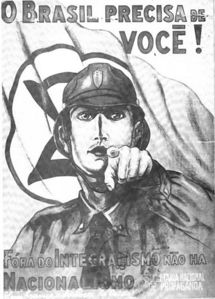
Integralist propaganda poster - 1937.
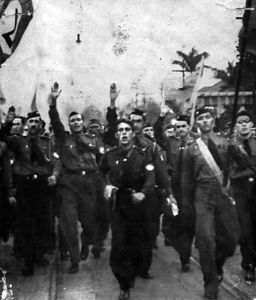
An integralist greeting, "Anauê", of indigenous origin meaning "You are my brother" and an ancient indigenous war cry.
The propaganda of the New State.

Edda Mussolini, daughter of Benito Mussolini, was received by Ademar de Barros during his visit to São Paulo in 1939. The Estado Novo was sympathetic to Nazi fascism.


.jpg)


Understanding Coups d'Etat and Populism in Latin America
The outbreak of the global financial crisis in 1929 was an economic shock that devastated companies and the economy as a whole. American companies, which were heavily invested and operated internationally, were not spared. The effects of the crisis were particularly felt in Latin America, a region where US companies had substantial interests. With the collapse of the stock market and the credit crunch, many companies faced reduced liquidity and lower demand for their products and services. This was exacerbated by the rapid fall in commodity prices, a key component of the economies of many Latin American countries. Foreign investment, particularly from the US, has dried up as US companies and banks struggle to survive. For US companies operating in Latin America, this meant reduced revenues, lower profit margins and, in many cases, unprofitable operations. Capital was difficult to obtain, and without adequate financing, many were unable to maintain normal operations. As a result, many companies downsized, suspended operations or went bankrupt. This period also marked a significant decline in economic relations between the United States and Latin America. Protectionist policies adopted by nations to protect their domestic economies exacerbated the situation, reducing international trade and investment. However, despite the severity of the crisis, it has also served as a catalyst for significant economic and regulatory change. Governments around the world, including those in Latin America, adopted new policies to regulate economic activity, stabilise financial markets and promote economic recovery.
The crisis of 1929 highlighted the vulnerabilities and flaws inherent in the economic liberalism of the time. This model, predominant in the years leading up to the Great Depression, promoted a minimal role for the state in the economy, leaving the market free to evolve without significant government interference. This system of economic liberalism tended to favour landowners, industrialists and the financial sector, encouraging the accumulation of wealth and power in the hands of these elites. Mechanisms of regulation and control were weak or non-existent, allowing these groups to prosper often at the expense of the working classes. Workers, on the other hand, were in a precarious position. They faced low wages, poor working conditions and had little or no social security or legal protections. Their rights and freedoms were often neglected, and economic and social inequalities increased. The Great Depression amplified these problems. As markets collapsed, unemployment soared and businesses failed, the structural weaknesses of economic liberalism became undeniable. The state, traditionally a marginal player in the economy, suddenly found itself at the centre of the attempt to resolve the crisis. This marked a turning point in the understanding and practice of economic liberalism. Governments around the world, under pressure from economic and social realities, began to adopt more interventionist policies. The state took on a more active role in regulating the economy, protecting workers and stabilising financial markets.
The crisis of 1929 exposed the structural weaknesses of the economic liberalism model of the time. A particularly striking feature of this model was the concentration of wealth and power in the hands of economic elites, such as hacendados, industrialists and bankers. Workers, on the other hand, often lacked sufficient protection and rights, and suffered the most serious consequences of these inequalities. Against this backdrop of uncertainty and economic insecurity, the population, faced with massive economic distress, often looked for strong leadership to restore stability and order. In several Latin American countries, charismatic figures have emerged, proposing authoritarian or populist alternatives to the liberalism that previously prevailed. In the United States, the response to the crisis was also characterised by increased state intervention. Under the presidency of Franklin D. Roosevelt, the New Deal marked a significant break with the previous laissez-faire liberalism. The government adopted a series of measures to stimulate economic growth, create jobs and protect the most vulnerable citizens. This involved tighter regulation of financial markets, an expansion of workers' rights and social welfare initiatives. The need to reassure and unify the population in this period of crisis revealed the importance of nationalism. Leaders have turned to nationalist ideas and symbols to bring their nations together and build a sense of solidarity and social cohesion.
Populism is often characterised by its ambivalence. On the one hand, it can offer a voice to people who feel neglected or marginalised by political and economic elites. In this context, populist leaders can mobilise broad popular support by responding to the frustrations and concerns of the masses. They are able to maintain social peace temporarily by presenting themselves as champions of "ordinary people" against corrupt and out-of-touch elites. On the other hand, populism can also be critical. Although populist leaders often promise radical change and the righting of perceived wrongs, they can actually reinforce existing structures of power and inequality. The reforms initiated under populist regimes are often superficial and fail to address the root causes of inequality and injustice. Sometimes these reforms are more focused on consolidating power in the hands of the populist leader than on improving the living conditions of the people they claim to represent. The illusion of change and representation can be maintained by skilful rhetoric and effective communication strategies. However, beneath the surface, structures of power and inequality often remain unchanged. This can lead to subsequent disillusionment among populist supporters, when bold promises of change and justice turn out to be insufficient or unattainable.
These dynamics have been observed in a number of historical and geographical contexts. Small farmers and the working class are often the most vulnerable to the devastating effects of economic crises. Their livelihoods are directly linked to an economy that, in times of crisis, becomes uncertain and precarious. In this context, the promise of populism, with its guarantees of economic recovery and fairness, can appear seductive. Socialist and Communist parties have historically sought to represent these groups. They often propose radical reforms to rebalance economic and political power, with an emphasis on protecting workers and small farmers. However, in times of crisis, these parties and movements can be marginalised or absorbed by more powerful populist forces. Populism, in its various manifestations, often presents a unified vision of the nation and proposes a quick fix to complex economic and social problems. This can lead to the suppression or co-option of smaller, more specialised groups and parties. Populist discourse tends to unite diverse groups under a national banner, setting aside specific demands and identities of class, region or profession.
The shortcomings and flaws of economic liberalism were exposed, and with them the profound inequalities that characterised these societies.
The crisis shook confidence in the existing economic system and highlighted the need for structural reform. Leaders who could articulate a convincing vision of a unified and prosperous nation gained ground. In many cases, they adopted nationalist ideologies, promising to restore dignity, power and prosperity to the nations they led. These ideologies sometimes led to an increase in authoritarianism. Populist leaders, armed with the urgency of the crisis, often consolidated power in their own hands, marginalising competing political forces and establishing regimes which, while popular, were often marked by the restriction of civil liberties and the concentration of power. However, it is also important to recognise that in some contexts, this period of crisis led to substantial and necessary reforms. In the United States, for example, the Roosevelt administration introduced the New Deal, a set of programmes and policies that not only helped to stabilise the economy, but also laid the foundations for a more robust social safety net.
The social unrest that followed the Great Depression created an urgent need for stability and reform. In response, governments oscillated between authoritarianism and populism to maintain control and ensure social peace. Populism, in particular, appeared to be a mechanism for appeasing the masses and avoiding revolution, a strategy illustrated by political developments in Cuba in 1933. The populist movement, however, was not content with rhetoric; it required a certain substantiality in the implementation of policies in order to be effective. This often involved the introduction of social legislation to protect the rights of workers and the poor, a necessary step to alleviate the pervasive social unrest of the time. However, although these measures succeeded in temporarily easing social tensions, they did not eliminate the underlying problems of inequality and injustice. The seeds of discontent remained, latent but alive, and re-emerged with a vengeance after the Second World War. A new era of political and social mobilisation was about to begin. Small peasants in rural areas and socialist and communist parties and unions in urban areas were particularly hard hit by the continuing repercussions of the Great Depression. While the state had managed to suppress or integrate some of these groups into larger, national political structures, the social protection offered was often inadequate. The basic problems of economic inequality, social justice and human rights remained unresolved.
Annexes
References
- ↑ Aline Helg - UNIGE
- ↑ Aline Helg - Academia.edu
- ↑ Aline Helg - Wikipedia
- ↑ Aline Helg - Afrocubaweb.com
- ↑ Aline Helg - Researchgate.net
- ↑ Aline Helg - Cairn.info
- ↑ Aline Helg - Google Scholar