美国战后社会:冷战与富裕社会
根据 Aline Helg 的演讲改编[1][2][3][4][5][6][7]
美洲独立前夕 ● 美国的独立 ● 美国宪法和 19 世纪早期社会 ● 海地革命及其对美洲的影响 ● 拉丁美洲国家的独立 ● 1850年前后的拉丁美洲:社会、经济、政策 ● 1850年前后的美国南北部:移民与奴隶制 ● 美国内战和重建:1861-1877 年 ● 美国(重建):1877 - 1900年 ● 拉丁美洲的秩序与进步:1875 - 1910年 ● 墨西哥革命:1910 - 1940年 ● 20世纪20年代的美国社会 ● 大萧条与新政:1929 - 1940年 ● 从大棒政策到睦邻政策 ● 政变与拉丁美洲的民粹主义 ● 美国与第二次世界大战 ● 第二次世界大战期间的拉丁美洲 ● 美国战后社会:冷战与富裕社会 ● 拉丁美洲冷战与古巴革命 ● 美国的民权运动
1954 年,在冷战最激烈的时候,美国国会做出了一项战略性决定,将 "上帝保佑 "这一短语写入效忠誓词。这一改动绝非无足轻重,而是为了与当时被视为无神论堡垒的苏联划清界限。通过这一象征性的改变,美国试图突出其宗教和爱国价值观,与共产主义意识形态直接对立。
这一立法变革是在民族主义日益高涨的背景下发生的。直到 2003 年,得克萨斯州和其他州的学校还在诵读《效忠誓词》,现在誓词中包含了 "在上帝之下 "的字样,这反映了这些价值观在美国教育中的持续存在。
在这段国际紧张局势期间,美国和其他西方国家开展了民防演习,目的是让包括儿童在内的民众做好准备,应对苏联可能发动的核攻击。这些演习旨在教授针对放射性尘降物的防护措施,是为潜在核战争做准备的整体战略的一部分。
第二次世界大战后,美国作为一个经济超级大国蓬勃发展,这个时代有时被称为 "富裕社会"。这一时期的特点是,在高产劳动力、有利的政府政策和蓬勃发展的消费市场的推动下,经济异常繁荣。凭借其世界工业领导者的地位及其政治和军事影响力,美国得以在整个冷战期间保持并增进其繁荣,塑造了我们今天生活的现代世界。
美国与冷战
1945 年 8 月,美国在广岛和长崎使用原子弹,这不仅标志着第二次世界大战悲剧性和争议性的结束,而且也是冷战黎明的前奏。这一时期的特点是激烈的政治、军事和意识形态竞争,美国与苏联这两个当时正在崛起的超级大国针锋相对。美国拥有核武器,并在日本以毁灭性的方式进行了展示,这在战后谈判中最初似乎给美国人带来了战略优势。然而,它也催化了美国和苏联之间史无前例的军备竞赛,使世界陷入了不确定和对可能发生的核启示录的恐惧之中。冷战在多条战线上展开。美国采取遏制政策,旨在通过军事干预、经济措施和外交战略等多种手段限制共产主义的传播。与此同时,苏联也做出了巨大努力,将其影响力扩展到境外,并建立了自己的意识形态模式。这种两极对抗极大地影响了美国和全球社会。国际关系、全球经济和许多国家的国内政策都受到冷战动态的深刻影响,甚至是决定性的影响。这场旷日持久的冲突虽然从未演变成两个超级大国之间的公开战争,但却引发了各种代理冲突,刺激了疯狂的军备竞赛,并造成了持续数十年的不信任和猜疑气氛。
第二次世界大战结束时,与世界其他大国相比,美国处于异常有利的地位。美国的领土基本上没有受到战争的破坏,经济不但没有衰退,反而蓬勃发展。然而,这种优势地位遇到了一个重大障碍:他们无法将自由主义理想强加给苏联。美国将共产主义的传播视为对其生活方式和他们希望建立的世界秩序的直接威胁,因此采取了多层面的政策来遏制共产主义的影响。这一战略包括政治、经济和军事措施,所有这些措施都旨在阻止共产主义扩张并维护其霸权。然而,事实证明,约瑟夫-斯大林及其继任者领导下的苏联无法抵挡这些影响企图。相反,苏联采取了以封闭市场和国家严格控制经济发展为基础的经济政策。这种做法与美国倡导的资本主义模式和自由贸易形成了鲜明对比。这一根本分歧为美国经济利益的扩张制造了巨大障碍,限制了美国主导世界市场的能力。此外,苏联的外交政策侧重于扩大其影响力和意识形态模式,导致其在世界各地与美国发生直接或间接的对抗。因此,战后美苏之间出现了一个激烈竞争的时代,确定了冷战的轮廓。这种竞争不仅表现在经济上和政治上,还表现在军备竞赛、代理人冲突以及在全球范围内争夺文化和意识形态影响力。

1945 年 2 月在克里米亚海滨度假胜地举行的雅尔塔会议是世界历史上具有决定性意义的时刻。会议聚集了当时最具影响力的三位领导人: 他们是美国总统富兰克林-罗斯福、英国首相温斯顿-丘吉尔和苏联总理约瑟夫-斯大林。这次历史性会议的主要目的是确定第二次世界大战后时代的轮廓,并规划通往世界新秩序的道路。雅尔塔会议的主要成果之一是成立了联合国(UN),旨在成为一个促进和平、安全和国家间合作的国际论坛。联合国的成立是朝着建立国际治理全球架构迈出的重要一步,旨在避免一战后导致国际联盟失败的陷阱。然而,尽管取得了这一成就,雅尔塔会议也凸显了盟国之间根深蒂固的分歧。美国和英国是自由贸易和开放市场的坚定捍卫者,这种经济理念植根于资本主义原则。相比之下,苏联在斯大林的领导下,力图保持对其经济的严格控制,并限制西方的影响,特别是在其控制或影响的东欧领土上。这些在经济理念、外交政策和意识形态上的根本分歧不仅未能在雅尔塔会议上得到解决,而且还为冷战奠定了基础。美国和苏联这两个超级大国之间的互不信任和相互冲突的野心,塑造了未来几十年的国际关系格局,创造了一个东西方势力范围分裂的世界,并开创了一个紧张和对抗的时代,这将决定 20 世纪下半叶的命运。
为了确立其在战后世界秩序中的主导地位,美国主动创建了世界银行、国际复兴开发银行(IBRD)和国际货币基金组织(IMF)等国际金融机构。这些机构是在 1944 年布雷顿森林会议上构思和建立的,旨在战后促进经济增长和全球稳定方面发挥重要作用。它们为国际经济合作提供了一个结构化框架,力图防止战时经济危机的重演。然而,苏联对这些机构的看法却截然不同。在苏联看来,世界银行、国际货币基金组织和其他类似机构不仅是美国金融和商业霸权的工具,也是美国试图扩大其影响力和巩固其对世界经济统治的机制。此外,苏联担心参与这些机构会导致失去对本国经济的控制,并使其计划经济体制受到外部影响。因此,苏联选择不加入这些机构,这一拒绝不仅扩大了美苏之间的经济和意识形态差距,还加剧了冷战中固有的紧张局势。苏联拒绝加入这些国际金融机构,不仅被视为反对美国的金融和商业霸权,也是两个超级大国之间深刻的政治和经济分歧的明确体现。这种反对标志着全球经济秩序的明显分界线,强化了共产主义东方与资本主义西方之间的分裂,并帮助塑造了 20 世纪下半叶复杂的地缘政治动态。
第二次世界大战后,美国建立了世界银行、国际复兴开发银行(IBRD)和国际货币基金组织(IMF)等国际金融机构,这是美国在全球范围内建立金融和商业霸权的战略举措。通过提出国际经济合作框架,并为重建和发展提供必要的资源,美国试图推动建立以自由贸易和市场一体化为基础的自由经济体系。然而,这一愿景遭到了苏联的拒绝,苏联拒绝加入这些机构。对苏联来说,这些机构不仅是美国影响力的延伸,也是对其计划经济模式和自主权的潜在威胁。通过不参加这些机构,苏联表明其拒绝美国的金融和商业霸权,并坚持其自主经济发展政策。这种拒绝加剧了两个超级大国之间在意识形态和经济方面的紧张关系,助长了以美国为首的资本主义集团和以苏联为首的共产主义集团之间的两极分化。这种分化是冷战的象征,反映了东西方在经济理念和世界观上的深刻差异。
加剧冷战的恐惧
美苏之间长达数十年的对峙--冷战--确实是由政治、经济和意识形态性质的根本分歧所引发的。美国自由资本主义与苏联共产主义之间的对立不仅仅是意见分歧,而是两种截然不同的世界观的斗争。一方面,美国提倡民主、个人自由、自由贸易和市场资本主义。另一方面,苏联则捍卫专制治理模式、国家计划经济和基于马克思列宁主义原则的社会。意识形态上的分歧因双方对扩张和影响力的担忧而加剧。每个超级大国都担心对方会将其影响力扩展到全世界,从而导致在各条战线上的激烈竞争。在政治上,美国和苏联进行代理冲突,支持第三国的盟国政权或游击队运动。在经济上,它们寻求扩展各自的经济模式,并通过财政援助和贸易赢得盟友。在军事上,他们进行军备竞赛,尤其是核军备竞赛,这引发了对全球冲突的恐惧。这段以恐惧、不信任和竞争为特征的时期深刻地影响了国际关系,塑造了几代人的政策、联盟和冲突。冷战不仅是一场争夺世界霸权的斗争,也是一场定义世界秩序的斗争,每个超级大国都在寻求将自己对人类未来的愿景强加于人。
对资本主义列强包围的恐惧在冷战期间的苏联外交政策中发挥了至关重要的作用。这种恐惧可追溯到第一次世界大战和俄国革命,当时苏联(当时的沙皇俄国,后来的苏联)感到受到西方列强的威胁。俄罗斯内战期间的外国干预加剧了这种感觉。第二次世界大战后,苏联试图在自己与西欧之间建立一个缓冲区。被红军从纳粹占领下解放出来的中欧和东欧国家成为苏联的卫星国。共产主义政权在那里建立,通常是通过武力或操纵选举过程。这些缓冲国旨在为苏联提供一定程度的安全保障,保护其免受西方可能的新入侵。与此同时,1949 年北大西洋公约组织(NATO)的成立加深了苏联领导人对被包围的恐惧。他们认为北约是一个旨在遏制和威胁苏联的侵略性军事联盟。作为回应,苏联于 1955 年成立了华沙条约组织,巩固了对卫星国的控制,并建立了一个与北约对立的军事集团。这种包围感和在邻国建立盟国政权的愿望导致了与西方的重大政治和意识形态冲突。它加剧了相互之间的不信任,在冷战的态势中发挥了核心作用,导致超级大国在世界各地的间接对抗。
美国对苏联构成全球威胁的恐惧决定了其在冷战期间的外交政策。第二次世界大战后,世界处于转型和脆弱时期。许多国家,尤其是欧洲和亚洲国家,经济凋敝,政局动荡。这种局势为美国和苏联之间的意识形态竞争和影响力争夺创造了肥沃的土壤。在希腊和中国的内战中,美国和苏联支持对立的派别,这是冷战上演方式的先兆。同样,非殖民化运动和对英法帝国的压力也开辟了意识形态和战略竞争的新战线。在此背景下,1947 年杜鲁门主义正式确立了美国的遏制战略。这一理论旨在支持那些反抗少数民族武装征服或外部压力的国家,这些国家通常被解释为苏联支持的共产主义运动。马歇尔计划是对遏制政策的补充,该计划是一项旨在帮助重建欧洲的大规模经济援助计划。该计划的目的不仅在于重建欧洲,还在于稳定欧洲,使其不易受到共产党的影响。美国担心共产主义的蔓延,认为苏联是对其利益和世界稳定的重大威胁,因此采取了全球策略。无论苏联的影响出现在欧洲、亚洲、非洲还是拉丁美洲,美国都试图予以打击。这导致美国直接或间接地卷入了世界各地的各种冲突,如朝鲜战争和越南战争,同时也增加了美国在全球范围内的军事和经济存在。因此,对苏联扩张的恐惧以及将苏联视为全球威胁是冷战期间美国外交政策的主要驱动力,影响了数十年的国际关系和冲突。
美国的内部因素
第二次世界大战结束时,美国国内的一些因素加剧了冷战期间对苏联威胁的担忧。其中一个关键因素是富兰克林-D-罗斯福于 1945 年 4 月去世后领导层的更迭。他的继任者哈里-杜鲁门虽然是副总统,但被认为外交政策经验不足。这一转变可能使人们担心美国政府是否有能力有效应对苏联的威胁。此外,第二次世界大战促进了美国的工业和军事生产。战后,国防部门的许多参与者看到了通过继续生产武器来保持繁荣的机会。这种愿望影响了美国的外交政策,使其倾向于对苏联采取更具侵略性的立场。对社会主义和共产主义的不信任在美国有着深厚的历史渊源,可以追溯到 19 世纪 80 年代,并在 1917 年俄国革命后愈演愈烈。冷战期间,这种不信任发展成为对苏联和国际共产主义的公开恐惧和敌意。反共宣传是塑造美国公众舆论的关键因素,媒体、电影和政治演讲经常将共产主义描绘成对民主和美国生活方式的直接全球性威胁。最后,美国担心共产主义政党在欧洲,特别是法国和意大利的崛起。人们担心,如果这些国家受到共产主义的影响,就会产生多米诺骨牌效应,威胁到美国的战略和经济利益。这些因素加上战后的国际背景,为美国和苏联之间的不信任和对抗创造了有利环境,为冷战的动态发展推波助澜。
冷战时期美国外交政策的总体思想与经济增长和国家繁荣的理念有着内在联系。美国认为其经济福祉与其进入新的出口市场和确保基本原材料供应的能力密切相关。这一观点在很大程度上影响了他们在此期间处理国际关系的方式。对其全球扩张计划的限制或制约被视为对美国利益的直接威胁。因此,保持强大的经济和军事实力成为美国的首要任务,促使其加强在全球范围内的主导地位。这一战略的目的是保护美国在全球的经济和战略利益。在此背景下,共产主义的崛起,尤其是苏联日益增长的影响力,被视为对美国霸权的直接挑战。共产主义的蔓延不仅代表着意识形态上的威胁,也是经济扩张以及市场和资源准入的潜在障碍。为了应对这一威胁,美国采取了遏制政策,旨在限制共产主义的传播,维护其在全球范围内的影响力和主导地位。这一方针在很大程度上决定了美国对苏联的反应,并界定了美国在冷战期间国际秩序中的角色。它导致了一系列政治、经济和军事决定,其中一些决定对国际关系结构和全球地缘政治格局产生了深远而持久的影响。
杜鲁门主义
The Truman Doctrine, announced by President Harry S. Truman on 12 March 1947, marked a major turning point in US foreign policy. The doctrine stipulated that the United States would provide political, military and economic support to all countries threatened by communism or totalitarianism. The aim was twofold: to contain the spread of communism and to promote democracy and capitalism. The doctrine was formulated in response to the rise of the Soviet Union, which had extended its influence into Eastern Europe and was seen as a direct threat to Western democratic and capitalist ideals. The Truman Doctrine therefore represented a firm response to Soviet expansion, sending a clear signal that the United States was prepared to engage actively to defend and promote its interests and values on a global scale. This doctrine marked a significant break with the United States' previous isolationist foreign policy. It laid the foundations for American involvement in the Cold War, indicating that the United States was prepared to intervene, including militarily, to curb Soviet influence and maintain its dominant position on the world stage. The Truman Doctrine thus became a central element of the containment strategy that characterised American foreign policy for several decades.
The Truman Doctrine and George Kennan's policy of containment were closely linked and complemented each other in the context of the Cold War. George Kennan, a diplomat and expert on Soviet affairs, played a crucial role in formulating the policy of containment. In his famous "Long Telegram" and later in his article published under the pseudonym "X", Kennan argued that the Soviet Union was inherently expansionist and that its spread had to be contained. In his view, the United States had to adopt a long-term strategy to prevent the spread of communism, opposing Soviet influence wherever it threatened to spread. The Truman Doctrine was part of this containment strategy. Announced in response to the crises in Greece and Turkey, it committed the United States to supporting nations threatened by communism or totalitarianism, not just with words, but also with concrete action, including military and economic support. Thus, Kennan's policy of containment provided the theoretical and strategic framework, while the Truman Doctrine translated that framework into active and practical policy. Together, they formed the pillars of American strategy during the Cold War, guiding the United States in its efforts to maintain its hegemony, counter Soviet influence, and protect its interests around the world.
A comparison between the Cold War policy of containment and the Monroe Doctrine highlights both similarities and significant differences. Both had as their primary objective the protection of the national interests of the United States. The Monroe Doctrine, formulated in 1823, aimed to prevent European powers from interfering in the affairs of the Western Hemisphere, essentially declaring Latin and North America to be areas of privileged influence for the United States and off-limits to further European colonisation. By contrast, the policy of containment, implemented during the Cold War, sought to protect American interests by preventing the spread of communism worldwide. Both policies were also responses to perceived threats. The Monroe Doctrine responded to the threat of European colonial expansion, while the policy of containment responded to the threat of Soviet expansionism and the spread of communism. However, there are fundamental differences between the two. Firstly, the geographical scope differs significantly. The Monroe Doctrine focused on the Western Hemisphere, whereas the policy of containment was global in scope. Secondly, the nature of the threat was different. The Monroe Doctrine mainly opposed attempts at colonisation or European political interference, whereas the policy of containment opposed a specific ideology, communism, and the influence of the Soviet Union. Finally, the historical and political contexts in which these doctrines were formulated are very different. The Monroe Doctrine was formulated at a time when European colonialism was flourishing and the United States was still young. The policy of containment, on the other hand, was formulated in the post-Second World War context, in a world marked by ideological rivalry between the United States and the Soviet Union.
The policy of containment, like the Monroe Doctrine before it, embodied the belief in American exceptionalism, reflecting the aspiration of the United States to maintain its dominant position and protect its interests on a global scale. However, the policy of containment was adapted to the specific realities of the Cold War era, a period marked by intense rivalry with the Soviet Union. Unlike the Monroe Doctrine, which aimed to keep European powers away from the Western Hemisphere, the policy of containment extended far beyond American borders. Its main aim was to limit the expansion of Soviet influence and counter the spread of communism. This policy was applied in various parts of the world, particularly in Europe, where the United States sought to strengthen and protect its allies in the face of the Soviet threat. The policy of containment therefore played a crucial role in defining American foreign policy during the Cold War. It shaped US interactions with the Soviet Union and had a considerable impact on the evolution of world politics, influencing US decisions and strategies for several decades. In short, this policy was a response to the unique challenges of its time, while continuing the tradition of defending American interests internationally.

The Marshall Plan, officially known as the European Recovery Programme, remains one of the most emblematic examples of post-war economic diplomacy and international aid. Initiated by US Secretary of State George C. Marshall in 1948, the plan had multiple strategic objectives. Firstly, the Marshall Plan aimed to support the reconstruction of European economies devastated by the Second World War. By providing substantial financial aid, the United States hoped to accelerate economic recovery and stabilise European nations. Secondly, there was a strong element of combating Communist influence. At a time when Communism was gaining ground in Europe, particularly in economically weakened countries, American aid was intended to offer an alternative and prevent the spread of Communist ideology. By strengthening economies and supporting democratic governments, the US sought to establish a bulwark against communism in Europe. Thirdly, the plan had positive repercussions for the American economy itself. By helping to rebuild Europe, the US was opening up new markets for its exports and strengthening transatlantic economic ties. This was particularly important in the post-war context, where stimulating international demand was essential to maintaining US economic growth. Ultimately, the Marshall Plan was a resounding success. Not only did it make a significant contribution to Europe's economic recovery, but it also laid the foundations for the close transatlantic cooperation that continues to this day. It also strengthened US influence in Europe and was a key factor in the continent's post-war economic boom. Moreover, as a foreign policy tool, it demonstrated the ability of the United States to use economic aid as an effective means of promoting its strategic interests on a global scale.
National Security Act
The National Security Act of 1947 marked a defining moment in the history of the United States, particularly in shaping the country's response to the threats and challenges posed by the Cold War. This legislation introduced significant changes to the structure and organisation of the US defence and intelligence services in response to escalating tensions with the Soviet Union. One of the most notable changes brought about by this legislation was the creation of the National Security Council (NSC). The NSC was conceived as a crucial body to advise the President on matters of national security and foreign policy. Its establishment enabled better coordination and integration of the various dimensions of national security, including military, diplomatic and intelligence aspects. The Act also saw the founding of the Central Intelligence Agency (CIA). The creation of the CIA represented a turning point in the United States' ability to collect, analyse and act on foreign intelligence. As a central intelligence agency, the CIA became a crucial player in gathering information on Soviet activities and conducting covert operations to counter Soviet influence around the world. In addition, the Act led to the reorganisation of the War Department and the Navy Department into a single Ministry of Defence. This consolidation was intended to improve the coordination and effectiveness of the US armed forces. The creation of the Air Force as a separate branch, alongside the Army, Navy and Marine Corps, underlined the growing importance of air power in modern military strategy.
The CIA's active involvement in various covert operations during the 1950s and beyond is indicative of the way in which the US sought to influence world politics and contain the spread of communism during the Cold War. These operations, often surrounded by controversy, had a lasting impact on both the countries involved and the international reputation of the United States. One of the most notorious operations was the 1953 coup in Iran, known as Operation Ajax. Conducted jointly by the CIA and the British secret services, the operation aimed to overthrow Iranian Prime Minister Mohammad Mossadegh, who had nationalised the country's oil industry. Although the coup succeeded in restoring Shah Mohammad Reza Pahlavi to power, it also engendered deep resentment towards the United States in Iran, planting the seeds of future conflict. In 1961, the Bay of Pigs invasion of Cuba, led by CIA-backed Cuban exiles, attempted to overthrow the government of Fidel Castro. The failure was a major humiliation for the United States. Not only did the operation strengthen Castro's position in Cuba, it also pushed the country closer to the Soviet Union. Another striking example was the overthrow of the democratically elected government of Salvador Allende in Chile in 1973. The CIA played a role in this coup, as Allende was perceived as a Marxist and a threat to American interests in the region. The overthrow of Allende led to the installation of the authoritarian regime of General Augusto Pinochet, marked by flagrant violations of human rights. These covert operations illustrate the determination of the United States to shape the world order according to its interests during the Cold War, as well as its struggle against what it perceived as the expansion of Soviet influence. They also highlight the complexities and moral dilemmas faced by the United States, as its foreign policy was sometimes at odds with the principles of democracy and human rights it advocated.
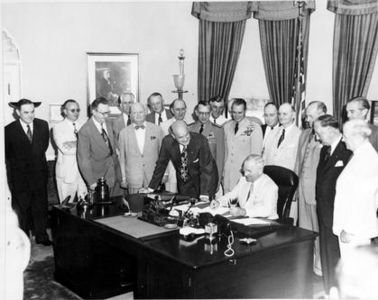
President Truman signing the National Security Act Amendment of 1949 in the Oval Office.

The logo of the National Security Council.

Emblem on the first CIA building in Washington.


The development of McCarthyism: 1947 - 1962
Anti-communist sentiment in the United States has deep roots, dating back to the late nineteenth century. It was fuelled by a combination of political, economic and ideological factors, including growing concern about the emergence of socialist and communist movements. This mistrust of communism was also fuelled by fears that American commercial interests might be threatened and by a deeply anti-Bolshevik ideology. With the onset of the Cold War, these fears intensified. Events such as the Soviet Union's acquisition of atomic weapons and the perceived spread of communism in Eastern Europe and Asia exacerbated fears. In addition, suspicions of espionage and subversion within the US government itself led to the creation of the House Un-American Activities Committee (HUAC) in 1938. This committee was tasked with investigating suspected communist activities and played a key role in creating a climate of fear and suspicion. In the 1950s, this 'red scare' reached its peak, thanks in part to the sensational speeches of Senator Joseph McCarthy. An atmosphere of widespread fear took hold, marked by the blacklisting of many people in the entertainment industry and the dismissal of federal employees suspected of Communist sympathies.b American political leaders skilfully used the fear of Communist subversion to justify the maintenance of anti-Communist policies, both nationally and internationally. This climate of mistrust and fear has had a profound impact on American society, shaping American politics, culture and international relations for decades.
McCarthyism was a period of intense suspicion and anti-communist repression in the United States during the 1950s, led primarily by Senator Joseph McCarthy. This era was marked by frequent accusations of political subversion and espionage, often made without tangible proof. These allegations led to the blacklisting of individuals in many sectors, including the entertainment industry. The term "McCarthyism" became synonymous with a political witch-hunt, characterised by unfounded accusations and unfair repression.

The term "McCarthyism" is often used to describe the period of intense anti-Communist hysteria in the United States, symbolised by the actions of Senator Joseph McCarthy. McCarthy spearheaded this anti-Communist campaign, making accusations that were often devoid of evidence and ruining the careers and reputations of many innocent people. This period was driven by a deep-seated fear of possible Communist infiltration of American society, as well as the perceived threat from the Soviet Union. These fears fuelled an atmosphere of widespread suspicion and persecution, deeply marking American society and politics at the time.
The post-war period was one of profound transformation, both for the United States and for the world as a whole. The end of the Second World War saw the emergence of the Soviet Union as a global superpower, a reality that deeply worried President Harry S. Truman and his administration. In the United States, economic instability, frequent strikes and the growing membership of the Communist Party of America exacerbated these concerns. Against this backdrop of social unrest and uncertainty, the fear of the spread of communism on American soil was omnipresent. Truman and his administration perceived communism not only as an ideological threat, but also as a real threat to national and global security. This concern led to the introduction of policies and measures designed to counter Communist influence and expansion. The Truman Doctrine, articulated in 1947, is a striking example. This foreign policy aimed to contain the spread of communism by providing economic and military support to countries threatened by communist movements. It symbolised the United States' commitment to opposing Soviet expansion and promoting democracy around the world. The creation of the National Security Council (NSC) under President Truman also played a crucial role in consolidating US efforts to counter communism. The NSC became an important instrument for coordinating national security policies and defence strategies, reflecting the growing importance attached to security issues in the context of the Cold War. Under Truman's leadership, the United States took decisive action to protect its interests and to counter the spread of communism. These actions had a considerable impact on the shaping of American foreign policy and played a decisive role in shaping the dynamics of the Cold War. The post-war period, marked by these developments, thus shaped the course of world history and laid the foundations for the decades of rivalry and confrontation that characterised the Cold War.
Truman's concerns about the loyalty of federal government employees were strongly influenced by the growing influence of communism both domestically and internationally. These concerns were exacerbated by major events such as the Communist victory in China under Mao Tse-tung. These developments reinforced the perception of an imminent Communist threat and prompted Truman to act to secure US government institutions. In response to these fears, Truman introduced loyalty programmes and extensive vetting processes for government employees. These measures were designed to identify and eliminate any potential Communist influence or sympathies within the government. This atmosphere of widespread suspicion also contributed to the rise of McCarthyism, a movement characterised by often unfounded accusations of communism and smear campaigns against allegedly disloyal individuals. The 'Red Scare', a period of intense anti-Communist hysteria, also took root in this context, profoundly affecting American politics and society. This period saw many people, including artists, academics and government officials, falsely accused of Communist sympathies, often with little or no evidence, restricting freedom of expression and sowing distrust within American society. Truman's approach to the communist threat and his efforts to secure the loyalty of federal employees had lasting consequences, shaping not only the politics of the day but also the cultural and social history of the United States during the Cold War.
The era of McCarthyism, initiated in large part by Senator Joseph McCarthy, gave rise to a period of great fear and suspicion in the United States. McCarthy's accusations, often unfounded or based on dubious evidence, triggered a veritable witch-hunt, targeting mainly suspected communists or communist sympathisers. During this period, many people were blacklisted, sacked from their jobs, and some were even imprisoned. These actions were not limited to the government; private organisations also took part in these intrusive investigations, scrutinising individuals' political beliefs and associations. This intrusion into private life caused serious damage to many careers and disrupted the personal lives of those involved. The impact of McCarthyism on civil liberties was profound. Freedom of expression and association, fundamental principles of American democracy, were seriously compromised. The period also instilled a general sense of paranoia, as people feared being falsely accused or associated with activities deemed subversive. McCarthyism left a lasting scar on American society, serving as a classic example of how fear and suspicion can undermine the principles of justice and freedom. Despite the end of this period, the lessons of McCarthyism continue to influence debates and policies around civil liberties and national security in the United States.
The atmosphere of fear and mistrust of communism in the United States during the Cold War led to a series of government measures aimed at detecting and countering what was perceived as a domestic threat. One such measure was the Subversive Activities Control Act, more commonly known as the McCarran Act, passed in 1950. This law required communist organisations to register with the federal government, an act that was seen as a means of limiting and monitoring communist activities. At the same time, the House Un-American Activities Committee (HUAC) played a major role in investigating alleged Communist infiltration of various sectors, including the federal government. HUAC became infamous for its public hearings, in which individuals were questioned about their political affiliations and beliefs, and often forced to name others suspected of Communist activities. The consequences of these measures were far-reaching and often destructive. Many people were subjected to widespread censorship and deprived of their jobs, their civil liberties severely curtailed. Fear of being labelled a "communist" or "communist sympathiser" was omnipresent, and accusations could ruin careers and lives, sometimes on the basis of very limited or even non-existent evidence. This period in American history is a poignant reminder of how fear of the enemy within can lead to abuses of fundamental rights and an atmosphere of widespread suspicion. Actions taken under the pretext of national security have had lasting repercussions on individual freedoms and the democratic fabric of the United States.
The period of McCarthyism in the United States was marked by intense suspicion and harsh measures against those suspected of being communists or having links with communism. These individuals found themselves under intense scrutiny, and the consequences of such accusations were often severe. Individuals could lose their jobs, be denied professional opportunities, have their passports seized, and in some extreme cases, face deportation. The Homeland Security Act, also known as the McCarran Act, reinforced this witch-hunt by making it illegal to contribute to the establishment of a totalitarian dictatorship. The law also required members of communist organisations to register with the federal government. The purpose of this requirement was to monitor and control the activities of communist groups, but it was also seen as an infringement of civil liberties and a form of ideological discrimination. The impact of these measures on those involved was profound. Many saw their lives and careers turned upside down, simply because of their political beliefs or their supposed association with communism. The fear and mistrust generated by this period left an indelible mark on American society, highlighting the tensions between national security and the protection of individual freedoms.
The Korean War was a turning point in the history of the Cold War, featuring a direct confrontation between forces backed by the United States and those backed by the Communist powers. The conflict began in 1950 when North Korea, backed by China and the Soviet Union, invaded South Korea. In response, the United States, under the leadership of President Harry S. Truman, took the crucial decision to intervene militarily in support of South Korea, marking the first time the United States had engaged directly in conflict against Communist forces during the Cold War. The US intervention was made possible in part by the absence of the Soviet Union from the United Nations Security Council. The USSR had boycotted the Council in protest at the refusal to grant Communist China a permanent seat, leaving the way clear for the United States to obtain a UN mandate to intervene in Korea. The conflict in Korea was intense and devastating. It finally ended in 1953 with the signing of a ceasefire agreement, but without a true peace treaty. The agreement led to the creation of a demilitarised zone (DMZ) between North and South Korea, which remains one of the most militarised borders in the world today. The Korean War had far-reaching consequences, not only for the Korean peninsula, but also for the dynamics of the Cold War, reinforcing the United States' policy of containment and demonstrating its willingness to intervene militarily to counter the spread of communism.

The case of the Rosenbergs is one of the most controversial and polarising in American legal history, particularly during the period of McCarthyism. Julius and Ethel Rosenberg were arrested in 1950 and charged with conspiracy to commit espionage, including allegedly passing information about the atomic bomb to the Soviet Union during the Second World War. In 1951, they were found guilty and sentenced to death, an exceptionally harsh sentence even in an era of anti-communist hysteria. Despite international protests and appeals for clemency, claiming that the evidence against them was insufficient and largely based on circumstantial testimony, the Rosenbergs were executed in the electric chair in June 1953. The case generated intense debate and remains a controversial subject. Some see it as a tragic example of justice skewed by anti-communist fear, while others believe that the evidence, while perhaps insufficient for a death sentence, pointed to involvement in espionage activities. Over time, declassified documents and subsequent confessions by individuals linked to the case have provided new insights, but opinions on the guilt or innocence of the Rosenbergs remain divided.
The election of Dwight D. Eisenhower to the presidency in 1953 coincided with a period of anti-communist firmness in American politics, partly due to the influence and rise of McCarthyism. Eisenhower, although more moderate in his approach than some of his contemporaries, nevertheless adhered to the dominant Cold War doctrine which placed the fight against communism at the heart of US foreign and domestic policy. Richard Nixon, as Vice-President under Eisenhower, played a significant role in promoting the anti-communist position. Even before becoming Vice-President, Nixon had made a name for himself as a member of Congress for his role in prosecuting espionage cases, notably the Alger Hiss affair. He continued to take a strong stance against communism throughout his political career. Under the Eisenhower administration, there was a concerted effort to contain the influence of communism, not only in the United States but throughout the world. This manifested itself in support for anti-communist regimes, involvement in Cold War conflicts abroad, and political rhetoric that saw communism as a global threat to freedom and democracy. It is worth noting that, although Eisenhower did not directly support McCarthy's methods and excesses, neither did he openly oppose him for most of his term in office. Eisenhower's presidency, while less demonstrative than some aspects of McCarthyism, nevertheless took place at a time when fear and mistrust of communism deeply permeated American politics and society.
The addition of the words "under God" to the United States Pledge of Allegiance in 1954 is an example of how anti-Communism became embedded in American culture. The change was intended to strengthen national identity in opposition to the atheistic communism promoted by the Soviet Union. It was adopted at the height of the Cold War and McCarthyism, reflecting the desire to clearly distinguish American ideology and values from those of communism. As for anti-communist legislation, the vote in Congress corresponds to the Homeland Security Act of 1950, also known as the McCarran Act. This law required members of communist organisations to register with the government and authorised the creation of detention camps for suspects in the event of a national emergency. Although President Truman vetoed the legislation as a violation of constitutional freedoms, his veto was overridden by Congress. In 1954, the Communist Activities Control Act (also known as the International Community Act) was passed, further strengthening anti-communist legislation. The Act made it illegal to create or support the establishment of a totalitarian dictatorship in the United States and required members of communist organisations to register with the government. The law criminalised Communist Party membership and was used to justify surveillance and repression of individuals and organisations suspected of Communist sympathies. These measures, taken in a climate of fear and mistrust, had a profound impact on American society, restricting civil liberties and fuelling an atmosphere of paranoia and repression. The emphasis on loyalty, often without the possibility of defence or appeal, had devastating consequences for many people accused of being Communists or simply suspected of being so.
During the period of McCarthyism and the Red Scare, the legal protections and rights of the accused were often set aside or actively ignored. The ever-present fear of Communist subversion justified, in the eyes of many, the adoption of extreme measures to protect the nation. Unfair trials were commonplace, with many people accused of being Communists or Communist sympathisers facing judgements based on circumstantial evidence or dubious testimony. Outside the courts, mere accusation or suspicion could lead to blacklisting, particularly in sectors such as film, radio and television, ruining careers often without concrete evidence or the opportunity to defend themselves. The principles of due process, essential for fair treatment in the legal system, were frequently neglected. Defendants were often found guilty until proven innocent, reversing the presumption of innocence. The social and political pressure of the time forced judges, politicians and employers to take action against those suspected of communist links. Failure to act against "suspected communists" could be interpreted as a sign of communist sympathy. Increased surveillance and infiltration of suspected Communist groups by government agencies, notably the FBI under J. Edgar Hoover, often took place without proper warrants or with questionable legal justification. Finally, the fear of being accused of communism led many people to censor themselves or avoid any association with causes or people deemed suspect, creating a climate of oppression and conformity. The period of McCarthyism remains a dark chapter in American history, illustrating the disastrous consequences that can occur when fear and suspicion overshadow fundamental principles of justice and civil rights.
The US Army affair marked a crucial turning point in Joseph McCarthy's anti-communist campaign. In 1954, McCarthy, who had already gained notoriety for his often unfounded accusations of communism, targeted the US Army, claiming that it was infiltrated by communists. This was seen as a step too far by many, including those who had previously supported or tolerated his actions. The televised hearings that followed, known as the Army and McCarthy hearings, gave a wide audience a first-hand look at McCarthy's methods. Viewers saw his aggressive approach, baseless accusations and intimidation tactics. This media exposure played a crucial role in altering public perception of McCarthy. One of the most memorable moments of these hearings came when Joseph N. Welch, the army's lawyer, confronted McCarthy with his famous question: "Have you, sir, no sense of decency?" This interpellation resonated with the American public and symbolised the growing rejection of McCarthy's campaign of fear and baseless accusations. Ultimately, the Army and McCarthy hearings significantly eroded political and public support for McCarthy. In December 1954, the US Senate voted to censure McCarthy, an action that marked his political downfall and the decline of his influence. Although McCarthyism as a movement persisted for some time after McCarthy, this period marked the beginning of the end of its hold on American politics and society.
The mid-1950s was a period of intensifying competition and tension between the United States and the Soviet Union, reflecting the complex dynamics of the Cold War. In 1955, the Soviet Union, already considered an expanding superpower, took a major step forward by successfully testing its first hydrogen bomb. This success highlighted the growing nuclear capabilities of the USSR, exacerbating fears and concerns in the United States and other Western countries. The creation of the Warsaw Pact by the Soviet Union that same year came in response to the North Atlantic Treaty Organisation (NATO), formed by the United States and its allies in 1949. The Warsaw Pact was a military alliance made up of the USSR and several Eastern European countries, and its creation reinforced the political and military division of Europe into East and West blocs. The launch of the Sputnik satellite by the Soviet Union in 1957 marked another crucial moment in the Cold War. This technological success not only demonstrated the USSR's scientific advances, but also raised concerns in the United States about a possible "missile gap" between the two superpowers. The launch of Sputnik had a major psychological impact, prompting the US to accelerate its own space and defence programmes. In this context of heightened rivalry and perceived threat, the Soviet Union's actions strengthened the justification for the Truman administration's policy of assessing loyalty and taking anti-communist action in the United States. Fear of Soviet influence and the spread of communism fuelled an atmosphere of mistrust and suspicion, influencing US domestic and foreign policy during this tense period of the Cold War.
The American affluent society
The post-war period in the United States, particularly in the 1950s and 1960s, presents a fascinating contrast between fear and prosperity. On the one hand, the Cold War and the perceived threat of Soviet aggression created a climate of mistrust and anxiety. The arms race and the fear of nuclear attack were omnipresent, and the US government responded with increased surveillance and control over the population, particularly in the fight against communism. At the same time, this period witnessed an unprecedented economic boom. After the deprivations of the Second World War, the United States experienced massive economic growth, fuelled in part by pent-up demand for consumer goods. This economic prosperity led to a significant increase in the standard of living for many Americans, characterised by the growth of suburbs and the availability of cars, household appliances and other consumer goods. Socially and culturally, the post-war years were also marked by significant change. The civil rights movement gained momentum, fighting segregation and racial discrimination, and seeking equal rights for African Americans. Emblematic figures such as Martin Luther King Jr. emerged, symbolising the fight for justice and equality. The rise of the suburbs has also reshaped the American landscape. Increased land ownership and massive home construction have contributed to a new form of American life, centred around family, community and a more comfortable, accessible lifestyle.
This phenomenon is a recurring motif throughout history. When economic, social or political crises occur, governments and societies often tend to look for scapegoats to channel people's frustration and anger. This approach generally involves naming an internal or external enemy, often a minority or ideological group, which is blamed for the difficulties encountered. This tactic can serve several purposes. Firstly, it can divert attention from the real systemic problems or failures of government by focusing public attention on a designated enemy. Secondly, it can reinforce the government's authority, especially if it presents itself as the protector against the identified threat. Finally, the presence of a common enemy can serve to unite different factions within a society, creating a sense of unity against a perceived threat. However, the use of scapegoats often has negative consequences. Firstly, scapegoating can lead to human rights abuses, discrimination and persecution of innocent groups. Secondly, rather than solving problems, this approach can create or exacerbate social and political divisions. Finally, by focusing on a manufactured enemy, the real structural and systemic problems often remain unresolved. History offers many examples where this dynamic has manifested itself, from the persecution of religious and ethnic minorities to campaigns against "enemies of the state" in various authoritarian regimes. Recognising and understanding this trend is crucial if we are to avoid repeating the mistakes of the past and work towards building fairer, more inclusive societies.
Causes and characteristics
The Golden Age of Capitalism, which followed the Second World War, marked a period of exceptional prosperity for the United States. It was a time of rapid economic growth, driven by technological innovation, rising productivity and strong demand for consumer goods. The labour market was robust, with remarkably low unemployment rates, enabling most people of working age to find a job with little difficulty. Alongside this economic growth, Americans' standard of living improved considerably. Rising incomes led to increased consumption of goods such as houses, cars and household appliances. This period also saw a significant expansion of the middle class, with many families achieving a comfortable standard of living. In addition, the development of infrastructure, including motorways and suburbs, stimulated economic growth and facilitated a car-centric lifestyle. The government has played a key role in stabilising the economy through sound fiscal and monetary policies, as well as social programmes. Internationally, the United States' position as a world economic leader was strengthened by foreign aid, such as the Marshall Plan, and by participation in international institutions that promoted trade. Although this period was one of remarkable prosperity, it was not without its faults. Communities, particularly racial minorities, did not benefit equally from this prosperity, revealing persistent economic and social disparities. Despite these problems, the Gilded Age of Capitalism remains an iconic period of economic growth and prosperity unprecedented in the history of the United States.
In the period following the Second World War, despite the economic prosperity and the consumer boom, some Americans remained cautious, even sceptical. Many feared the onset of a recession, reminiscent of the difficulties of the Great Depression. This caution was anchored in the collective memory, influencing economic behaviour and attitudes towards financial stability. At the same time, anti-communism became a central pillar of American society, shaping domestic and foreign policy. This fear of communism has served as a unifying force for the nation, justifying US military interventions abroad and supporting the country's foreign policy objectives. Anti-Communist sentiment also played a role in maintaining social stability, providing American society with a common enemy and channelling domestic anxieties towards an external goal. However, this period was not without controversy. The United States' military involvement in international conflicts, particularly the Vietnam War, began to arouse significant public opposition. As the reality of war became more apparent, particularly through media reports and shock images, anti-war sentiment gained momentum. More and more Americans questioned the human and financial costs of these interventions, as well as the motives behind US involvement in these distant conflicts. This led to a national debate about US foreign policy and responsibility on the world stage, a debate that significantly shaped American history and politics during this period.
The post-World War II economic boom in the United States, sometimes referred to as the "golden age of capitalism", was a time of unprecedented growth and prosperity. This boom was underpinned by several key industries that expanded rapidly during this period.
The construction and automotive industries played a major role. The demand for new homes, particularly in the rapidly expanding suburbs, led to a boom in the construction sector. This boom was fuelled by a combination of factors, including easier access to credit and a growing desire for a comfortable and stable family life after the war years. The car industry also experienced spectacular growth. The American car culture, with the rise of suburbanisation and improved road networks, led to a significant increase in demand for cars. This stimulated not only the car industry itself, but also related industries such as oil production and vehicle maintenance. The arms industry was also a major driver of the economy. The Cold War and the containment policy towards the Soviet Union led to a significant increase in military spending. This expansion of the arms industry not only stimulated industrial production, but also created many jobs. The government played a crucial role in this economic growth. It stimulated the economy through significant public spending and investment in infrastructure projects, such as motorways, which supported economic growth and created jobs. These investments not only directly stimulated the economy, but also facilitated business growth and improved the quality of life for Americans.
The period of economic prosperity that followed the Second World War benefited many Americans, particularly those in the middle class. Rising wages and overall economic growth gave many people access to a higher standard of living and greater economic security. It was a time when the American dream seemed within reach for many, characterised by the purchase of houses in the suburbs, increased accessibility to cars and improved living conditions. However, despite this apparent prosperity, there were deep and persistent inequalities. Minority groups, particularly African Americans and other communities of colour, faced significant systemic barriers. Discriminatory practices, such as racial segregation and redlining (discrimination in banking and insurance services), limited these groups' access to economic opportunities, quality education and decent housing. In addition, wage disparities and limited access to well-paid jobs kept many families of colour in a state of poverty or economic insecurity. Similarly, although economic conditions had improved for many, poverty remained a significant problem in the United States. Rural and some urban areas were particularly hard hit, with high rates of poverty and poor living conditions. This period therefore highlights a paradox: while it was marked by unprecedented growth and affluence for many, it also highlighted deep structural inequalities and persistent challenges related to poverty and discrimination. This laid the foundations for social movements and political reforms in the decades that followed, as the country sought to respond to these challenges and create a more equitable and inclusive society.

The post-war baby boom is one of the most significant demographic periods in American history. It took place against a backdrop of veterans returning from the front to rebuild their lives and start families. The sense of optimism and economic prosperity that prevailed at the time played a crucial role in this significant increase in the birth rate. Between 1945 and 1961, the United States experienced a demographic explosion with the birth of 63.5 million children, transforming the structure of the American population. By 1960, the US population had reached almost 189 million, reflecting not only the effects of the baby boom, but also immigration and other demographic factors. This population increase had profound implications for American society. It has led to an increased demand for housing, the growth of suburbs, and an expansion of education and other public services to meet the needs of this growing generation. The baby boom also shaped the cultural, economic and political trends of the following decades, as this large cohort of individuals gradually influenced all aspects of American society.
The period immediately following the Second World War in the United States saw the emergence of the baby boom, a phenomenon that profoundly affected American society. The baby boom refers to the dramatic increase in the birth rate between 1945 and 1961, a period when veterans were returning home and starting families. This demographic surge led to a rapid increase in the population, with lasting and varied repercussions. This large cohort of young people grew up and reached adulthood during a period of major upheaval, marked by important social movements such as civil rights, feminism and protests against the Vietnam War. Baby boomers played a key role in these movements, contributing to significant changes in social and cultural norms. They not only shaped the social agenda, but also influenced popular culture, becoming a driving force behind music, art and fashion trends. In economic terms, the baby boom created a massive and stable consumer market, which had a positive impact on economic prosperity. Businesses have responded by adapting their products and marketing strategies to meet the needs of this dynamic generation. However, the baby boom also put pressure on infrastructure. The population explosion required an expansion of schools, housing and other services, leading to rapid urbanisation and suburban growth. Today, as the baby boomers age, they continue to influence society. Their transition to retirement has major implications for the health, pension and social support systems, given the growing number of older people relative to the working population. So the baby boom, beyond its immediate post-war impact, continues to shape American society in many ways.
The post-war baby boom was not unique to the United States. Many countries experienced significant increases in birth rates after the end of the Second World War. In the United States, however, the duration of the baby boom was remarkable, stretching into the 1960s. This prolonged period of increased birth rates left an indelible mark on various aspects of American society, particularly in the construction sector. The high demand for new homes, schools and infrastructure led to a massive expansion of suburban areas, suburbs characterised by detached houses that became emblematic of the American dream. This era saw the emergence of vast residential estates, offering families an environment deemed more ideal and conducive to family development. In addition, this demographic growth stimulated the construction of new factories, the creation of supermarkets and the development of airports to meet the needs of an ever-growing population. These large-scale projects have not only created numerous employment opportunities, but have also acted as catalysts for the US economy. The trend towards suburbanisation intensified during this period, marking an exodus from city centres to the suburbs. This migration has brought about significant changes in the American landscape, transforming not only the physical environment but also the social and cultural fabric of the country. The suburbs have become the symbol of a lifestyle aspiring to greater tranquillity, security and comfort, reflecting the values and aspirations of post-war American society.
The growth of suburbs and the post-war baby boom in the United States led to a dramatic increase in car ownership. With the expansion of suburban communities, often designed around the use of the car, people found themselves in need of a reliable means of transport to navigate these new sprawling residential areas. Urban sprawl and the suburban lifestyle have made the car not only a practical means of transport, but also a symbol of independence and social status. The car has become essential for getting to work, running errands, and transporting families through the various activities of daily life. In response to this growing demand, the car industry enjoyed a period of prosperity and development. Car manufacturers began to produce an ever-increasing variety of models, meeting the tastes and needs of a diverse customer base. Mass production also made cars more affordable for the American middle class. This boom in the car industry had a major economic impact, creating jobs and stimulating other related sectors, such as oil production, road building and the tyre industry. In short, the increase in car ownership associated with the suburban boom played a key role in shaping the social and economic landscape of the United States during this period.
The automobile was of paramount importance to the post-war American way of life, becoming a powerful symbol of freedom, prosperity and mobility. The car was not only a practical means of transport, but also an object of pride and individual expression. It allowed people to travel freely, explore new regions and expand their horizons, which was particularly relevant in the context of the economic prosperity and optimism that prevailed at the time. At the same time, the growing popularity of the motor car meant that appropriate infrastructure had to be developed. Motorways and interstate highways were built on a massive scale to make it easier to travel around the country by car. These infrastructure projects have not only connected cities and suburbs, but have also opened up new areas for development and commerce. Similarly, as the number of cars has increased, structures such as car parks, service stations and car maintenance centres have proliferated, becoming common features of the urban and suburban landscape. These developments have had a considerable impact on the planning, culture and economy of the United States, permanently shaping American society and its built environment.
The drive-in cinema became a cultural phenomenon emblematic of the post-war car society in the United States. These establishments offered a unique experience, allowing spectators to watch films from the comfort and privacy of their own cars. They quickly became popular leisure destinations, especially for families and young couples. The location of drive-in cinemas on the outskirts of towns reflected the growth of the suburbs and the increasing importance of the motor car in everyday American life. Access by car was essential, underlining the extent to which the car had become a central feature of American society. As well as providing entertainment, drive-in cinemas were also social gathering places. They represented a space where people could interact in a relaxed setting, strengthening community ties. In addition, the design and ambience of drive-in cinemas, often accompanied by snack bars and additional entertainment, contributed to a unique leisure experience that was highly prized at the time.
The Cold War period saw a dramatic increase in US military spending, an escalation driven by intense rivalry with the Soviet Union and the desire to maintain military superiority. Between 1949 and 1954, US military spending almost quadrupled, reflecting the emphasis on strengthening military power. This substantial increase in spending was the result of a combination of factors. The arms race with the Soviet Union, centred on the development of advanced weaponry including nuclear weapons, required enormous investment. The United States' containment strategy, aimed at preventing the spread of communism, led to military engagements in various parts of the world, including the Korean War. In addition, as a founding member of NATO, the United States made a significant contribution to the collective defence effort against the Soviet threat in Europe. The era was also marked by rapid advances in military technology, requiring significant investment. In addition, maintaining and improving the US nuclear arsenal, as part of the strategy of deterrence, also required significant financial resources. This increased military spending has become a substantial part of the US federal budget, reflecting the priority given to national security and the country's geopolitical position against a backdrop of international tensions. This has had repercussions not only for US foreign policy, but also for the country's economy, society and culture.
The substantial proportion of the US military budget devoted to research and development has been a major driver of innovation in the post-war era. Constantly seeking to create more sophisticated weapons systems to maintain a military advantage, the United States invested heavily in science and technology. This focus generated a multitude of innovations and technological advances. These investments have not been limited to the military. They have had a knock-on effect on other industries, stimulating innovation in sectors such as aeronautics, electronics, telecommunications and even medicine. For example, the space race, fuelled by rivalry with the Soviet Union, led to the development of technologies that have found civilian applications, such as communications satellites. In addition, advances in materials, electronics and computing, initially intended for military applications, have found uses in the commercial sector, giving rise to new industries and creating jobs. These developments not only contributed to America's military superiority, but also played a key role in the general economic prosperity of the time. They helped make the United States a world leader in a number of technological fields, strengthening its economic and geopolitical position on the world stage.
The arms race between the United States and the Soviet Union during the Cold War was undeniably one of the main drivers of the escalation in military spending. This intense rivalry saw the two superpowers engage in fierce competition to develop ever newer and more powerful weapons systems. Each side sought to gain a strategic advantage, which led to a series of innovations and developments in the military field. In particular, the concept of nuclear deterrence took on paramount importance, with both countries amassing huge nuclear arsenals in the hope of deterring the other from direct aggression. This led to the doctrine of mutually assured destruction, whereby neither side could survive an all-out nuclear war, making direct nuclear conflict unlikely. In addition to nuclear weapons, the United States and the Soviet Union invested in the development of advanced fighter aircraft, missiles, submarines and other military technologies. Competition also extended to space with the Space Race, in which each side sought to prove its technological superiority and secure strategic advantages. This competition had a considerable impact on world affairs, influencing not only relations between the two superpowers, but also their relations with other countries. It led to numerous proxy conflicts in different parts of the world, where the United States and the Soviet Union supported opposing factions in their struggle for geopolitical influence.
The US defence industry plays a complex and often controversial role in the country's politics and economy. Primarily made up of private companies dependent on federal government contracts, it is intrinsically linked to military spending. So high levels of military spending can translate directly into higher profits for these companies. This dynamic creates a strong financial incentive for the defence industry to promote policies that perpetuate or increase military spending. Sometimes this can involve promoting a heightened perception of insecurity or threats, thereby justifying the need to maintain or increase investment in military capabilities. This phenomenon is sometimes described as part of the concept of the "military-industrial complex", an expression popularised by President Dwight D. Eisenhower in his farewell address in 1961, when he warned of the potential and excessive influence of this complex on American policy. The application of the Monroe Doctrine, which was established in the 19th century to deter European powers from becoming involved in the affairs of the Western Hemisphere, has also been invoked in a modern context to justify American intervention in other countries. Although the Monroe Doctrine was originally designed to protect the independence of the nations of the Americas, its interpretation and application over the centuries has often been extended to support interventions designed to maintain or extend American influence abroad.

The invention of the transistor in 1947 was a major event in the history of technology. Created by physicists John Bardeen, Walter Brattain and William Shockley of Bell Laboratories, the transistor revolutionised the world of electronics. Before the advent of the transistor, electronic devices relied mainly on vacuum tubes, which were bulky, consumed a lot of energy and generated a lot of heat. The transistor, on the other hand, was small, energy-efficient and more reliable. Its ability to amplify and switch electronic signals made it possible to miniaturise electronic components, paving the way for a host of technological innovations. This advance played a key role in the development of the first generation of commercial computers, which were much smaller and more affordable than their vacuum tube predecessors. As well as computers, the transistor also enabled the creation of compact, portable radios, changing the way people listened to music and got information. This portability had a significant cultural impact, making music and news accessible almost anywhere. Over the years, the continuing evolution of transistors has led to ever smaller and more powerful devices, laying the foundations for the semiconductor era and modern electronics. From smartphones and laptops to satellite navigation systems and medical devices, transistors continue to play a crucial role in almost every aspect of modern technology.
The electronics revolution, sparked by innovations such as the transistor, has had a huge impact on the world of work and the economy in general. The automation of industries is one of the direct consequences of this revolution. With the advent of smarter, more efficient machines, capable of carrying out tasks previously performed by humans, the need for labour in many industries has diminished. This has been most noticeable in sectors such as manufacturing and assembly, where robots and automated machines have replaced workers in many functions. This has led to a decline in industrial employment, with a significant impact on workers, particularly those who lacked the skills to adapt to these changes. Alongside automation, a wave of mergers and acquisitions swept through many industries. Large companies, seeking to consolidate their power and maximise their profits, often sought to merge with or acquire smaller companies, particularly those holding key or innovative technologies. This consolidation has enabled these larger companies to control a larger share of the market, achieve economies of scale, and often gain access to cutting-edge technologies. These mergers and acquisitions have also changed the economic landscape, sometimes leading to the creation of monopolies or oligopolies in certain sectors. They have also raised concerns about competition and the impact on consumers, particularly in terms of price, quality and choice.
The period following the Second World War saw the emergence of large conglomerates, which played a major role in the global economy. These conglomerates, often with impressive financial and technological strength, were formed through the merger and acquisition of various companies in multiple industries. Bringing these different industries together under one roof allowed these conglomerates to diversify their operations and reduce the risks associated with dependence on a single sector. They could manufacture a wide range of products, from everyday consumer goods to cutting-edge technologies, and often control the entire value chain, from manufacturing to distribution. These conglomerates acquired companies in fields as varied as electronics, automobiles, aerospace, chemicals, and even media and financial services. This diversification has often led to economies of scale and synergies, increasing their competitiveness and capacity to innovate. However, the concentration of economic power in the hands of a few large conglomerates has also raised concerns. Issues of competition, market control, influence on policy and impact on consumers have become major concerns. Governments and regulators have had to find ways of balancing the benefits of these vast enterprises with the need to preserve a fair and competitive market.
The concentration of production in the hands of a few large companies has profoundly influenced the US economy and society. These conglomerates and multinationals, through their size and power, have shaped the economic and political landscape in a variety of ways. These companies have often acquired a dominant position in their sectors, controlling a significant share of the market. This dominance has enabled them to dictate prices and industry standards, and often to impose their terms on suppliers and distributors. At the same time, their political influence has been strengthened by their considerable resources, enabling them to exert pressure on decision-makers and influence public policy in their favour. The concentration of production has also had an impact on employment and the workforce. In some cases, this has led to downsizing, automation, and downward pressure on wages and benefits. Whole communities have sometimes been economically disrupted, particularly when these large companies have relocated production. Although these companies have often had the means to invest in research and development, their dominance has sometimes stifled competition and innovation, preventing smaller companies from competing or entering the market. This has sometimes limited consumer choice and led to unfavourable commercial practices, such as higher prices or lower quality products. Finally, these large, often multinational, companies have played a key role in globalisation, influencing not only the US economy, but also world markets. They have exported the American business model internationally and have had a significant impact on business practices, labour standards and even cultures in other countries. The concentration of production has stimulated efficiency and innovation on the one hand, but has posed challenges in terms of competition, equity and governance on the other.
The economic history of the United States is marked by several waves of concentration of production and growth of large companies, each with distinct characteristics and impacts on the economy and society. The end of the 19th century saw the emergence of the first wave of concentration, associated with the rise of the "Robber Barons", tycoons such as John D. Rockefeller, Andrew Carnegie and J.P. Morgan. These figures built up immense fortunes and vast businesses in sectors such as oil, steel and railways, forming trusts and monopolies that raised concerns about their power and influence over the economy. The 1920s, often referred to as the Roaring Twenties, was a period of rapid economic growth and prosperity, marked by a second wave of concentration. Companies of this era sought to expand through mergers and acquisitions, increasing their size and reach. This period also saw the emergence of new industries, such as automotive and broadcasting. The third wave of concentration took place in the 1960s and 1970s, a period characterised by the rise of conglomerates. In their quest to diversify, companies acquired companies in completely different sectors, forming large multi-sector entities. However, this strategy sometimes proved detrimental to efficiency and management. Finally, the end of the twentieth century and the beginning of the twenty-first were marked by a fourth wave stimulated by globalisation and technological progress. Multinational companies extended their influence on a global scale, while the technology sector experienced explosive growth, leading to the emergence of giants such as Google, Apple and Amazon. Each wave of concentration has helped to reshape not only the economic landscape but also regulation, government policy and social dynamics. They have raised persistent questions about the power of big business, the balance between efficiency and competition, and the impact on workers, consumers and the economy as a whole.
The first wave of concentration at the end of the 19th century was a defining period in the economic history of the United States. During this period, several large companies emerged, dominating key sectors of the economy. Magnates such as John D. Rockefeller in oil and Andrew Carnegie in steel formed monopolies or trusts, centralising control and exerting considerable influence over their respective industries. This concentration of economic power raised concerns about its impact on competition and the economy in general. The second wave of concentration occurred in the 1920s, a period of economic prosperity and innovation. The rise of the automobile and consumer goods industries stimulated economic growth, and with it a new wave of mergers and acquisitions. Companies such as Ford and General Motors became dominant players in the automotive sector, while other industries also saw the formation of large companies. This period was marked by economic dynamism, but also by growing concern about the concentration of economic power and its implications for American society.
The third wave of concentration occurred during the New Deal period of the 1930s, a time of profound economic and political change in the United States. This period was marked by the Great Depression, which caused massive economic and social upheaval. In response, the federal government, under President Franklin D. Roosevelt, implemented a series of policies and programmes known as the New Deal, aimed at promoting economic recovery and reforming the financial system. Despite the government's efforts to regulate the economy and promote competition, this period also saw a new wave of consolidation in many industries. Large companies, seeking to survive and prosper in a difficult economic climate, have often sought to take control of new markets and new technologies. They have carried out mergers and acquisitions, consolidating their hold on key sectors of the economy. This trend towards concentration, even during a period of increased government regulation, has underlined the ability of large companies to adapt and maintain their influence in the US economy.
The fourth wave of economic concentration took place in the post-war period, marked by profound technological and economic change. This era was defined by the electronic revolution and the growth of the military-industrial complex, both of which played a crucial role in restructuring the US economy. The electronic revolution, catalysed by advances such as the invention of the transistor, paved the way for the emergence of new technologies and industries. It facilitated the development and production of innovative electronic goods, from computers to communications systems, transforming working methods and lifestyles. At the same time, the military-industrial complex, fuelled by competition with the Soviet Union during the Cold War, led to a massive expansion in military spending and investment in research and development of defence technologies. This focus on armaments and military technology had a profound impact on industry and scientific research. This period was characterised by an unprecedented concentration of industrial capital. A small number of large companies, often involved in emerging technologies or weapons production, dominated the US economy. These companies exerted considerable influence not only on the market, but also on government policy. Mergers and acquisitions were commonplace, as companies sought to extend their influence, consolidate their power and control greater shares of the market. This concentration of economic power in the hands of a few large companies profoundly shaped the structure of the American economy and continues to influence economic and political dynamics to this day.
The concentration of production and the rise of big business in the post-war period had a significant impact on the trade union movement in the United States. Faced with the consolidation of industries and increasing automation, workers felt a greater need for solidarity and collective representation. In response to these changes, the American Federation of Labor (AFL) and the Congress of Industrial Organizations (CIO) merged in 1955 to form the AFL-CIO. This merger created the largest trade union federation in the United States, uniting unions representing various sectors and professions. This consolidation in the labour movement was in part a response to consolidation in the business world. Unions recognised that in order to negotiate effectively with large and powerful corporations, they too needed to be strong and united. The AFL-CIO merger was designed to increase their influence and bargaining power, enabling them to better defend workers' rights and interests. The Cold War context also played a role in the formation of the AFL-CIO. During this period, there was strong pressure for organisations in the United States to take a firm stance against communism. The AFL-CIO, on forming, adopted an anti-communist stance, distancing itself from influences or affiliations perceived as radical or communist. This stance was in part a strategy to maintain the legitimacy and acceptance of the union in the largely anti-communist American society of the time. The AFL-CIO played a crucial role in the history of the labour movement in the United States, seeking to unite workers and strengthen their voice in negotiations with employers, while navigating the complex political climate of the Cold War.
The consolidation of the trade union movement in the United States with the creation of the AFL-CIO in 1955 did not lead to a significant increase in union membership in the post-war period. Several factors contributed to this stagnation, or even a relative decline, in union membership. Firstly, the post-war boom saw the creation of many jobs in the 'white collar' sector, including administrative, clerical and professional positions. These sectors traditionally had lower rates of unionisation than industrial and manufacturing jobs. White-collar workers, often perceived as middle-class employees, did not have the same history or affinity with trade unions as working-class workers. In addition, the growth of the suburbs played an important role. Many companies moved their operations to suburbs or regions where there was less of a union tradition. This decentralisation weakened the influence of the unions, which were stronger in urban and industrial areas. Employers, particularly in new industries and fast-growing businesses, often resisted unionisation. They used a variety of strategies, from improving working conditions to reduce the appeal of unions, to more aggressive tactics such as anti-union campaigns and lobbying for more restrictive labour relations legislation. Legislation such as the 1947 Taft-Hartley Act imposed further restrictions on the activities and powers of trade unions. These laws made unionisation more difficult and limited the effectiveness of unions in some cases. Finally, during the Cold War period, unions also had to navigate a political climate where any association with radical or socialist ideas was strongly criticised. This sometimes hampered their ability to mobilise and win new members.
The changing composition of the US workforce in the post-war period, and the decline in union membership and influence, played a major role in the weakening of the trade union movement. The transition to a more service-based economy and the rise of white-collar employment have created considerable challenges for unions that were traditionally rooted in the industrial sector. Despite these obstacles, the AFL-CIO has continued to exert a significant influence on the political and social landscape of the United States. As a coalition of unions, it has fought to defend workers' rights, striving to promote fair working conditions, equitable wages, and job security. It has also played an active role in supporting pro-worker legislation and has been involved in wider political and economic issues. Although the influence of unions may have diminished from their heyday in earlier years, the AFL-CIO and other labour organisations continued to represent an important voice for American workers, seeking to balance power between employers and employees and to promote a fairer, more inclusive economy.
The post-war period marked an era of profound transformation in the American agricultural sector. The spectacular increase in agricultural productivity was mainly fuelled by a series of technological advances and innovations. Mechanisation, which replaced manual and animal labour with machines, greatly increased the efficiency and speed of farming operations. The use of pesticides and chemical fertilisers has made it possible to control pests and improve soil fertility, leading to a significant increase in yields. In addition, improved farming techniques, including crop and livestock management methods, have played a crucial role in increasing production. These advances have not only improved the quantity of agricultural production, but have also contributed to the quality and diversity of the products available. However, this rise in agricultural productivity has also led to a concentration of production in the hands of a small number of large agri-food companies. Consolidation in the agricultural sector was driven by economies of scale: large companies could produce more efficiently and at lower cost. This trend had a significant impact on small family farms, many of which found it difficult to compete with the large companies and some of which were even forced to close or sell their land. As a result, the agricultural landscape of the United States changed radically in the post-war period, characterised by industrialised and centralised agricultural production, dominated by large players in the agri-food industry. This transformation has had lasting effects on the rural economy, farming lifestyles and the global environment of the agricultural industry.
The increasing concentration of agricultural production in the United States has had a profound and lasting impact on the farming sector and rural communities. As large agribusinesses and corporations have grown in influence, many small and medium-sized farms have found themselves unable to compete. This unequal competition, often exacerbated by significant differences in resources, technology and access to markets, has forced many small farmers out of business or to sell their land. The gradual disappearance of these traditional family farms has not only had an economic impact, but has also led to social and cultural changes. Rural communities, once vibrant and centred on family farming, have often suffered decline, faced with job losses, falling populations and the deterioration of local infrastructure. In addition, the concentration of agricultural production in the hands of a few large entities has raised questions about crop diversity, the sustainability of farming practices and food security. Dependence on a limited number of large companies for food production has highlighted the risks of monoculture, soil depletion and environmental degradation. In response to these challenges, movements in favour of sustainable agriculture, agroecology and support for small farms have emerged, seeking to promote more balanced farming practices and strengthen rural communities. Despite these efforts, the consequences of the concentration of agricultural production and the decline of small farms remain important issues in today's agricultural landscape.
The post-war period has seen considerable progress in the agricultural sector in the United States and other developed countries. The introduction of new technologies and the adoption of improved farming techniques led to significant increases in productivity and yields. Innovations such as increased mechanisation, the use of chemical fertilisers and pesticides, and improved crop and livestock management practices have helped transform agriculture into a more efficient, large-scale industry. However, this agricultural revolution has come at a significant social cost. As noted, many family farms have been unable to compete with the large agri-businesses that have begun to dominate the sector. These small farms, often deprived of the same resources, capital and access to advanced technologies, found it increasingly difficult to maintain their competitiveness in the marketplace. The decline of family farming has had profound implications, not only for individual farmers and their families, but also for rural communities as a whole. These communities have often seen a decline in their population, an erosion of their economic base and a loss of their social fabric. In addition, this shift towards large-scale farming has raised environmental issues and concerns about the long-term sustainability of farming practices. Although increased productivity has made it possible to meet growing food demand and reduce the cost of agricultural products, the social, economic and environmental consequences of this transformation have continued to be a subject of debate and concern. Striking a balance between efficiency, sustainability and support for farming communities remains a central challenge in today's agricultural sector.
Rural-urban migration, driven by the search for new employment opportunities, has profoundly transformed many rural communities in the wake of the post-war agricultural revolution. As farmers left the land, these communities often faced major challenges: population decline, erosion of local services, weakened infrastructure and widespread economic hardship. These persistent problems have left an indelible mark on the rural landscape, sometimes transforming once prosperous communities into areas facing economic hardship and demographic decline. But the story of rural communities is not just one of decline. Despite these considerable challenges, many have shown remarkable resilience. They have found ways to adapt and reinvent themselves by exploring new economic avenues, building on local assets and strengthening the community fabric. Some have seen the development of rural tourism or the emergence of small businesses focused on niche markets or local products. Others have benefited from the growth of organic farming or small-scale production, offering an alternative to large-scale industrial operations. Beyond their economic contributions, rural communities continue to play a crucial role in the social and cultural fabric of the country. They preserve traditions, lifestyles and knowledge that are an essential part of the national identity. Their resilience and ability to adapt are testament not only to the strength of these communities, but also to their continuing importance in modern society.
The Great Migration, which took place mainly from the beginning of the 20th century until the 1970s, represented a massive migration of African-Americans from the southern states to the cities of the north and California. This migration led to significant demographic changes in the United States, redefining the social, economic and political landscape of many regions. For many African-Americans, the Great Migration symbolised hope and the aspiration for a better life. Fleeing segregation, discrimination and the harsh economic conditions of the rural South, they sought employment opportunities, education for their children and emancipation from the shackles of institutionalised racism. Industrial jobs in the cities of the North offered higher wages and a degree of freedom from the oppressive restrictions of the South. However, the reality in Northern cities was not without its challenges. Many African-Americans found themselves confronted with new forms of discrimination and segregation. They were often relegated to low-paid jobs and lived in overcrowded, underdeveloped neighbourhoods. Poverty, racial tensions and marginalisation were persistent problems. Despite these difficulties, the Great Migration led to the formation of vibrant African-American communities in northern cities. These communities played a crucial role in the development of African-American culture, particularly in the fields of music, literature and the arts. In addition, this migration has had a significant impact on American politics, with African-Americans becoming an important electoral force in many northern cities.
Birth of the symbols of the American affluent society
The post-war period in the United States was an era of profound transformation, marked by robust economic growth and unprecedented prosperity. This era gave rise to what is often referred to as the 'affluent society', characterised by a number of key elements that illustrate the significant cultural shift that America underwent. Firstly, there was a dramatic rise in consumerism. The increased availability of a variety of products, from household appliances to cars, stimulated a consumer culture that became central to American life. Advertising and marketing played a crucial role in encouraging this consumerism, presenting the possession of goods as a symbol of status and success. At the same time, the post-war period witnessed a massive expansion of suburbs. American families, seduced by the idea of single-family homes and quiet neighbourhoods, moved to the suburbs in large numbers. This trend was reinforced by government policies favouring home ownership and the development of motorways, facilitating transport between the suburbs and the cities. Technological innovation was also a mainstay of this period. The introduction of new products such as televisions, fridges and washing machines transformed daily life, offering comfort and efficiency. These technologies also changed consumer habits and leisure activities, with television in particular becoming a central part of American popular culture. Finally, the emphasis on individualism and the American Dream was reinforced during this period. The American Dream ideal of success through hard work and the pursuit of material wealth was widely celebrated. This vision encouraged personal ambition and was a powerful driver of entrepreneurial effort.
The 1950s was a pivotal period in the cultural and social history of the United States, marked by the advent of a consumer culture and the emergence of new symbols of prosperity. During this decade, television became a central feature of the American home, offering a new means of entertainment and information. Brands like McDonald's began to shape the fast-food landscape, while toys like Barbie became iconic parts of American culture. At the same time, the likes of Marilyn Monroe and Elvis Presley became major figures in popular culture. Monroe, with her charm and sex appeal, became a symbol of Hollywood glamour, while Elvis Presley revolutionised the music scene. Elvis's style, combining influences from rhythm and blues and rock 'n' roll, and his provocative dance moves, triggered a cultural upheaval, particularly within the WASP (White Anglo-Saxon Protestant) community, which represented the dominant cultural and social establishment at the time. For many in the WASP community, Elvis' style and music were seen as a threat to traditional values. His music, heavily influenced by African-American culture, represented a break with the musical and cultural norms of the time. He introduced rhythms and styles that had previously been confined to African-American communities into the mainstream, paving the way for a greater integration of African-American music into American popular culture.
The 1950s represented an era of profound transformation for American society, fuelled by an unprecedented economic boom. This period was marked by growing prosperity and greater access to mass consumption. With rising disposable incomes, Americans were able to invest in an ever wider range of consumer goods, fuelling a significant expansion of the economy.
Suburbanisation was a central phenomenon of this decade. Attracted by the promise of the American dream - owning a home with a garden, a car and a comfortable middle-class life - many families settled in rapidly expanding suburbs. These suburban communities symbolised a new form of American life, offering space, security and a certain idealisation of family life. This period also saw the start of the baby boom. Birth rates soared after the Second World War, resulting in a rapidly growing population and increased demand for housing, education and services. The youth of this baby-boom generation would later play a key role in the social and cultural changes of the following decades. In terms of technology, the 1950s saw remarkable progress. Commercial air travel became more accessible, revolutionising the way people travelled and interacted. Air conditioning became more affordable and widespread, improving comfort in homes and offices, particularly in hot climates. At the same time, the widespread use of credit cards introduced a new form of financial flexibility and further fuelled consumer culture. Overall, the 1950s laid the foundations for the modern consumer economy and shaped many aspects of American life that continue to this day. The combination of economic prosperity, technological advances and social change created a dynamic period that greatly influenced the course of American history.

Marilyn Monroe, in the 1950s.

The first Barbie doll was introduced in both blonde and brunette in March 1959.

The oldest McDonald's restaurant still in operation, in Downey, California, on the corner of Lakewood Bvd and Florence Ave. It is the third restaurant built by the chain and the second with the golden arches. Its appearance has hardly changed since it opened in 1953.

Elvis Presley in 1957.


¾ of Americans benefiting from the affluent society
The post-war period in the United States, particularly during the 1950s, was marked by a significant demographic and economic movement, often referred to as the "Sunbelt miracle". This region, which includes the southern and western states of the United States, experienced spectacular growth in terms of population, industry and economic prosperity. Migration to the Sunbelt was driven by a number of factors. Firstly, the milder climate attracted many Americans. Secondly, the abundant economic opportunities played a crucial role. Booming industries such as armaments, aerospace, oil extraction and food processing created jobs and stimulated the local economy. This industrial growth was underpinned by significant investment, both private and public, particularly with government spending on defence during the Cold War. The growth of these industries led to increased prosperity in the Sunbelt region, which significantly benefited the white middle class. Around three quarters of Americans enjoyed some form of prosperity during this period, with increased access to consumer goods, property and education. However, it is important to note that this period of prosperity was not evenly distributed. Ethnic minorities, and African Americans in particular, were often excluded from this growing prosperity due to systemic discrimination and socio-economic inequalities. These inequalities helped shape America's social and economic landscape and continued to be issues of concern and civil rights struggles in the decades that followed.
During the 1950s, American society witnessed major changes in the role and place of women, particularly in the workplace. Having played a crucial role in the workforce during the Second World War, many women continued to work or sought to enter the labour market in the years that followed. However, this period was characterised by tensions between traditional ideals and the growing aspirations of women. On the one hand, the dominant ideology promoted the model of the housewife, dedicated to bringing up children and doing household chores. This image was reinforced by popular culture, advertising and even certain government policies that favoured the traditional family. On the other hand, the increasing integration of women into the workforce began to challenge these traditional norms. Many middle-class women began to seek personal and professional fulfilment beyond the home. Paid work offered not only a source of income, but also a sense of independence, identity and contribution to society. This conflict between traditionalist values and the desire for professional independence created tensions within society. Working women often faced discrimination, unequal pay and limited opportunities for career progression. What's more, they had to juggle work and family responsibilities, a challenge that continues to this day. The entry of women into the workforce in the 1950s was therefore an important turning point. It paved the way for progressive changes in gender roles and contributed to the emergence of subsequent movements for gender equality. This period laid the foundations for future struggles for women's rights and highlighted the complexity of women's identities and roles in American society.
During the 1950s, the white middle class in the United States played a central role in post-war economic growth and prosperity. This demographic group benefited greatly from the economic expansion and government policies of the time, which had a significant impact on the American social and economic landscape. The white middle class had access to well-paid jobs in booming sectors such as manufacturing, construction and the service sector. This availability of stable, well-paid jobs has enabled many middle-class Americans to achieve a comfortable standard of living. In addition, federal programs such as the GI Bill (formally known as the Servicemen's Readjustment Act of 1944) provided substantial benefits to veterans, including low-interest mortgages and scholarships, which helped many buy homes in rapidly growing suburbs and obtain higher education. These programmes played a key role in the growth of the middle class and the expansion of the suburbs. However, it is important to note that these benefits and opportunities were not evenly distributed across American society. Ethnic minorities, particularly African-Americans, as well as other marginalised groups, were often excluded from these opportunities due to discriminatory practices such as segregation and redlining.
The Federal Housing Administration (FHA), established in 1934, has played a crucial role in shaping the residential landscape of the United States, in particular by facilitating home ownership for millions of Americans. However, its policies and practices also contributed to racial and ethnic discrimination and segregation in housing. The FHA favoured mortgages for white middle-class citizens, often to the detriment of people of colour, the poor, Jews and other minority communities. This discrimination was institutionalised through practices such as 'redlining', where maps of neighbourhoods were coloured red to indicate areas where loans were considered risky, often because of the presence of black residents or other minorities. As a result, residents in these areas were frequently refused mortgages, preventing them from buying homes or investing in their property. These discriminatory practices had profound and lasting repercussions. They perpetuated racial segregation by concentrating wealth and resources in white hands while limiting access to housing and property for minorities. These policies have also contributed to the wealth gap between whites and minorities, since access to property is a major route to wealth accumulation in the United States. Institutionalised discrimination in housing created and reinforced systemic inequalities that persist to this day, despite subsequent reforms and legislation to promote equal opportunities in access to housing.
The 1950s in the United States was a period of major transformation in terms of infrastructure development, particularly with the emphasis on building roads and motorways. This reflected a significant change in the priorities and lifestyles of Americans. In 1956, President Dwight D. Eisenhower signed the Federal Aid Highway Act, marking the beginning of an unprecedented expansion of the US highway network. This act led to the creation of the Interstate Highway System, a colossal project aimed at linking the country with a network of modern motorways. The massive investment in this project stimulated the economy and promoted mobility, but it also had significant collateral effects. The emphasis on the road network has tended to favour the car as the main means of transport, leading to a decline in public transport and the railways. This trend exacerbated socio-economic inequalities, as people who could not afford a car found themselves at a disadvantage in terms of access to employment opportunities and services. In addition, these policies contributed to suburbanisation, with many Americans, mainly from the white middle class, moving to the suburbs. These areas were often better served by the new motorways, while the inner cities, home to many marginalised communities, were neglected. The lack of significant investment in social housing until the late 1960s also exacerbated housing problems, particularly for the poor and minorities. This contributed to the maintenance of disparities in housing and access to resources, leaving many marginalised communities in precarious conditions.
The ¼ of Americans in poverty
In the 1950s, the United States enjoyed a period of economic prosperity, with significant growth in the middle class and an expansion of consumerism. However, this prosperity was not shared equally by all. Around a quarter of the population lived in conditions of poverty, highlighting the deep socio-economic disparities of the time. The elderly, children and single, widowed or divorced women were disproportionately represented among those living in poverty. There were many reasons for this vulnerability. Older people, for example, often had no stable source of income after retirement. Pensions and social security systems were either non-existent or insufficient to meet their needs. Single, widowed or divorced women, for their part, faced considerable obstacles in the labour market. They were often limited to low-paid jobs with no social benefits, and had to take on family responsibilities at the same time. Children from poor families were also particularly vulnerable. Child poverty was and remains a persistent problem, affecting not only children's immediate well-being but also their future prospects. The concentration of poverty in urban areas was another feature of the period. While 70% of people living in poverty resided in urban areas, the specific challenges of rural communities should not be underestimated. The remaining 30% lived in rural areas, where they often faced a lack of access to well-paid jobs, health services and quality education. This situation reflects an underlying complexity of American society in the 1950s. Despite the image of an era of prosperity and growth, a significant proportion of the population was left behind, living on the margins of the affluent society.
Indigenous Americans, or Native Americans, suffered deep and persistent inequalities during the 1950s and continue to face many challenges today. In the 1950s, American Indians had incomes well below those of the general population, including people already living in poverty. This situation was exacerbated by a lack of access to adequate educational and employment opportunities. Education systems on the reserves were often underfunded and of poor quality, limiting the opportunities for advancement for young Amerindians. Their communities also suffered from limited access to quality healthcare. Medical services were often inadequate, and residents of the reserves sometimes had to travel long distances to obtain basic care. Chronic illnesses and mental health problems were common, but there were insufficient resources to deal with them. Systemic and institutional discrimination played a major role in maintaining these inequalities. The federal government, which had obligations to indigenous peoples under various treaties, often failed to live up to its commitments. The policies and laws adopted were sometimes directly detrimental to indigenous communities, such as those aimed at forcibly assimilating Amerindians or reducing their autonomy. In the 1950s, a policy known as "Termination" was implemented, aimed at assimilating Amerindians into the dominant society and ending their status as sovereign nations. This policy led to the removal of federal recognition from many tribes, the loss of land and the deterioration of living conditions on reserves. Unfortunately, many of these problems persist in contemporary indigenous communities. Although progress has been made in terms of recognising the rights and autonomy of indigenous peoples, disparities in health, education and income remain significant. Efforts to remedy these historical and current inequalities continue to be an important topic of political and social discourse in the United States.
The Indian Termination Policy has had a profoundly devastating impact on Native American communities in the United States. Introduced from the late 1940s and especially during the 1950s, its aim was to integrate Native Americans into American society by ending their special legal status and dissolving the reservations. One of the most controversial aspects of this policy was the withdrawal of federal recognition from certain tribes. This resulted in the loss of tribal sovereignty and self-government, disrupting centuries of indigenous political and social structures. With this policy, lands formerly under tribal control were ceded to the states or put up for sale. The direct consequence has been a huge loss of ancestral lands, with economic, cultural and spiritual implications for indigenous peoples. Alongside these changes, federal support for services such as education, health care and social welfare was cut. This cut has plunged many communities into poverty and exacerbated social problems that were already present. In addition, the policy encouraged, even forced, Native Americans to abandon their own culture and traditions in order to assimilate into the dominant American society, leading to a sense of loss of cultural identity and generations of Native Americans feeling uprooted. The repercussions of the cessation policy are still felt today. Even after its rejection in the 1970s, challenges such as poverty, marginalisation and cultural loss persist within Amerindian communities. Although it was introduced as a means of improving the lives of American Indians, in reality it has contributed to exacerbating inequalities and social problems in these communities.
The Indian extinction policy, halted in the 1960s, had disastrous consequences for many Native American tribes. The impacts of this policy were wide-ranging and profound, affecting almost every aspect of the lives of indigenous peoples. The loss of traditional lands was one of the most immediate and visible consequences. Land that had been under the protection and management of tribes for generations was taken away, sold or ceded to the States. This not only had economic implications, but also disrupted the cultural and spiritual ties that communities had with their ancestral lands. The removal of federal recognition of certain tribes led to the dissolution of their sovereignty and governmental structures. This uprooted political and social systems that had functioned for centuries, depriving indigenous peoples of their right to self-determination. In addition, forced assimilation had a considerable impact on the cultural practices and languages of the Amerindians. The pressure to adopt the lifestyles and values of the dominant American society has led to a decline in traditional cultural practices and a loss of native languages, some even becoming endangered. The end of federal support for essential services also had severe repercussions, plunging many communities into poverty and exacerbating problems such as unemployment, poor living conditions and limited access to healthcare and education. Even after the policy ended, tribes have had to cope with its lasting consequences. Efforts to rebuild, preserve and revitalise tribal cultures, languages and rights are still underway. The policy of Indian extinction remains a dark chapter in the history of the United States, the echoes of which are still felt in contemporary American Indian communities.
During the 1950s and beyond, many groups in the United States faced marginalisation and significant economic and social challenges. These groups included the urban poor, Puerto Rican and Mexican immigrants, sharecroppers and migrant workers, and Native American communities. The urban poor, often from diverse ethnic and racial communities, struggled for access to decent jobs, affordable housing and adequate social services. Often living in precarious conditions, they faced discrimination and systemic inequalities that limited their economic opportunities. Puerto Rican and Mexican immigrants, attracted by the promise of better economic opportunities, often faced linguistic, cultural and discriminatory barriers. Despite their significant contribution to the economy through agricultural and industrial work, they were frequently marginalised and had to cope with difficult living and working conditions. Sharecroppers and migrant workers, mainly employed in agriculture, were often exploited and underpaid. Living in precarious conditions, they were vulnerable to abuse and had few options for improving their situation. As far as the Amerindian communities were concerned, the policy of eliminating Indians exacerbated existing problems. Despite the end of this policy in 1960, the devastating effects continued, with the loss of land, culture, language and limited access to essential services. All of these groups have shared experiences of struggle, resilience and the search for a better life. Their stories highlight the inequalities and social challenges that marked this period in American history and continue to influence society today.
The 'War on Poverty' launched by President Lyndon B. Johnson in the mid-1960s represented a series of legislative initiatives and social programmes aimed at reducing poverty and providing support for disadvantaged people in the United States. The campaign was part of Johnson's broader vision for a "Great Society" that sought to improve the quality of life for all Americans. Among the measures taken, the creation of the Office of Economic Opportunity (OEO) was a key step. The purpose of this federal agency was to coordinate and oversee a variety of programmes aimed at combating poverty, particularly in the areas of education, vocational training, health and employment. Other initiatives included the expansion of social programmes such as Medicaid and Medicare, which provided healthcare for low-income and elderly people respectively. Educational programmes such as Head Start, which offered early education services to children from low-income families, were also introduced. These efforts led to a significant reduction in poverty rates in the United States. Between 1964 and 1973, the percentage of people living below the poverty line fell from around 25% to 11%. This remarkable reduction testifies to the positive impact of these initiatives on the lives of the most vulnerable Americans. However, the escalation of the Vietnam War had consequences for the 'war on poverty'. As military spending increased and national attention became increasingly focused on the conflict in Vietnam, resources and political commitment to anti-poverty programmes were reduced. This has limited the effectiveness and reach of these programmes, and some of the progress made in the fight against poverty has been compromised by these shifting political and financial priorities.
Annexes
- “International Monetary Fund.” International Organization, vol. 1, no. 1, 1947, pp. 124–125. JSTOR, https://www.jstor.org/stable/2703527.
- « I Pledge Allegiance to the flag of the United States of America and to the Republic for which it stands, one Nation under God, indivisible, with liberty and justice for all. »
- Our Flag, chapitre Pledge of Alliegiance to the Flag, sur http://www.pueblo.gsa.gov/, Joint Committee on Printing, United States Congress, 2003
- The phrase "under God" was added to the pledge by a Congressional act approved on June 14, 1954. At that time, President Eisenhower said: "in this way we are reaffirming the transcendence of religious faith in America's heritage and future; in this way we shall constantly strengthen those spiritual weapons which forever will be our country's most powerful resource in peace and war."
- Freeland, Richard M. (1970). The Truman Doctrine and the Origins of McCarthyism. Alfred A. Knopf, Inc. pp. g. 90.
- Hinds, Lynn Boyd, and Theodore Otto Windt Jr. The Cold War as Rhetoric: The Beginnings, 1945–1950 (1991) online edition
- Merrill, Dennis (2006). "The Truman Doctrine: Containing Communism and Modernity". Presidential Studies Quarterly. 36 (1): 27–37. doi:10.1111/j.1741-5705.2006.00284.x.
- "Present Status of the Monroe Doctrine". Annals of the American Academy of Political and Social Science. 54: 1–129. 1914. ISSN 0002-7162. JSTOR i242639. 14 articles by experts
- Perkins, Dexter (1927). The Monroe Doctrine, 1823–1826. 3 vols.
- Rossi, Christopher R. (2019) "The Monroe Doctrine and the Standard of Civilization." Whiggish International Law (Brill Nijhoff, 2019) pp. 123-152.
- Sexton, Jay (2011). The Monroe Doctrine: Empire and Nation in 19th-Century America. Hill & Wang. 290 pages; competing and evolving conceptions of the doctrine after 1823
- Monroe Doctrine and related resources at the Library of Congress
- Diebold, William (1988). "The Marshall Plan in Retrospect: A Review of Recent Scholarship". Journal of International Affairs. 41 (2): 421–435. JSTOR 24356953.
- Bryan, Ferald J. "George C. Marshall at Harvard: A Study of the Origins and Construction of the 'Marshall Plan' Speech." Presidential Studies Quarterly (1991): 489-502. Online
- Mee, Charles L. The Marshall Plan: The Launching of the Pax Americana (1984).
- Weissman, Alexander D. "Pivotal politics—The Marshall Plan: A turning point in foreign aid and the struggle for democracy." History Teacher 47.1 (2013): 111-129. online
- Stevenson, Charles A. "The Story Behind the National Security Act of 1947." Military Review 88.3 (2008): 13+. online
- "National Security Act of 1947". Enrolled Acts and Resolutions of Congress, compiled 1789 - 2008. U.S. National Archives and Records Administration. July 26, 1947.
- Brown, Cody M. The National Security Council: A Legal History of the President's Most Powerful Advisers, Project on National Security Reform (2008).
- Encyclopedia of American foreign policy, 2nd ed. Vol. 2, New York: Scribner, 2002, National Security Council, 22 April 2009
- Warner, Michael (June 13, 2013). "CIA Cold War Records: THE CIA UNDER HARRY TRUMAN — Central Intelligence Agency"
- "Office of the General Counsel: History of the Office". Central Intelligence Agency. Retrieved August 26, 2017.
- "CIA – History". Federation of American Scientists.
- Warner, Michael (1995). "The Creation of the Central Intelligence Group" (PDF). Studies in Intelligence. Center for the Study of Intelligence. 39 (5): 111–120.
- United States Congress. "Joseph McCarthy (id: M000315)". Biographical Directory of the United States Congress.
- FBI file on Joseph McCarthy
- Caute, David (1978). The Great Fear: The Anti-Communist Purge Under Truman and Eisenhower. Simon & Schuster. ISBN 0-671-22682-7.
- Latham, Earl (ed.). The Meaning of McCarthyism (1965). excerpts from primary and secondary sources
- Schrecker, Ellen (1994). The Age of McCarthyism: A Brief History with Documents. Bedford Books of St. Martin's Press. ISBN 0-312-08349-1.
- « Le compromis de Luxembourg », sur cvce.eu
- Matthias Schönwald: Walter Hallstein and the „Empty chair“ Crisis 1965/66. In: Wilfried Loth (Hrsg.): Crises and compromises. Nomos, Baden-Baden 2001, ISBN 3-7890-6980-9, S. 157–172.
- Alman, Emily A. and David. Exoneration: The Trial of Julius and Ethel Rosenberg and Morton Sobell – Prosecutorial deceptions, suborned perjuries, anti-Semitism, and precedent for today's unconstitutional trials. Green Elms Press, 2010. ISBN 978-0-9779058-3-6 or ISBN 0-9779058-3-7.
- Carmichael, Virginia .Framing history: the Rosenberg story and the Cold War, (University of Minnesota Press, 1993).
- "David Greenglass grand jury testimony transcript" (PDF). National Security Archive, Gelman Library, George Washington University. August 7, 1950.
- Wexley, John. The Judgment of Julius and Ethel Rosenberg. Ballantine Books, 1977. ISBN 0-345-24869-4.
- Communist Control Act of 1954, August 24, 1954, An Act to outlaw the Communist Party, to prohibit members of Communist organizations from serving in certain representative capacities, and for other purposes.
- McAuliffe, Mary S. “Liberals and the Communist Control Act of 1954.” The Journal of American History. 63.2. (1976): 351-67.
- Haerle, Paul R. “Constitutional Law: Federal Anti-Subversive Legislation: The Communist Control act of 1954.” Michigan Law Review. 53.8 (1955): 1153–65.
- “The Communist Control Act of 1954.” The Yale Law Journal. 64.5 (1955): 712-65.
- "Text of Warsaw Pact" (PDF). United Nations Treaty Collection. Archived (PDF) from the original
- Yost, David S. (1998). NATO Transformed: The Alliance's New Roles in International Security. Washington, DC: U.S. Institute of Peace Press. p. 31. ISBN 1-878379-81-X.
- Formation of Nato and Warsaw Pact. History Channel. Archived from the original.
- "The Warsaw Pact is formed". History Channel. Archived from the original.
- "In reaction to West Germany's NATO accession, the Soviet Union and its Eastern European client states formed the Warsaw Pact in 1955." Citation from: NATO website. "A short history of NATO". nato.int. Archived from the original.
- Van Bavel, Jan; Reher, David S. (2013). "The Baby Boom and Its Causes: What We Know and What We Need to Know". Population and Development Review. 39 (2): 264–265. doi:10.1111/j.1728-4457.2013.00591.x.
- Figures in Landon Y. Jones, "Swinging 60s?" in Smithsonian Magazine, January 2006, pp 102–107.
- Principles to Guide Housing Policy at the Beginning of the Millennium, Michael Schill & Susan Wachter, Cityscape
- "Racial" Provisions of FHA Underwriting Manual, 1938 Recommended restrictions should include provision for the following: Prohibition of the occupancy of properties except by the race for which they are intended … Schools should be appropriate to the needs of the new community and they should not be attended in large numbers by inharmonious racial groups.
- Getches, David H.; Wilkinson, Charles F.; Williams, Robert L. (2005). Cases and Materials on Federal Indian Law. St. Paul, MN: Thomson/West. pp. 199–216. ISBN 978-0-314-14422-5.
- Wunder, John R. (1999). Native American Sovereignty. Taylor & Francis. pp. 248–249. ISBN 9780815336297. Retrieved December 26, 2014.
- House concurrent resolution 108 (HCR-108), passed August 1, 1953, declared it to be the sense of Congress that it should be policy of the United States to abolish federal supervision over American Indian tribes as soon as possible and to subject the Indians to the same laws, privileges, and responsibilities as other US citizens - US Statutes at Large 67:B132
- "Public Law 280" . The Tribal Court Clearinghouse. 1953-08-15. Retrieved 2007-05-01.
- Fixico, Donald Lee (1986). Termination and Relocation: Federal Indian Policy, 1945-1960. University of New Mexico Press. ISBN 978-0-8263-0908-2.
- raska Press. ISBN 978-0-8032-3723-0.
- Ulrich, Roberta (2010). American Indian Nations from Termination to Restoration, 1953-2006. University of Nebraska Press. ISBN 978-0-8032-3364-5.
- "Federal Indian Policies". Oneida Indian Nation. Archived from the original
- "List of Federal and State Recognized Tribes".
- Woods, Randall (2006). LBJ: Architect of American Ambition. New York: Free Press. ISBN 978-0684834580.
- Zarefsky, David. President Johnson's War on Poverty (1986).
- Califano Jr., Joseph A. (October 1999). "What Was Really Great About The Great Society: The truth behind the conservative myths". Washington Monthly. Archived from the original on March 26, 2014.
- Zachary A. Goldfarb (December 9, 2013). Study: U.S. poverty rate decreased over past half-century thanks to safety-net programs. The Washington Post.
- Bookbinder, Hyman (August 20, 1989). "Did the War on Poverty Fail?". The New York Times.
- Martha J. Bailey and Sheldon Danziger (eds.), Legacies of the War on Poverty. New York: Russell Sage Foundation, 2013. ISBN 9780871540072.
- Annelise Orleck and Lisa Gayle Hazirjian (eds.), The War on Poverty: A New Grassroots History, 1964–1980. Athens, GA: University of Georgia Press, 2011. ISBN 9780820339498.
References
- ↑ Aline Helg - UNIGE
- ↑ Aline Helg - Academia.edu
- ↑ Aline Helg - Wikipedia
- ↑ Aline Helg - Afrocubaweb.com
- ↑ Aline Helg - Researchgate.net
- ↑ Aline Helg - Cairn.info
- ↑ Aline Helg - Google Scholar
- ↑ CDC Bottom of this page http://www.cdc.gov/nchs/products/vsus.htm "Vital Statistics of the United States, 2003, Volume I, Natality", Table 1-1 "Live births, birth rates, and fertility rates, by race: United States, 1909-2003."
- ↑ U.S. Census Bureau — Oldest Boomers Turn 60 (2006)August 2010