« 20世纪20年代的美国社会 » : différence entre les versions
(→美国经济繁荣) |
|||
| Ligne 135 : | Ligne 135 : | ||
[[image:publicité de 1922.jpg|thumb|200px|left|广告促进经济发展 1922 年 Palmolive 肥皂的广告。]] | [[image:publicité de 1922.jpg|thumb|200px|left|广告促进经济发展 1922 年 Palmolive 肥皂的广告。]] | ||
消费主义的兴起产生了多方面的影响。一方面,它推动了前所未有的生产创新。制造商通过开发新的生产和营销技术来满足日益增长的需求。亨利-福特(Henry Ford)等人推广的大规模生产,使得以较低成本大量生产商品成为可能。此外,广告成为吸引和说服消费者购买产品的重要工具,创造了一种消费主义文化。便捷的信贷渠道也发挥了至关重要的作用。20 世纪 20 年代以前,赊购或举债购买非必需品的观念广受鄙视。然而,在这十年间,分期付款等信贷计划的推出和普及,使消费者即使没有即时资金也能购买商品。这种购买方式刺激了需求,给人一种富裕的感觉。然而,感受到这些好处的主要是精英阶层和中产阶级。工人阶级虽然因工资略有增长而受益,但却无法以同样的方式利用这一消费热潮。许多人生活在边缘,勉强维持生计。最终,这种疯狂的消费是不可持续的。一旦中产阶级和精英阶层满足了对耐用品的直接需求,他们通过购买新产品继续刺激经济的能力就会减弱。此外,许多消费者过度使用信贷造成了经济泡沫,即商品的感知价值远远超过其实际价值。 | |||
20 世纪 20 年代的十年间,美国人的消费习惯发生了重大转变。赊购能力开启了消费主义新时代的大门。消费者在购物时不再受限于眼前的积蓄。由于分期付款和其他形式的消费信贷,汽车或家用电器等曾被视为奢侈品的商品变得可以为更多的人所购买。然而,这种表面上的购买便利掩盖了潜在的危险。家庭负债的增加使经济更容易受到冲击。许多消费者发现自己负债累累,远远超出了自己的经济承受能力,他们把赌注押在了未来工资增长的承诺或经济繁荣的乐观情绪上。消费债务成为一个普遍问题,许多人没有做好准备,或者不了解其财务义务的长期影响。此外,银行和金融机构为了利用这一新趋势,采取了更高风险的贷款做法,助长了经济泡沫。用 "保证金"(即用借来的钱购买股票)购买股票的现象激增,是这一时期信贷热的另一个例子。当信心崩溃时,这些做法扩大了股市崩盘的影响。20 世纪 20 年代末,经济开始出现放缓迹象,消费者和金融机构脆弱的债务结构加剧了这种情况。高额债务、信心下降和消费减少为随后的经济危机创造了完美的环境。以 1929 年股市崩盘为开端的大萧条凸显了过度依赖信贷的危险,以及以不可持续的消费为基础的经济的弊端。 | |||
20 世纪 20 年代的消费繁荣,虽然在大众文化中常被赞誉为繁荣和魅力的时期,但并非所有美国人都能平等分享。在城市繁荣、消费主义兴盛的同时,社会的其他部门并没有平等地从经济繁荣中受益。例如,农民经历了特别艰难的十年。一战后,欧洲对美国农产品的需求急剧下降,导致价格下跌。许多美国农民发现自己负债累累,无力偿还战争年代的贷款。不利的气候条件和农业机械化加剧了这种状况,农业机械化提高了产量,但也增加了农民的负债。这些因素导致了严重的土地危机。尽管大规模生产兴起,但产业工人的工资增长并不总是与生产率或公司利润同步。许多工人,尤其是在汽车业等快速增长的行业中,工作条件艰苦,工资相对较低,这使得他们很难进入这个新的消费时代。种族和地区的不平等也加剧了经济上的不平等。非裔美国人,尤其是生活在南方的非裔美国人,往往被排除在许多经济机会之外,并面临种族隔离和歧视。这一切造成了社会的严重分化,一方面是繁荣的精英阶层和日益壮大的中产阶级从大众消费和技术进步中获益,另一方面则是边缘化的经济弱势群体。这些差距虽然被 "咆哮的二十年代 "的表面光鲜所掩盖,但却为未来几十年的社会经济矛盾和挑战奠定了基础。 | |||
信贷和分期付款制度在 20 世纪 20 年代日益流行,使许多美国中产阶级有机会购买他们原本买不起的商品。消费者只需支付首期定金,然后按月付款,就可以购买汽车、冰箱和收音机等商品。这种便捷的信贷方式是这十年消费繁荣的主要推动力之一。然而,并非所有人都能享受到这一信贷新时代。许多工人和农民的收入很低或不固定,他们没有资格获得这些形式的信贷,或者即使他们有资格,他们也发现风险很大,如果他们无法支付款项,就有可能毁掉自己的生活。此外,信贷合同内容复杂,有时利率很高,有时还有误导性条款,对于那些不习惯或没有能力管理这种财务安排的人来说,还款可能会很困难。此外,尽管许多产品在技术上是信贷 "负担得起 "的,但对于那些生活贫困或接近贫困线的人来说,这些产品仍然是可望而不可及的。例如,尽管福特的 T 型车被宣传为 "普通人 "的汽车,但许多人仍然无法实现拥有一辆汽车的梦想。这种无法获得信贷和新消费品的情况不仅强化了不同社会经济群体之间的经济鸿沟,而且还造成了文化鸿沟。当中产阶级和精英阶层生活在新奇、娱乐和现代化的世界中时,其他人却被抛在后面,从而加深了被排斥和不平等的感觉。 | |||
20 世纪 20 年代的消费繁荣通常被称为消费主义时代,它给美国人的生活和消费方式带来了巨大的变化。汽车、收音机、家用电器和其他消费品的普及改变了许多美国家庭的日常生活。这些创新,加上新的营销和广告方法以及更容易获得信贷,鼓励了前所未有的消费水平。然而,这一繁荣并没有使每个人平等受益。城市中产阶级和精英阶层充分利用了这一繁荣时代的优势,而许多工人和农村阶级却被甩在了后面。例如,农业经济在整个 20 世纪 20 年代都举步维艰。农民们在第一次世界大战期间为满足欧洲的需求而增加了产量,但战后需求下降时,他们却有了剩余。农产品价格暴跌,许多农民债台高筑。在城市生活迅速现代化的同时,许多农村地区却陷入贫困。同样,尽管一些工业部门的工资有所增长,但并不总是能跟上通货膨胀或生活成本上涨的步伐。许多产业工人未能从消费繁荣中充分获益。信贷的便利虽然对那些能够获得和管理信贷的人有利,但也使一些消费者陷入无法偿还债务的困境,尤其是在面临不可预见的经济或个人情况时。 | |||
20 世纪 20 年代的经济态势为 1929 年的大崩溃和随后的大萧条奠定了基础。这十年间,消费支出激增,尤其是在汽车、收音机和家用电器等商品上。然而,一旦许多家庭拥有了这些物品,需求就开始减弱。更重要的是,信贷变得更加容易,这使得消费者能够购买这些商品,但也使他们背上了沉重的债务。因此,随着经济信心开始减弱,消费者支出放缓,部分原因是债务水平过高。与此同时,财富日益集中在少数精英手中,而大多数人没有足够的可自由支配的收入来支持对商品的需求。十年末期,股市投机猖獗,许多投资者赊账购买股票,加剧了经济的脆弱性。当市场开始下滑时,为弥补利润而被迫抛售股票加速了崩盘。崩盘后,某些政治和货币干预措施,如美联储收紧货币供应和政府提高关税,阻碍了国际贸易,加剧了局势的恶化。最后,消费者和企业信心崩溃,进一步减少了支出和投资。此外,应该指出的是,世界其他地区的经济问题也影响了美国经济,因为大萧条确实是一个全球现象。 | |||
20 世纪 20 年代的股市动态反映了美国经济根深蒂固的不平等。富裕的精英阶层积累了大量财富,将大量资金注入股市,押注于股市的持续增长。当市场出现疲软迹象时,他们的风险敞口使他们蒙受了巨大损失。用保证金购买股票,即用借来的钱购买股票,在当时是一种常见的高风险做法。这种做法在顺境中能提高收益,但也意味着市场相对较小的下跌就可能使投资价值化为乌有,使投资者背上超出初始投资的债务。当信心开始削弱、股价下跌时,那些用保证金买入股票的人发现自己陷入了绝境。他们不仅看到自己的投资价值蒸发,还欠下了债主的钱。恐慌开始出现,急于抛售股票加剧了跌势,造成了市场的大崩溃。财富高度集中、无节制的投机和高额债务相结合,为 1929 年的金融灾难埋下了祸根。 | |||
20 世纪 20 年代通常被称为 "咆哮的二十年代",见证了美国社会的彻底变革。第一次世界大战后的繁荣刺激了快速的城市化进程,大量人口从农村地区迁移到城市。这些城市中心成为文化和技术创新的温床,至今仍影响着美国人的生活。汽车尤其重新定义了美国人的生活方式。福特 T 型车价格低廉,而且通过流水线创新实现了大规模生产,使许多美国人都能享受到汽车带来的便利。这不仅彻底改变了交通,而且还带动了郊区的发展,因为越来越多的人能够在市中心以外的地方生活,同时在那里工作。在空间扩张的同时,摩天大楼也象征着美国达到新高度的愿望。纽约和芝加哥等城市争相建造最高的建筑,帝国大厦就是其中的代表。百货商店,如纽约的梅西百货公司和芝加哥的马歇尔菲尔德百货公司,提供了全新的奢华购物体验,将购物转变为一种休闲追求,而非生活必需品。这些消费主义的殿堂在同一屋檐下提供了种类繁多的产品,反映了大众消费主义的兴起。娱乐文化也发生了蜕变。广播成为交流和娱乐的核心手段,使各行各业的美国人都能通过新闻、广播和音乐联系在一起。尤其是爵士乐,以其欢快的节奏和大胆的即兴创作,成为这个时代的标志性音乐,反映了 20 世纪 20 年代的活力和乐观主义。 | |||
汽车无疑是 20 世纪最具变革性的创新之一,其影响在 20 世纪 20 年代尤为明显。在汽车大规模出现之前,美国人主要依靠铁路系统和马匹出行。汽车的出现彻底改变了这一状况,重塑了美国的地理和文化景观。高速公路等基础设施的出现是对汽车数量增加的直接回应。这些道路方便了城市间的交通,前所未有地将城市和州连接起来。以前不存在的加油站在这些高速公路沿线变得司空见惯,往往演变成不仅提供汽油,还提供食品和住宿的综合体。汽车旅馆和汽车餐厅等新型商业的发展成为这种新型汽车文化的象征。汽车旅馆的灯光招牌和餐厅已成为美国公路的象征,以舒适的休息或热餐的承诺吸引着旅客。旅游业曾一度受到火车或马车旅行的限制,如今却蓬勃发展。国家公园、海滩和其他景点的游客越来越多,为美国人创造了新的经济和娱乐机会。但是,汽车最深远的影响可能是它在改变社会规范方面的作用。特别是对妇女而言,拥有和驾驶汽车成为自由的象征。她们不再局限于自己所在的地区,也不再依赖男人的接送。这种流动性在妇女解放中发挥了关键作用,使她们能够以几十年前无法想象的方式工作、社交和参与公共生活。因此,汽车不仅仅是一种交通工具,更是一种变革的推动力,它重新定义了美国人的日常生活,重塑了美国的物质和文化景观。[[image:Manhattan New York City 1932.jpg|thumb|right|1932 年纽约曼哈顿半岛上的摩天大楼。]] | |||
广告与大规模生产相结合,真正彻底改变了消费者的消费行为,并塑造了 20 世纪 20 年代的美国文化。产品首次被大规模生产并向大众大力推广,从而创造了一种前所未闻的消费文化。大规模生产带来的大众文化导致了流行文化的同质化。大众电影、广播节目和杂志被广大受众消费,创造了一种共同的文化体验。查理-卓别林(Charlie Chaplin)、贝比-鲁斯(Babe Ruth)和路易斯-阿姆斯特朗(Louis Armstrong)等偶像家喻户晓,无论他们是生活在纽约还是中西部小镇。大众娱乐,从电影、百老汇演出到棒球比赛,变得司空见惯。尤其是电影院,在美国各大城市如雨后春笋般涌现,为市民提供了经济实惠的娱乐活动和逃避现实的机会。广播是 20 世纪 20 年代的一项创新,迅速成为广播音乐、新闻和娱乐节目的首选媒体,创造了一种统一的文化体验。所有这一切都被广告所放大,广告在创造欲望文化方面发挥了关键作用。广告不仅提供产品信息,还推销一种生活方式、一种愿望。广告通常展示的是要实现的理想:更舒适的生活、更高的社会地位、更好的外表或最佳健康状态。普通消费者受到各种信息的轰炸,包括如何生活、穿什么、吃什么以及如何娱乐。因此,20 世纪 20 年代,也就是人们常说的 "咆哮的二十年代",见证了消费文化的爆炸式增长。生产和销售方面的创新,加上日益成熟的广告技术,创造了这样一种环境,即购买商品不再仅仅是生活必需品,也是个人表达的一种形式和归属主流文化的一种手段。 | |||
20 世纪 20 年代美国城市的变迁反映了美国社会从以生产为中心向以消费为中心的快速转变。城市中心变得熙熙攘攘,为城市居民提供了前所未有的各种活动和景点。标准化的工作日,加上一些人每周五天工作制的出现,也为休闲和放松腾出了时间。爵士乐诞生于美国南部,并在新奥尔良和芝加哥等城市发展完善,很快成为 20 世纪 20 年代的主旋律。爵士乐俱乐部如雨后春笋般涌现,尤其是在纽约这样的城市,爵士乐俱乐部成了聚会场所,在舞池中,种族和社会壁垒往往被打破,至少是暂时被打破。查尔斯顿舞作为那个时代的标志性舞蹈,成为一种全国性的现象。与此同时,电影改变了美国人认识世界和认识自己的方式。第一部有声电影在十年末问世,开创了娱乐新时代。查理-卓别林(Charlie Chaplin)、玛丽-皮克福德(Mary Pickford)和道格拉斯-费尔班克斯(Douglas Fairbanks)等好莱坞明星成为文化偶像,他们的电影每周吸引数百万观众。职业体育,尤其是棒球,大受欢迎。为了容纳越来越多的观众,全国各地纷纷兴建体育场馆。贝比-鲁斯(Babe Ruth)等体育英雄受到狂热粉丝的追捧。百货商店,如纽约的梅西百货公司或芝加哥的马歇尔菲尔德百货公司,本身就成了聚会场所。这些消费主义的殿堂提供的不仅仅是商品,更是一种体验。餐厅、茶室和电影院往往与这些商店融为一体,使购物日成为一次完整的郊游。所有这些变化的核心是一种共同的意识形态:消费主义。20 世纪 20 年代的明显繁荣和宽松的信贷政策鼓励人们购买。随着时代的发展,这种消费文化与美国人的身份越来越密不可分,为我们今天所熟知的现代消费社会奠定了基础。 | |||
广播改变了美国人消费新闻和娱乐的方式,使他们能够在家中实时获取内容。以前,人们只能依靠报纸、杂志或电影院获取信息或娱乐。有了广播,这一切都改变了。每日广播迅速成为美国人日常生活中不可或缺的一部分。一家人围着收音机听故事、新闻、游戏和音乐。阿莫斯与安迪》(Amos 'n' Andy)和《独行侠》(The Lone Ranger)等著名节目吸引着听众,成为美国大众文化不可或缺的一部分。广播对音乐也产生了重大影响。在广播出现之前,无论是在音乐厅、俱乐部还是私人聚会上,音乐都必须通过现场演奏才能被听到。有了广播,全国的听众都能听到来自全国各地的艺术家的声音。这有助于将爵士乐、蓝调和乡村音乐等新音乐流派推向全国舞台。广告在资助商业广播方面也发挥了重要作用。广告被整合到节目中,许多节目甚至由公司赞助,从而产生了 "由......为您带来 "等著名的短语。这种商业模式不仅为广播的快速发展提供了资金,还帮助塑造了美国未来几十年的媒体格局。 | |||
广告在 20 世纪 20 年代的广播格局中发挥了变革性作用。广告不仅为广播内容提供资金,还帮助确定了节目的结构和形式。最受欢迎的时段往往留给大公司赞助的节目,广告信息被精心整合,以吸引听众的注意力。公司很快就认识到了广播的潜力,它能以个人化和直接的方式接触到广大听众。与平面广告不同,广播提供了一个听觉维度,使品牌可以通过朗朗上口的广告歌、幽默的小品和令人信服的推荐信与听众建立情感联系。此外,广告主导的商业模式使消费者购买广播接收器的成本相对较低。由于收音机价格低廉,更多的美国家庭能够拥有收音机,从而增加了广告商的潜在听众。这是一个良性循环:听众越多,广告商就越愿意投资广播广告,这反过来又为更好、更多样化的内容提供了资金。然而,这种模式也有批评者。一些人认为,对广告的依赖损害了节目的完整性,导致节目将重点放在吸引广告商的内容上,而不是提供高质量的教育或文化节目。尽管存在这些担忧,但不可否认的是,广告已成为商业广播的基石,决定了其发展和对美国社会的影响。 | |||
广播迅速成为 20 世纪 20 年代新兴消费文化的主要载体之一。由于广播几乎可以在瞬间覆盖数百万听众,它成为企业前所未有的广告工具。广播广告往往经过精心制作,不仅向听众介绍产品,还唤起人们对这些产品的渴望或需求。例如,一则冰箱广告不仅讲述了冰箱冷却食物的能力,还唤起了现代感、舒适感和进步感,这些主题都能引起当时听众的共鸣。肥皂剧因经常得到肥皂公司的赞助而被戏称为 "肥皂剧",在这种消费文化中扮演着特殊的角色。这些每天播出的节目讲述了主人公跌宕起伏的生活,深受观众尤其是家庭主妇的喜爱。品牌知道,如果能将自己的产品巧妙地融入到这些故事中,甚至只是在休息时间做做广告,就能吸引大批忠实观众。烹饪节目是另一种有效的媒介。通过介绍新食谱和新技术,它们不仅刺激了特定食材的销售,还推广了搅拌机和电烤箱等现代家用电器。 | |||
广播深刻地改变了美国人与体育的互动方式。以前,如果有人想关注体育赛事,要么亲自到现场观看,要么等待第二天报纸上的报道。随着广播的出现,体育赛事被直接传送到人们的客厅,创造了一种集体体验,邻居们聚集在一起聆听比赛或竞赛。广播不仅让人们更容易接触到体育,还改变了人们对体育的看法以及向公众展示体育的方式。广播体育解说员必须开发一种新的方式来讲述体育运动,详细描述每一个动作,这样听众就能在脑海中想象出赛事的全貌。这种生动、充满活力的解说为人们的体育体验增添了新的维度,使每场比赛都更加激动人心。运动员也因广播而成为全国名人。棒球运动员贝比-鲁斯(Babe Ruth)或拳击运动员杰克-登普西(Jack Dempsey)之所以成为传奇人物,很大程度上要归功于媒体对他们的报道。广播使他们的事迹在其所在的城市之外广为人知。最后,广播在职业体育演变为一个利润丰厚的产业的过程中也发挥了关键作用。由于听众遍布全国,广告商热衷于在体育广播中投放广告,从而为联赛和球队带来了可观的收入。简而言之,广播不仅改变了公众消费体育的方式,也改变了美国职业体育的经济基础。 | |||
在 20 世纪的大部分时间里,种族隔离在美国社会的许多方面根深蒂固,体育也不例外。尽管许多非裔美国运动员的天赋毋庸置疑,但他们往往仅仅因为肤色而被剥夺了参加最高级别比赛的机会。以棒球为例,种族隔离催生了黑人联赛,黑人球员在没有机会进入大联盟的情况下,只能在黑人联赛中相互竞争。这些联赛竞争异常激烈,培养出了棒球史上一些最伟大的天才,如萨切尔-佩奇(Satchel Paige)和乔什-吉布森(Josh Gibson)。遗憾的是,由于种族隔离,这些球员没有机会在最大的舞台上展示自己的技能,直到 1947 年杰基-罗宾逊(Jackie Robinson)打破了种族隔离。拳击是另一个种族隔离和种族主义明显的领域。尽管一些非裔美国拳击手能够登上拳击运动的顶峰,但他们在职业生涯的每一个阶段都经常面临歧视和偏见。从学校、住房到公共场所和工作,美国社会几乎方方面面都存在着广泛的种族隔离,而体育界的种族隔离只是其中的一种反映。这些不公正现象助长了民权运动,民权运动旨在结束种族歧视,确保人人平等,不论肤色。因此,在 20 世纪 20 年代,体育运动在美国大受欢迎的同时,也见证了美国持续存在的深刻种族隔阂。 | |||
20 世纪 20 年代,好莱坞迅速成为电影的代名词。技术革新、人才聚集以及加利福尼亚州适宜的气候推动了电影业的快速发展。随着无声电影的发展,20 年代后期 "有声电影 "的出现,电影成为美国乃至世界文化不可分割的一部分。这些电影通常以娱乐为目的,为人们提供了一种逃避日常生活中残酷现实的方式。电影院或戏院成为各行各业美国人的聚集地。然而,一些电影的内容往往被认为与传统道德标准相冲突。对性、饮酒(尤其是在禁酒令期间)以及奢华、颓废的生活方式的描述引起了许多人的关注。克拉拉-鲍(Clara Bow)等明星被昵称为 "It Girl",她们是 20 年代新型自由女性的代表,但保守派往往对她们持怀疑态度。为了回应这些担忧,也为了避免政府更严格的监管,电影业于 1930 年通过了《海斯法典》(尽管直到 1934 年才完全实施)。该准则规定了电影中可接受和不可接受的内容,取消或限制了对性、犯罪和其他不道德内容的描述。还必须指出的是,尽管好莱坞创造了一种大众文化,但该行业远非兼容并包。与体育界一样,种族隔离和种族成见在好莱坞司空见惯。黑人演员往往只能扮演从属或刻板的角色,很少作为主角或英雄出现。 | |||
好莱坞作为主要电影制作中心的出现对美国乃至全球文化产生了深远影响。海斯法典》的实施可能引入了更严格的审查制度,但并没有抑制公众对电影的需求。事实上,电影院在美国各地如雨后春笋般涌现,改变了人们消磨闲暇时间的方式和娱乐观念。电影的影响不仅限于娱乐。好莱坞电影往往成为时尚潮流、审美标准、音乐风格甚至社会理想的展示窗口。男演员和女演员已成为偶像,影响着数百万人的愿望和行为。电影还介绍和普及了从香烟到汽车等许多产品,在电影业和其他商业部门之间形成了一种协同效应。电影还产生了民主化的影响。其他形式的娱乐,如戏剧或歌剧,有时被视为精英阶层的专属,而电影几乎人人都能观看,无论其社会背景、教育水平或收入如何。只需一张电影票,观众就可以逃离日常生活,沉浸在异域风情、热恋故事或惊心动魄的冒险中。这样,好莱坞在 20 世纪 20 年代的崛起不仅重新定义了文化规范和消费模式,还为我们今天所知的娱乐与消费紧密相连的大众文化奠定了基础。 | |||
== | == 政治和社会变革,包括妇女的选举权 == | ||
第 19 修正案的批准是妇女权利向前迈出的重要一步,但其影响并不均衡。要了解这一动态,必须考虑当时的历史和社会政治背景。1865 年南北战争结束后,美国通过了《宪法》第 13、14 和 15 条修正案,禁止奴隶制,保障黑人的公民权利和选举权。然而,在随后的几十年里,许多南方州出台了 "黑人法典 "和其他法律,如吉姆-克罗法,以规避这些修正案,限制非裔美国人的权利。这些限制包括识字测试、人头税和 "祖父条款",旨在阻止黑人投票,同时允许贫穷的白人避开这些障碍。第 19 项修正案于 1920 年获得批准,保障了妇女的投票权,这些制度和法律障碍也影响到了黑人妇女。虽然白人妇女从新的投票权中受益,但许多黑人妇女仍然无法投票,尤其是在南方。还必须指出的是,妇女选举权运动并非没有种族主义。一些白人参选者为了赢得南方白人男性的支持,将黑人妇女边缘化或排除在运动之外,认为白人妇女的投票权有利于维护 "白人至上"。非裔美国民权活动家艾达-威尔斯(Ida B. Wells)等人在女权运动中与这些种族主义倾向进行了斗争。 | |||
第 19 项修正案的批准标志着妇女权利史上迈出了重要一步,但立法变革并没有立即转化为社会各领域的完全平等。正式承认妇女的选举权并不能保证消除几个世纪以来盛行的传统观念或父权制社会结构。20 世纪初,对 "女性 "的主流看法深深植根于传统的社会角色。妇女在很大程度上被视为天生的母亲、妻子和家庭看护人。社会规范、教育机构甚至当时的流行文学都强化了这些定型观念。尽管妇女选举权为妇女更多地参与公民生活打开了大门,但更广泛的平等仍然面临着文化和结构上的障碍。大多数女性无法获得与男性同等的高等教育,职业机会也很有限。传统上向妇女开放的职业往往被视为其家庭角色的延伸,如教师或护士。更有甚者,即使女性试图涉足传统上属于男性的领域,她们也常常会遇到系统性的障碍。例如,在法律或医疗行业,女性可能会被拒绝进入专业学校或被排除在主流专业组织之外。尽管存在这些障碍,20 世纪 20 年代还是出现了新的女性形象,特别是 "艳舞女郎 "的形象--她们是敢于挑战传统行为和时尚规范的年轻女性。然而,即使是这些形象,也常常带有矛盾的色彩,因为她们偏离传统规范的行为既受到赞美,也受到批评。随着时间的推移,立法的进步与进步的社会运动相结合,帮助破坏了父权制结构,扩大了妇女的机会。然而,正式权利与妇女日常现实之间的差距凸显出,立法变革虽然至关重要,但只是实现真正性别平等征程的一部分。 | |||
1920 年批准第 19 项修正案是重要的一步,但争取性别平等的斗争远未结束。20 世纪 60 年代和 70 年代,第二波女权主义浪潮兴起,重点关注妇女的生育权、平等就业、教育和其他公民权利等问题。贝蒂-弗里丹(Betty Friedan)、格洛丽娅-斯坦因(Gloria Steinem)和贝拉-阿布祖格(Bella Abzug)等标志性人物在领导这场运动中发挥了重要作用。弗里丹于 1963 年出版的《女性的神秘面纱》一书通常被认为是掀起这股新的女权运动浪潮的功臣。1966 年,全国妇女组织(NOW)等团体也在这一时期诞生,其宗旨是让妇女充分参与社会,无论是工作场所、教育还是政治。尽管取得了重大进展,但这一时期也充满了争议和紧张,尤其是在堕胎、性行为和性别角色等问题上。20 世纪 70 年代试图批准《平等权利修正案》(ERA)就是这些紧张关系的一个特别明显的例子,尽管该修正案得到了许多女权主义者的支持,但最终还是在有组织的反对声中失败了。尽管如此,第二波女权主义浪潮为后来的许多进步奠定了基础。它提高了公众对许多妇女权利问题的认识,帮助建立了妇女权利组织和倡导者的基础设施,这些组织和倡导者至今仍在继续倡导性别平等。在随后的几十年里,随着第三和第四次女权主义浪潮的兴起,妇女的权利和角色不断演变,解决了交叉性、性别认同和 LGBTQ+ 权利等问题。虽然要实现真正的平等还有很多工作要做,但不可否认的是,女权运动塑造并影响了美国政治和社会格局的演变。 | |||
然而,其他女权运动则关注文化和社会问题,寻求挑战和改变性别规范以及社会对女性的期望。她们认为,真正的解放不仅来自于法律的改变,还来自于对妇女和性别角色的思想和态度的转变。对这些女权主义者来说,解决文化和社会中根深蒂固的厌女症、性别歧视和父权制问题至关重要,因为这些问题使妇女长期遭受压迫。此外,还存在基于种族、阶级和性取向等因素的分歧。例如,一些黑人女权主义者认为,白人主导的女权运动没有解决黑人妇女的具体问题,而这些问题是种族主义和性别歧视的交叉点。为了解决这些独特的问题,成立了全国黑人女权组织等组织。关于如何最好地实现变革,也存在争论。一些女权主义者倾向于采取更加激进的方式,寻求推翻现有的父权制结构,而另一些则采取更加改革的方式,在体制内努力实现渐进式变革。尽管存在这些分歧,但女权运动的这些不同方面都以这样或那样的方式为促进妇女权利做出了贡献。致力于政治和法律问题的女权主义者实现了政策和法律的具体变革,而关注文化问题的女权主义者则帮助转变了人们对妇女和性别角色的态度和观念。 | |||
例如,二十世纪六七十年代的性解放运动就深受这些女权主义思想的影响。妇女开始要求获得避孕、堕胎和完全自主决定生育的权利。我的身体,我做主 "成为这一时期的核心口号。对社会规范的质疑也促使人们深入探讨作为女性的意义。女权主义者批评了媒体和流行文化对女性的描绘方式,这种方式往往将女性简化为刻板印象或将女性性化。因此,她们提出了关于个人解放、自我接纳和打破传统规范的观点。此外,在这一时期的女权运动中还出现了意识团体,妇女们聚集在一起讨论个人经历,分享自己的故事。这些团体为妇女提供了一个表达自我、与他人交流的空间,并使她们意识到影响所有妇女的系统性问题。这场运动还包括性取向问题。随着同性恋解放运动的发展,许多女权主义者支持妇女有权定义自己的性取向,反对异性恋。这些挑战和重新定义社会规范的努力并非没有阻力。许多社会阶层认为这些变革威胁到了既有的社会秩序。然而,尽管面临挑战,这些女权主义者还是为一场更具包容性和多样性的运动奠定了基础,她们倡导选择、接受和个人自由的理念。 | |||
第 19 条修正案批准后,女权运动内部出现了分裂,这表明美国妇女的关切和经历多种多样。普选权一旦实现,下一步该怎么走的问题就引起了各种反应。在 20 世纪二三十年代,一些女权主义者关注经济平等问题,为妇女争取同工同酬法和劳工权利。其他女权主义者则致力于和平主义事业,还有一些女权主义者则关注性和生殖问题。然而,在这一时期,女权运动主要由白人中产阶级妇女主导,有色人种妇女、工人阶级妇女和其他边缘群体所关注的问题往往被忽视或被置于次要地位。20 世纪 60 年代和 70 年代的 "第二波 "女权运动代表了女权运动的复兴。它受到了当时其他社会运动的影响,如民权运动、反战运动和同性恋解放运动。这一时期,人们重新关注生殖权利、针对妇女的暴力和工作场所平等等问题。此外,第二次浪潮的特点是对运动中的多样性和交叉性的认识有所提高。Audre Lorde、Bell hooks 和 Gloria Anzaldúa 等女权主义者强调了考虑有色人种妇女、LGBTQ+ 妇女和不同社会经济背景妇女的经历的重要性。然而,尽管取得了这些进步,运动内部的紧张关系依然存在,对优先事项、策略和理念存在争论。随着时间的推移,这些动态不断演变和转变,女权主义作为一项运动,仍然是一个辩论、创新和变革的空间。 | |||
20 世纪 20 年代妇女解放是受多种因素共同影响的结果。第一次世界大战后,出生率普遍下降。出生率下降意味着妇女受到的限制和承担的责任减少,使她们有机会追求事业和参与家庭以外的活动。与此同时,新家用技术的引入也发挥了至关重要的作用。冰箱、洗衣机和吸尘器等家用电器简化并加快了家务劳动的速度。因此,妇女能够节省时间,从而有更多的自由从事其他活动。这一时期,越来越多的妇女接受了中等和高等教育,提高了她们的知识自主性,拓宽了她们的职业视野。第一次世界大战对劳动力市场的影响不容低估。由于许多男人都去了前线,妇女不得不填补职业空白。尽管许多妇女在战后被迫重返家庭生活,但她们的经历表明,她们可以从事以前只有男性才能从事的工作,尽管她们的工资往往较低。文化和社会的变化在时尚界也是显而易见的。随着短裙的采用和紧身胸衣的摒弃,女性着装的限制变得越来越少。这些服装选择表面上看是肤浅的,但却反映了人们对自由和自主的深切渴望。此外,随着避孕药具的普及,女性开始对自己的身体和生育能力有了更大的控制权。最后,文学和电影等艺术在塑造女性独立自主的形象方面发挥了重要作用。20 世纪 20 年代大胆的年轻女性 "艳舞女郎 "的形象已成为自由、生活乐趣和质疑既定规范的象征。然而,应该强调的是,尽管取得了这些重大进步,但许多对妇女的不平等和歧视依然存在。 | |||
这一时期出生率的下降对妇女在社会中的作用和地位产生了深远的影响。需要抚养的子女减少,意味着在养育子女方面投入的时间和资源减少。这为许多妇女打开了一扇机会之窗,使她们能够探索以前从未考虑过的途径。中产阶级妇女尤其是这一人口结构转型的主要受益者。她们通常能够接受更好的教育,获得更多关于节育方法的信息,从而能够对计划生育做出明智的选择。财政资源也使她们能够获得节育等资源,甚至能够雇人帮忙做家务,从而腾出更多的时间。这些额外的空闲时间往往被投入到教育、工作、休闲或参与社会和政治运动中。这些发展对重新定义妇女的角色以及挑战当时的社会和文化规范起到了决定性的作用。 | |||
20 世纪初,新家政技术的引入标志着许多妇女日常生活的一场革命。由于洗衣机、吸尘器和冰箱等发明的出现,以往费时费力的家务劳动得以简化和自动化。这些在今天看来司空见惯的创新,在 20 世纪 20 年代实际上是进步和现代化的象征。由于花在家务上的时间减少,妇女能够更多地参与家庭以外的活动。这为妇女更多地参与职业、教育和社会生活铺平了道路。例如,她们可以重返校园,加入劳动力市场,或参与社会运动和休闲活动。这一转变不仅促进了妇女解放,还挑战并重新定义了与女性相关的传统角色。家庭不再是妇女表达和实现自我的唯一领域,社会逐渐开始承认并重视她们在公共生活其他领域的贡献。 | |||
20 世纪 20 年代,出生率下降和家用技术的出现等一系列因素共同促进了妇女社会地位的变化。这些发展逐渐改变了人们对妇女角色的看法,使她们有更多的时间和灵活性去追求传统家庭框架之外的理想。然而,尽管这一进步意义重大,但并不一定伴随着社会态度或立法框架的彻底改变。体制和文化障碍依然严重。无论是在劳动力市场、受教育机会还是在行使公民权利方面,妇女仍然面临系统性歧视。不可否认,20 世纪 20 年代为妇女社会地位的重大转变奠定了基础。然而,直到几十年后,特别是随着 20 世纪 60 和 70 年代女权运动的兴起,这些文化变革才转化为重大的立法改革,保障妇女享有更加具体和广泛的平等权利。 | |||
20 世纪 20 年代出生率的下降对家庭结构和教育产生了重大影响。子女较少的家庭可以为每个子女投入更多的资源。因此,教育的价值也随之提高。中学曾被视为许多人的奢侈品,如今已成为教育历程中的一个普通阶段。此外,接受高等教育的机会也扩大了。这种受教育时间延长的趋势也延长了青壮年在家的时间。因此,年轻人进入劳动力市场的年龄发生了变化,随之而来的是人生的其他关键阶段,如结婚或组建家庭。因此,从童年到成年的过渡延长了,导致了社会关于成年的规范的重构。 | |||
20 世纪 20 年代的社会经济转型在推迟进入劳动力市场方面发挥了重要作用。随着美国经济的发展,它日益转向以服务和办公室职业为基础的模式。这种转变需要受过更多教育、技能更高的劳动力,以满足新兴白领工作的需求。因此,教育不仅是实现个人价值的手段,也是经济发展的需要。人们鼓励年轻人接受高等教育,以掌握专业技能,获得这些更有利可图和稳定的工作。大学和职业学校的重要性与日俱增,为学生从事法律、医学、商业和工程等领域的职业做好准备。这一现象也对社会经济动态产生了影响。对教育的重视加强了体力劳动者与智力职业者之间的区分。这种区分逐渐扩大了社会经济差距,教育成为衡量社会地位和经济流动性的关键指标。 | |||
通过花更多的时间在学校,推迟进入劳动力市场,年轻人能够经历一个更长的个人和学术探索阶段。这一时期通常与青春期和成年早期联系在一起,已成为形成身份认同、发展批判性思维和深入学习特定领域知识的重要阶段。它还促进了一种独特的青年文化的出现。无论是在学校、大学还是在其他社会环境中,青年人通过花更多的时间在一起,形成了社 区,创造了亚文化,对音乐、时尚、艺术和流行文化的其他方面产生了重大影响。从经济角度看,继续深造的决定通常会给个人带来积极的投资回报。随着教育水平的提高,这些年轻人能够竞争收入更高的工作和更高级的职业机会。从长远来看,这有助于整体经济增长,因为受过良好教育的劳动力通常更具生产力和创新能力。最后,这一发展也对家庭和代际关系产生了影响。由于年轻人与父母住在一起的时间更长,或在学习期间在经济上依赖父母,这就改变了家庭的动态关系,往往在加强联系的同时也带来了新的挑战和紧张关系。 | |||
= | = 艺术和文化运动 = | ||
The 1920s in the United States, often referred to as the 'Roaring Twenties', was a period of cultural and social effervescence marked by a profound spirit of experimentation and rebellion against traditional norms. Following the First World War, the country was experiencing an economic boom. This dynamic, combined with technological innovation and demographic change, catalysed a cultural transformation. Jazz, led by icons such as Louis Armstrong and Duke Ellington, came to the fore, symbolising the freedom and innovation of the era. Literature also reflected this spirit, with authors such as F. Scott Fitzgerald and Ernest Hemingway exploring themes of freedom, rebellion and disillusionment. At the same time, fashion saw women adopting shorter dresses and bold hairstyles, embodying a new era of female independence. The era was also marked by alcohol prohibition, which, despite its moralistic intentions, often spawned more vices, particularly with the rise of speakeasies and organised crime. At the same time, Hollywood became the nerve centre of world cinema, with silent films giving way to talkies and actors like Charlie Chaplin becoming iconic figures. However, this decade was not without its tensions. The Harlem Renaissance highlighted the cultural contributions of African Americans, but the country was still deeply segregated. In addition, nativist movements led to drastic restrictions on immigration. Taken together, these factors made the 1920s a period rich in contradictions, combining cultural exuberance and societal tensions. | The 1920s in the United States, often referred to as the 'Roaring Twenties', was a period of cultural and social effervescence marked by a profound spirit of experimentation and rebellion against traditional norms. Following the First World War, the country was experiencing an economic boom. This dynamic, combined with technological innovation and demographic change, catalysed a cultural transformation. Jazz, led by icons such as Louis Armstrong and Duke Ellington, came to the fore, symbolising the freedom and innovation of the era. Literature also reflected this spirit, with authors such as F. Scott Fitzgerald and Ernest Hemingway exploring themes of freedom, rebellion and disillusionment. At the same time, fashion saw women adopting shorter dresses and bold hairstyles, embodying a new era of female independence. The era was also marked by alcohol prohibition, which, despite its moralistic intentions, often spawned more vices, particularly with the rise of speakeasies and organised crime. At the same time, Hollywood became the nerve centre of world cinema, with silent films giving way to talkies and actors like Charlie Chaplin becoming iconic figures. However, this decade was not without its tensions. The Harlem Renaissance highlighted the cultural contributions of African Americans, but the country was still deeply segregated. In addition, nativist movements led to drastic restrictions on immigration. Taken together, these factors made the 1920s a period rich in contradictions, combining cultural exuberance and societal tensions. | ||
Version du 3 novembre 2023 à 16:19
根据 Aline Helg 的演讲改编[1][2][3][4][5][6][7]
美洲独立前夕 ● 美国的独立 ● 美国宪法和 19 世纪早期社会 ● 海地革命及其对美洲的影响 ● 拉丁美洲国家的独立 ● 1850年前后的拉丁美洲:社会、经济、政策 ● 1850年前后的美国南北部:移民与奴隶制 ● 美国内战和重建:1861-1877 年 ● 美国(重建):1877 - 1900年 ● 拉丁美洲的秩序与进步:1875 - 1910年 ● 墨西哥革命:1910 - 1940年 ● 20世纪20年代的美国社会 ● 大萧条与新政:1929 - 1940年 ● 从大棒政策到睦邻政策 ● 政变与拉丁美洲的民粹主义 ● 美国与第二次世界大战 ● 第二次世界大战期间的拉丁美洲 ● 美国战后社会:冷战与富裕社会 ● 拉丁美洲冷战与古巴革命 ● 美国的民权运动
20 世纪 20 年代又称 "咆哮的二十年代",是美国社会、文化和经济发生巨大变化的十年。第一次世界大战结束后,美国经历了一段繁荣和乐观的时期,社会规范和价值观也发生了重大变化。年轻女性采用新的着装和行为方式,"艳舞 "文化的兴起是这十年最显著的社会趋势之一。经济蓬勃发展,汽车和收音机等新技术开始普及。然而,并非所有美国人都能分享 20 世纪 20 年代的繁荣,因为许多人,尤其是非裔美国人和移民,仍然面临着歧视和不平等。此外,1929 年的股市崩盘标志着这十年繁荣的结束,并迎来了大萧条。
19世纪末,美国从吞并殖民地转向占领政治和经济控制区。1898年的美西战争标志着美帝国主义在美洲大陆的一个重要转折点。美国取得了胜利,控制了波多黎各、关岛和菲律宾,并获得了对古巴的影响力。随后修建的巴拿马运河巩固了美国对该地区的控制,并为进入中美洲和南美洲提供了便利。美国开始将加勒比海和中美洲视为自己的势力范围。美国开始通过各种手段,包括军事干预、经济援助和外交施压,对这些地区实施政治和经济控制。
第一次世界大战(又称第一次世界大战)给欧洲带来了巨大的破坏和毁灭,并对全球力量平衡产生了深远影响。战争标志着欧洲统治的结束和美国作为世界大国的崛起。美国于 1917 年参战,它的参战对扭转战局、战胜中央强国起到了决定性作用。战争还结束了大英帝国的世界霸主地位,美国成为世界主要的经济和军事强国。战争结束后,美国在国际事务中扮演了更加突出的角色,其经济和军事实力使其能够对世界事务产生重大影响。白人的负担 "这一术语被用来描述欧洲列强和美国有责任 "文明化 "世界其他国家的信念,在这一时期的美国外交政策中也非常突出。
20 世纪 20 年代美国与同期墨西哥的文化和艺术发展有相似之处。两国都经历了重大的社会和文化变革时期,都在努力创造不受欧洲影响的独特民族文化。在美国,"咆哮的二十年代 "见证了爵士乐的兴起、哈莱姆文艺复兴以及新一代作家、艺术家和知识分子的崛起,他们试图创造一种独特的美国文化。同样,在墨西哥,20 世纪 20 年代和 30 年代是文化和艺术的繁荣时期,被称为 "墨西哥文艺复兴"。墨西哥艺术家和知识分子试图创造一种反映墨西哥土著和混血遗产的民族文化。他们还反对欧洲对墨西哥艺术和文化的影响。这场运动由迭戈-里维拉、弗里达-卡洛和大卫-阿尔法罗-西奎罗斯等人领导,他们试图通过自己的艺术和文学促进新的民族认同。
第二次工业革命
18 世纪末至 19 世纪初的第一次工业革命,以纺织、冶金和运输领域的重大技术进步为标志。这些创新以机械化取代了手工劳动,提高了生产力,促进了经济增长和繁荣。虽然这场革命首先在英国兴起,并深刻地改变了英国的经济和社会,但其影响和创新迅速蔓延到世界其他地区,为美国等国家随后几十年的工业动荡铺平了道路。
继第一次工业化浪潮之后,19 世纪末开始的第二次工业革命推动世界进入了一个前所未有的技术进步时代。在利用最初进步的同时,这一时期还出现了革命性的技术:钢铁成为首选材料,电力重新定义了生活和生产方式,化学领域开辟了以前从未探索过的领域。电报、电话和内燃机只是塑造了这个时代的一些里程碑式的发明。在美国和其他地区,汽车和石油化工等新兴产业不仅推动了经济的发展,还对社会产生了深远的影响。城市中心以惊人的速度发展,交通工具发生了变革,随之而来的是将工作、旅行和娱乐融为一体的整个生活方式。
1918 年结束的第一次世界大战不仅改变了战争的面貌,也颠覆了全球经济和政治秩序。在欧洲战场上,新的战争方式造成了前所未有的破坏和惨重的人员伤亡。曾经引以为傲、称霸一时的欧洲大国,在战争的恐怖面前,无论在物质上还是经济上都变得一无所有。美国虽然加入冲突的时间较晚,但却幸免于这场浩劫。美国的介入较晚,而且其海岸远离主要战区,因此没有遭受大规模的破坏。因此,战争结束后,美国不仅成为军事强国,还成为经济巨人,与欧洲满目疮痍的景象形成鲜明对比。
"虽然第二次工业革命在第一次世界大战之前就已出现,但这场冲突成为许多技术创新的催化剂。美国拥有坚实的基础设施和企业家精神,是利用这些进步的理想之地。20 世纪 20 年代,创新与机遇之间的协同作用将美国经济推向了新的高峰。制造业和运输业等行业经历了惊人的增长,而新兴产业,尤其是汽车和化工行业的出现,重新定义了经济格局。与饱受战争蹂躏的欧洲不同,美国在很大程度上没有受到战争的直接影响。这一有利地位加上其工业实力,使美国成为当时世界上的主要经济大国。
美国拥有一系列独特的优势,这些优势使其在20世纪成为经济霸主。美国拥有广阔且不断增长的国内市场、丰富的自然资源以及稳固的现代化基础设施,是成为世界商品和服务生产火车头的理想之地。但它们的崛起并不局限于经济领域。他们在第一次世界大战中发挥的决定性作用不仅加强了他们的军事和政治地位,还巩固了他们在国际舞台上的影响力。这些因素与其经济实力相结合,巩固了美国作为20世纪无可争议的超级大国的地位。
消费品的大规模生产

第二次工业革命始于 19 世纪末,标志着产品制造和消费方式的深刻变革。除了在钢铁、电力和化学品生产方面取得重大进展外,电话、内燃机和城市电气化等革命性技术也在这一时期问世。由亨利-福特和他的 T 型车等人物推广的大规模生产技术的出现,不仅提高了生产能力,还使更多的人买得起商品。因此,普通消费者的日常生活发生了变化,他们可以更多地获得以前被视为奢侈品的商品。它还刺激了经济增长,为现代消费社会奠定了基础。
亨利-福特是第二次工业革命的代表人物之一,尤其是他革命性地采用流水线生产汽车。他的 T 型车不仅是一辆汽车,更是一个新生产时代的象征。通过使用流水线,福特能够以更低的成本更高效地生产汽车,使汽车不仅面向精英阶层,也面向绝大多数美国人。汽车的民主化改变了美国的基础设施,促进了郊区的发展,改变了工作和休闲模式,更广泛地说,塑造了美国的社会经济结构。从本质上讲,福特不仅改变了汽车工业,还重新定义了美国人的生活方式。
在汽车行业屡试不爽的大规模生产技术,很快在其他众多工业领域得到了应用。从家用电器到香烟和服装,各种各样的产品开始为大多数人所享用。这些商品价格低廉,种类繁多,促进了一种文化的诞生,在这种文化中,购买不再仅仅是一种必需品,也是一种表达方式和消遣方式。这种消费文化重塑了经济和社会格局。公司开始大量投资广告来吸引消费者,从而形成了无处不在的广告业。消费信贷也开始普及,允许家庭购买超出其经济能力的商品,同时刺激了需求和生产。流水线是工业效率的象征,同时也成为一个时代的标志,在这个时代,消费成为美国经济和文化的核心。今天,即使出现了新的技术和制造方法,大规模生产的遗产依然存在,证明了它对社会的深刻而持久的影响。
第二次工业革命横跨 19 世纪末和 20 世纪初,其催化剂是前所未有的提高工业生产力、降低成本和优化制造流程的动力。为了实现这些雄心壮志,重大创新层出不穷,给工业格局打上了深刻的烙印。由亨利-福特(Henry Ford)等人推广的装配线不仅彻底改变了汽车生产,还为许多其他行业的大规模生产确立了新的范式。可互换部件加强了这一趋势,确保了成品的一致性和质量,同时最大限度地减少了浪费和错误。与此同时,电力的引入彻底改变了传统的生产方式,提供了一种更高效、更多用途的能源,使生产无需依赖日光或更原始的能源即可持续进行。所有这些创新都汇聚在一个愿景上:改变商品的生产方式,创造一个工业繁荣、增长和创新的时代。
流水线是工业世界的一场革命。它引入了高效和专业化的分工,每个工人不是从头到尾制造产品,而是负责特定的生产阶段。这种专业化分工大大加快了生产流程,在确保质量稳定的同时提高了产量。可互换部件强化了这一动态。它们消除了每个部件都需要定制的需要,促进了大规模生产,并保证了产品的一致性和可靠性。不仅可以大规模生产,而且还简化了维修和维护,因为故障部件可以很容易地被另一个部件替换。与此同时,电力作为主要能源的出现给工业带来了革命性的变化。它使以前的手工操作实现了机械化,解放了劳动力从事其他工作,使生产不受自然光或蒸汽机功率的限制,可以连续进行。这一变革带来了前所未有的生产力水平,推动工业进入效率和创新的新时代。
随着广播和电视等新媒体的出现,广告也呈现出新的面貌。公司开始接触更广泛的受众,广告信息也变得更加精致,面向更广泛的公众。与此同时,大规模生产导致产品标准化。为了在饱和的市场中脱颖而出,企业为自己的产品创立了独特的品牌。这些品牌强调质量、独特功能或与特定产品相关的生活方式等要素。此外,大量生产的商品在分销方面面临的挑战也导致了零售业格局的变化。连锁店和百货商店应运而生,成为接触大量消费者和方便他们购买产品的重要渠道。与此同时,消费信贷成为刺激需求的重要工具。消费信贷为消费者提供了长期还款的可能性,使他们能够购买昂贵的产品,如汽车或家用电器。最后,企业清楚地认识到,要想繁荣发展,就必须采取以客户为中心的方针。这促使他们投资于市场研究、调查和焦点小组,以更好地了解消费者的愿望和需求。这种以客户为中心的方法与较低的生产成本相结合,为经济创造了良性循环,更便宜、更易获得的产品刺激了需求,反过来又增加了生产和扩大了市场。
第二次工业革命期间,大规模生产和高效率的广泛应用深刻地改变了劳动力市场。直接后果之一就是制造业的工作岗位大幅增加。从事大规模生产的工厂需要更多的工人来操作机器、提供维护和管理生产流程。这一时期,工人阶级崛起。农村地区的人们被稳定的工作和固定的收入所吸引,向城市中心迁移,扩大了这一阶层的规模和影响力。工业城镇在工厂周围发展起来,城市景观也因居住区的迅速扩张而发生了变化。然而,尽管大规模生产具有明显的经济优势,但也有其不利之处。工厂的工作条件往往十分艰苦。工作时间长、工资低、安全条件差。这种对劳动力的剥削导致了一系列工人罢工和抗议活动。面对这些不公正现象,工人工会的力量和影响力不断增强。这些组织的成立旨在保护工人的权利,通过谈判获得更好的工资、工作条件和福利。它们的崛起标志着资本与劳工之间的激烈对抗,导致了立法和社会变革,奠定了现代劳工权利的基础。
亨利-福特无疑是第二次工业革命的代表人物之一。作为一位有远见的人,他深知将效率、速度和降低成本结合起来以改变汽车工业的重要性,进而改变美国人的生活方式。通过彻底重新思考汽车的生产方式,福特选择了一种创新的方法。他创建了当时技术最前沿的大型工厂,旨在优化生产流程的每个阶段。通过采用最新的先进技术,这些工厂成为高效的典范,强调连续、有条不紊的生产。然而,福特最重要的创新无疑是引入了装配线。每辆汽车不是在一个地方从 A 到 Z 地制造出来的,而是沿着一条流水线生产出来的,在这条流水线上,工人,有时是机器,承担着专门的任务。因此,每个制造阶段都得到了简化,从而大大提高了生产速度。采用这种技术后,制造一辆汽车所需的时间从 12 小时缩短到不到两个半小时。因此,生产成本也随之降低,使福特能够以更低廉的价格向大众销售汽车。特别是 T 型车,已成为经济型汽车的典型代表。这些创新的影响不仅限于汽车行业。装配线已成为工业生产的支柱,影响到电子、食品和纺织等不同行业。通过重新思考产品的制造方式,亨利-福特不仅改变了汽车工业,还重新定义了现代生产。
在装配线上,制造方法与传统制造方法截然不同。每个工人都专门从事一项特定的工作,而不是由一个工人从头开始制造一辆汽车。当汽车在流水线上行驶时,每个工人都会一遍又一遍地重复他所分配的任务,而且精度更高、速度更快。这种专业化使每个工人都成为自己领域的专家。他们对自己任务的每个细节都了如指掌,因此能够快速高效地完成任务。这种分工的结果是惊人的:生产速度和产量呈指数级增长。相比之下,在传统模式下,工人要对一辆汽车进行整体加工。虽然这种方法能让工人看到成品的全貌,但效率却低得多。因此,福特和其他行业采用流水线生产标志着一场革命,不仅是生产方式的革命,也是工厂工作理念的革命。
亨利-福特引入了一系列创新,彻底改变了汽车行业和其他行业。T 型车部件和配件的标准化就是一个重要的例子。通过零部件标准化,福特得以简化和精简生产流程。这意味着生产过程中的变化更少,使得每辆汽车都能更快地通过装配线。通过标准化实现的大规模生产带来了显著的规模经济效益。通过大量生产,单位成本大大降低,使福特能够以更实惠的价格提供 T 型车。这为全新阶层的消费者敞开了大门,他们现在可以拥有汽车了,而这在以前被视为奢侈品。可互换零件的使用还为车主带来了其他实实在在的好处。如果一个零件老化或损坏,可以很容易地用一个新零件替换,而不需要为特定车辆定制。这使得汽车保养和维修变得更便宜、更方便。简而言之,福特的远见卓识和对效率的不懈追求不仅彻底改变了汽车生产,也改变了消费者与汽车的关系。
装配线和大规模生产方式彻底改变了商品的生产方式。随着大型工业工厂的建立,对劳动力的需求急剧增加,催生了强大的工人阶级。然而,这些工厂的条件往往十分艰苦。工人们的工作时间长而疲惫,从事的是重复而单调的工作。这导致了一种形式的劳动剥削,工人的工资往往很低,工作条件也很危险。面对这些状况,工人们开始组织起来争取自己的权利。这导致了工人工会的兴起,这些组织努力为其成员争取更好的工作条件、更高的工资和更短的工时。由于工人和工会试图强调他们的处境并迫使工厂主做出改善,罢工和示威游行十分普遍。与此同时,装配线创造了一种新型工人:半熟练工人。与掌握一整套生产产品技能的工匠或高技能专业人员不同,半熟练工人接受的培训只针对生产过程中的一项特定任务。这虽然提高了生产过程的效率,但也削弱了工人的多面性和独立性,使他们的就业依赖于生产线。随着时间的推移,人们不断追求提高效率和降低成本,于是出现了第一批工业机器人。这些机器能够以人类无法比拟的速度和精度完成重复性任务。这在进一步提高效率的同时,也引发了对未来工作和工人在生产过程中的作用的质疑。
流水线改变了工业格局。流水线的基本原则--劳动分工、任务专业化和机械化--很容易移植到几乎所有的生产形式中。它实现了大规模生产、产品的统一性和生产时间的大幅缩短。随着亨利-福特在汽车行业取得巨大成功,其他行业也迅速采用了这种模式。例如,在家用电器行业,装配线使冰箱、洗衣机和其他电器得以大规模生产,从而降低了最终消费者的成本。在电子行业,它意味着更快、更高效地生产收音机、电视机以及后来的计算机等产品。同样,在服装业,大规模生产使服装的尺寸和款式标准化,从而实现了更快的生产方式和更广泛的销售。除了提高生产率,流水线还降低了产品成本。大规模生产意味着将固定成本分摊到更多的产品上,从而降低了单位成本。消费者从这些节省下来的成本中获益,价格降低,反过来又刺激了需求,从而带来了更大的生产增长和经济繁荣。因此,最初为汽车行业开发的流水线被证明是一项多功能的创新,它改变了众多行业的产品制造方式,为现代消费社会奠定了基础。
大规模生产的增加带来了新的挑战:如何处理大量的制成品库存?复杂的营销和广告策略的发展为我们找到了答案。以前,企业的主要目标是生产商品,但现在它们还必须说服消费者大量购买这些产品。此时,随着广告公司、营销专家和传播专业人员的兴起,广告本身也成为了一种产业。通过广播、电影以及后来的电视播放的广告在美国人的生活中无处不在。它们不仅将产品作为欲望的对象,还将其作为社会地位和成功的象征。程序性淘汰(Programmed obsolescence)的理念也开始兴起,这种理念认为,产品的设计应具有有限的使用寿命,以鼓励消费者定期更换产品。许多公司都采用了这一策略,开始定期生产 "改进型 "产品,鼓励消费者不断更新自己的财产。与此同时,信贷的日益普及使消费者即使没有立即付款的资金也能购买产品。这不仅促进了销售,还有助于进一步巩固消费文化,因为拥有最新的时尚产品已成为个人地位和成功的重要标志。总之,大规模生产与创新的营销和广告技术相结合,创造了一种以消费者为基础的经济,在这种经济中,个人的价值往往是通过他们拥有什么来衡量的,而不是通过他们做了什么或作为一个什么样的人。
20 世纪,特别是第二次世界大战之后,许多工业化国家,尤其是美国,中产阶级崛起。这种前所未有的经济增长在很大程度上是由大众消费推动的。市场营销和广告策略通过让消费者需要他们尚未拥有的产品,在刺激这种需求方面发挥了关键作用。有效的广告宣传创造了一种紧迫感和需求感,将昨天的奢侈品变成了今天的必需品。因此,对这些产品需求的增加刺激了工业生产。工厂满负荷运转,需要大量劳动力。制造业成为经济的核心支柱,为数百万人提供了工作岗位。然而,这些工作的重复性和危险性,加上利润最大化和成本最小化的压力,导致了对工人的剥削。面对艰苦的工作条件、不足的工资和漫长的工作时间,工人们聚集在一起成立了工会。这些组织试图通过集体谈判来争取更好的工作条件、更高的工资和社会福利。工会与公司经理之间的冲突有时会导致罢工、停工甚至暴力。
20 世纪美国消费文化的兴起对社会价值观和态度产生了深远影响。随着经济的繁荣,购买和拥有商品的能力不仅成为成功的象征,也成为衡量个人幸福和成就的标准。广告在塑造美国人如何看待物质财富的价值方面发挥了重要作用。广告传递的信息表明,拥有最新的时尚产品或科技小玩意儿可以提高生活质量,提升社会地位,甚至带来某种形式的个人成就感。消费主义在美国文化中根深蒂固,以至于许多社会活动和传统,如节日和生日,都与购买和给予行为紧密相连。例如,"黑色星期五"(Black Friday)几乎与感恩节本身一样成为标志性节日。价值观的转变也对社会产生了更广泛的影响。对物质财富的重视扩大了个人成功的概念,有时甚至损害了社区或集体价值观。此外,获取和消费的持续压力导致许多家庭债台高筑。然而,这种消费文化也带来了无数创新,改善了许多美国人的生活质量。这些年来,从汽车、家电到旅游,商品和服务的可负担性大幅提高。
美国经济繁荣
第二次工业革命兴起于十九世纪末,一直延续到二十世纪初,从根本上改变了美国的经济。在这一时期,电力、大规模钢铁生产、汽车以及电话等长途通信技术被引入并迅速普及。最具革命性的变革之一是亨利-福特引入了装配线。通过将生产流程标准化并将工作划分为单个的专门任务,工厂能够以前所未有的速度和数量生产商品。福特使用这些技术生产的 T 型车成为这个新生产时代的象征。它不仅改变了汽车工业,还让数百万美国人拥有了汽车,改变了城市面貌和生活方式。生产力的提高也降低了许多商品的生产成本。这使得普通消费者更能买得起这些产品,增加了需求,进一步刺激了经济增长。因此,20 世纪 20 年代被称为 "咆哮的二十年代",是一个经济扩张、创新和文化乐观主义的时期。更重要的是,经济的快速增长带动了城市化进程,越来越多的人搬到城市,在新工厂里寻找工作。城市开始迅速发展,提供了新的工作、娱乐和机会。
第二次工业革命之后的时期,特别是 20 世纪 20 年代,通常被称为 "咆哮的二十年代",因为它给美国带来了前所未有的繁荣。这十年间美国经济的飞速发展主要归功于新技术、机械化、大规模生产方式和创新的采用。美国国内生产总值令人印象深刻地增长了 40%,这反映了美国工业和服务业的迅速扩张。企业从生产率的大幅提高中获益,从而促进了整体经济的增长。更重要的是,国民生产总值的增长已转化为许多美国人生活水平的切实提高,年均人均收入增长 30% 就是明证。人均收入的增加使美国人能够购买这一时期出现的创新产品。汽车、收音机和家用电器等产品在美国家庭中变得司空见惯。繁荣也导致了以爵士乐、电影和其他娱乐形式为标志的新流行文化的出现。20 世纪 20 年代的人口爆炸也是多种因素共同作用的结果。高出生率和死亡率下降刺激了人口的自然增长,而持续的移民则对人口增长起到了补充作用,尽管在此期间移民法有所收紧。此外,快速城市化也是 20 世纪 20 年代的一个主要现象。许多美国人被蓬勃发展的工厂和工业的就业前景以及新的机遇和城市生活方式所吸引,从农村地区迁往城市。
美国 20 年代的经济繁荣为经济创造了良性循环。随着企业不断创新,生产成本不断降低,消费品的价格也随之下降,使更多的美国人能够买得起消费品。价格下降,加上收入增加和对经济的信心增强,鼓励了消费者增加消费。这个时代的美国人还得益于金融创新,例如赊购能力。分期付款购买,即消费者可以现在购买商品,以后以低利率付款,成为购买汽车或家用电器等昂贵商品的流行方式。这种容易获得信贷的方式进一步刺激了需求,因为它使更多的人能够购买他们原本买不起的商品。对商品和服务需求的增加自然会创造就业机会。公司必须雇佣更多的工人来满足日益增长的需求。工厂满负荷运转,雇用成千上万的工人生产从汽车到收音机的各种产品。此外,服务业也在增长,从零售服务到金融服务,反映出现代经济日益复杂。这种消费热潮也导致了消费习惯和价值观的改变。市场营销和广告已成为主要产业,利用日益复杂的技术说服美国人购买最新产品。品牌和消费主义成为日常生活的中心,创造了一种价值和地位往往与拥有商品联系在一起的文化。然而,尽管出现了这些积极的趋势,经济不平等依然存在,许多美国人仍然生活在贫困之中或面临经济困难。此外,对消费主义和信贷的重视导致经济脆弱,再加上其他因素,导致了 1929 年的股市崩盘和随后的大萧条。
1929 年的股市崩盘结束了 20 年代的繁荣,使美国乃至世界陷入了历史上最严重的经济危机之一。经济曲线的突然倒转让这个已经习惯了持续增长和看似无止境繁荣的国家感到震惊。造成大萧条的原因很多,也很复杂,但有几个关键因素发挥了作用。首先,在容易获得信贷的推动下,股票市场的过度投机造成了金融泡沫。泡沫破灭后,成千上万的投资者倾家荡产,经济信心严重动摇。将储户资金投资于股市的银行开始以惊人的速度倒闭,引发了信贷危机。政府政策不当加剧了经济问题。政府最初没有刺激经济,而是采取了保护主义的做法,如 1930 年的《关税法》(又称《斯穆特-霍利关税法》),该法增加了许多进口产品的关税。这引起了其他国家的报复,导致国际贸易急剧减少,加剧了经济衰退。大萧条的社会影响是深远的。失业率达到历史新高,几乎影响到四分之一的劳动人口。成千上万的人失去了家园、积蓄和尊严。以赫伯特-胡佛总统的名字命名的棚户区被称为 "胡佛村",这些棚户区遍布全国各地,居住着失去一切的人们。直到 20 世纪 30 年代,富兰克林-D-罗斯福当选并推出新政计划,才采取措施刺激经济,并为受影响的公民提供安全网。大规模的基础设施项目、金融监管和社会计划相继出台,以减轻危机的影响,防止未来发生类似的灾难。尽管 "新政 "带来了一些缓解,但最终真正振兴美国经济的是第二次世界大战的战争努力,因为向战争经济的过渡导致生产和就业的大规模增长。然而,大萧条仍然是黑暗的一章,也是经济体系脆弱性的重要一课。
20 世纪 20 年代的经济繁荣,通常被称为 "咆哮的二十年代",是美国前所未有的富裕和增长时期。在技术创新和大规模生产技术的刺激下,快速工业化对美国经济产生了深远的影响,从而也对工人的福利产生了深远的影响。这一时期最显著的后果之一就是实际工资的增长。随着大规模生产的兴起,特别是汽车业等行业的兴起,对熟练劳动力的需求增加。这些行业需要大量工人来操作新的装配线和生产设施。为了吸引和留住这些劳动力,公司不得不提供更高的工资。例如,亨利-福特在 1914 年将工人的最低日工资提高了近一倍,达到每天 5 美元,震惊了整个行业。这一方面是为了吸引和留住最优秀的人才,另一方面也是为了让工人能够购买他们生产的汽车,从而刺激需求。工资的提高加上工时的减少,对工人的士气和生产率产生了积极影响。提高工资不仅使行业内的工人受益。它还对整个经济产生了连锁反应。工资提高后,工人有能力购买更多的商品和服务,从而刺激了国内需求,并鼓励了其他行业的发展。
工人工资的上涨,再加上大规模生产,在 20 世纪 20 年代为美国经济创造了一个良性循环。由于工人现在有能力购买更多的产品,对这些产品的需求也随之增加,从而推动了经济增长。亨利-福特为工人增加每天 5 美元的工资,完美地诠释了这一理念。这不仅是一种利他主义的姿态,也是一种精明的商业策略。通过提高员工的购买力,福特确保他们也是福特汽车的潜在客户。这起到了加强对他们生产的产品的需求的作用。产业工人购买力的提高和价格合理的消费品的出现刺激了需求。收音机、冰箱、洗衣机和其他家用产品成为美国家庭的常用物品。此外,信贷越来越容易获得,使更多的美国人能够购买昂贵的商品,如汽车和房屋。随着需求的不断增长,公司不得不雇佣更多的工人,从而促进了制造业的就业。此外,随着道路和公用事业等基础设施的扩建,服务业和建筑业也创造了就业机会。这种以消费者为主导的经济增长标志着美国社会的重大转型。消费者的价值观和行为发生了变化,拥有物质财富成为成功和社会地位的象征。
20 世纪 20 年代的繁荣掩盖了美国社会长期存在的深刻差距。尽管美国经济在这一时期以前所未有的速度增长,但并非所有美国人都能从中受益。非裔美国人、移民和其他边缘群体往往被排除在这个时代的经济利益之外,这主要是种族和民族歧视的结果。尽管经济普遍进步,但这些群体往往从事收入较低的工作,获得经济机会的途径有限。例如,南方的 "吉姆-克罗 "法律使许多非裔美国人无法投票,也无法获得高质量的工作和教育。同样,移民,尤其是那些非盎格鲁-撒克逊人和非欧洲人,往往只能从事低薪工作,并面临普遍的仇外心理。政府的政策往往有利于最富有的公司和个人,这也加剧了经济不平等。例如,为富人减税和放松管制往往使最富有的人受益过多。1929 年的股市崩盘凸显了这些不平等现象。随着市场崩溃,许多普通美国人将积蓄投资于希望持续繁荣的市场,但他们的财富几乎在一夜之间蒸发殆尽。随之而来的大萧条对整个美国社会造成了破坏性影响,但对已经被边缘化的群体造成了不成比例的影响。经济崩溃与原有的不平等相结合,造成了深刻的社会和经济危机。这最终导致政府在 20 世纪 30 年代以富兰克林-罗斯福新政的形式进行干预,试图纠正一些最严重的不公正和不平等现象,稳定美国经济。

成本和社会后果
20 世纪 20 年代,第二次工业革命在刺激美国城市地区经济大幅增长和繁荣的同时,也对农村地区产生了深远影响。技术进步在给工业带来好处的同时,也给农业社区带来了挑战。例如,农业机械化引进了拖拉机和联合收割机等机器,减少了人工劳动的必要性。效率的提高导致某些作物生产过剩,充斥市场,农产品价格下跌,许多农民难以获得利润。更令他们苦恼的是,许多人举债购买这些新技术,希望以此提高产量,从而增加利润。但随着价格下跌,偿还债务成了一项挑战。农村地区的经济紧张促使大量人口向城市地区迁移。在高薪工作和城市生活方式的吸引下,许多人,尤其是年轻人离开了农村家园。这往往使农村地区失去活力和年轻人,导致社会结构发生变化。小型家庭农场开始消失,取而代之的是大型农场。人口的减少也影响到小企业和学校,它们纷纷关闭,进一步改变了农村社区的结构。虽然 20 世纪 20 年代通常被视为繁荣时期,但实际上,早在 1929 年股市崩盘和随后的大萧条之前,许多农村社区就已陷入危机。
第二次工业革命期间,城市地区制造业和服务业的兴起为许多美国人的日常生活带来了实实在在的改善。得益于这些产业的蓬勃发展,工资水平不断提高,使很大一部分城市人口达到了以前难以想象的生活水平。然而,尽管城市中心的经济表面上很乐观,但全国各地的繁荣程度却远远不够。如果我们深入研究收入细节,就会发现明显的差距。例如,城市地区的产业工人平均年收入为 680 美元。虽然这个数字在今天看来微不足道,但在当时却是一笔可观的收入,让这些工人享受到了一定程度的舒适。与此形成鲜明对比的是农民和农村工人的收入,他们的平均年收入仅为 273 美元。这种巨大的收入差距不仅反映了城乡之间的经济不平等,也反映了当时农民所面临的挑战,包括生产过剩、粮食价格下降以及购买农机所产生的债务。
城乡收入的显著差异为人口迁移提供了强大的动力。在美好未来承诺的刺激下,数以百万计的小农离开了自己的土地和社区,前往繁华的城市中心。他们希望找到收入更高的工作,过上更富裕的生活,成为推动城市工业机器发展的生力军。然而,这种大规模的人口迁移并非没有后果。城市迅速发展,边界不断扩大,对基础设施和服务的需求成倍增加,而农村地区却逐渐被遗弃。曾经繁荣的农场现在往往被遗弃或出售给更大的农业企业。除了物质和经济方面的变化,人口迁移还深刻地改变了国家的社会和文化结构。在城市,不同文化和社会群体的汇聚催生了新形式的艺术、音乐和文学,同时也对同居和融合提出了新的挑战。与此同时,在农村地区,人口的减少导致了当地传统的侵蚀和社区纽带的断裂。因此,这一时期的移民不仅重新定义了美国的经济和人口格局,也不可磨灭地塑造了美国的文化和社会特征。
第二次工业革命期间,对大规模生产的推动和对效率的不懈追求无疑带来了可观的经济繁荣。然而,这种对快速增长的追求往往忽视了对环境造成的后果。事实上,在一个以眼前利益和扩张为优先事项的世界里,环境保护和自然资源保护往往不是人们关注的核心问题。这种忽视表现在许多方面。工厂向河流和湖泊倾倒废物,污染了水源,导致水生野生动物死亡。大量烟尘排放导致空气质量恶化。森林以惊人的速度被砍伐,以满足对原材料和工业扩张空间日益增长的需求。开采矿产资源时完全不考虑景观或这些资源的可持续性。结果,子孙后代继承了被改变的景观,生态破坏往往是不可逆转的。快速工业化时期加剧了土壤退化、水土流失和生物多样性丧失等环境问题。今天,我们仍然面临着这一时期带来的后果。气候变化、空气和水污染以及森林砍伐等挑战都是这个无限制大规模生产时代的直接后遗症。我们必须从这段历史中汲取教训,在经济发展和环境保护之间取得平衡,确保子孙后代拥有可持续发展的未来。
生产过程的自动化和机械化减少了许多领域对人力的需求。以前,一项工作可能需要数名工人,但随着更先进机械的引进,只需较少的工人就能完成同样的任务,从而使许多工作被淘汰。此外,快速的城市化和农村人口向城市的迁移也造成了一些地区劳动力过剩。就业竞争的加剧不仅导致失业率上升,还对工资造成了下行压力,因为雇主知道他们可以轻易地取代心怀不满的工人。流水线上任务的专业化也导致劳动力的多面性降低。传统工匠掌握多种技能,可以在不同的工作岗位之间转换,而流水线工人则不同,他们通常接受的培训只针对一项特定任务。如果该任务被自动化或过时,他们就会发现自己没有可转移的技能,无法寻找其他工作。大工厂的集中化生产也导致了无法在价格或效率上与之竞争的当地小企业的倒闭。这些企业往往是小社区的支柱,它们的倒闭导致许多地区失业和经济衰退。
1921 年的经济衰退往往被其后非同寻常的繁荣时期所掩盖,但它却是美国历史上最严重的经济衰退之一,尽管时间相对较短。造成这次衰退的原因是多方面的:第一次世界大战后的通货膨胀、战争结束后的经济调整以及某些行业的生产过剩。战后,由于战争期间被压抑的巨大需求,价格迅速上涨。当需求得到满足后,出现了供过于求的局面,尤其是在汽车和建筑等行业。库存积压,公司减产,裁员开始。为应对通货膨胀而实行的高利率也导致投资和消费放缓。然而,政府和美联储对这次衰退的反应与随后的危机截然不同。当局主要允许经济进行必要的调整,而不是大规模干预。削减成本,提高效率,关闭无利可图的企业。尽管在短期内是痛苦的,但这为经济的强劲复苏奠定了基础。在这十年的剩余时间里,创新、信贷扩张和对经济信心的增强推动了令人印象深刻的经济增长。然而,这种快速增长掩盖了一些潜在的问题和失衡,这些问题和失衡最终表现为 1929 年的股市崩盘和随后的大萧条。1921 年的经济衰退与随后几年的爆炸式增长之间的反差提供了一个重要的教训,即经济的周期性以及即使在繁荣时期也需要对不稳定的早期迹象保持警惕。
20 世纪的经济大萧条不仅对美国,而且对世界许多地区来说,都是最具创伤性的经济事件之一。它对当时的社会、政治和文化产生了深远的影响。大萧条的起因是多方面的,也是相互交织的。除上述因素外,金融体系的结构也发挥了重要作用。大多数银行容易出现连锁倒闭。当一家金融机构倒闭时,就会引发多米诺骨牌效应,危及与其有关联的所有其他银行。此外,美联储未能对货币供应收缩做出适当反应,加剧了衰退形势。1930 年的《斯穆特-霍利法案》(Smoot-Hawley Act)等措施提高了进口关税,限制了国际贸易,加剧了国内外的萧条。在农业方面,1920 年代的特点是生产过剩。农民生产过剩,导致价格下跌和大量破产。此外,第一次世界大战后,欧洲各国对美国债台高筑。当美国债权人开始限制信贷并要求偿还债务时,这给欧洲经济造成了巨大压力。面对这场大萧条,政府的应对措施无与伦比。时任总统的富兰克林-罗斯福启动了 "新政",一系列举措旨在救济受害者、重振经济和防止未来的萧条。结果,联邦政府在经济中的作用大幅扩大。然而,尽管做出了这些努力,经济复苏依然缓慢。最终,美国卷入第二次世界大战,成为真正复苏的催化剂,推动萧条的经济走向全球经济超级大国的地位。
第二次工业革命见证了新型企业结构的出现。在这个大规模生产和效率最大化的新时代,能够大规模投资于新技术并利用规模经济优势的公司成为市场主导。将生产集中到庞大的工厂,带来了前所未有的效率。亨利-福特(Henry Ford)等人推广的装配线实现了快速、标准化生产,降低了成本。因此,这些工厂的产品生产成本更低,销售价格往往比小生产者的产品更具竞争力。寡头垄断的崛起也因更容易获得资源而得到加强。这些公司不仅拥有投资研发和实施创新的资金,还享有与供应商的特权关系、广泛的分销网络和相当大的政治影响力。这些竞争优势使得小公司很难在同一起跑线上竞争。更重要的是,这些工业巨头凭借其雄厚的资源,能够采取激进的商业行为来扼杀竞争。无论是通过压低定价、收购竞争对手,还是与分销商签订排他性协议,这些大公司往往利用自己的力量主导,有时甚至垄断各自的市场。
寡头垄断企业与政府之间的关系在许多情况下都是互利合作。在第二次工业革命后的几年里,许多大公司都从某种形式的政府支持中获益。对工会运动的镇压就是一个鲜明的例子。在许多情况下,当工人试图组织起来争取更高的工资和更好的工作条件时,他们不仅遭到雇主的强烈抵制,而且还遭到当局的强烈抵制。例如,在重大罢工期间,警察经常被动员起来进行干预,以维护雇主的利益,有时甚至对罢工者使用武力。此外,政府还出台了关税政策,旨在保护国内工业免受外国竞争的影响。例如,《1890 年关税法》(又称《麦金利关税法》)大幅提高了进口关税。这一政策虽然以保护美国工人和鼓励国内生产为理由,但也起到了保护寡头垄断企业免受外国竞争者冲击的作用,使他们能够维持更高的价格,获取更大的利润。这些关税壁垒限制了外国竞争的有效性,并为国内公司提供了巨大优势,使其能够增加市场份额并巩固其主导地位。
这些寡头垄断企业经济实力的集中,从根本上改变了美国的经济格局。事实上,凭借这种市场支配地位,这些大公司往往可以随意制定价格、决定工作条件,并对政策和立法施加相当大的影响。面对这些巨头,小公司很难与之竞争。面对更高的生产成本以及与供应商和分销商谈判能力的下降,许多公司被迫关闭或被更大的实体吞并。这种市场集中化结果导致许多小企业消失,减少了商业景观的多样性,限制了消费者的选择。在就业方面,大公司已成为主要雇主。虽然它们提供的工资往往高于小企业,但它们也倾向于采用大规模生产方式和标准化的就业做法。再加上它们对利润的不懈追求,往往导致工作条件艰苦。工作时间长,工作条件往往很危险,工人几乎没有任何保障。面对这种剥削,工人阶级认为有必要团结起来捍卫自己的权利。正是在这种背景下,工人工会发展壮大起来。他们寻求通过集体谈判获得更高的工资、更短的工时和更安全的工作条件。在此期间,工会与企业主之间的关系紧张,发生了许多重大罢工和冲突,反映了在大企业利益主导的时代中为权力和正义而进行的斗争。
寡头垄断企业在美国社会中日益增长的影响力远远超出了其商业运营。得益于其雄厚的财力,这些公司能够对政治施加重大影响。它们经常游说立法者,资助政治活动,倡导有利于自身利益的政策。这些公司与政府之间的密切联系有时会导致所谓的 "旋转门",即企业领导人成为政府官员,反之亦然。企业利益与政治的这种相互交织,自然引发了人们对美国政治进程是否真正民主的担忧。批评者认为,普通公民的声音被这些公司的竞选资金和强大的游说机器所淹没。然而,消费者也从中受益。由于规模经济,寡头垄断企业能够以较低的成本生产商品。这种效率往往转化为较低的消费品价格,使更多的人能够获得这些商品。这意味着,尽管经济力量集中,但大多数美国人在获得基本商品和服务方面的生活水平得到了提高。然而,商品供应量的增加与经济和政治权力的日益集中形成了一种复杂的动态关系。一方面,消费者从更便宜的商品和更广泛的产品种类中受益,另一方面,他们发现自己所处的环境中,经济权力的集中可能会侵蚀社会的民主基础。
随着寡头垄断的出现,权力态势开始发生变化。这些大公司拥有巨大的财政资源,使其不仅能够对市场,而且能够对政治施加相当大的影响。寡头垄断的迅速崛起恰逢工会的动荡时期,因为这些公司对工会主义的崛起不屑一顾,并准备使用强硬手段阻止或破坏罢工和其他工会运动。除了财政资源,这些公司往往还得到地方和联邦政府的默许甚至明确支持。法院禁令有时被用来阻止罢工,警察甚至军队也被用来镇压示威者和罢工者。1914 年科罗拉多国民警卫队向罢工矿工营地开火的路德罗大屠杀就是一个悲惨的例子。然而,20 世纪 20 年代对工人运动来说尤为艰难。寡头垄断企业拥有庞大的资源,并经常得到政府的支持,它们发起了咄咄逼人的反工会运动。尤其是在 1917 年俄国革命之后,抹黑运动将工会与 "颠覆活动 "或共产主义联系在一起,从而加强了这些运动。对共产主义的恐惧,即 "红色恐慌",被用来诋毁工会并将其描绘成对美国社会的威胁。
面对工人运动的兴起,许多大公司采取了复杂的策略来挫败或收买工人组织起来要求权利的努力。最常见的方法之一就是成立所谓的 "公司工会"。与代表工人利益对抗管理层的独立工会不同,这些工会在很大程度上受到公司本身的控制或影响。这些工会往往被用来劝阻工人加入真正的工会,在避免独立工会可能要求的结构性变革的同时,提供一些小的让步。与此同时,为了化解工人的不满和怨气,一些公司推出了福利计划,提供住房补贴、医疗保健或休闲设施等福利。虽然这些福利确实提高了许多工人的生活质量,但它们往往被战略性地用来使工人更加依赖公司,而不太可能要求自己的权利或独立组织起来。最后,大企业的政治关系和权力往往使它们能够影响政府政策,使其对自己有利。无论是通过游说、捐款还是其他手段,这些公司往往能成功获得政府的支持,从而压制工人运动。针对罢工者的暴力行动、利用立法限制工会的权力以及将工会领导人描绘成煽动者或激进分子,这些都是政府(往往是在强大的经济精英的影响下)试图削弱劳工运动的方式。总体而言,这一时期经济和政治权力的交织往往不利于工人及其在工作场所实现公正和公平的努力。
社会资本主义 "这一概念的出现是为了应对快速工业化时期工人与雇主之间日益紧张的关系。它代表着雇主试图在没有外部工会干预的情况下减少劳资纠纷,改善与雇员的关系。在这些计划下,许多公司提供了提高工资、改善工作条件、医疗保险和养老金计划等福利。这些福利通常以忠诚于公司和不加入工会为条件。其基本理念是,如果雇主能为员工提供体面的生活水准和一定的保障,那么他们寻求工会代表或罢工的动机就会降低。此外,一些商界领袖认为,社会资本主义不仅是缓和劳资紧张关系的机会,也是通过对雇主和雇员的关系提出更仁慈的看法,使资本主义道德化的机会。然而,必须指出的是,这些方案的成功与否参差不齐。尽管这些方案使一些工人受益,但许多批评者认为,社会资本主义主要是为企业利益服务,它使工人远离工会,并使他们依赖于公司的恩惠。此外,这些计划往往仅限于某些公司或行业,许多工人被排除在外。最后,虽然社会资本主义给一些工人带来了重大改善,但它并没有取代对独立和强大的工会的需求,工会能够代表工人并捍卫工人的权利,使他们免受雇主的侵害。
尽管一些大公司试图通过 "社会资本主义 "计划来控制和安抚其工人,但美国的劳工运动仍在不断发展壮大。工人们认识到需要集体组织起来,以有效地维护自己的权利,对抗强大的企业。独立工会为寡头垄断日益增长的影响力提供了制衡力量。随着时间的推移,通过集体动员,工人们在就业权利、工作场所安全、工资和福利方面取得了重大胜利。重大罢工和示威活动凸显了工人遭受的不平等和不公正待遇,并经常引起全国甚至国际社会对其原因的关注。此外,工会运动在落实政府有利于工人的政策方面也发挥了至关重要的作用。1935 年《劳资关系法》(又称《瓦格纳法》)等立法加强了工人的组织权和集体谈判权。随着时间的推移,工会也开始在国家政治中发挥积极作用,支持支持工人的候选人和政策。例如,工会成为民主党联盟的重要支柱。然而,工会运动并非一帆风顺。他们面临着镇压、诽谤和立法障碍。但是,尽管面临这些挑战,工会运动仍然坚持了下来,并一直是美国政治和社会舞台上的一支重要力量。
亨利-福特和他的 T 型车所推广的流水线代表了一种革命性的生产方式。工人不再负责从头开始制造产品,而是被分配到流水线上从事特定的重复性工作。这使得以前所未有的规模和速度生产产品成为可能。然而,这也对工作的本质产生了深远的影响。拥有专业技能、制造独特产品的工匠发现自己的角色日益边缘化。他们的工作曾因其专业技能和质量而备受推崇,如今却要与大规模生产的产品竞争,而后者的售价往往要低得多。手工艺的细微差别、个性和独特性与大规模生产的统一性和效率形成了对立。标准化也对工人的本质产生了影响。流水线上的工人不再拥有可以用来制造完整产品的各种技能,他们往往不得不从事简单、重复的工作。这可能导致人格解体和工作满意度降低。许多工人对这种机械化的工作形式感到疏远,他们的角色被简化为庞大机器中的一个小齿轮。然而,值得注意的是,大规模生产也带来了经济效益。它创造了许多新的就业机会,使大部分人口更容易获得消费品。曾经被视为奢侈品的产品,如汽车,如今已广泛普及,改变了数百万人的日常生活。
百货商店和零售连锁店的兴起标志着消费者购买商品的方式发生了重大变化。这些新的零售形式在同一屋檐下提供各种产品,由于能够批量采购并受益于规模经济,价格往往更具竞争力。对消费者来说,这意味着方便、多样和节省,使这些大型商店成为一个有吸引力的提议。而小商店和独立商人则很难在价格上与之竞争。更重要的是,百货公司和零售连锁店能够在广告、产品展示甚至为消费者创造独特的购物体验方面投入更多,这使得小型零售商更加难以与之竞争。然而,这些零售寡头的崛起并非没有弊端。产品和购物体验的标准化导致了消费文化的同质化。随着独立商店的消失,街区和城镇失去了一些独特性,取而代之的是在不同地方提供相同产品的可识别连锁店。零售业的集中化也对就业动态产生了影响。虽然百货商店和零售连锁店创造了就业岗位,但这些岗位往往不如小型商店的岗位那么个性化和以客户为中心。此外,随着采购和存货决策的集中化,许多传统上与零售业相关的工作,如独立采购员的作用被削弱或取消。随着时间的推移,寡头垄断的这种主导地位引起了人们对零售多样性丧失、对当地社区的影响以及经济力量集中的担忧。虽然消费者受益于更低的价格和更大的便利,但许多人认为独立贸易的逐渐消失是一种文化和经济损失。
经济权力集中在少数大公司手中,对美国的经济和社会结构产生了深远的影响。一方面,这些公司有能力大量生产和分销商品,从而有可能降低成本,以更实惠的价格向消费者提供产品。乍一看,这似乎是普通消费者的福音,他们现在可以获得一系列以前被认为无法获得或过于昂贵的产品。然而,这种表面上的丰富和便利掩盖了更为复杂的现实。大公司的主导地位导致许多小企业和工匠被淘汰出局,因为他们无法在价格或分销范围方面与大公司竞争。这些小企业往往扎根于当地社区,它们不仅带来了商品和服务,还为各自地区带来了经济活力和多样性。它们的衰落导致了商店的关闭、技术诀窍的流失和当地创业精神的丧失。更重要的是,这些小企业和工匠往往发挥着社区支柱的重要作用。小企业主不仅仅是一个销售点,他们往往参与社区活动,支持当地学校,并在所在地区的公民生活中发挥积极作用。他们的消亡留下了一个空白,而以盈利为目的的大型企业往往与当地的关切脱节,没有填补这个空白。其结果是商业景观的同质化和经济多样性的减少。虽然消费者能够买到更便宜的产品,但他们失去了选择和定制的机会。此外,小企业数量的减少削弱了许多社区的经济恢复能力,使一些地区更容易受到经济冲击的影响。归根结底,集中经济力量的代价不仅是用金钱来衡量的,也是用经济多样性、社区活力和美国社会结构的丰富性来衡量的。
新的城市文化和不断变化的生活方式
20 世纪 20 年代又称 "咆哮的二十年代",是美国社会、文化和经济发生重大变革的十年。这一时期的特点是从农村生活和传统价值观向城市化和现代化转变。新女性 "和 "艳舞女郎 "的出现象征着当时不断变化的社会规范和态度。美国人对消费主义和追求享乐越来越感兴趣。新技术和新的娱乐方式,如汽车、收音机和爵士乐,在美国大行其道。这种新的城市文化在纽约、芝加哥和洛杉矶等大城市尤为盛行。
20 世纪 20 年代商品的大规模生产导致了产品的标准化,在消费者中形成了一种统一感。此外,这十年的经济繁荣主要是由消费支出推动的,消费者的数量可能跟不上生产的快速增长。这最终导致商品生产过剩和销售下降,造成了始于 1929 年的经济衰退。1929 年 10 月的股市崩盘标志着大萧条的开始,进一步加剧了生产过剩造成的经济问题。
大众消费和消费主义

消费主义的兴起产生了多方面的影响。一方面,它推动了前所未有的生产创新。制造商通过开发新的生产和营销技术来满足日益增长的需求。亨利-福特(Henry Ford)等人推广的大规模生产,使得以较低成本大量生产商品成为可能。此外,广告成为吸引和说服消费者购买产品的重要工具,创造了一种消费主义文化。便捷的信贷渠道也发挥了至关重要的作用。20 世纪 20 年代以前,赊购或举债购买非必需品的观念广受鄙视。然而,在这十年间,分期付款等信贷计划的推出和普及,使消费者即使没有即时资金也能购买商品。这种购买方式刺激了需求,给人一种富裕的感觉。然而,感受到这些好处的主要是精英阶层和中产阶级。工人阶级虽然因工资略有增长而受益,但却无法以同样的方式利用这一消费热潮。许多人生活在边缘,勉强维持生计。最终,这种疯狂的消费是不可持续的。一旦中产阶级和精英阶层满足了对耐用品的直接需求,他们通过购买新产品继续刺激经济的能力就会减弱。此外,许多消费者过度使用信贷造成了经济泡沫,即商品的感知价值远远超过其实际价值。
20 世纪 20 年代的十年间,美国人的消费习惯发生了重大转变。赊购能力开启了消费主义新时代的大门。消费者在购物时不再受限于眼前的积蓄。由于分期付款和其他形式的消费信贷,汽车或家用电器等曾被视为奢侈品的商品变得可以为更多的人所购买。然而,这种表面上的购买便利掩盖了潜在的危险。家庭负债的增加使经济更容易受到冲击。许多消费者发现自己负债累累,远远超出了自己的经济承受能力,他们把赌注押在了未来工资增长的承诺或经济繁荣的乐观情绪上。消费债务成为一个普遍问题,许多人没有做好准备,或者不了解其财务义务的长期影响。此外,银行和金融机构为了利用这一新趋势,采取了更高风险的贷款做法,助长了经济泡沫。用 "保证金"(即用借来的钱购买股票)购买股票的现象激增,是这一时期信贷热的另一个例子。当信心崩溃时,这些做法扩大了股市崩盘的影响。20 世纪 20 年代末,经济开始出现放缓迹象,消费者和金融机构脆弱的债务结构加剧了这种情况。高额债务、信心下降和消费减少为随后的经济危机创造了完美的环境。以 1929 年股市崩盘为开端的大萧条凸显了过度依赖信贷的危险,以及以不可持续的消费为基础的经济的弊端。
20 世纪 20 年代的消费繁荣,虽然在大众文化中常被赞誉为繁荣和魅力的时期,但并非所有美国人都能平等分享。在城市繁荣、消费主义兴盛的同时,社会的其他部门并没有平等地从经济繁荣中受益。例如,农民经历了特别艰难的十年。一战后,欧洲对美国农产品的需求急剧下降,导致价格下跌。许多美国农民发现自己负债累累,无力偿还战争年代的贷款。不利的气候条件和农业机械化加剧了这种状况,农业机械化提高了产量,但也增加了农民的负债。这些因素导致了严重的土地危机。尽管大规模生产兴起,但产业工人的工资增长并不总是与生产率或公司利润同步。许多工人,尤其是在汽车业等快速增长的行业中,工作条件艰苦,工资相对较低,这使得他们很难进入这个新的消费时代。种族和地区的不平等也加剧了经济上的不平等。非裔美国人,尤其是生活在南方的非裔美国人,往往被排除在许多经济机会之外,并面临种族隔离和歧视。这一切造成了社会的严重分化,一方面是繁荣的精英阶层和日益壮大的中产阶级从大众消费和技术进步中获益,另一方面则是边缘化的经济弱势群体。这些差距虽然被 "咆哮的二十年代 "的表面光鲜所掩盖,但却为未来几十年的社会经济矛盾和挑战奠定了基础。
信贷和分期付款制度在 20 世纪 20 年代日益流行,使许多美国中产阶级有机会购买他们原本买不起的商品。消费者只需支付首期定金,然后按月付款,就可以购买汽车、冰箱和收音机等商品。这种便捷的信贷方式是这十年消费繁荣的主要推动力之一。然而,并非所有人都能享受到这一信贷新时代。许多工人和农民的收入很低或不固定,他们没有资格获得这些形式的信贷,或者即使他们有资格,他们也发现风险很大,如果他们无法支付款项,就有可能毁掉自己的生活。此外,信贷合同内容复杂,有时利率很高,有时还有误导性条款,对于那些不习惯或没有能力管理这种财务安排的人来说,还款可能会很困难。此外,尽管许多产品在技术上是信贷 "负担得起 "的,但对于那些生活贫困或接近贫困线的人来说,这些产品仍然是可望而不可及的。例如,尽管福特的 T 型车被宣传为 "普通人 "的汽车,但许多人仍然无法实现拥有一辆汽车的梦想。这种无法获得信贷和新消费品的情况不仅强化了不同社会经济群体之间的经济鸿沟,而且还造成了文化鸿沟。当中产阶级和精英阶层生活在新奇、娱乐和现代化的世界中时,其他人却被抛在后面,从而加深了被排斥和不平等的感觉。
20 世纪 20 年代的消费繁荣通常被称为消费主义时代,它给美国人的生活和消费方式带来了巨大的变化。汽车、收音机、家用电器和其他消费品的普及改变了许多美国家庭的日常生活。这些创新,加上新的营销和广告方法以及更容易获得信贷,鼓励了前所未有的消费水平。然而,这一繁荣并没有使每个人平等受益。城市中产阶级和精英阶层充分利用了这一繁荣时代的优势,而许多工人和农村阶级却被甩在了后面。例如,农业经济在整个 20 世纪 20 年代都举步维艰。农民们在第一次世界大战期间为满足欧洲的需求而增加了产量,但战后需求下降时,他们却有了剩余。农产品价格暴跌,许多农民债台高筑。在城市生活迅速现代化的同时,许多农村地区却陷入贫困。同样,尽管一些工业部门的工资有所增长,但并不总是能跟上通货膨胀或生活成本上涨的步伐。许多产业工人未能从消费繁荣中充分获益。信贷的便利虽然对那些能够获得和管理信贷的人有利,但也使一些消费者陷入无法偿还债务的困境,尤其是在面临不可预见的经济或个人情况时。
20 世纪 20 年代的经济态势为 1929 年的大崩溃和随后的大萧条奠定了基础。这十年间,消费支出激增,尤其是在汽车、收音机和家用电器等商品上。然而,一旦许多家庭拥有了这些物品,需求就开始减弱。更重要的是,信贷变得更加容易,这使得消费者能够购买这些商品,但也使他们背上了沉重的债务。因此,随着经济信心开始减弱,消费者支出放缓,部分原因是债务水平过高。与此同时,财富日益集中在少数精英手中,而大多数人没有足够的可自由支配的收入来支持对商品的需求。十年末期,股市投机猖獗,许多投资者赊账购买股票,加剧了经济的脆弱性。当市场开始下滑时,为弥补利润而被迫抛售股票加速了崩盘。崩盘后,某些政治和货币干预措施,如美联储收紧货币供应和政府提高关税,阻碍了国际贸易,加剧了局势的恶化。最后,消费者和企业信心崩溃,进一步减少了支出和投资。此外,应该指出的是,世界其他地区的经济问题也影响了美国经济,因为大萧条确实是一个全球现象。
20 世纪 20 年代的股市动态反映了美国经济根深蒂固的不平等。富裕的精英阶层积累了大量财富,将大量资金注入股市,押注于股市的持续增长。当市场出现疲软迹象时,他们的风险敞口使他们蒙受了巨大损失。用保证金购买股票,即用借来的钱购买股票,在当时是一种常见的高风险做法。这种做法在顺境中能提高收益,但也意味着市场相对较小的下跌就可能使投资价值化为乌有,使投资者背上超出初始投资的债务。当信心开始削弱、股价下跌时,那些用保证金买入股票的人发现自己陷入了绝境。他们不仅看到自己的投资价值蒸发,还欠下了债主的钱。恐慌开始出现,急于抛售股票加剧了跌势,造成了市场的大崩溃。财富高度集中、无节制的投机和高额债务相结合,为 1929 年的金融灾难埋下了祸根。
20 世纪 20 年代通常被称为 "咆哮的二十年代",见证了美国社会的彻底变革。第一次世界大战后的繁荣刺激了快速的城市化进程,大量人口从农村地区迁移到城市。这些城市中心成为文化和技术创新的温床,至今仍影响着美国人的生活。汽车尤其重新定义了美国人的生活方式。福特 T 型车价格低廉,而且通过流水线创新实现了大规模生产,使许多美国人都能享受到汽车带来的便利。这不仅彻底改变了交通,而且还带动了郊区的发展,因为越来越多的人能够在市中心以外的地方生活,同时在那里工作。在空间扩张的同时,摩天大楼也象征着美国达到新高度的愿望。纽约和芝加哥等城市争相建造最高的建筑,帝国大厦就是其中的代表。百货商店,如纽约的梅西百货公司和芝加哥的马歇尔菲尔德百货公司,提供了全新的奢华购物体验,将购物转变为一种休闲追求,而非生活必需品。这些消费主义的殿堂在同一屋檐下提供了种类繁多的产品,反映了大众消费主义的兴起。娱乐文化也发生了蜕变。广播成为交流和娱乐的核心手段,使各行各业的美国人都能通过新闻、广播和音乐联系在一起。尤其是爵士乐,以其欢快的节奏和大胆的即兴创作,成为这个时代的标志性音乐,反映了 20 世纪 20 年代的活力和乐观主义。
汽车无疑是 20 世纪最具变革性的创新之一,其影响在 20 世纪 20 年代尤为明显。在汽车大规模出现之前,美国人主要依靠铁路系统和马匹出行。汽车的出现彻底改变了这一状况,重塑了美国的地理和文化景观。高速公路等基础设施的出现是对汽车数量增加的直接回应。这些道路方便了城市间的交通,前所未有地将城市和州连接起来。以前不存在的加油站在这些高速公路沿线变得司空见惯,往往演变成不仅提供汽油,还提供食品和住宿的综合体。汽车旅馆和汽车餐厅等新型商业的发展成为这种新型汽车文化的象征。汽车旅馆的灯光招牌和餐厅已成为美国公路的象征,以舒适的休息或热餐的承诺吸引着旅客。旅游业曾一度受到火车或马车旅行的限制,如今却蓬勃发展。国家公园、海滩和其他景点的游客越来越多,为美国人创造了新的经济和娱乐机会。但是,汽车最深远的影响可能是它在改变社会规范方面的作用。特别是对妇女而言,拥有和驾驶汽车成为自由的象征。她们不再局限于自己所在的地区,也不再依赖男人的接送。这种流动性在妇女解放中发挥了关键作用,使她们能够以几十年前无法想象的方式工作、社交和参与公共生活。因此,汽车不仅仅是一种交通工具,更是一种变革的推动力,它重新定义了美国人的日常生活,重塑了美国的物质和文化景观。

广告与大规模生产相结合,真正彻底改变了消费者的消费行为,并塑造了 20 世纪 20 年代的美国文化。产品首次被大规模生产并向大众大力推广,从而创造了一种前所未闻的消费文化。大规模生产带来的大众文化导致了流行文化的同质化。大众电影、广播节目和杂志被广大受众消费,创造了一种共同的文化体验。查理-卓别林(Charlie Chaplin)、贝比-鲁斯(Babe Ruth)和路易斯-阿姆斯特朗(Louis Armstrong)等偶像家喻户晓,无论他们是生活在纽约还是中西部小镇。大众娱乐,从电影、百老汇演出到棒球比赛,变得司空见惯。尤其是电影院,在美国各大城市如雨后春笋般涌现,为市民提供了经济实惠的娱乐活动和逃避现实的机会。广播是 20 世纪 20 年代的一项创新,迅速成为广播音乐、新闻和娱乐节目的首选媒体,创造了一种统一的文化体验。所有这一切都被广告所放大,广告在创造欲望文化方面发挥了关键作用。广告不仅提供产品信息,还推销一种生活方式、一种愿望。广告通常展示的是要实现的理想:更舒适的生活、更高的社会地位、更好的外表或最佳健康状态。普通消费者受到各种信息的轰炸,包括如何生活、穿什么、吃什么以及如何娱乐。因此,20 世纪 20 年代,也就是人们常说的 "咆哮的二十年代",见证了消费文化的爆炸式增长。生产和销售方面的创新,加上日益成熟的广告技术,创造了这样一种环境,即购买商品不再仅仅是生活必需品,也是个人表达的一种形式和归属主流文化的一种手段。
20 世纪 20 年代美国城市的变迁反映了美国社会从以生产为中心向以消费为中心的快速转变。城市中心变得熙熙攘攘,为城市居民提供了前所未有的各种活动和景点。标准化的工作日,加上一些人每周五天工作制的出现,也为休闲和放松腾出了时间。爵士乐诞生于美国南部,并在新奥尔良和芝加哥等城市发展完善,很快成为 20 世纪 20 年代的主旋律。爵士乐俱乐部如雨后春笋般涌现,尤其是在纽约这样的城市,爵士乐俱乐部成了聚会场所,在舞池中,种族和社会壁垒往往被打破,至少是暂时被打破。查尔斯顿舞作为那个时代的标志性舞蹈,成为一种全国性的现象。与此同时,电影改变了美国人认识世界和认识自己的方式。第一部有声电影在十年末问世,开创了娱乐新时代。查理-卓别林(Charlie Chaplin)、玛丽-皮克福德(Mary Pickford)和道格拉斯-费尔班克斯(Douglas Fairbanks)等好莱坞明星成为文化偶像,他们的电影每周吸引数百万观众。职业体育,尤其是棒球,大受欢迎。为了容纳越来越多的观众,全国各地纷纷兴建体育场馆。贝比-鲁斯(Babe Ruth)等体育英雄受到狂热粉丝的追捧。百货商店,如纽约的梅西百货公司或芝加哥的马歇尔菲尔德百货公司,本身就成了聚会场所。这些消费主义的殿堂提供的不仅仅是商品,更是一种体验。餐厅、茶室和电影院往往与这些商店融为一体,使购物日成为一次完整的郊游。所有这些变化的核心是一种共同的意识形态:消费主义。20 世纪 20 年代的明显繁荣和宽松的信贷政策鼓励人们购买。随着时代的发展,这种消费文化与美国人的身份越来越密不可分,为我们今天所熟知的现代消费社会奠定了基础。
广播改变了美国人消费新闻和娱乐的方式,使他们能够在家中实时获取内容。以前,人们只能依靠报纸、杂志或电影院获取信息或娱乐。有了广播,这一切都改变了。每日广播迅速成为美国人日常生活中不可或缺的一部分。一家人围着收音机听故事、新闻、游戏和音乐。阿莫斯与安迪》(Amos 'n' Andy)和《独行侠》(The Lone Ranger)等著名节目吸引着听众,成为美国大众文化不可或缺的一部分。广播对音乐也产生了重大影响。在广播出现之前,无论是在音乐厅、俱乐部还是私人聚会上,音乐都必须通过现场演奏才能被听到。有了广播,全国的听众都能听到来自全国各地的艺术家的声音。这有助于将爵士乐、蓝调和乡村音乐等新音乐流派推向全国舞台。广告在资助商业广播方面也发挥了重要作用。广告被整合到节目中,许多节目甚至由公司赞助,从而产生了 "由......为您带来 "等著名的短语。这种商业模式不仅为广播的快速发展提供了资金,还帮助塑造了美国未来几十年的媒体格局。
广告在 20 世纪 20 年代的广播格局中发挥了变革性作用。广告不仅为广播内容提供资金,还帮助确定了节目的结构和形式。最受欢迎的时段往往留给大公司赞助的节目,广告信息被精心整合,以吸引听众的注意力。公司很快就认识到了广播的潜力,它能以个人化和直接的方式接触到广大听众。与平面广告不同,广播提供了一个听觉维度,使品牌可以通过朗朗上口的广告歌、幽默的小品和令人信服的推荐信与听众建立情感联系。此外,广告主导的商业模式使消费者购买广播接收器的成本相对较低。由于收音机价格低廉,更多的美国家庭能够拥有收音机,从而增加了广告商的潜在听众。这是一个良性循环:听众越多,广告商就越愿意投资广播广告,这反过来又为更好、更多样化的内容提供了资金。然而,这种模式也有批评者。一些人认为,对广告的依赖损害了节目的完整性,导致节目将重点放在吸引广告商的内容上,而不是提供高质量的教育或文化节目。尽管存在这些担忧,但不可否认的是,广告已成为商业广播的基石,决定了其发展和对美国社会的影响。
广播迅速成为 20 世纪 20 年代新兴消费文化的主要载体之一。由于广播几乎可以在瞬间覆盖数百万听众,它成为企业前所未有的广告工具。广播广告往往经过精心制作,不仅向听众介绍产品,还唤起人们对这些产品的渴望或需求。例如,一则冰箱广告不仅讲述了冰箱冷却食物的能力,还唤起了现代感、舒适感和进步感,这些主题都能引起当时听众的共鸣。肥皂剧因经常得到肥皂公司的赞助而被戏称为 "肥皂剧",在这种消费文化中扮演着特殊的角色。这些每天播出的节目讲述了主人公跌宕起伏的生活,深受观众尤其是家庭主妇的喜爱。品牌知道,如果能将自己的产品巧妙地融入到这些故事中,甚至只是在休息时间做做广告,就能吸引大批忠实观众。烹饪节目是另一种有效的媒介。通过介绍新食谱和新技术,它们不仅刺激了特定食材的销售,还推广了搅拌机和电烤箱等现代家用电器。
广播深刻地改变了美国人与体育的互动方式。以前,如果有人想关注体育赛事,要么亲自到现场观看,要么等待第二天报纸上的报道。随着广播的出现,体育赛事被直接传送到人们的客厅,创造了一种集体体验,邻居们聚集在一起聆听比赛或竞赛。广播不仅让人们更容易接触到体育,还改变了人们对体育的看法以及向公众展示体育的方式。广播体育解说员必须开发一种新的方式来讲述体育运动,详细描述每一个动作,这样听众就能在脑海中想象出赛事的全貌。这种生动、充满活力的解说为人们的体育体验增添了新的维度,使每场比赛都更加激动人心。运动员也因广播而成为全国名人。棒球运动员贝比-鲁斯(Babe Ruth)或拳击运动员杰克-登普西(Jack Dempsey)之所以成为传奇人物,很大程度上要归功于媒体对他们的报道。广播使他们的事迹在其所在的城市之外广为人知。最后,广播在职业体育演变为一个利润丰厚的产业的过程中也发挥了关键作用。由于听众遍布全国,广告商热衷于在体育广播中投放广告,从而为联赛和球队带来了可观的收入。简而言之,广播不仅改变了公众消费体育的方式,也改变了美国职业体育的经济基础。
在 20 世纪的大部分时间里,种族隔离在美国社会的许多方面根深蒂固,体育也不例外。尽管许多非裔美国运动员的天赋毋庸置疑,但他们往往仅仅因为肤色而被剥夺了参加最高级别比赛的机会。以棒球为例,种族隔离催生了黑人联赛,黑人球员在没有机会进入大联盟的情况下,只能在黑人联赛中相互竞争。这些联赛竞争异常激烈,培养出了棒球史上一些最伟大的天才,如萨切尔-佩奇(Satchel Paige)和乔什-吉布森(Josh Gibson)。遗憾的是,由于种族隔离,这些球员没有机会在最大的舞台上展示自己的技能,直到 1947 年杰基-罗宾逊(Jackie Robinson)打破了种族隔离。拳击是另一个种族隔离和种族主义明显的领域。尽管一些非裔美国拳击手能够登上拳击运动的顶峰,但他们在职业生涯的每一个阶段都经常面临歧视和偏见。从学校、住房到公共场所和工作,美国社会几乎方方面面都存在着广泛的种族隔离,而体育界的种族隔离只是其中的一种反映。这些不公正现象助长了民权运动,民权运动旨在结束种族歧视,确保人人平等,不论肤色。因此,在 20 世纪 20 年代,体育运动在美国大受欢迎的同时,也见证了美国持续存在的深刻种族隔阂。
20 世纪 20 年代,好莱坞迅速成为电影的代名词。技术革新、人才聚集以及加利福尼亚州适宜的气候推动了电影业的快速发展。随着无声电影的发展,20 年代后期 "有声电影 "的出现,电影成为美国乃至世界文化不可分割的一部分。这些电影通常以娱乐为目的,为人们提供了一种逃避日常生活中残酷现实的方式。电影院或戏院成为各行各业美国人的聚集地。然而,一些电影的内容往往被认为与传统道德标准相冲突。对性、饮酒(尤其是在禁酒令期间)以及奢华、颓废的生活方式的描述引起了许多人的关注。克拉拉-鲍(Clara Bow)等明星被昵称为 "It Girl",她们是 20 年代新型自由女性的代表,但保守派往往对她们持怀疑态度。为了回应这些担忧,也为了避免政府更严格的监管,电影业于 1930 年通过了《海斯法典》(尽管直到 1934 年才完全实施)。该准则规定了电影中可接受和不可接受的内容,取消或限制了对性、犯罪和其他不道德内容的描述。还必须指出的是,尽管好莱坞创造了一种大众文化,但该行业远非兼容并包。与体育界一样,种族隔离和种族成见在好莱坞司空见惯。黑人演员往往只能扮演从属或刻板的角色,很少作为主角或英雄出现。
好莱坞作为主要电影制作中心的出现对美国乃至全球文化产生了深远影响。海斯法典》的实施可能引入了更严格的审查制度,但并没有抑制公众对电影的需求。事实上,电影院在美国各地如雨后春笋般涌现,改变了人们消磨闲暇时间的方式和娱乐观念。电影的影响不仅限于娱乐。好莱坞电影往往成为时尚潮流、审美标准、音乐风格甚至社会理想的展示窗口。男演员和女演员已成为偶像,影响着数百万人的愿望和行为。电影还介绍和普及了从香烟到汽车等许多产品,在电影业和其他商业部门之间形成了一种协同效应。电影还产生了民主化的影响。其他形式的娱乐,如戏剧或歌剧,有时被视为精英阶层的专属,而电影几乎人人都能观看,无论其社会背景、教育水平或收入如何。只需一张电影票,观众就可以逃离日常生活,沉浸在异域风情、热恋故事或惊心动魄的冒险中。这样,好莱坞在 20 世纪 20 年代的崛起不仅重新定义了文化规范和消费模式,还为我们今天所知的娱乐与消费紧密相连的大众文化奠定了基础。
政治和社会变革,包括妇女的选举权
第 19 修正案的批准是妇女权利向前迈出的重要一步,但其影响并不均衡。要了解这一动态,必须考虑当时的历史和社会政治背景。1865 年南北战争结束后,美国通过了《宪法》第 13、14 和 15 条修正案,禁止奴隶制,保障黑人的公民权利和选举权。然而,在随后的几十年里,许多南方州出台了 "黑人法典 "和其他法律,如吉姆-克罗法,以规避这些修正案,限制非裔美国人的权利。这些限制包括识字测试、人头税和 "祖父条款",旨在阻止黑人投票,同时允许贫穷的白人避开这些障碍。第 19 项修正案于 1920 年获得批准,保障了妇女的投票权,这些制度和法律障碍也影响到了黑人妇女。虽然白人妇女从新的投票权中受益,但许多黑人妇女仍然无法投票,尤其是在南方。还必须指出的是,妇女选举权运动并非没有种族主义。一些白人参选者为了赢得南方白人男性的支持,将黑人妇女边缘化或排除在运动之外,认为白人妇女的投票权有利于维护 "白人至上"。非裔美国民权活动家艾达-威尔斯(Ida B. Wells)等人在女权运动中与这些种族主义倾向进行了斗争。
第 19 项修正案的批准标志着妇女权利史上迈出了重要一步,但立法变革并没有立即转化为社会各领域的完全平等。正式承认妇女的选举权并不能保证消除几个世纪以来盛行的传统观念或父权制社会结构。20 世纪初,对 "女性 "的主流看法深深植根于传统的社会角色。妇女在很大程度上被视为天生的母亲、妻子和家庭看护人。社会规范、教育机构甚至当时的流行文学都强化了这些定型观念。尽管妇女选举权为妇女更多地参与公民生活打开了大门,但更广泛的平等仍然面临着文化和结构上的障碍。大多数女性无法获得与男性同等的高等教育,职业机会也很有限。传统上向妇女开放的职业往往被视为其家庭角色的延伸,如教师或护士。更有甚者,即使女性试图涉足传统上属于男性的领域,她们也常常会遇到系统性的障碍。例如,在法律或医疗行业,女性可能会被拒绝进入专业学校或被排除在主流专业组织之外。尽管存在这些障碍,20 世纪 20 年代还是出现了新的女性形象,特别是 "艳舞女郎 "的形象--她们是敢于挑战传统行为和时尚规范的年轻女性。然而,即使是这些形象,也常常带有矛盾的色彩,因为她们偏离传统规范的行为既受到赞美,也受到批评。随着时间的推移,立法的进步与进步的社会运动相结合,帮助破坏了父权制结构,扩大了妇女的机会。然而,正式权利与妇女日常现实之间的差距凸显出,立法变革虽然至关重要,但只是实现真正性别平等征程的一部分。
1920 年批准第 19 项修正案是重要的一步,但争取性别平等的斗争远未结束。20 世纪 60 年代和 70 年代,第二波女权主义浪潮兴起,重点关注妇女的生育权、平等就业、教育和其他公民权利等问题。贝蒂-弗里丹(Betty Friedan)、格洛丽娅-斯坦因(Gloria Steinem)和贝拉-阿布祖格(Bella Abzug)等标志性人物在领导这场运动中发挥了重要作用。弗里丹于 1963 年出版的《女性的神秘面纱》一书通常被认为是掀起这股新的女权运动浪潮的功臣。1966 年,全国妇女组织(NOW)等团体也在这一时期诞生,其宗旨是让妇女充分参与社会,无论是工作场所、教育还是政治。尽管取得了重大进展,但这一时期也充满了争议和紧张,尤其是在堕胎、性行为和性别角色等问题上。20 世纪 70 年代试图批准《平等权利修正案》(ERA)就是这些紧张关系的一个特别明显的例子,尽管该修正案得到了许多女权主义者的支持,但最终还是在有组织的反对声中失败了。尽管如此,第二波女权主义浪潮为后来的许多进步奠定了基础。它提高了公众对许多妇女权利问题的认识,帮助建立了妇女权利组织和倡导者的基础设施,这些组织和倡导者至今仍在继续倡导性别平等。在随后的几十年里,随着第三和第四次女权主义浪潮的兴起,妇女的权利和角色不断演变,解决了交叉性、性别认同和 LGBTQ+ 权利等问题。虽然要实现真正的平等还有很多工作要做,但不可否认的是,女权运动塑造并影响了美国政治和社会格局的演变。
然而,其他女权运动则关注文化和社会问题,寻求挑战和改变性别规范以及社会对女性的期望。她们认为,真正的解放不仅来自于法律的改变,还来自于对妇女和性别角色的思想和态度的转变。对这些女权主义者来说,解决文化和社会中根深蒂固的厌女症、性别歧视和父权制问题至关重要,因为这些问题使妇女长期遭受压迫。此外,还存在基于种族、阶级和性取向等因素的分歧。例如,一些黑人女权主义者认为,白人主导的女权运动没有解决黑人妇女的具体问题,而这些问题是种族主义和性别歧视的交叉点。为了解决这些独特的问题,成立了全国黑人女权组织等组织。关于如何最好地实现变革,也存在争论。一些女权主义者倾向于采取更加激进的方式,寻求推翻现有的父权制结构,而另一些则采取更加改革的方式,在体制内努力实现渐进式变革。尽管存在这些分歧,但女权运动的这些不同方面都以这样或那样的方式为促进妇女权利做出了贡献。致力于政治和法律问题的女权主义者实现了政策和法律的具体变革,而关注文化问题的女权主义者则帮助转变了人们对妇女和性别角色的态度和观念。
例如,二十世纪六七十年代的性解放运动就深受这些女权主义思想的影响。妇女开始要求获得避孕、堕胎和完全自主决定生育的权利。我的身体,我做主 "成为这一时期的核心口号。对社会规范的质疑也促使人们深入探讨作为女性的意义。女权主义者批评了媒体和流行文化对女性的描绘方式,这种方式往往将女性简化为刻板印象或将女性性化。因此,她们提出了关于个人解放、自我接纳和打破传统规范的观点。此外,在这一时期的女权运动中还出现了意识团体,妇女们聚集在一起讨论个人经历,分享自己的故事。这些团体为妇女提供了一个表达自我、与他人交流的空间,并使她们意识到影响所有妇女的系统性问题。这场运动还包括性取向问题。随着同性恋解放运动的发展,许多女权主义者支持妇女有权定义自己的性取向,反对异性恋。这些挑战和重新定义社会规范的努力并非没有阻力。许多社会阶层认为这些变革威胁到了既有的社会秩序。然而,尽管面临挑战,这些女权主义者还是为一场更具包容性和多样性的运动奠定了基础,她们倡导选择、接受和个人自由的理念。
第 19 条修正案批准后,女权运动内部出现了分裂,这表明美国妇女的关切和经历多种多样。普选权一旦实现,下一步该怎么走的问题就引起了各种反应。在 20 世纪二三十年代,一些女权主义者关注经济平等问题,为妇女争取同工同酬法和劳工权利。其他女权主义者则致力于和平主义事业,还有一些女权主义者则关注性和生殖问题。然而,在这一时期,女权运动主要由白人中产阶级妇女主导,有色人种妇女、工人阶级妇女和其他边缘群体所关注的问题往往被忽视或被置于次要地位。20 世纪 60 年代和 70 年代的 "第二波 "女权运动代表了女权运动的复兴。它受到了当时其他社会运动的影响,如民权运动、反战运动和同性恋解放运动。这一时期,人们重新关注生殖权利、针对妇女的暴力和工作场所平等等问题。此外,第二次浪潮的特点是对运动中的多样性和交叉性的认识有所提高。Audre Lorde、Bell hooks 和 Gloria Anzaldúa 等女权主义者强调了考虑有色人种妇女、LGBTQ+ 妇女和不同社会经济背景妇女的经历的重要性。然而,尽管取得了这些进步,运动内部的紧张关系依然存在,对优先事项、策略和理念存在争论。随着时间的推移,这些动态不断演变和转变,女权主义作为一项运动,仍然是一个辩论、创新和变革的空间。
20 世纪 20 年代妇女解放是受多种因素共同影响的结果。第一次世界大战后,出生率普遍下降。出生率下降意味着妇女受到的限制和承担的责任减少,使她们有机会追求事业和参与家庭以外的活动。与此同时,新家用技术的引入也发挥了至关重要的作用。冰箱、洗衣机和吸尘器等家用电器简化并加快了家务劳动的速度。因此,妇女能够节省时间,从而有更多的自由从事其他活动。这一时期,越来越多的妇女接受了中等和高等教育,提高了她们的知识自主性,拓宽了她们的职业视野。第一次世界大战对劳动力市场的影响不容低估。由于许多男人都去了前线,妇女不得不填补职业空白。尽管许多妇女在战后被迫重返家庭生活,但她们的经历表明,她们可以从事以前只有男性才能从事的工作,尽管她们的工资往往较低。文化和社会的变化在时尚界也是显而易见的。随着短裙的采用和紧身胸衣的摒弃,女性着装的限制变得越来越少。这些服装选择表面上看是肤浅的,但却反映了人们对自由和自主的深切渴望。此外,随着避孕药具的普及,女性开始对自己的身体和生育能力有了更大的控制权。最后,文学和电影等艺术在塑造女性独立自主的形象方面发挥了重要作用。20 世纪 20 年代大胆的年轻女性 "艳舞女郎 "的形象已成为自由、生活乐趣和质疑既定规范的象征。然而,应该强调的是,尽管取得了这些重大进步,但许多对妇女的不平等和歧视依然存在。
这一时期出生率的下降对妇女在社会中的作用和地位产生了深远的影响。需要抚养的子女减少,意味着在养育子女方面投入的时间和资源减少。这为许多妇女打开了一扇机会之窗,使她们能够探索以前从未考虑过的途径。中产阶级妇女尤其是这一人口结构转型的主要受益者。她们通常能够接受更好的教育,获得更多关于节育方法的信息,从而能够对计划生育做出明智的选择。财政资源也使她们能够获得节育等资源,甚至能够雇人帮忙做家务,从而腾出更多的时间。这些额外的空闲时间往往被投入到教育、工作、休闲或参与社会和政治运动中。这些发展对重新定义妇女的角色以及挑战当时的社会和文化规范起到了决定性的作用。
20 世纪初,新家政技术的引入标志着许多妇女日常生活的一场革命。由于洗衣机、吸尘器和冰箱等发明的出现,以往费时费力的家务劳动得以简化和自动化。这些在今天看来司空见惯的创新,在 20 世纪 20 年代实际上是进步和现代化的象征。由于花在家务上的时间减少,妇女能够更多地参与家庭以外的活动。这为妇女更多地参与职业、教育和社会生活铺平了道路。例如,她们可以重返校园,加入劳动力市场,或参与社会运动和休闲活动。这一转变不仅促进了妇女解放,还挑战并重新定义了与女性相关的传统角色。家庭不再是妇女表达和实现自我的唯一领域,社会逐渐开始承认并重视她们在公共生活其他领域的贡献。
20 世纪 20 年代,出生率下降和家用技术的出现等一系列因素共同促进了妇女社会地位的变化。这些发展逐渐改变了人们对妇女角色的看法,使她们有更多的时间和灵活性去追求传统家庭框架之外的理想。然而,尽管这一进步意义重大,但并不一定伴随着社会态度或立法框架的彻底改变。体制和文化障碍依然严重。无论是在劳动力市场、受教育机会还是在行使公民权利方面,妇女仍然面临系统性歧视。不可否认,20 世纪 20 年代为妇女社会地位的重大转变奠定了基础。然而,直到几十年后,特别是随着 20 世纪 60 和 70 年代女权运动的兴起,这些文化变革才转化为重大的立法改革,保障妇女享有更加具体和广泛的平等权利。
20 世纪 20 年代出生率的下降对家庭结构和教育产生了重大影响。子女较少的家庭可以为每个子女投入更多的资源。因此,教育的价值也随之提高。中学曾被视为许多人的奢侈品,如今已成为教育历程中的一个普通阶段。此外,接受高等教育的机会也扩大了。这种受教育时间延长的趋势也延长了青壮年在家的时间。因此,年轻人进入劳动力市场的年龄发生了变化,随之而来的是人生的其他关键阶段,如结婚或组建家庭。因此,从童年到成年的过渡延长了,导致了社会关于成年的规范的重构。
20 世纪 20 年代的社会经济转型在推迟进入劳动力市场方面发挥了重要作用。随着美国经济的发展,它日益转向以服务和办公室职业为基础的模式。这种转变需要受过更多教育、技能更高的劳动力,以满足新兴白领工作的需求。因此,教育不仅是实现个人价值的手段,也是经济发展的需要。人们鼓励年轻人接受高等教育,以掌握专业技能,获得这些更有利可图和稳定的工作。大学和职业学校的重要性与日俱增,为学生从事法律、医学、商业和工程等领域的职业做好准备。这一现象也对社会经济动态产生了影响。对教育的重视加强了体力劳动者与智力职业者之间的区分。这种区分逐渐扩大了社会经济差距,教育成为衡量社会地位和经济流动性的关键指标。
通过花更多的时间在学校,推迟进入劳动力市场,年轻人能够经历一个更长的个人和学术探索阶段。这一时期通常与青春期和成年早期联系在一起,已成为形成身份认同、发展批判性思维和深入学习特定领域知识的重要阶段。它还促进了一种独特的青年文化的出现。无论是在学校、大学还是在其他社会环境中,青年人通过花更多的时间在一起,形成了社 区,创造了亚文化,对音乐、时尚、艺术和流行文化的其他方面产生了重大影响。从经济角度看,继续深造的决定通常会给个人带来积极的投资回报。随着教育水平的提高,这些年轻人能够竞争收入更高的工作和更高级的职业机会。从长远来看,这有助于整体经济增长,因为受过良好教育的劳动力通常更具生产力和创新能力。最后,这一发展也对家庭和代际关系产生了影响。由于年轻人与父母住在一起的时间更长,或在学习期间在经济上依赖父母,这就改变了家庭的动态关系,往往在加强联系的同时也带来了新的挑战和紧张关系。
艺术和文化运动
The 1920s in the United States, often referred to as the 'Roaring Twenties', was a period of cultural and social effervescence marked by a profound spirit of experimentation and rebellion against traditional norms. Following the First World War, the country was experiencing an economic boom. This dynamic, combined with technological innovation and demographic change, catalysed a cultural transformation. Jazz, led by icons such as Louis Armstrong and Duke Ellington, came to the fore, symbolising the freedom and innovation of the era. Literature also reflected this spirit, with authors such as F. Scott Fitzgerald and Ernest Hemingway exploring themes of freedom, rebellion and disillusionment. At the same time, fashion saw women adopting shorter dresses and bold hairstyles, embodying a new era of female independence. The era was also marked by alcohol prohibition, which, despite its moralistic intentions, often spawned more vices, particularly with the rise of speakeasies and organised crime. At the same time, Hollywood became the nerve centre of world cinema, with silent films giving way to talkies and actors like Charlie Chaplin becoming iconic figures. However, this decade was not without its tensions. The Harlem Renaissance highlighted the cultural contributions of African Americans, but the country was still deeply segregated. In addition, nativist movements led to drastic restrictions on immigration. Taken together, these factors made the 1920s a period rich in contradictions, combining cultural exuberance and societal tensions.
In literary terms, the 1920s were characterised by the rise of a generation of innovative writers who were deeply immersed in the turbulence of their time. These writers, often referred to as the "lost generation", captured the essence of the post-war era, a time when old ideals seemed to have collapsed in the face of the brutal reality of the trenches and battlefields. Ernest Hemingway, with his spare style and direct prose, portrayed the psychological trauma of war and the search for authenticity in works such as "The Sun Also Rises". F. Scott Fitzgerald captured the opulence and superficiality of the 1920s, while highlighting the futility of American dreams in works such as "Gatsby the Magnificent". T.S. Eliot, though more abstract, explored cultural fragmentation and the loss of moral cohesion in poems like "The Waste Land". These and other writers not only depicted an era, but also questioned the very foundations of society, offering often bleak but deeply reflective visions of the modern world.
During the 1920s, the art world underwent a radical transformation, moving away from traditional conventions to embrace avant-garde ideas and techniques. Modernism became the dominant trend, encouraging artists to break with the past and adopt innovative approaches to express their vision of the contemporary world. Among the stylistic movements that emerged, Art Deco stands out for its fusion of innovation and aesthetics. With its clean lines, geometric patterns and bold colour palette, Art Deco manifested itself in everything from architecture to the decorative arts, reflecting the optimism and dynamism of the era. At the same time, the American musical landscape was abuzz with the rise of jazz, a genre that embodied the freedom, spontaneity and rhythm of urban life. Cities like New Orleans and Chicago became centres of jazz innovation, but it was in New York, specifically in the Harlem district, that the Harlem Renaissance took root. This cultural and artistic movement celebrated African-American identity, expression and creativity, giving rise to a plethora of literary, musical and artistic masterpieces that have had a lasting influence on American culture.
The 1920s was a decisive era for the film industry. It was a time when Hollywood consolidated its position as the film capital of the world, attracting directors, screenwriters and actors from all over the world, eager to become part of this burgeoning dream machine. But one of the most striking innovations of the decade was the introduction of sound into films. With the release of "The Jazz Singer" in 1927, silent films, which had dominated the screen until then, began to give way to talking pictures. This transition was not without its problems, as many actors from the silent era found it difficult to adapt to this new dimension of sound, and some even saw their careers decline because of their voice or accent. Alongside this technological revolution, the industry also saw the emergence of the "star system". Studios realised that audiences were attracted not only by the stories themselves, but also by the actors who played them. Stars like Charlie Chaplin, Mary Pickford and Rudolph Valentino became icons, and their lives both on and off the screen were fervently followed by millions of fans. The studios capitalised on this fascination by meticulously controlling the public image of their stars, creating a glamour industry that is still alive today. In this way, the 1920s not only redefined the way films were produced and consumed, but also laid the foundations for modern celebrity culture.
The 1920s, often referred to as the 'Roaring Twenties', were a pivotal decade in the cultural and artistic history of the twentieth century. This post-First World War period was marked by a profound desire for renewal, a thirst for experimentation and a rejection of past conventions. In literature, writers such as Ernest Hemingway and F. Scott Fitzgerald captured the essence of this period, expressing both the exuberance of youth and a certain disillusionment with the unfulfilled promises of modernity. Their works, deeply rooted in the realities and contradictions of their time, continue to influence writers and readers today. In terms of art, Modernism and Art Deco revolutionised the way people thought about art, with simplified forms, geometric patterns and a celebration of modernity. Artists such as Georgia O'Keeffe and Edward Hopper brought a unique perspective to the American experience, combining modernity with nostalgia. Music was also transformed during this period, with the emergence of jazz, a genre deeply rooted in the African-American experience, influencing many forms of artistic expression, from film to dance. The Harlem Renaissance, meanwhile, highlighted the immense talent and creativity of African-Americans, redefining American culture as a whole. Hollywood, with its rise and innovations in talking pictures, redefined entertainment and laid the foundations for the film industry as we know it today. The 1920s was a period of cultural ferment, when artists, writers and musicians, influenced by the rapid transformations of their time, pushed back the boundaries of artistic expression, leaving a lasting legacy that continues to shape art and culture today.
Literary flowering
In the literary panorama, the 1920s offer a rich and nuanced picture of socio-cultural change in the United States. The rapid growth of cities, the rise of technology and the transformation of urban landscapes were both a source of excitement and disenchantment for many intellectuals and writers. This rapid urbanisation gave rise to feelings of alienation and isolation, not least because the industrial revolution overturned traditional ways of life. Writers of the "lost generation", a term popularised by Gertrude Stein, felt this tension between the old world and the new. They witnessed the First World War, a war that challenged many of their previous beliefs and often left them disillusioned. The war, with its horrors and chaos, shattered many illusions about human progress, and writers of this generation sought to make sense of this new reality. Writers like F. Scott Fitzgerald, in "Gatsby the Magnificent", painted seductive but ultimately empty pictures of the prosperity of the 1920s, showing the disenchantment that can result from the unbridled pursuit of the American dream. Ernest Hemingway, in works such as "The Sun Also Rises", explored the disillusionment of war veterans searching for purpose in a world that seems to have lost its own. Alienation, resulting from the dizzying speed of change and the sense that modernity is eroding old certainties, is a common theme. Disillusionment and alienation were reflections of this period of intense change, when the old world and the new realities often seemed at odds.
The 1920s was a pivotal period for American literature, when a constellation of writers emerged who reflected the tumult and transformation of their times. The advent of the "lost generation" marked a turning point in the way the world was perceived and interpreted. This expression, attributed to Gertrude Stein, refers to a cohort of writers who lived through the First World War and were profoundly affected by its trauma and by the societal changes that followed. Ernest Hemingway, with his spare and direct prose, captured the essence of this disillusionment in works such as "The Sun Also Rises", depicting a generation of young people searching for meaning in a post-war world that seemed devoid of it. His characters, often haunted by their wartime experiences, reflect a society struggling to recover from the scars left by the conflict. F. Scott Fitzgerald, for his part, plunged into the heart of the Roaring Twenties, revealing the effervescence but also the emptiness of that era. In "Gatsby the Magnificent", he explores the frantic quest for the American dream, with all its promises and disappointments. The lavish parties and aspirations of the characters mask a deep melancholy and sense of failure. T.S. Eliot, although British by adoption, also influenced this period with his poetic exploration of modern disenchantment. "The Waste Land" is perhaps the most poignant reflection of this period, a poem that paints a fragmented, desolate world in search of spirituality. These authors, among others, shaped a literature that not only reflected their times, but also continues to influence our understanding of the modern world. They exposed the cracks in the veneer of contemporary society, asking fundamental questions about the meaning, value and nature of human existence in an ever-changing world.
The 1920s, often referred to as the 'Roaring Twenties', was a period of major social and cultural upheaval in the United States. It was a time when boundaries expanded, popular culture took off and traditional notions were challenged. The literature of this decade was bound to reflect these tumultuous movements. One of the most striking changes of this period was mass immigration. Many writers, such as Anzia Yezierska in her novel "Bread Givers", captured the struggles of immigrants faced with the duality between preserving their cultural heritage and assimilating into American society. The challenges, tensions and aspirations of these newcomers have become central themes in the works of many authors. The rapid rise of urban areas and the relative decline of rural areas also influenced the literature of the period. Cities, with their boundless energy, diversity and modernity, became backdrops for stories of ambition, disillusionment and the search for identity. Sinclair Lewis, in "Babbitt", for example, criticised the hypocrisy and conformism of the small-town middle class. In terms of the changing role of women, the literature of the 1920s captured both their struggles for equality and their desire for independence. After gaining the right to vote in 1920, women made their way into the world of work, cultural life and public life. Authors such as Zelda Fitzgerald and Edith Wharton explored the tensions between traditional expectations and the new freedoms women were beginning to embrace. These themes, among others, showed that writers of the 1920s were deeply engaged with the society of their time. They responded to the challenges of their generation with a creativity and insight that continue to illuminate our understanding of this rich and complex period.
The economic boom of the 1920s in the United States, with its emphasis on consumerism and technological progress, offered vast opportunities but also created a society increasingly focused on materialism. Skyscrapers sprang up in major cities, the stock market rose to dizzying heights, and the car became a symbol of freedom and success. However, this prosperity often concealed an underlying emptiness, which many writers of the time were quick to point out.
The novel most emblematic of this perspective is probably "Gatsby the Magnificent" by F. Scott Fitzgerald. Through the tragic story of Jay Gatsby, Fitzgerald describes a world where apparent success and glamour conceal superficiality, disillusionment and despair. Gatsby, for all his wealth, is fundamentally a lonely man, pursuing an idealised and unattainable vision of happiness. Ernest Hemingway, in "The Sun Also Rises", also explored the feeling of disillusionment. The novel, centred on a group of American expatriates in Paris, illustrates a generation scarred by the trauma of the First World War, unable to find meaning or satisfaction in post-war society. Sinclair Lewis, for his part, criticised the hypocrisy and conformism of American society. In "Babbitt", Lewis presents a successful but dissatisfied businessman trapped in a life of social conformity and materialism. Similarly, T.S. Eliot, though English, captured the essence of this disillusionment in his poem, "The Waste Land", which depicts a post-war world devoid of meaning and spirituality. So, although the 1920s were a time of prosperity and innovation, they were also marked by a profound questioning of society's true values. Many iconic writers of the period used their art to probe and critique the often conflicted heart of the American experience.
Ernest Hemingway, with his succinct prose and unique style, became one of the most influential voices of his generation. His time in Europe had a profound effect on him. Living in Paris in the 1920s, he rubbed shoulders with other American expatriates and emblematic figures of literary modernism such as Gertrude Stein, F. Scott Fitzgerald and James Joyce. This immersion in the artistic ferment of Paris enabled him to rub shoulders with the cutting edge of contemporary literature and hone his own writing voice. "The Sun Also Rises", first published in 1926, is a perfect example. Set between Paris and Spain, the novel captures the essence of the "lost generation", a term popularised by Gertrude Stein and echoed by Hemingway himself in the book's epigraph. The characters, like Jake Barnes, carry with them the physical and emotional scars of war, and seek meaning and solace in a world that seems to have lost its bearings. "A Farewell to Arms, written a little later in 1929, is also a reflection on war, but in a more direct and personal way. Based in part on Hemingway's own experiences as an ambulance driver in Italy during the First World War, the novel tells the tragic love story of Frederic Henry, an American ambulance driver, and Catherine Barkley, an English nurse. Throughout the book, Hemingway explores the themes of love, war, death and the absurdity of existence. These works demonstrate Hemingway's ability to convey great emotion with an economy of words. His pared-down, direct style, characterised by short sentences and sharp dialogue, was seen as a reaction against the more florid and ornate prose of his predecessors. But technique aside, his novels offer a profound and sometimes heartbreaking insight into the human condition in a world dislocated by war and change.
F. Scott Fitzgerald is often regarded as the chronicler par excellence of the Jazz Age and the 1920s in America. His writings capture the effervescence and exuberance, but also the fragility and futility, of that era. His lyrical and poetic prose accurately depicts a society obsessed with wealth, celebrity and spectacle, while highlighting the superficiality and emptiness that often lurk behind these glittering facades. In "The Great Gatsby", published in 1925, Fitzgerald describes the rise and tragic fall of Jay Gatsby, a mysterious millionaire who throws lavish parties in the hope of winning back the love of his life, Daisy Buchanan. Through Gatsby's story, Fitzgerald explores the idea of the American Dream - the belief that anyone, regardless of background, can achieve success and happiness through perseverance and hard work. However, the novel suggests that this dream is ultimately unattainable, an elusive illusion that leads to disappointment and destruction. "Tender is the Night", first published in 1934, is another exploration of disillusionment and decadence. The novel tells the story of Dick Diver, a talented psychiatrist, and his wife Nicole, a patient he has cured and married. The couple move in the social circles of the European elite, but behind the glamour and luxuriance lies a darker reality of betrayal, mental instability and moral disintegration. Fitzgerald was fascinated by the contradictions of American society - by the tension between its lofty ideals and the often sordid reality of everyday life. He had a particular talent for depicting the fragility of dreams and the transience of glory. In his writings, beauty and sadness coexist, reflecting the complexity and ambivalence of the human experience.
F. Scott Fitzgerald is indisputably one of the writers who has had the greatest impact on American literature through his insightful portrayal of his time. His work reflects an acerbic critique of the unbridled materialism that characterised America in the 1920s, a post-First World War period marked by an unprecedented economic boom, but also by cultural and spiritual emptiness. Fitzgerald focused on the shiny, attractive façade of the American dream, only to reveal its cracks, voids and shadows. His penetrating look at the wealthy social classes reveals a world of extravagant parties and decadence, where the frantic pursuit of fleeting pleasures often conceals a deep sense of despair and disenchantment. He depicts a gilded elite who, despite their privilege and wealth, are trapped in a relentless quest for status and recognition, often to the detriment of genuine human relationships and a sense of morality. His most emblematic novel, The Great Gatsby, embodies this critique. Jay Gatsby, the protagonist, with all his wealth, charm and ambition, is ultimately a profoundly lonely man, obsessed with an idealised past and unable to find true meaning in the present. The novel shows that, despite material prosperity, a spiritual and emotional void can remain. The themes of rise and fall, moral decay and disillusionment are omnipresent in Fitzgerald's work. His ability to capture the complexity and contradictions of the American experience, particularly during the 1920s, made him an essential chronicler of his time, whose observations remain relevant to this day.
The Harlem Renaissance was undoubtedly one of the most influential cultural movements of the twentieth century. It was a crucible for African-American creativity and expression, forging a legacy that endures to this day. Although geographically located in Harlem, a district in the north of Manhattan, this Renaissance went far beyond the boundaries of this district. Above all, it was an explosion of black culture that demonstrated to America and the world the depth, complexity and variety of African-American experience and expression. Through their works, the protagonists of this Renaissance offered a powerful response to the persistent racial stereotypes and injustices of the time. Literary figures such as Langston Hughes, Zora Neale Hurston and Claude McKay used poetry, fiction and essay to explore the lives, aspirations and frustrations of African Americans. Their works examined both the joy and pain of black life in America and the corrosive effects of racism and segregation. Musically, the Harlem Renaissance saw jazz and blues flourish, with artists like Duke Ellington and Bessie Smith captivating audiences across the country. These musical genres not only provided a soundtrack for this dynamic period, but also influenced many generations of musicians in a variety of genres. The visual arts also flourished. Artists such as Aaron Douglas and Jacob Lawrence created powerful works that celebrated black culture while commenting on the social and political realities of their time. Finally, the Harlem Renaissance was also a time of profound intellectual activism. Figures such as W.E.B. Du Bois and Marcus Garvey advocated civil rights, education and greater autonomy for black communities. This period, rich in artistic innovation and political challenge, left an indelible mark on American culture. It shaped black American identity and changed the way America sees (and hears) its black citizens.
Harlem Renaissance
The Harlem Renaissance not only marked a moment of cultural effervescence, it also served as a platform for African-Americans to claim their place in the American socio-political landscape. Indeed, this movement was not limited to artistic creation: it also extended into the political and social sphere, becoming a period of reflection on race, class and civil rights. Literarily, iconic figures such as Langston Hughes, Zora Neale Hurston, Claude McKay and James Weldon Johnson used their pens to explore and express the complexities of black life in America. Their works addressed themes such as pride, alienation, the desire for equality and the beauty of black culture. Musically, the Harlem Renaissance was a pivotal period for jazz, with artists such as Duke Ellington, Louis Armstrong and Bessie Smith bringing this Southern American musical genre to the New York urban scene. In addition, blues, gospel and other forms of music also found a platform and a wider audience during this period. Visually, artists such as Aaron Douglas, Augusta Savage and Romare Bearden captured the essence of the movement through painting, sculpture and other visual art forms, using African-American motifs and themes to tell stories of struggle, triumph and beauty. Finally, the Harlem Renaissance was not only a cultural renaissance, but also an intellectual one. Leaders and thinkers like W.E.B. Du Bois, Alain Locke and Marcus Garvey encouraged debates about race, equality and the place of African-Americans.
The Harlem Renaissance was born at a pivotal moment in American history, following the Great Migration, which saw millions of African-Americans move from the rural South to the urban centres of the North. This mass migration was fuelled by the search for economic opportunity and escape from the systemic oppression of the segregated South. On arrival in the North, however, although African Americans found relative economic improvement, they were confronted with a new set of challenges: racial discrimination, xenophobia, and competition for resources in densely populated cities. Faced with these challenges, the African-American community of Harlem and other urban enclaves used art, music, literature and theatre as a means of defence and expression. By challenging dominant stereotypes and asserting their own image and identity, African-Americans began to redefine what it meant to be black in America. Figures such as Langston Hughes, with his vibrant poetry that celebrated the beauty and complexity of black life, or Zora Neale Hurston, whose works explored the richness of African-American traditions, challenged stereotypes and created more nuanced and positive representations of African-Americans. Musicians such as Duke Ellington and Billie Holiday broke down racial barriers, allowing black music to reach a wider audience and be recognised for its artistic merit. In addition, magazines such as "The Crisis", published by the NAACP under the editorship of W.E.B. Du Bois, or "Opportunity", edited by Charles S. Johnson, provided platforms for black voices, highlighting issues specific to the community and promoting ideas of progress and emancipation. But more than anything, the Harlem Renaissance was a movement of empowerment. It provided the African-American community with a sense of pride, solidarity and identity at a time when it desperately needed them. It was a cry of resistance against oppression and an affirmation of the beauty, value and dignity of black life.
The Harlem Renaissance, beyond its invaluable contributions to literature and the arts, was a vibrant manifesto of the African-American experience in the context of early twentieth-century American society. It was a period of awakening in which black creativity was vividly expressed, challenging racial stereotypes and seeking to reshape black identity in an often hostile landscape. Writers such as Langston Hughes, Claude McKay and Zora Neale Hurston explored the complexities of black life, blending joy, pain, hope and despair into a mosaic that represented an often marginalised experience. Hughes, for example, in his famous poem "The Negro Speaks of Rivers", drew a link between African Americans and ancient African civilisations, evoking an ancestral pride. Claude McKay, with his poem "If We Must Die", spoke of resistance and dignity in the face of oppression. Zora Neale Hurston, on the other hand, delved into the culture of the rural south of the United States, focusing on African-American customs, language and traditions, showing an aspect of black life that was often ignored or mocked by mainstream society. His novel Their Eyes Were Watching God is a powerful tale of love, independence and the search for identity. In art, figures such as Aaron Douglas captured the essence of this era through works that incorporated both elements of African art and modernist themes. His illustrations, often used in Harlem Renaissance publications, reflected the movement's ambition to create a symbiosis between the African past and the contemporary African-American experience. Theatre and music also played a crucial role. Plays such as Eugene O'Neill's "The Emperor Jones", with a black protagonist, broke with theatrical conventions. Jazz, born out of the black musical traditions of the South, became the sonic expression of the era, with legendary figures such as Duke Ellington, Louis Armstrong and Bessie Smith redefining the American musical landscape.
The Harlem Renaissance produced an impressive array of talent whose impact spanned time and cultural boundaries, indelibly influencing American cultural tapestry. Langston Hughes, with his poetic lyricism, captured the essence of African-American life, its dreams, hopes and struggles. His poem "I, Too" is a powerful affirmation of the place of African-Americans in society, a direct response to the segregation and inequalities of his time. Zora Neale Hurston defied convention by focusing on the lives of black women in the South, blending folklore and realism. "Their Eyes Were Watching God is a testament to her unique vision, exploring themes of female independence, love and the search for identity. James Baldwin, although associated with an era slightly after the Harlem Renaissance, continued the legacy of the movement by tackling issues of race, sexuality and religion head-on in works such as "Go Tell It on the Mountain" and "Notes of a Native Son". In visual art, Aaron Douglas fused elements of African art with modernism, creating pieces symbolic of the struggle and aspirations of African Americans. Jacob Lawrence told stories through his series of paintings, notably his series "The Migration", which depicts the mass movement of blacks from the rural South to the industrial cities of the North. Romare Bearden, with her expressive collages, captured the dynamics of black urban life, mixing reality and abstraction. Duke Ellington and his orchestra revolutionised jazz music, introducing a sophistication and complexity that took the genre to new heights. Bessie Smith, the "Empress of the Blues", sang with a power and emotion that captured the essence of black life in the South. Each of these artists, in their own way, not only influenced African-American culture, but also pushed American society to confront its own prejudices and inequalities, while enriching the country's artistic panorama with works of immense beauty and depth.
The Harlem Renaissance was not just an explosion of artistic expression, but also a profoundly significant political and social movement. At a time when segregation was rampant and Jim Crow laws were firmly in place, this period saw the birth of a new black consciousness and a sense of shared identity. African Americans used art as a means of challenging stereotypical representations of themselves, redefining their identity and fighting for civic equality. Jazz and blues, in particular, have become instruments of expression for the pain, joy, love, loss, injustice and hope of the African-American community. These musical genres, born out of the experiences of African-Americans, have resonated far beyond their home communities and have profoundly influenced American and world music. The clubs and jazz scenes of Harlem and Chicago attracted multiracial audiences, breaking down some of the racial barriers of the time. Places like the Cotton Club in Harlem became icons of the era, attracting renowned artists and audiences from all over to enjoy the music and thriving culture. In literature, African-American authors tackled subjects such as racism, integration, Black Pride, the dynamics of North versus South and many other themes that were central to the concerns of the black community. These works were an invitation to reflection and conversation about the place of African-Americans in American society. Ultimately, the Harlem Renaissance was a time when African Americans not only celebrated their unique cultural heritage, but also strongly asserted their right to equality, justice and freedom of expression. The movement laid the foundations for important social and political advances in later years, including the civil rights movement of the 1950s and 1960s.
Jazz and blues were fundamental pillars of the Harlem Renaissance, serving as the sonic backdrop to this period of creativity and affirmation. These genres were pure expressions of the complexity, richness and diversity of the African-American experience, capturing both joy and pain, hope and disillusionment. Jazz was a musical revolution, fusing a multitude of influences, from African rhythms to European melodies, creating a distinctive sound that reflected the unique amalgam of experiences of the black diaspora. Harlem's jazz clubs, such as the aforementioned Cotton Club and the Savoy Ballroom, became places where this music could flourish, and where musicians and listeners of all backgrounds could come together. Duke Ellington, with his orchestra, became the face of sophisticated jazz, mixing classical orchestration with jazz improvisation. He was recognised not only for his musical talent, but also for his ability to compose pieces that told stories and evoked emotions. Louis Armstrong, on the other hand, brought a sense of spontaneity and innovation, revolutionising trumpet playing and singing with his unique voice and inventive improvisations. His ability to infuse emotion into every note has made his music timeless. The popularity of these and other musicians of the era helped elevate jazz and blues to the status of central American art forms, influencing generations of musicians and contributing to the richness of American culture. Their influence extended beyond the black community, breaking down racial and cultural barriers and establishing jazz as a universally respected musical genre.
During the Harlem Renaissance, literature played an essential role in articulating and disseminating the African-American voice beyond the boundaries of Harlem or black communities. These writers, using the power of the pen, portrayed the complexity of African-American experiences, which were often in contrast to the stereotypical representation of African-Americans in mainstream American culture. Writers such as Langston Hughes expressed pride in black culture while criticising social injustice and discrimination. His poem "The Negro Speaks of Rivers" is an ode to African origins and the shared heritage of the African diaspora. Hughes, along with other writers, used literature as a means of reaffirming the dignity, beauty and richness of African-American culture. Zora Neale Hurston, with her novel Their Eyes Were Watching God, offered a profound exploration of the life and loves of a black woman in the rural South, offering a nuanced portrayal that ran counter to the usual caricatures. Claude McKay, with his poem "If We Must Die", captured the feeling of resistance in the face of oppression. His writings expressed the desire for freedom and equality at a time of great racial tension. Alain Locke, as a philosopher and editor, helped promote and publish many of these writers in his influential anthology "The New Negro", which served as a manifesto for the Harlem Renaissance. The availability of these works in magazines such as "The Crisis", published by the NAACP, and "Opportunity", published by the National Urban League, helped to reach a wide and diverse audience. Many members of the white cultural elite of the time, fascinated by this artistic effervescence, also helped to promote and fund many of the artists of the Harlem Renaissance.
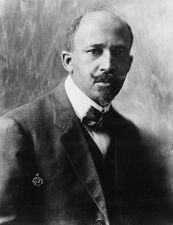
W. E. B. Du Bois.

National Association for the Advancement of Colored People (NAACP)
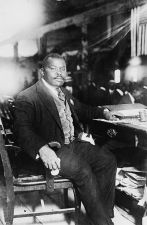
Marcus Garvey in 1924

The red, black and green flag created by the UNIA in 1920.


W.E.B. Du Bois is a monumental figure in the history of civil rights in the United States and in the intellectual development of the twentieth century. His contributions are wide-ranging and profound in many fields, including sociology, history, journalism and politics. His 1903 work "The Souls of Black Folk" is probably the most famous. This collection of essays explores the concept of "double-consciousness", a sensation Du Bois describes as the feeling of always being "observed by eyes other than one's own". This is particularly relevant for African-Americans who had to constantly juggle their black identity with their American aspirations. In 1909, Du Bois was one of the founders of the National Association for the Advancement of Colored People (NAACP). As editor of the organisation's magazine, 'The Crisis', for nearly 25 years, he used this platform to promote African-American literature, art and politics. Du Bois and Booker T. Washington were two of the most influential African-American voices of their time, but they had divergent philosophies on how African-Americans should approach issues of racism and discrimination. While Washington advocated a more conciliatory approach, suggesting that African Americans should accept segregation for the time being and focus on upliftment through education and work, Du Bois opposed this vision. He argued for classical education and for direct and immediate resistance to segregation and discrimination. Furthermore, Du Bois believed that the fate of African Americans would be determined by the efforts and leadership of a tenth of their population, whom he called the 'Talented Tenth'. He believed that this group, through higher education and civic engagement, could be at the forefront of the struggle for rights and equality. Later in life, Du Bois became increasingly involved in pan-African and international issues. He helped found several Pan-African Congresses and devoted himself to the cause of world peace and disarmament. The life and work of W.E.B. Du Bois shaped not only the Harlem Renaissance and the civil rights movement, but also African-American studies and sociological thought. He is undoubtedly one of the most influential intellectual figures in American history.
W.E.B. Du Bois was a central figure during the Harlem Renaissance, playing a decisive role in shaping the intellectual and political discourse of the period. With "The Crisis", he not only provided a space for African-American literature, art and social commentary, but also for the defence of civil rights, the promotion of racial equality and the condemnation of racism. Du Bois' influence was such that 'The Crisis' became one of the most widely read magazines in the African-American community, helping to bring to light the talents of black writers, poets, artists and journalists who might otherwise have been overlooked or marginalised. His role within the NAACP was equally significant. As one of its founders, he was instrumental in leading the organisation through its early decades, advocating for education, voting rights, and other fundamental rights for African Americans. His activism and commitment greatly contributed to laying the foundations for the civil rights movements of the following decades.
W.E.B. Du Bois's choice to move the NAACP headquarters to Harlem was both strategic and symbolic. During this period, Harlem was emerging as the beating heart of African-American creativity, intellectuality and activism. It offered an unrivalled platform for black voices - whether literary, musical or political. Du Bois recognised the value of Harlem's geographical location. By locating the NAACP there, he placed the organisation at the centre of this effervescence. This strategic decision not only strengthened the link between the cultural movement of the Harlem Renaissance and the struggle for civil rights, but also gave the NAACP greater visibility and proximity to influential thinkers, artists and activists. The merger of these two movements - cultural and political - had profound implications. It encouraged a symbiosis between art and activism, with each aspect nourishing and reinforcing the other. So while artists like Langston Hughes and Zora Neale Hurston were giving voice to the African-American experience, the NAACP was working to translate these cultural expressions into concrete change for African-Americans across the country.
The Great Migration is one of the largest demographic movements in the history of the United States. Between 1915 and 1970, around six million African-Americans moved from the Southern states to the North, West and Midwest of the country. Although there were many reasons for this migration, two major factors motivated it: the search for better-paid industrial jobs in the cities of the North, and escape from racial violence and the oppressive segregation of Jim Crow laws in the South. The mass arrival of African-Americans in Northern cities had profound social, economic and cultural implications. Economically, they bolstered the industrial workforce of cities such as Chicago, Detroit and Philadelphia, particularly during the First World War and the Second World War, when demand for factory workers was high. Culturally, the increased presence of African Americans in these cities led to an explosion of creativity and artistic expression, particularly in Harlem, New York, which became the focal point of the Harlem Renaissance. This period saw the flowering of a rich tapestry of African-American art, literature, music and theatre. Socially, the Great Migration also brought challenges. New arrivals often faced hostility from existing residents, including other immigrant communities. In addition, rapid population growth in some areas led to tensions over resources, housing and jobs, sometimes leading to racial tensions, such as the 1919 race riots in Chicago. However, despite these challenges, the Great Migration fundamentally transformed the urban, social and cultural landscape of the United States. It helped shape modern African-American identity, redefine the concept of the black community and lay the foundations for the civil rights movement of the 1950s and 1960s.
In Detroit, as in other Northern cities, African-Americans sought to build a new life away from the rigours and brutal segregation of the South. With the exponential growth of the black population, many African-American institutions and businesses sprang up, reflecting a dynamic and growing community. Churches, businesses, newspapers and social clubs were established to serve and support the African-American community. The automotive industry, in particular, offered employment opportunities for many migrants. Although many African-Americans were initially hired for low-paid, physically demanding jobs, their presence in the industry became indispensable. However, they often had to work under less favourable conditions and for lower wages than their white counterparts. Despite the economic opportunities, discrimination was not absent. In many cases, African-Americans were confined to specific neighbourhoods, and these areas were often overcrowded and had poor infrastructure. Racial barriers were also in place in many public institutions and workplaces. Racial tensions sometimes erupted, as in the Detroit race riots of 1943. Nevertheless, Detroit saw the emergence of a robust black middle class and an influential cultural and political elite. Figures such as Reverend C.L. Franklin, father of Aretha Franklin, and Coleman Young, Detroit's first black mayor, played key roles in defending the rights and interests of African-Americans in the city. The increased presence of African Americans in Detroit and their participation in the city's economic and political life not only transformed local culture, but also had repercussions on a national scale. Detroit became one of the main centres of black activism, with many organisations, including the NAACP, playing an active role in fighting discrimination and defending the rights of African-Americans.
The impact of the Great Migration on transforming the political, economic and cultural landscape of the United States cannot be underestimated. Northern cities saw an influx of African-American workers who, as well as seeking economic opportunities, also brought with them a rich culture, an unshakeable determination and a willingness to fight for equal rights. As the demographics of Northern cities changed, so did the political influence of African Americans. For many black Northerners, the fight against segregation and discrimination in the South was deeply personal. Many were either migrants themselves or the direct descendants of those who had fled the South, and so the issue of civil rights resonated deeply in their hearts and minds. This new population was not only a workforce, but also a force for change. The NAACP, founded in 1909, played a pivotal role in this fight for equality. Although it operated on a national scale, much of its strength came from its local branches in Northern cities, where it organised demonstrations, boycotts and provided legal aid to those fighting discrimination. These collective actions formed the basis of the protest movements that would later culminate, in the 1950s and 1960s, in a veritable civil rights revolution. The influx of African-Americans to the North also stimulated the economic development of the community. Many black entrepreneurs seized the opportunity to meet the needs of the growing population. Whether through beauty salons, restaurants, shops or publishing houses, the black community began to establish its own economy. This internal economic growth not only enabled many African-Americans to climb the social ladder, it also generated a pride and confidence that translated into greater political influence.
Although the Northern United States did not have the same explicitly segregationist Jim Crow laws as the South, discrimination was still endemic in many respects. Structural and institutional forms of discrimination were common, and African Americans in the North often found themselves facing a different, but equally oppressive, set of barriers. De facto segregation in Northern cities was largely the result of unofficial practices and policies that limited the opportunities and rights of African Americans. For example, 'redlining', a practice where banks refused to lend money or offered less favourable rates to people living in certain areas, usually those that were predominantly black, prevented many African Americans from accessing home ownership and economic mobility. Maps of these areas were often marked in red, hence the term "redlining". In addition, landlords and estate agents often refused to sell or rent properties to African-Americans outside specific areas, confining them to urban ghettos. These areas were often overcrowded, with poor quality housing, and were poorly served in terms of infrastructure and public services. In terms of education, de facto segregation meant that black children were often confined to underfunded, overcrowded schools that offered a poorer quality of education. These schools were generally located in predominantly black neighbourhoods, and as most school funding came from local taxes, schools in poorer neighbourhoods had fewer resources. Unequal access to employment was also a major problem. Although African-Americans could get jobs in the North, they were often confined to low-paid, menial positions. In addition, trade unions, which were a major force in many Northern industries, were often reluctant to take on black members, limiting their opportunities for employment and advancement.
US foreign policy has often been influenced by racial attitudes throughout history. After the Spanish-American War of 1898, the US acquired new territories, including the Philippines, Puerto Rico and Guam. In these territories, the US adopted a paternalistic approach, often treating local populations as 'children' in need of American 'guidance'. This is particularly evident in the Philippines, where an insurrection against American rule was brutally suppressed. During the first decades of the 20th century, the United States intervened on several occasions in Central America and the Caribbean. These interventions, although officially justified by the protection of American interests or the fight against communism, were often underpinned by paternalistic rhetoric. The United States believed, in essence, that it knew what was best for these nations. US immigration policy also reflected these racial attitudes. Laws such as the Chinese Exclusion Act of 1882, which banned Chinese immigration, are striking examples. Foreign relations were also affected by these attitudes, as evidenced by the agreements negotiated with Japan to limit Japanese immigration. At the same time, the Monroe Doctrine and Roosevelt's corollary solidified the idea that the Western Hemisphere was the "preserve" of the United States. Although they were conceived as measures to protect against European intervention, they were often used to justify American intervention in the affairs of other nations on the continent. Finally, the construction of the Panama Canal illustrates another facet of this attitude. During its construction, black workers in the West Indies in particular were paid less and treated worse than white workers. These examples show how racial perceptions influenced the way the United States interacted with foreign nations and peoples.
The Great Migration, which saw millions of African Americans leave the rural South for the industrial cities of the North and West between 1916 and 1970, was a turning point in American history. While it offered new economic opportunities to migrants, it also exacerbated racial tensions in the regions they reached. African-Americans fled the segregation, Jim Crow laws and racism of the South, hoping to find a better life in the North. However, when they arrived in these cities, they were often greeted with hostility. Competition for jobs, particularly during and after the First World War, when Europe was in conflict and demand for industrial goods was at its peak, exacerbated tensions between white and black workers. In addition, competition for affordable housing also led to friction, as African-Americans were often confined to overcrowded and unsanitary neighbourhoods. Tensions sometimes degenerated into violence. For example, in 1919, a series of race riots broke out in several American cities, the deadliest of which took place in Chicago. An incident at a racially segregated beach sparked a week of violence, during which 38 people (23 black and 15 white) were killed and more than 500 were injured. At the same time, African-Americans in the North began to organise and mobilise for their rights, supported by African-American newspapers and community leaders. They also brought with them the richness of Southern culture, contributing to the Harlem Renaissance and other artistic and cultural movements in the North.
Faced with pervasive discrimination and the many challenges they faced in American society, many African-Americans turned to black nationalist movements in the early twentieth century. Far from mere protest, these movements aimed primarily to strengthen the black community from within, emphasising autonomy, self-determination and pride in race. The Universal Negro Improvement Association (UNIA), founded by Marcus Garvey in 1914, is an emblematic example. Garvey advocated black pride, economic self-sufficiency and the idea of pan-Africanism. For him, African Americans could never achieve their full potential in a white-dominated society. He envisioned the creation of a powerful black nation in Africa. Under his leadership, the UNIA created black-owned businesses, including the Black Star Line, a shipping company. Although some of his ventures failed and Garvey himself was criticised and eventually deported, the impact of his philosophy persisted, inspiring other black nationalist movements throughout the century. The Nation of Islam is another example. Founded in the 1930s, it gained popularity in the 1950s and 1960s under the leadership of Elijah Muhammad. With its message of autonomy, self-sufficiency and an Islam specifically adapted to the African-American experience, the Nation offered an attractive alternative to the integration advocated by other civil rights figures. The Nation of Islam also launched businesses, schools and social programmes, while advocating a healthy lifestyle for its members. These movements were influential in many ways, offering not only solutions to socio-economic challenges, but also a sense of dignity, pride and identity to millions of African-Americans at a time when discrimination was the norm. They challenged the logic of integration and offered an alternative vision of success and self-actualisation for black Americans.
The era of European nationalism, which peaked in the nineteenth and early twentieth centuries, exerted considerable influence on movements around the world, including black nationalist movements in the United States. The rise of nation states in Europe, based on a common identity, culture and history, presented a model for mobilising and organising around shared values and territorial claims. The concepts of sovereignty and self-determination, widely discussed during the creation of the League of Nations after the First World War, reinforced these ideas. This was particularly relevant in the context of declining colonial empires, where oppressed peoples in Africa, Asia and elsewhere aspired to their own freedom and independence. In the United States, African-Americans, although integrated for several generations, still faced segregation, discrimination and violence. In this context, European nationalist movements offered a source of inspiration. The notion that peoples with a common identity and experience should have the right to govern themselves resonated with those seeking an escape from white domination in the United States. Marcus Garvey, for example, drew on these nationalist movements to promote his own vision of pan-Africanism, which envisaged the return of African descendants to their continent of origin to establish a great unified nation. For Garvey, the right of African Americans to self-determination lay in the creation of a strong and independent African nation. The ideas of nationalism, autonomy and self-determination played a crucial role in shaping black nationalist movements in the United States. The situation in Europe and the liberation struggles in the colonies provided models and inspiration for African-Americans in their quest for equality, respect and autonomy.
Marcus Garvey and the Universal Negro Improvement Association (UNIA) played a crucial role in defining a vision of black nationalism in the early twentieth century. While most civil rights leaders of the time advocated integration and equal rights within American society, Garvey proposed a radically different solution: the emancipation of African-Americans through economic separation and, eventually, repatriation to Africa. Under the banner "Africa for Africans", Garvey envisaged a great united African diaspora, returning to the continent to establish a powerful and prosperous nation. For him, the racism and discrimination that prevailed in the United States made integration impossible; the only solution was a return to African roots. Garvey's economic philosophy was centred on the idea of self-sufficiency. He believed that African Americans could never be free as long as they were economically dependent on the white community. The UNIA therefore encouraged the creation of black businesses and even founded the Black Star Line, a shipping company designed to facilitate trade between black communities around the world, and potentially, to facilitate repatriation to Africa. The Garveyite movement also emphasised black pride, encouraging African Americans to be proud of their African heritage, skin colour and history. Garvey was often criticised by other black leaders of the time for his separatist ideas, but he nevertheless managed to mobilise millions of African Americans around his vision and his organisation.
Marcus Garvey was a fervent advocate of 'racial pride' and urged African Americans to reclaim and celebrate their African heritage. In an era of pervasive racism and discrimination, his message sought to counterbalance the self-hatred and inferiority that many blacks felt as a result of societal oppression. By embracing the beauty, culture and history of Africa, Garvey believed that African Americans could free themselves mentally and spiritually from the shackles of white domination. Unlike other civil rights leaders of his time, Garvey was firmly opposed to the idea of racial integration. He saw integration as an insufficient, even harmful, solution to the problems facing African-Americans. For him, harmonious coexistence with those who had historically oppressed Blacks was an illusion. Moreover, he believed that integration would lead to the dissolution of the unique black identity and assimilation into a dominant white culture. His ideas led to the promotion of the creation of an independent nation for African Americans. Garvey envisaged a great migration back to Africa, where African Americans could establish their own nation, free from oppression and discrimination. For him, it was only in such a context that black people could truly be free and equal. While this vision was never fully realised, and while many contemporaries and critics found his separatist ideas controversial, Garvey's influence has left an indelible mark. His promotion of black pride and self-determination laid the foundations for future movements and inspired generations of African-American activists and thinkers.
The Universal Negro Improvement Association (UNIA) struck a chord with many African Americans, particularly in the tumultuous context of the early twentieth century. Garvey's exhortation to racial pride, self-determination and economic emancipation was exactly what many blacks needed to hear in the face of institutionalised discrimination and open racial animosity. The success of the UNIA reflected this need. With its thriving businesses, such as the Black Star Line, and its influential newspaper, the Negro World, the organisation offered a vision of self-reliance and prosperity for the black community. Yet, as is often the case in movements for rights and justice, there were differences of opinion about how best to achieve emancipation. Marcus Garvey emphasised separatism and the creation of a powerful autonomous black economy, while others, like W.E.B. Du Bois, believed strongly in working within the existing system to achieve equal rights for all, regardless of the colour of their skin. Du Bois, as one of the founders of the NAACP, advocated education, political action and integration to achieve racial equality. He believed that African Americans should educate and uplift themselves through the system, fighting for equal rights and working to abolish systemic discrimination. This divergence of opinions and strategies led to tension and conflict within the black rights movement. Garvey and Du Bois, in particular, had a notoriously tense relationship, with each criticising the other's approach. While both men shared the ultimate goal of emancipation and equality for African Americans, their visions of the road ahead were fundamentally different.
The movement led by Marcus Garvey and the Universal Negro Improvement Association (UNIA) represented a radically different vision for African American emancipation at the time. While Garvey advocated a separatist approach, with an emphasis on the return to Africa and the creation of a strong black nation, others, such as those in the NAACP and the National Urban League, firmly believed in integration and the achievement of equal rights within the existing system in the United States. The NAACP, with its roots in the struggle to end racial violence and promote integration, often saw Garvey's approach as counterproductive. The National Urban League, with its focus on economic integration and improving urban living conditions for blacks, also felt that Garvey's vision was not aligned with their goals. The US government, for its part, saw Garvey and the UNIA as a potential threat. His bold calls for black self-determination, combined with his massive rallies and growing influence, alarmed the authorities. The FBI, under the direction of J. Edgar Hoover, set about monitoring and disrupting the UNIA, which eventually led to Garvey's arrest on charges of mail fraud in connection with the Black Star Line. After serving part of his sentence, he was deported to Jamaica in 1927. Nevertheless, despite opposition and setbacks, the impact of Garvey and the UNIA has not been erased. The ideals of black nationalism and self-determination that he advocated resonated with future generations, particularly during the 1960s and 1970s with the rise of the Black Power movement. The Harlem Renaissance, with its rich tapestry of art, literature and music, also had a profound influence on African-American consciousness and culture, embedding a deep sense of pride and identity that endures to this day.
The Harlem Renaissance was a flourishing period for African-American arts, culture and intellectual expression, and at the heart of this renaissance was the concept of the 'New Negro'. This idea embodied the socio-cultural transformation of African Americans in the early twentieth century, where a new consciousness and sense of self was emerging. Contrary to the old image of the submissive and oppressed black man, the 'New Negro' was rising up, educated, articulate and determined to fight for his rights and reassert his place in American society. Alain Locke, one of the most influential figures of this period, played a leading role in the formulation and dissemination of this notion. His anthology "The New Negro: An Interpretation" was more than just a collection of works; it was a bold proclamation of the birth of a new African-American identity. Locke brought together writers, poets, artists and intellectuals who, through their work, gave voice to this transformation. These artists, such as Langston Hughes with his vivid poetry, Zora Neale Hurston with her captivating prose and Countee Cullen with her lyrical poetry, illustrated the diversity, richness and complexity of the black experience. But this idea was not limited to art and literature; it also extended to political activism. The "New Negro" was aware of his civil rights and ready to fight for them. The Harlem Renaissance was a period of artistic expression, but it was also deeply political, as it sought to challenge and dismantle prevailing racial stereotypes and claim a place for African Americans in the American cultural and political panorama. The 'New Negro' movement not only left an indelible artistic legacy, but also paved the way for the civil rights movements that were to follow, underlining the power of art and culture in the fight for equality and justice.
The Protestant and Anglo-Saxon reaction
Discrimination and marginalisation of non-WASP Americans and immigrants
The decade of the 1920s in the United States is often remembered as a period of economic, social and cultural ferment. This era, marked by widespread optimism, was characterised by rapid economic growth, technological innovation and rapid cultural transformation. The country saw the rise of the automobile, film and radio industries, which greatly influenced the American way of life. Politically, the Republican Party, with its three successive presidents - Harding, Coolidge and Hoover - dominated the national scene. These presidents emphasised a less interventionist form of government, letting the economy operate with minimal regulation. They firmly believed in the efficiency of the free market. In addition, to stimulate domestic economic growth and protect American industries, these presidents adopted protectionist policies. High tariffs, such as the Fordney-McCumber Tariff of 1922, were introduced to protect American producers from foreign competition. This favoured domestic companies, but also led to trade tensions with other nations. Although the US economy was thriving, the situation in Europe was quite different. After the First World War, the continent was plagued by economic, political and social instability. War debts, soaring inflation, punitive peace treaties and reparations exacerbated economic difficulties, particularly in Germany. These economic challenges, coupled with nationalist and revanchist sentiments, led to the rise of radical political movements, notably Fascism in Italy and Nazism in Germany. Despite this turmoil in Europe, American presidents in the 1920s largely adopted an isolationist policy, choosing to focus primarily on domestic affairs and avoiding deep involvement in European problems. This approach was finally put to the test with the economic collapse of 1929, known as the Great Depression, which not only shook the United States but also had global repercussions, further exacerbating the problems in Europe and leading to a new period of global turmoil.
Official portrait of the President of the United States by President Warren G. Harding 1921-1923.
Official portrait of President Coolidge by Charles S. Hopinknson.
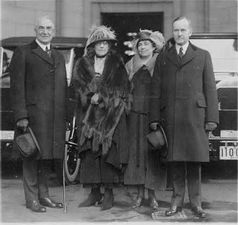
President Harding and Vice-President Coolidge accompanied by their wives.
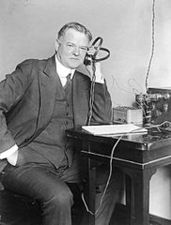
Herbert Hoover in 1925.


The 1920s in the United States, often referred to as the "Roaring Twenties", were synonymous with economic prosperity, innovation and social change. Under the leadership of Republican presidents Warren G. Harding, Calvin Coolidge and Herbert Hoover, the US economy grew rapidly, with a strong emphasis on the principles of "absolute liberalism" or laissez-faire. These principles were based on the belief that markets worked best when government intervention was minimal. One of the main manifestations of this economic liberalism was the drastic reduction of taxes, particularly for the wealthiest corporations and citizens. The advocates of these cuts claimed that they would stimulate investment, generate economic growth and ultimately benefit all segments of society. And for much of the decade, this prosperity seemed evident, at least on the surface. The stock market soared, businesses prospered, and technological innovations like radio and the automobile became accessible to millions of Americans. However, this prosperity was not evenly distributed. Tax policy and economic liberalism accentuated the concentration of wealth in the hands of a minority. While the middle class enjoyed a certain level of comfort, workers, farmers and, in particular, the African-American population continued to face major economic challenges. Wage inequality widened, and many workers and farmers struggled to make ends meet. African-Americans, meanwhile, were often relegated to low-paid jobs and faced institutional discrimination, in addition to the general economic challenges of the time. In the end, the 1920s were marked by a paradox: a period of dazzling prosperity for some, but also a period of persistent hardship for others. These economic inequalities, along with the underlying structural weaknesses of the economy, would be laid bare with the collapse of the stock market in 1929, giving rise to the Great Depression. This economic catastrophe challenged the foundations of absolute liberalism and led to a fundamental re-examination of the role of government in the economy during the 1930s.
During the 1920s, American agriculture underwent major upheavals that caused many small farmers to go bankrupt or abandon their farms. The First World War had created a high demand for agricultural products, prompting farmers to increase production and take on debt to buy land and equipment. However, once the war was over, European demand for agricultural products fell, leading to overproduction and a drastic fall in prices. Mechanisation exacerbated this problem. While machines such as combines and tractors made production more efficient, they also required heavy investment and put farmers deeper into debt. What's more, they reduced the need for labour, pushing many farm workers out of farming. As a result, many small farmers, unable to compete with the larger, better-equipped and often more diversified farms, went bankrupt or were forced to sell their land. This led to mass migration to the cities, where former farmers sought work in a booming industrial environment. Unfortunately, government policies at the time offered no real safety net or support for these struggling farmers. The credo of "absolute liberalism" advocated minimal government intervention in the economy. Tax cuts and business-friendly policies mainly benefited urban industries and the wealthiest, leaving many farmers out in the cold. This neglect of the agricultural sector had major social repercussions. Poverty has increased in rural areas, with rates surpassing those in urban areas. In addition, the agricultural crisis created a growing disparity between rural and urban areas, a phenomenon that would influence the economic and political dynamics of the United States for decades to come.
The 1920s witnessed a striking contrast between the economic prosperity of urban areas and the persistent difficulties of agricultural regions. The introduction of advanced agricultural technologies and mechanisation led to a considerable increase in production. But this increase in productivity has had a perverse effect: massive overproduction. With an abundant supply of agricultural products on the market, prices have fallen drastically. For large farms, these technological changes were often synonymous with profit, as they were able to spread their fixed costs over a larger output and diversify their activities. For small farmers, on the other hand, often specialised and less inclined or unable to invest in new technology, lower prices meant reduced or non-existent margins. Debts piled up, and without adequate support from government policies, many farmers found themselves unable to keep their farms afloat. The 'absolute liberalism' of the 1920s, with little government intervention in the economy and favouring the interests of big business and wealthy individuals, left small farmers to fend for themselves. Rather than providing concrete support or seeking solutions to the agricultural crisis, the administration focused on policies that exacerbated existing inequalities. Many farmers, unable to maintain their lifestyle in the countryside, have been forced to seek new opportunities in urban areas, exacerbating the decline of rural areas. Not only did this migration displace people, it also reinforced the cultural, economic and political gap between urban and rural areas, a gap that in many ways persists to this day. The plight of farmers during this decade is a poignant testament to how technological advances and misguided economic policies can have unexpected and often devastating consequences for parts of society.
During the 1920s in the United States, certain groups became the prime targets of these scapegoating mechanisms. African-Americans, recent immigrants, particularly from Eastern Europe and Italy, and religious groups such as Catholics and Jews were often unfairly blamed for the social and economic ills that afflicted the country. One of the most glaring examples of this period was the resurgence of the Ku Klux Klan, which had originally been founded during the post-Civil War Reconstruction period. In the 1920s, the Klan underwent a revival, presenting itself as the defender of Protestant white supremacy and 'traditional' America against the changing forces of modernity. This has led to a rise in racial violence and the persecution of minority groups. The passage of immigration quota laws during this decade, which sought to limit immigration from certain parts of the world deemed 'undesirable', is another example of how prejudice has shaped national policy. These laws reflect a deep anxiety about the changing nature of American identity at a time of rapid change. The process of scapegoating is not just about finding someone to blame, it is also part of a wider dynamic of searching for national identity and cohesion. In times of economic, social or political stress, the need for unity and stability can lead to the marginalisation and stigmatisation of those perceived as different or foreign. This serves to reinforce an idea of belonging and solidarity within the majority group, even if it is at the expense of others.
During the 1920s, the Ku Klux Klan underwent a major transformation from its original post-Civil War incarnation. Whereas the first Klan was primarily based in the South and focused on suppressing the civil rights of African Americans, the Klan of the 1920s was much more national in scope. It spread well beyond the South, establishing a strong presence in states such as Indiana and Illinois. Faced with a growing wave of immigration from Eastern Europe and Italy, this Klan developed a nativist sentiment, taking a firm stance against immigration. In addition to its traditional hatred of African-Americans, it has shown hostility towards Catholics and Jews, seeing these groups as a threat to America's Protestant and Anglo-Saxon identity. Politically, the Klan has acquired considerable influence. In some states and municipalities, it has become a key political player, supporting or opposing candidates on the basis of their alignment with Klan ideology. For example, its influence was strongly felt at the 1924 Democratic Party Convention. Another striking feature of this renewed Klan was its adoption of formal rituals and ceremonies. It regularly organised parades to galvanise its members and publicly demonstrate its power. These events were clear manifestations of the Klan's identity and mission. The rise of the Klan in the 1920s was a direct response to the cultural and social tensions of the time. Many Americans, faced with the changing realities of urbanisation, industrialisation and immigration, were looking for answers and the Klan offered them one, albeit a simplistic one. It promised its members a clear identity and mission, while blaming minority groups for society's ills. Towards the end of the decade, however, the Klan began to lose ground. Internal scandals, growing opposition and the mobilisation of its detractors contributed to its decline. Although it never completely disappeared, its influence and power were considerably reduced.
In 1925, the Ku Klux Klan reached its zenith with a claimed 5 million active members. This made the Klan one of the most dominant entities in the United States. But with this dominance came a frightening rise in violent acts tinged with racism. Lynchings, in particular, were on the increase, extending far beyond the borders of the traditional South to the West and parts of the North. And contrary to popular belief, these acts were not aimed solely at African-Americans. Other groups such as Italians, Jews, Mexicans and Catholics were also targeted. However, of all these groups, African-Americans were the most affected. They were the predominant targets of lynchings, bombings and other forms of brutality perpetrated by the Klan and similar groups. The terror these acts inflicted on these communities was amplified by the flagrant lack of intervention by the police and elected representatives. This passivity, even complicity, on the part of the authorities in these odious acts only added to the atmosphere of fear and intimidation. This dark period in American history left deep and lasting scars, not only among African-Americans, but also among other minority groups. The repercussions of this racial violence reshaped the social, political and economic fabric of the country, effects that continue to be felt decades later.
Although the Ku Klux Klan enjoyed immense popularity in the 1920s, it is alarming to note that their violent and racist acts were rarely countered by the government and the forces of law and order. This apathy, or even passive complicity, gave the Klan a sense of impunity, reinforcing their audacity and ability to terrorise entire communities. However, although the Klan's influence began to wane towards the end of the 1920s, the shadow of their presence continued to haunt America well beyond that decade. The hatred, violence and racism they injected into the fabric of American society left lasting scars. This toxic legacy helped shape the country's race relations, politics and culture for many years after the apparent fall of their direct influence. As the decade of the 1920s drew to a close, the Ku Klux Klan saw its power erode. Internal divisions, often accompanied by power struggles, undermined the unity of the group. This was exacerbated by the light shed on endemic corruption and other wrongdoing by its members, exposed by high-profile scandals. Such revelations have tarnished the Klan's reputation in the eyes of the public, making its efforts to recruit and maintain influence all the more difficult. At the same time, rising public awareness and outrage at the horrors perpetrated by the Klan played a crucial role in its decline. Prominent figures and civil rights organisations bravely denounced the Klan, highlighting its hatred and bigotry. Their work helped to mobilise public opinion against the group. Although the Klan went into sharp decline in the early 1930s, it would be unwise to assume that its impact had completely dissipated. The ideas it propagated and the violence it inflicted left deep scars on American society. These scars serve as a reminder of extremism's ability to take root and the importance of remaining vigilant against hatred.
The immigrants
During the 1920s, the socio-political landscape of the United States was strongly tinged with anti-immigrant sentiment. This mood was fuelled by a combination of economic concerns, cultural fears and ethnic prejudice. Since the beginning of the 20th century, there had been growing concern about new arrivals, particularly those from southern and eastern Europe, many of whom were Jewish or Catholic. These immigrants were often perceived as threats to the 'American' way of life, both culturally and economically. Nativists, or those who advocated protecting the interests of natives against those of immigrants, feared that these new arrivals would not assimilate and would not be loyal to their new country. The Literacy Act of 1917 was a blatant example of this mistrust. It was aimed primarily at "undesirable" immigrants, i.e. those who, according to the standards of the time, were considered less capable of assimilating into the dominant American culture. The total ban on immigration from Asia was another clear example of the racial and ethnic discrimination present in American policies at the time. Tensions sometimes culminated in acts of violence, such as demonstrations or riots directed against certain immigrant communities. These violent eruptions reflected the depth of anti-immigrant sentiment in some parts of society.
The 1920s period in the United States was marked by a series of socio-political changes, one of the most significant of which was the passage of the Immigration Act of 1924. This Act reflected the prevailing nativist sentiments of the time, when xenophobic attitudes and the desire to preserve a certain 'American' identity were commonplace. The Immigration Act of 1924, also known as the Johnson-Reed Act, established immigration quotas based on census data dating back to 1890. The use of this older data was intentionally designed to favour immigrants from Northern and Western Europe while significantly reducing the entry of immigrants from Southern and Eastern Europe. The latter were often perceived as less 'American' in terms of religion, culture and work ethic, with clear racial and ethnic prejudices. The law was a clear example of the then-popular eugenics ideology, which held that certain races or ethnicities were genetically superior to others. These ideas, although now largely discredited, were influential at the time and helped shape public policy. For example, immigrants from Northern and Western Europe were favoured because they were seen as more 'compatible' with mainstream American society, while others were restricted or even excluded. The result of this law was a drastic transformation of immigration patterns. Whereas previous waves of immigration had been dominated by people from Southern and Eastern Europe, the Act led to a considerable slowdown in these flows, changing the face of the immigrant diaspora in the United States. The impact of the Immigration Act of 1924 was felt for several decades, until the immigration reforms of the 1960s put an end to the discriminatory quota system. Its effects on the ethnic and cultural make-up of the United States, however, continue to resonate in contemporary society.
During the 1920s, when the United States was undergoing a period of profound cultural and economic transformation, anti-immigrant sentiment proliferated, fuelled by a variety of social and economic anxieties. The Immigration Act of 1924, with its discriminatory quotas, was one of the most notable manifestations of this. Although the Act was primarily aimed at European immigrants, mistrust of immigrants extended beyond Europe. Immigrants from the Americas, particularly Latin America, were not subject to these quotas, but that does not mean that they were welcomed with open arms. Many of them, particularly Mexican immigrants, were seen as temporary workers, coming to the US to meet a demand for low-cost labour in sectors such as agriculture, but were not necessarily seen as desirable candidates for long-term integration into American society. The press played a crucial role in the way immigrants were perceived. At a time when the media were one of the main sources of information, public opinion was influenced by often stereotypical and negative representations of immigrants, whether European, Asian or from the Americas. These depictions often portrayed immigrants as refusing to assimilate, bringing disease, engaging in criminal activity or taking jobs away from American citizens. Such portrayals created a climate of hostility and suspicion. These nativist attitudes were not new to the United States, but they took on particular significance in the post-First World War context of the 1920s, with its changing economy, rapid urbanisation and social upheaval. The Immigration Act of 1924 and the anti-immigrant sentiment it reflected were, in a sense, a response to America's anxiety about these rapid changes and the uncertainty they engendered.
The distinction made by the Immigration Act of 1924 between immigrants from the Eastern Hemisphere and those from the Western Hemisphere reflected the particular geopolitical and economic concerns of the United States at the time. The absence of quotas for countries in the Western Hemisphere, notably Mexico and Puerto Rico, can be explained in several ways. Firstly, the US economy, particularly in the South West, was heavily dependent on Mexican labour, especially in sectors such as agriculture. As a result, limiting immigration from Mexico could have had negative economic consequences for certain regions and industries. Secondly, it should be noted that Puerto Rico had been a territory of the United States since the Spanish-American War of 1898. As such, Puerto Ricans were technically US citizens and could move freely between Puerto Rico and the US mainland. However, the freedom of these immigrants to circumvent quotas did not protect them from the difficult realities of assimilation and discrimination. Mexican immigrants, for example, were often confined to low-paid jobs, lived in precarious conditions and regularly faced racial prejudice. Similarly, although Puerto Ricans were US citizens, they were often treated as foreigners in their own country, due to linguistic and cultural differences. Yet despite these challenges, Mexican and Puerto Rican immigrants played an essential role in shaping the American cultural mosaic, bringing with them traditions, cuisine, music and other cultural elements that enriched American society.
Fear of communism and the "red scare

The 'Reds' became synonymous with a perceived threat to the national security and social order of the United States in the post-First World War period, particularly during what became known as the 'Red Scare'. International events, such as the Bolshevik revolution in Russia, heightened anxiety about radical movements, but it was their manifestation on American soil that caused the most concern. In 1919, a series of bomb attacks rocked the country. Parcel bombs were sent to numerous political and business leaders, including the Attorney General of the United States, A. Mitchell Palmer. These attacks were attributed to anarchists and helped to fuel an atmosphere of fear and suspicion. In response to this perceived threat, Attorney General Palmer orchestrated a series of raids to arrest and deport suspected radicals, mainly immigrants. These "Palmer raids" were widely criticised for their disregard for civil rights, as thousands were arrested without warrants and often without evidence of wrongdoing. However, the urgency of the climate at the time allowed such violations to take place. In addition, the Sedition Act of 1918, which criminalised criticism of the government or the promotion of resistance to the law, was used to prosecute and convict many individuals on the basis of their political beliefs. The association of radical or dissident ideas with immigration has reinforced anti-immigrant sentiment. Immigrants from Eastern and Southern Europe, in particular, were often stigmatised as agitators or socialists, even though the vast majority came to the United States in search of economic opportunity and had no radical political affiliations. These prejudices, fuelled by fear, played a key role in the restrictive immigration policies of the 1920s.
After the First World War, the United States went through a period of social and economic upheaval. The transition from a wartime to a peacetime economy created tensions in the labour market, and strikes became a common way for workers to demand better working conditions and wages. These strikes were often seen not as legitimate workers' demands, but as signs of a possible revolutionary upheaval inspired by socialist and communist ideas. The steelworkers' strike in 1919 was one of the largest industrial strikes in American history, involving almost 365,000 workers. It was closely followed by a general strike in Seattle, where thousands of workers staged a peaceful strike that brought the city to a standstill for several days. Although the strike was largely non-violent, it caused widespread fear among city leaders and business owners, who saw it as a potential communist insurrection. The rhetoric of the media and many government officials linked these workers' movements to the influence of the "Reds". In the context of the Bolshevik revolution in Russia and the violent overthrow of governments in other regions, these fears seemed to many to be well-founded. Newspapers often portrayed the strikes as the work of Bolsheviks or foreign agitators seeking to import the revolution to the United States. In this context, repressive measures were taken. The Red Scare led to mass arrests, often without just cause, and the deportation of many immigrants accused of radicalism. Attorney General A. Mitchell Palmer led raids on alleged radical groups, and the Espionage Act of 1917 and the Sedition Act of 1918 were used to suppress dissent. Opposition to strikes and the link made between radicalism and immigration played a part in reinforcing anti-immigrant attitudes which led to restrictive immigration laws such as the Immigration Act of 1924. In short, fear of the 'Reds' was used to justify both the repression of domestic dissent and a more isolationist approach to foreign policy and immigration.
The period following the First World War and the Russian Revolution of 1917 in the United States was marked by intense anti-communist paranoia, often referred to as the 'Red Scare'. The confluence of social unrest at home, such as mass strikes, and geopolitical upheaval abroad, such as the rise of the Bolsheviks in Russia, generated a pervasive fear of communism and other forms of radicalism. Between 1919 and 1920, Attorney General A. Mitchell Palmer orchestrated a series of raids to arrest and deport foreigners suspected of radicalism. These operations, often carried out without proper warrants or tangible evidence, targeted socialists, communists, anarchists and other radical groups. Thousands were arrested and many deported. At the same time, sedition and espionage laws were implemented. These laws were used to charge individuals for speech or actions deemed seditious or anti-American. People who criticised the government or opposed conscription during the First World War were particularly likely to be targeted under these laws. Distrust of immigrants, reinforced by fears that they would bring radical ideas with them, led to calls for tighter immigration restrictions. These sentiments contributed to the passage of the Immigration Act of 1924, which introduced quotas based on nationality. In addition, workers' movements and strikes were often perceived as being influenced or led by radical forces. As a result, companies, with the support of the authorities, regularly cracked down on these movements. Culturally, fear of the "Reds" permeated popular culture at the time. The media, from films to plays to newspapers, frequently conveyed stereotypical representations of communists and radicals as threats to American identity. Although this first 'Red Scare' subsided in the early 1920s, mistrust of communism remained embedded in American politics and culture, resurfacing markedly in the 1950s with the second 'Red Scare' and the era of McCarthyism.
The Red Scare, which dominated the United States between 1919 and 1920, can be seen as a profound and sometimes irrational reaction to the world events of the time. With the end of the First World War and the emergence of the Bolshevik revolution in Russia, many Americans began to fear that communist radicalism would infiltrate their country. The rapid spread of communist and socialist ideologies around the world fuelled these concerns. This fear was not isolated to government circles or high society; it seeped into the collective consciousness, where the typical 'communist' or 'socialist' was often imagined as a treacherous foreigner, ready to undermine American values and way of life. As a result, foreigners, particularly those from Eastern and Southern Europe, as well as political dissidents, were the object of intense suspicion and persecution. Immigrants with even the slightest links to radical organisations were often regarded as "enemies from within". Under the leadership of Attorney General A. Mitchell Palmer, thousands of people were arrested in what became known as the Palmer Raids. These raids were aimed at dismantling radical groups and deporting those deemed dangerous to national security. Often carried out without respect for proper judicial procedures, these actions were criticised for their flagrant violations of civil rights. The Red Scare also led to considerable self-censorship by individuals and organisations who feared being associated with radicalism. Freedom of expression was seriously compromised, with people reluctant to express views that might be perceived as radical or un-American. Over time, although the Red Scare diminished, its effects endured. It laid the foundations for increased government surveillance and distrust of radical movements. It also left an indelible mark on the way the United States perceived domestic threats, a legacy that manifested itself again during the McCarthyism of the 1950s and in other periods of domestic political tension.
The post-war period in the United States, marked by the rise of communism in Russia and the spread of socialist ideology across Europe, gave rise to a national psychosis about the potential 'infiltration' of these ideologies on American soil. This anxiety was amplified by mass strikes, social unrest and the actions of radical groups, culminating in the Red Scare of 1919-1920. During this period, a combination of xenophobia, fear of social change and geopolitical concerns led to brutal repression of those perceived as threats to national security or the established order. Immigrants were particularly vulnerable to this repression because of persistent stereotypes associating them with radical and revolutionary activities. Many Americans considered immigrants from Southern and Eastern Europe, who came from regions shaken by political turbulence, to be the main vectors for the spread of these "dangerous" ideologies. Under the leadership of Attorney General A. Mitchell Palmer, unprecedented operations were carried out to track down, arrest and deport those suspected of links with radical movements. These "Palmer raids" were based not only on concrete evidence of subversive activities, but often on suspicions or past affiliations. Fundamental rights, such as the right to a fair trial or legal representation, were often ignored, reflecting the severity of the national paranoia. The irony of this repression is that most immigrants had come to the United States in search of a better life, lured by the promise of freedom and opportunity. Instead, many were met with open hostility, discrimination and suspicion. The mass hysteria of the Red Scare not only damaged America's reputation as a welcoming land, but also highlighted the underlying tensions and prejudices that can emerge in times of national uncertainty.
During the 1920s, socio-political tensions combined with racial prejudice to create a volatile atmosphere in the United States. As fear of the "Reds" spread across the country, it intertwined with existing xenophobia and racism to form a perfect storm of animosity towards immigrants and other marginalised groups. It is worth noting that lynching, in its most widespread and violent form, was targeted primarily at African-Americans in the South. It was an instrument of brutal terror, used to maintain the system of white supremacy and to punish African-Americans who, in the attackers' view, had overstepped their bounds. Lynchings were public and theatrical acts designed to send a powerful message to the black community: subordination and submission were demanded on pain of death. However, in the paranoid climate of the 1920s, the fear of communism was also exploited to justify attacks on immigrants, particularly those from Southern and Eastern Europe. People from these regions, already facing intense stigmatisation due to cultural, linguistic and religious differences, were now also seen as potential communist sympathisers. Although immigrants were not the main target of lynchings as were African-Americans, they were victims of violence and hate crimes, often justified by a combination of racial prejudice and anti-communist fears. In this context, immigrants found themselves caught between several fronts. On the one hand, they were viewed with suspicion because of their ethnic origin and, on the other, they were perceived as potential threats to national security. These attitudes exacerbated discrimination and violence against them, illustrating how, in times of crisis or fear, existing prejudices can be amplified and directed against the most vulnerable groups in society.
Throughout history, this fear of communism has often been used as a means of controlling and repressing a variety of movements and individuals who challenged the status quo. Trade union movements, intellectuals, artists, civil rights activists and many other groups and individuals who fought for social and economic change were targeted. During the period of the Red Scare, accusations of communism were often used as a political weapon to discredit and delegitimise opponents. In the United States, for example, Senator Joseph McCarthy and others led anti-communist "witch hunts", seeking to purge alleged communists from government, entertainment, education and other sectors of society. Many individuals have had their careers destroyed and their lives turned upside down simply on the accusation of communist associations. The term "communism" became a pejorative term that was often used to discredit any left-wing or progressive movement. What was often lost in this rhetoric was the distinction between different political movements, ideologies and aspirations of the people targeted. This fear of communism was also exploited to justify interventionist foreign policies. Under the pretext of stopping the spread of communism, numerous military interventions and coups d'état were supported by Western powers, often at the expense of the democratic aspirations of local populations.
The Sacco and Vanzetti case became a symbol of the intolerance and xenophobia prevalent in the United States in the 1920s, and of the injustice of the justice system when political and social considerations interfere with the search for truth. Both men were sentenced to death in 1921. Despite numerous pleas for clemency and protests not only in the United States but also in other parts of the world, they were executed in 1927. Their trial and execution were seen by many as the product of a toxic mixture of anarchophobia, xenophobia and anti-Italianism. One of the main problems with their trial was that, although the evidence of their involvement in the crime was questionable, their known political affiliation and Italian origin played a central role in the way the case was handled by the justice system and perceived by the public. Defence lawyers argued that the evidence against Sacco and Vanzetti was insufficient and circumstantial, and that the testimony of witnesses was unreliable. However, the political and social climate of the time greatly influenced the outcome of the trial. Over the years, the Sacco and Vanzetti case has remained in the public mind as a sombre illustration of the dangers of a judicial system influenced by prejudice and irrational fears. Subsequent enquiries into the case suggested that the two men were probably innocent of the crimes for which they had been convicted. In 1977, on the 50th anniversary of their execution, Massachusetts Governor Michael Dukakis declared that Sacco and Vanzetti had been unjustly tried and convicted, and proclaimed a day of commemoration in their honour. The declaration was not a pardon, but an official acknowledgement of the injustice that had been committed.
The affair attracted attention not only in the United States, but also internationally. Journalists, writers, artists and intellectuals from all over the world mobilised to defend Sacco and Vanzetti, highlighting the prejudices and irregularities surrounding the trial. Demonstrations and rallies were organised in several major cities around the world to demand the release of the two men. Sacco and Vanzetti's detractors often sought to discredit their supporters, accusing them of being manipulated by communist or anarchist forces. However, the lack of solid evidence against the two men and the many procedural irregularities that marked their trial have fuelled the belief that their conviction was primarily motivated by political considerations and not by factual evidence. Vanzetti's last words, spoken before their execution, reflect the two men's conviction that they were victims of a grave injustice: "I would like you to know that I am innocent... It's true that I was convicted of carrying arms... But I have never committed a crime in my life." The controversy surrounding the Sacco and Vanzetti case did not fade with their execution. It continues to be studied and debated by historians and civil rights activists as a tragic example of the dangers of prejudice and paranoia in the legal system. It also serves as a reminder of the potentially lethal consequences of xenophobia and suspicion towards people with non-conformist political beliefs.
The Sacco and Vanzetti case has become emblematic of the dangers of fear, prejudice and repression in a democratic system. These two men, despite the insufficient evidence against them, were the victims of a hostile political climate, marked by mistrust of foreigners and an irrational fear of radicalism. The speed with which they were found guilty and executed testifies to the influence of these sentiments in American society at the time. The international attention that the case attracted shows the extent to which many outside observers were concerned about the fate of human rights in the United States at the time. Demonstrations, petitions and condemnations from the four corners of the globe underlined concerns about American justice and its treatment of minorities and dissidents. Today, the Sacco and Vanzetti case is often cited in discussions about miscarriages of justice, human rights and the influence of prejudice on the legal system. It serves as a reminder of the importance of vigilance in the face of authoritarian excesses, especially in times of crisis or social tension. It also highlights the need for a judicial system to remain impartial and to resist political or popular pressure, especially when it comes to matters of life and death. The fundamental lesson of the Sacco and Vanzetti case, which still resonates today, is that a society that sacrifices its fundamental principles out of fear or prejudice compromises the very values that define it.
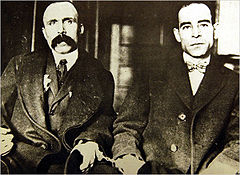
Nicola Sacco (right) and Bartolomeo Vanzetti (left)
Nicola Sacco
Bartolomeo Venzetti


The Sacco and Vanzetti affair clearly struck a chord not only in the United States, but internationally too. The arrest, trial and execution of the two men took place against the backdrop of the rise of fascism in Europe, the revival of the workers' movement and the emergence of anti-colonial movements around the world. Their cases took on symbolic importance, embodying the global struggle for social justice, workers' rights and human rights. In the United States, civil rights activists and progressive groups saw the case as a warning against the dangers of blind patriotism, political repression and rampant xenophobia. Protests and demonstrations of support spread to various strata of society, from intellectuals and artists to workers and trade unions. Their voices were raised to denounce what they saw as a grave injustice and a flagrant violation of the defendants' constitutional rights. Internationally, the case took on an even greater dimension. The fact that the Vatican intervened on behalf of Sacco and Vanzetti shows the extent to which their cause had struck a chord not only among radicals and socialists, but also within more conservative institutions. Their case was used both as an example of the flaws in the American system and as a symbol of resistance to oppression. Unfortunately, despite enormous public pressure, the judicial and political institutions of Massachusetts refused to reverse the convictions. The execution of Sacco and Vanzetti in 1927 came as a shock to many, and their deaths reinforced their status as martyrs in the eyes of many supporters around the world.
The Sacco and Vanzetti case is undoubtedly one of the most controversial court cases in American history. From the outset, it was marked by accusations of prejudice and inappropriate conduct on the part of the authorities. The conviction that the two men were the victims of a grave injustice was reinforced by the socio-political context of the time, dominated by the Red Scare and growing animosity towards immigrants, particularly those of Italian origin.
Supporters of Sacco and Vanzetti insisted that the case against them was based mainly on circumstantial evidence and that key elements of the prosecution were either inaccurate or outright fabrications. In addition, they pointed out that both men were known for their radical political views, which could have made them particularly vulnerable to unfair accusation and conviction. The manner in which the trial was conducted, with sometimes contradictory testimony and a blatantly biased judge, reinforced the perception that Sacco and Vanzetti had not received a fair trial. Judge Webster Thayer, who presided over the case, had a well-known aversion to political radicals and reportedly made derogatory comments about the defendants outside the courtroom. The international repercussions of the case were immense. Leading literary, artistic and political figures from around the world, such as Albert Einstein, George Bernard Shaw and H.G. Wells, expressed their outrage at the perceived injustice. Demonstrations took place in cities around the world, from Buenos Aires to Tokyo. The fact that the Sacco and Vanzetti case continues to be debated almost a century later is testament to its enduring relevance. It serves as a powerful reminder of the dangers of xenophobia, political paranoia and the abandonment of basic civil rights in response to societal fears. For many, Sacco and Vanzetti epitomise the injustice that can occur when fear and prejudice override reason and justice.
//Before being executed, Venzetti told Judge Webster Thaye: "Not only have I never committed this crime, but I have never committed any violence in my life, but I am convinced that I am actually being condemned for things of which I am guilty: radicalism and Italianism; and if I could be reborn after my execution I would be radical and Italian again and I would do what I have done with my life and you would execute me a second time for what I have done. Extract from his last words, spoken on 9 April 1927". Vanzetti's statement highlights the prevailing idea that he and Sacco were being tried primarily for their ethnic identity and political beliefs rather than for the crimes of which they were accused. His poignant words underline Vanzetti's deep conviction that he had been unfairly targeted because of his nationality and political beliefs, rather than on the basis of concrete evidence of his guilt. An individual's identity, be it ethnic origin, religion or political beliefs, should never be a reason for persecution or conviction. The Sacco and Vanzetti case is a tragic reminder of this fundamental principle of human rights. Vanzetti's words capture the perceived injustice of their trial and execution, and continue to resonate as a poignant testament to how prejudice can corrupt the justice system.
The Prohibition

Prohibition was enshrined in law in the 18th Amendment to the US Constitution in 1919 and came into force in January 1920. It was reinforced by the Volstead Act, which defined the types of alcoholic beverages prohibited and the penalties for offences. However, far from eliminating alcohol consumption, Prohibition actually led to an increase in organised crime. Illegal alcohol production and distribution networks, known as speakeasies and bootleggers, proliferated. Emblematic figures of organised crime, such as Al Capone in Chicago, amassed fortunes by controlling the production and sale of alcohol. What's more, the alcohol produced illegally during Prohibition was often dangerous. The lack of regulation meant that contraband alcohol could be contaminated or poorly manufactured, leading to poisoning and death. Over time, public opinion began to turn against Prohibition. Many felt that the experiment had failed to create a sober society and had instead encouraged corruption and crime. The Great Depression also played a role, as the government needed tax revenue and the revival of the legal alcohol industry could help create jobs. As a result, in 1933, the 21st Amendment was passed, repealing the 18th Amendment and ending Prohibition. This allowed the alcohol industry to become legal again, but under strict regulations. Prohibition is often cited as an example of well-intentioned but poorly executed government intervention, with unintended and often negative consequences. It serves as a lesson in the limitations of legislation to change human behaviour and the potential dangers of introducing draconian measures without a thorough assessment of the secondary consequences.
Enforcing prohibition has proved to be an immense challenge. Federal and local authorities often found themselves overwhelmed, unable to manage the scale of the illegal alcohol trade. Clandestine distilleries and secret bars, known as speakeasies, proliferated across the country, and corruption within the police and other public institutions became rife, allowing bootleggers to operate with impunity. Notorious criminal figures such as Al Capone became notorious for their ability to evade justice and accumulate massive wealth through this illegal trade. The smuggling, violence and corruption associated with Prohibition turned some cities, with Chicago as a prominent example, into battlegrounds where rival gangs vied for control of the lucrative alcohol market. As a result, many in society began to question the relevance and effectiveness of prohibition. The costs associated with attempting to enforce the law, the rise of organised crime and the loss of tax revenue from the alcohol industry led to a re-examination of the policy. The adoption of the 21st Amendment in 1933, which repealed the 18th Amendment, marked the official end of Prohibition. This period left a lasting legacy, revealing the difficulties associated with attempting to ban popular substances and highlighting the unforeseen side-effects of a poorly conceived and implemented public policy. It also highlighted the dangers of organised crime and institutional corruption, problems that would continue to haunt the United States long after prohibition ended.
Prohibition in the United States proved to be a costly experiment for the country's economy. With the prohibition of the manufacture and sale of alcohol, not only were breweries, distilleries and bars closed, but all related sectors, such as agriculture, transport and advertising, were also hit hard. Thousands of jobs were lost in these sectors, exacerbating the economic challenges of the time. In addition, the state was deprived of a substantial source of tax revenue. Before Prohibition, alcohol was heavily taxed and represented a reliable source of revenue for the government. With prohibition, these funds evaporated, leaving a hole in the national and state budgets. Prohibition also gave rise to a thriving black market. Demand for alcohol remained high despite prohibition, and organised crime quickly took over to supply it. Infamous figures such as Al Capone emerged, and their criminal empires were built on the smuggling, illegal manufacture and sale of alcohol. It also led to widespread corruption of law enforcement and public officials. Many were prepared to turn a blind eye to illegal activities in exchange for bribes, undermining public confidence in institutions. As a result, while prohibition was initially motivated by a desire to improve public morality and health, its unforeseen side-effects created a distinct set of social and economic problems. The resulting organised crime, corruption and economic hardship eventually led to its repeal in 1933 with the passage of the 21st Amendment, marking the end of one of the most tumultuous periods in American history.
Prohibition is often cited as a period of social experimentation gone awry. In theory, it was intended to improve the morality and health of the nation. In practice, however, it created an environment where crime, corruption and illegality flourished. It was not only a failure of law enforcement, but also had a negative impact on the American economy and society as a whole. The repeal of Prohibition in 1933 with the ratification of the 21st Amendment was an admission of failure. It reflected the recognition that Prohibition had not only failed to eradicate alcoholism and its associated problems, but had actually exacerbated many other social problems. Organised crime had become more powerful than ever, corruption was endemic, and the economy had suffered due to the loss of jobs and tax revenues. The end of Prohibition marked a significant change in American politics and social policy. It symbolised the end of an era of moral experimentation and ushered in a more pragmatic and realistic period in national politics. The lessons learned from Prohibition continue to resonate in modern debates on drug policy and other social issues. This historical episode also offered valuable lessons about the limits of government intervention in people's personal lives and the unintended consequences that can arise when attempts are made to impose moral standards through the law. The years of Prohibition have left an indelible mark on American cultural memory, reminding us of the complexities and challenges inherent in balancing individual liberty, public morality and social welfare.
The road to prohibition was long and complex. The movement to ban alcohol did not emerge overnight. It was the result of years of concerted efforts by various groups, including temperance organisations and religious groups, who all joined forces to make alcohol illegal at national level. They were motivated by a combination of moral, health and social concerns. Many sincerely believed that alcohol was at the root of many of society's problems, from domestic violence to poverty. When Prohibition was introduced, it was hailed by its supporters as a major victory. They believed it would lead to a healthier, more moral and more productive society. However, it soon became clear that the reality was far from these ideal aspirations. Instead of eliminating the problems associated with alcohol consumption, Prohibition created a distinct set of difficulties. Demand for alcohol remained high, and a thriving black market, dominated by criminal organisations, sprang up to meet that demand. Prohibition highlighted a number of fundamental problems. It illustrated the difficulties of enforcing a law that was not widely supported by the public. Many ordinary citizens continued to drink alcohol, while law enforcement agencies and the courts were often reluctant to enforce prohibition laws, either because of their own disagreement with the law or because of corruption. Prohibition also highlighted the limits of efforts to impose morality through the law. It demonstrated that, although legislation can modify and regulate behaviour to a certain extent, it cannot easily change deeply rooted attitudes and beliefs. This was strikingly illustrated by the way in which Prohibition was largely circumvented and ignored, not only by those directly involved in the illegal alcohol trade, but also by ordinary citizens. In 1933, with the ratification of the 21st Amendment, Prohibition was officially repealed. This marked a tacit admission of the failure of the prohibition experiment. It had failed to create a sober nation and had, in fact, exacerbated many of the problems it was intended to solve. The Prohibition years left a profound mark on American society, influencing not only attitudes towards alcohol and its regulation, but also the wider discourse on individual liberty, civil rights and the role of the state in regulating private morality.
Prohibition in the United States ushered in an era of defiance and defiance of the law, giving rise to a climate where clandestinity and corruption flourished. In this chaotic environment, bootlegging and speakeasies took root, turning entire cities into breeding grounds for illicit activities. Chicago, for example, became the scene of the rapid rise of criminal figures, led by Al Capone. His domination of the illegal liquor trade, facilitated by endemic corruption and violent intimidation, became emblematic of the inherent failures of Prohibition. This dark chapter in American history is marked by a cruel irony. A law designed to promote morality and virtue directly fuelled the rise of organised crime, anchoring characters like Capone in popular culture. Law enforcement officers, whose job it was to maintain law and order, were often complicit, either through corruption or impotence, in the clandestine alcohol industry that flourished before their very eyes. Through this prism, Prohibition reveals the dangers inherent in criminalising widely desired substances. It illustrates how well-intentioned policies can backfire spectacularly, creating unintended consequences and exacerbating the very problems they seek to solve. By criminalising alcohol, prohibition not only failed to eradicate alcohol consumption, it also made it dangerous, uncontrolled and lucrative for the criminal world. The repeal of Prohibition in 1933 by the 21st Amendment marked the end of a tumultuous era, but the lessons learned still resonate today. The decades of Prohibition left an indelible scar on the American cultural and political landscape, a vivid reminder of the limits of moral legislation and the dangers inherent in suppressing individual freedoms. Ultimately, prohibition served as a catalyst, prompting society to reconsider the complex intersection between morality, freedom and law, a debate that continues to shape contemporary public discourse.
Christian fundamentalism

During the 1920s, Christian fundamentalism in the United States stood as a powerful force of reaction, a pillar against the rapid advance of modern, progressive ideas. It was a time when traditional values were under fire from scientific and cultural progress. The unshakeable belief in a literal interpretation of the Bible collided with an era of scientific and intellectual enlightenment. In this cultural maelstrom, the Scopes Monkey Trial stands as a monument, illustrating the struggle between the proponents of biblical creationism and the supporters of Darwinian evolution. John Scopes, a teacher who dared to plunge into the stormy waters of evolution in a public classroom, was the target of public and legal vindictiveness. This was not just an attack on one man, but symbolised an assault on the advent of a new era, one in which science, logic and reason threatened to dismantle centuries of established religious dogma. The courtroom where Scopes was tried was more than a place of trial; it was the arena where two Americas clashed. On the one hand, the fundamentalists, firm in their faith and determined to preserve a way of life shaped by strict adherence to the Scriptures. On the other, those who looked to the horizon of a future enlightened by science, a world where truths were not dictated by dogma but discovered through investigation, experimentation and reflection. Although Scopes was found guilty, and the strict letter of Tennessee law upheld, the trial was a catalyst for a cultural tidal shift. The fundamentalists, while winning the legal battle, began to lose the cultural war. The divide revealed during the trial resonates to this day, foreshadowing contemporary battles between science and religion, faith and reason. In this way, the 1920s, although a long time ago, offer a mirror in which contemporary society can be seen reflected. The issues raised and the battles fought during that turbulent decade live on, transforming and reinventing themselves in the context of each new generation. The Scopes story, and by extension the challenge of Christian fundamentalism in that era, remains a vibrant, relevant and inspiring chapter in American history.
Jehovah's Witnesses rose from the ashes of the Bible Student movement in the late nineteenth century to become a distinctive and sometimes controversial voice on the American religious scene. Their preaching, vibrant with ardent fervour and a passion for evangelism, resonated in the remote corners of American towns and villages. Their method of evangelism, a door-to-door witness, though unconventional, resonated in the hearts of those seeking a different and direct spirituality. However, this direct and unequivocal approach to proselytism was not without consequences. They often encountered resistance, even hostility, from government institutions and established churches. Their literal interpretation of the Bible, their reluctance to participate in civic affairs, including military service, and their disdain for pagan celebrations, including birthdays and Christmas, made them strangers in their own country. Nevertheless, there was something in the simplicity of their faith, their endurance in the face of persecution, that attracted the attention of those living on the margins. In the rural corners of the United States, where religious traditions were deeply rooted but often unchallenged, the message of Jehovah's Witnesses found fertile ground. They offered an alternative, a path of faith that promised not only religious freedom but also a form of social justice - a respite from the inequalities and injustices of everyday life. The growth of Jehovah's Witnesses during the 1920s and 1930s can be attributed to a convergence of socio-economic and religious factors. It was a time of great change, economic crisis and questioning of social norms. People were looking for answers, and for many, Jehovah's Witnesses offered a clear and unshakeable answer in an uncertain world. The strength of their faith, the clarity of their message and their unwavering commitment to preach, despite opposition, shaped the identity of Jehovah's Witnesses. Every persecution was seen not as an obstacle but as a validation of their faith, a sign that their message was not only urgent but divinely ordained. In the complex and often contradictory tapestry of American religious life in the early twentieth century, Jehovah's Witnesses carved out a distinctive niche for themselves, a legacy that endures to this day.
The 1920s, a decade of transformation for American society
The rise of the second industrial revolution marked an era of prosperity and radical transformation in American society and the economy. The rapid deployment of emerging technologies, including electricity, communications and transportation, triggered an unprecedented industrial boom. The expansion of manufacturing industries opened up employment opportunities, fuelling the economic rise of the middle and upper classes. The American dream seemed within reach for a wider section of the population. This prosperity, however, was far from universal. As cities grew into buzzing metropolises and wealth concentrated in the hands of industrial tycoons, a large section of the population remained outside the golden circle of prosperity. Small farmers, unskilled workers and ethnic minorities faced a reality of growing socio-economic inequality. Economic optimism fuelled unshakeable confidence in free market forces. The government, imbued with the ideology of economic liberalism, was committed to policies of non-intervention. Taxes were low, regulation minimal and the economy was left to the mercy of market forces. The result was an era of unbridled capitalism, where corporations flourished and inequality deepened. The wealth and opulence of the upper and middle classes was ostentatiously displayed. Consumption became not only a way of life, but also a status symbol. The accessibility of consumer goods, amplified by mass production, created a consumer culture in which material possession was equated with social success. However, this era of opulence and prosperity was not destined to last forever. The very foundations on which this prosperity was built - unbridled economic liberalism, excessive reliance on market forces and rampant socio-economic inequality - were unstable. The economic house of cards, built on speculation and excessive debt, was vulnerable, paving the way for the stock market crash of 1929 and the Great Depression that was to shake the foundations of American society and the economy.
It was against this contrasting backdrop of economic prosperity and protectionist policies that the daily lives of Americans in the 1920s unfolded. Protectionist policies cut both ways. On the one hand, it stimulated domestic industry, boosted employment and ensured rapid economic growth. On the other hand, it led to a concentration of economic power in the hands of a few oligopolies, exacerbating socio-economic inequalities. The economic boom propelled living standards to unprecedented heights for the majority of Americans. Mass production and consumption were the driving forces behind this growth. Protectionist policies favoured domestic industries, which in turn generated jobs and an abundance of goods. The increased availability of affordable products widens access to goods previously considered luxuries. This leads to a society where consumption is a norm and a sign of success. But this idyllic picture of prosperity and abundance masks a more complex reality. The protection of national industries and the concentration of economic power are eroding the strength of small businesses. Oligopolies dominate, eclipsing the artisan and the small entrepreneur. The culture of local, personalised business is fading, giving way to an impersonal, homogenised market economy. Protectionism, while beneficial to overall national growth, has a social cost. Communities that depended on small businesses for their vitality and uniqueness are seeing their social fabric transformed. The closeness and personal touch that characterised trade and business are giving way to the anonymity of big business. The decline of craft and small businesses is having an impact on the identity and cohesion of communities. The direct relationship between shopkeeper and customer, once based on trust and familiarity, is being lost in the mechanisation and standardisation of production and sales. Town centres and local markets, once lively and diverse, are being transformed under the pressure of department stores and national chains.
Income inequality was entrenched and exacerbated during the economic boom of the 1920s. As the nation witnessed a meteoric industrial and economic rise, the fruits of this growth were not evenly shared among the population. A considerable concentration of wealth in the hands of the wealthy elite was palpable, driving a clear wedge between the economic classes. The economic elite, taking advantage of industrial and commercial opportunities, reaped astronomical profits. Stock market growth, industrial expansion and general economic prosperity consolidated the wealth and economic power of the better-off. At the same time, the middle and lower classes, although benefiting from increased employment and the availability of consumer goods, did not experience a proportional increase in their incomes. For a time, the rapid rise of industry and consumption masked the growing imbalance in wealth. The economic gains of the upper classes were highlighted, offering an illusion of universal prosperity. However, the contrast between the opulence of the rich and the modest living conditions of the majority of the population became increasingly apparent. The economic divide helped to create a breeding ground for instability. When the stock market collapsed in 1929, ushering in the Great Depression, income inequality came to the fore. The middle and lower classes, whose economic resources were already limited, were hit hard by the economic shock. The vulnerability of low-income households, combined with the collapse of financial markets and the economic contraction, revealed the flaws inherent in a prosperity that was not inclusive. The Great Depression was not only the product of unbridled speculation and insufficient regulation; it also reflected a society where wealth and opportunity were not equitably distributed. These structural inequalities, which came to the fore during the economic crisis, gave rise to a profound reflection on the nature of capitalism and the American economic system. The need for a balance between economic freedom, regulation and social justice became a central theme in the political and economic debates of the following decades. Thus, the prosperity of the 1920s and the abyss of the Great Depression together shaped an era of reform and redefinition of the American social and economic contract.
The economic climate of the 1920s in the United States was characterised by exuberant optimism, fuelled largely by laissez-faire policies and low levels of government regulation. This provided fertile ground for unbridled speculation and risky investments. The stock market became the symbol of the nation's apparent prosperity, with shares seeming to know no bounds in their dizzying ascent. The government, under the influence of a liberal economic ideology, had largely withdrawn its hand from the market. Protectionism, aimed at protecting domestic industries from foreign competition, also contributed to an atmosphere of false economic security. High tariff barriers and restrictions on imports created an apparently robust, but also isolated and unsustainable, domestic market. Beneath the surface of this prosperity, however, significant cracks began to appear. Income inequality was pronounced; the working class, while productive, did not share equally in the fruits of economic growth. Their purchasing power stagnated, and their capacity to consume did not keep pace with production. The stock market, largely unregulated, became a playground for speculation. The lack of adequate supervision and regulation allowed risky and often reckless investment practices to proliferate. Easy money and quick gains were the order of the day, fuelling a financial bubble that was ready to burst. When the stock market crash of 1929 struck, it not only revealed the instability of the stock market, but also highlighted the structural weaknesses of the American economy. Speculation, easy credit and excessive debt combined with growing income inequality and a lack of regulation to create a perfect storm of economic instability. The Great Depression that followed was a brutal manifestation of the limits of laissez-faire and protectionism in the absence of adequate regulation and supervision. It underlined the need for a delicate balance between market freedom, government regulation and social justice, a balance that would be at the heart of economic and political debates for decades to come.
The initial government response to the Great Depression was limited and often considered inadequate to deal with the scale and depth of the economic crisis. Early interventions were rooted in a laissez-faire philosophy, with a strong belief that the market would correct itself and that government intervention should be minimised. The administration of President Herbert Hoover, which was in office during the stock market crash of 1929, was criticised for its apparently timid and ineffective response to the crisis. Although Hoover did not completely ignore the Depression, his efforts to combat it were often indirect and insufficient. The President believed in individual responsibility and was wary of direct government intervention in the economy. However, the rapidly worsening economic crisis, characterised by soaring unemployment rates, pervasive misery and growing despair, increased the pressure for more decisive action. The election of Franklin D. Roosevelt in 1932 marked a major turning point in the American government's approach to economic management and crisis intervention. With Roosevelt's New Deal, the federal government took an active and direct role in revitalising the economy. A range of legislation and programmes were put in place to provide immediate relief to those who were suffering, to stimulate economic recovery and to implement reforms to prevent a recurrence of such a crisis. Programmes such as Social Security, the Securities and Exchange Commission, and others came into being during this period, marking a significant increase in the scope and role of the federal government in the economy and society. Nevertheless, despite these unprecedented interventions, the full recovery of the American economy was gradual and was stimulated not only by the policies of the New Deal but also by the increase in production and employment resulting from the Second World War. The war acted as a catalyst to pull the economy out of depression, providing jobs and stimulating production on a massive scale.
Annexes
- NAACP | National Association for the Advancement of Colored People.
- Édition du 23 août 1927 du journal Le Devoir, Montréal - "La fin de Sacco et Venzetti".
- Articles de H.L. Mencken relatifs au procès Scopes.
- Tennessee vs. John Scopes: The "Monkey Trial", site sur le procès du singe.
- Monkey Trial sur PBS.
- Foreign Affairs,. (2015). The Great Depression. Retrieved 29 October 2015, from https://www.foreignaffairs.com/articles/united-states/1932-07-01/great-depression
- Buck, Christopher (2013). Harlem Renaissance in: The American Mosaic: The African American Experience. ABC-CLIO. Santa Barbara, California.
- Huggins, Nathan. Harlem Renaissance. New York: Oxford University Press, 1973. ISBN 0-19-501665-3
- Davarian L. Baldwin and Minkah Makalani (eds.), Escape from New York: The New Negro Renaissance beyond Harlem. Minneapolis, MN: University of Minnesota Press, 2013.
- Jeffrey B. Perry, Hubert Harrison: The Voice of Harlem Radicalism, 1883-1918. New York: Columbia University Press, 2008.
- Shannon King, Whose Harlem Is This? Community Politics and Grassroots Activism During the New Negro Era. New York: New York University Press, 2015.
- The Birth of a Nation de D. W. Griffith, 1915. Movie available here: https://www.youtube.com/watch?v=MQe5ShxM2DI
- The Text of the Act (PDF)
- Bromberg, Howard (2015). "Immigration Act of 1917". Immigration to the United States. Archived from the original on 22 November 2015.
- Powell, John (2009). Encyclopedia of North American Immigration. New York, New York: Infobase Publishing. ISBN 978-1-4381-1012-7.
- Sohi, Seema (2013). "Immigration Act of 1917 and the 'Barred Zone'". In Zhao, Xiaojian; Park, Edward J.W. (eds.). Asian Americans: An Encyclopedia of Social, Cultural, Economic, and Political History [3 volumes]: An Encyclopedia of Social, Cultural, Economic, and Political History. ABC-CLIO. pp. 534–535. ISBN 978-1-59884-240-1.
- Van Nuys, Frank (2002). Americanizing the West: Race, Immigrants, and Citizenship, 1890-1930. Lawrence, Kansas: University Press of Kansas. ISBN 0-7006-1206-8.
- Koven, Steven G.; Götzke, Frank (2010). American Immigration Policy: Confronting the Nation's Challenges. New York, New York: Springer Science & Business Media. ISBN 978-0-387-95940-5.
- "Sacco and Vanzetti Put to Death Early This Morning". New York Times. August 23, 1927.
- Waxman, Olivia B. “Sacco and Vanzetti Case 90 Years Later: What to Know.” Time, Time, 22 Aug. 2017, time.com/4895701/sacco-vanzetti-90th-anniversary/
- Michael A. Musmano (January 1961). The Sacco-Vanzetti Case: A Miscarriage of Justice. 47 No. 1. American Bar Association. p. 29,30.
- Avrich, Paul (1996). Sacco and Vanzetti: The Anarchist Background. Princeton University Press. pp. 13, 31. ISBN 9780691026046.
- Kyvig, David E. Law, Alcohol, and Order: Perspectives on National Prohibition Greenwood Press, 1985.
- Behr, Edward. (1996). Prohibition: Thirteen Years That Changed America. New York: Arcade Publishing. ISBN 1-55970-356-3.
- Burns, Eric. (2003). The Spirits of America: A Social History of Alcohol. Philadelphia: Temple University Press. ISBN 1-59213-214-6.
- Kobler, John. (1973). Ardent Spirits: The Rise and Fall of Prohibition. New York: G. P. Putnam's Sons. ISBN 0-399-11209-X.
- McGirr, Lisa. (2015). The War on Alcohol: Prohibition and the Rise of the American State. New York: W. W. Norton. ISBN 0-393-06695-9.
- Okrent, Daniel. (2010). Last Call: The Rise and Fall of Prohibition. New York: Scribner. ISBN 0-7432-7702-3. OCLC 419812305
- Kobler, John. Capone: The Life and Times of Al Capone. New York: Da Capo Press, 2003. ISBN 0-306-81285-1
- Deirdre Bair. Al Capone: His Life, Legacy, and Legend. Knopf Doubleday Publishing Group, Oct 25, 2016
- Supreme Court of Tennessee John Thomas Scopes v. The State
- "A Monkey on Tennessee's Back: The Scopes Trial in Dayton". Tennessee State Library and Archives.
- An introduction to the John Scopes (Monkey) Trial by Douglas Linder. UMKC Law.
References
- ↑ Aline Helg - UNIGE
- ↑ Aline Helg - Academia.edu
- ↑ Aline Helg - Wikipedia
- ↑ Aline Helg - Afrocubaweb.com
- ↑ Aline Helg - Researchgate.net
- ↑ Aline Helg - Cairn.info
- ↑ Aline Helg - Google Scholar
- ↑ based on data in Susan Carter, ed. Historical Statistics of the US: Millennial Edition (2006) series Ca9