美国与第二次世界大战
根据 Aline Helg 的演讲改编[1][2][3][4][5][6][7]
美洲独立前夕 ● 美国的独立 ● 美国宪法和 19 世纪早期社会 ● 海地革命及其对美洲的影响 ● 拉丁美洲国家的独立 ● 1850年前后的拉丁美洲:社会、经济、政策 ● 1850年前后的美国南北部:移民与奴隶制 ● 美国内战和重建:1861-1877 年 ● 美国(重建):1877 - 1900年 ● 拉丁美洲的秩序与进步:1875 - 1910年 ● 墨西哥革命:1910 - 1940年 ● 20世纪20年代的美国社会 ● 大萧条与新政:1929 - 1940年 ● 从大棒政策到睦邻政策 ● 政变与拉丁美洲的民粹主义 ● 美国与第二次世界大战 ● 第二次世界大战期间的拉丁美洲 ● 美国战后社会:冷战与富裕社会 ● 拉丁美洲冷战与古巴革命 ● 美国的民权运动
第二次世界大战给美洲的面貌留下了不可磨灭的印记,美国就是最有力的体现。1941 年 12 月 7 日,美国珍珠港遭到袭击,美国受到沉重打击,从中立的熔炉中跃入全球冲突的熔炉,成为盟军的核心支柱。
在这场声势浩大的战争中,一场经济变革应运而生。国家史无前例地动员了大量资源,经济复兴成为了将国家从大萧条深渊中拉出来的催化剂。公共开支的爆炸式增长带来了一个繁荣的时代,创造了大量的就业机会和新兴产业,对商品和服务的需求也呈爆炸式增长。在严格的配给制和价格控制机制之间,一个新的美国经济秩序诞生了。
美国的社会结构也被重新塑造。在战场的遥远回声中,数百万被动员起来的男人的脚步声回荡着,妇女在劳动力市场上掀起了一场风暴,开启了女性解放的篇章。少数群体尽管一直受到歧视,但他们在战争中找到了一个舞台,可以越来越多地表达自己的愿望,这标志着一场持续的社会变革的开始。
美洲大陆虽然与世隔绝,但也未能幸免于冲突的煎熬,它见证了美国毫无争议的崛起。他们以新的活力为武装,部署其经济和军事实力,在拉丁美洲内外编织其影响力,确立了美国作为西半球无可争议的守护者的地位。
然而,战争的阴影给拉美国家宝贵的自治权蒙上了阴影。随着第二次世界大战的硝烟逐渐消散,冷战的阴影也随之浮现,黑暗而顽固。在美国外交的重压和冷战的态势下,该地区各国的自治、社会进步和政治抱负受到了考验,揭开了美洲复杂互动的新篇章。
美国加入第二次世界大战
美国参与的情况和原因
20 世纪二三十年代,美国在拉丁美洲的影响巨大,其特点是在经济和政治领域进行了明显的干预。该地区蕴藏着丰富的经济机遇,是美国投资的沃土。公路和港口等大型基础设施的开发和融资往往由美国公司和投资者发起。与此同时,富兰克林-罗斯福总统提出的睦邻政策标志着一个重大变化。它标志着从军事干预主义的盛行后退了一步,转而支持经济和外交接触,目的是建立更和谐的关系和更密切的合作。重点还放在促进和扩大贸易与交流上。优惠的关税政策和贸易协定的出台刺激了经济互动,为美国产品打开了更大的市场,促进了拉美国家的经济发展势头。然而,这些举措的影响有好有坏。它们在促进该地区现代化和经济发展方面发挥了作用,但同时也加强了美国的影响力,造成了复杂的力量对比和有时模棱两可的关系。这个时代留下的影响至今仍在美国与拉美的当代关系中回响。这一时期错综复杂的接触和干预造成了一种岌岌可危的平衡,一种互利合作与帝国主义和新殖民主义动态所固有的紧张关系之间的微妙平衡。
1929 年股市崩盘后的几年里,美国对欧洲不断升级的冲突采取了坚决中立的立场。这一立场受到美国公众舆论的强烈影响,美国公众舆论极不情愿卷入另一场国际冲突。在经历了第一次世界大战的惨痛经历后,面对经济大萧条的肆虐,美国人民主要是在寻求一个喘息和反思的时期。中立不仅仅是一种外交立场,它还体现了一种民族退缩意识和集中精力解决国内紧迫挑战的愿望。股市崩盘使美国经济一蹶不振,失业率飙升,贫困现象普遍。在此背景下,再次发动海外军事和外交活动的前景不仅不可取,而且在许多人看来是鲁莽的。这种孤立主义态度反映在政府政策和公众言论中。大西洋彼岸正在酝酿的战争被视为欧洲事务,美国必须置身事外,以维护自身的国家利益。通过专注于本国境内的经济和社会复兴,美国试图建立一个更强大、更有韧性的国家,在应对自身结构和经济挑战的同时,能够经受住国际不确定性的风暴。

1941 年 12 月 7 日,日本突袭珍珠港,标志着美国外交政策的彻底转变。这次袭击的残酷性和突然性打破了美国的中立地位,将其推向了第二次世界大战的中心。这个曾经决心置身于国际冲突边缘的国家发现自己卷入了一场全球规模的战争。美国对袭击的反应迅速而坚决。美国以前所未有的效率和规模进行了动员,这不仅标志着对侵略的军事回应,也标志着美国国际身份的深刻转变。一夜之间,美国成为世界舞台上的核心角色,与盟国站在一起,在冲突的整体格局中发挥着决定性作用。美国人力、工业和财政资源的动员是巨大的。战争激励了美国,改变了美国的经济、社会和政治。美国在战前的孤立无援状态一扫而空,取而代之的是更强烈的国际参与和坚定的领导。这一重大事件不仅标志着美国卷入了一场全球冲突,也开创了一个美国将自己定位为世界事务主导力量的时代。早先不愿卷入国际冲突的美国让位给了新的现实,即美国不仅是全球权力动态和国际政治的积极参与者,而且往往是领导者。这一决定性的转折点重新定义了美国未来几十年在世界舞台上的角色和地位。
偷袭珍珠港虽然造成了 2,400 人丧生的惨重损失,但并没有彻底摧毁美国的海军基地。尽管损失惨重,但并没有妨碍美国作出反应和进行战争动员的能力。袭击的残酷性对美国产生了震撼性的影响,将早先不愿采取军事行动的态度转变为反击的坚定决心。袭击发生前,美国国内普遍存在一种孤立感;许多人不愿卷入欧洲和亚洲冲突的动荡之中。然而,1941 年 12 月 7 日成为了美国猛醒的一天。珍珠港事件不仅是对海军基地的袭击,更是对美国国家认同、安全和自豪感的袭击。美国的直接反应是民族团结的高涨和公众舆论的转变。关于参战的争论和分歧几乎在一夜之间烟消云散。一个曾经决心避免冲突的国家团结起来,共同下定决心反击。富兰克林-罗斯福总统称这次袭击是 "臭名昭著的一天",美国人民普遍感受到了这种愤怒和对国家主权的侵犯。因此,美国外交政策的基础和公众对战争的态度发生了转变。偷袭珍珠港事件就像一个导火索,不仅将美国推向了第二次世界大战,还重新定位了美国在世界舞台上的视角和角色。它标志着美国从一个注重谨慎和孤立的国家转变为一个决心在国际舞台上捍卫和维护其价值观和利益的世界大国。
偷袭珍珠港、击沉美国海军缅因号战舰以及 "9-11 "袭击事件都是震撼美国的关键事件,每一次事件都是采取实质性军事行动的催化剂。珍珠港事件以其突如其来的残酷结束了美国的孤立状态,将美国推向第二次世界大战,并重新定义了美国的全球角色。同样,美国海军缅因号战舰在哈瓦那港神秘沉没,激发了公众舆论,引发了美西战争,这场冲突标志着美国成为全球大国。近一个世纪后,9.11 袭击事件再次将美国人的悲痛和决心凝聚在一起,开启了反恐战争,并导致了国内和外交政策的深刻变革。这些事件中的每一个都不仅仅代表着一个悲剧时刻;它们象征着转折点,象征着国家轨迹被重新定义、战略被重新定位、国家身份被重新塑造的时刻。这些事件表明,国家有能力将悲剧转化为行动,将脆弱性转化为复原力。每一次袭击,无论其破坏性有多大,都促使美国做出一致反应,凝聚国家意志,重新定义美国在世界舞台上的角色。在这些危机时刻,我们不仅看到了美国的脆弱性,也看到了它面对全球挑战团结一致、保卫自己和塑造未来的不屈不挠的能力。
1898 年美国海军缅因号战舰的沉没和 2001 年 9 月 11 日的袭击是两起事件,虽然时间相隔遥远,但它们在重塑美国的国际角色和引发重大冲突方面却有着相似的能力。导致美国海军缅因号在哈瓦那港沉没的爆炸被认为是西班牙所为,尽管没有确凿的证据。然而,它激怒了美国公众舆论,挑起了美西战争,在这场对抗中,美国扩大了其在海外的影响力,并获得了重要领土,标志着美国成为世界强国。一个多世纪后,2001 年 9 月 11 日的袭击事件激起了同样强烈的反应。与 "基地 "组织有关联的恐怖分子摧毁了世贸中心大楼,袭击了五角大楼,这不仅造成了深重的民族悲痛,也将美国推向了反恐战争。这场战争已经远远超出了最初针对的阿富汗边界,它定义了中东和其他地区冲突和紧张的时代。这些事件都深刻而持久地塑造了美国历史。它们凸显了对美国本土或美国利益的攻击能够改变国家和国际政治,催化军事行动,并重新定义全球对美国的看法。这些事件的反响仍在几代人之间产生共鸣,影响着美国在世界舞台上的言论和干预动态。
这些悲惨事件中的每一起都在改变美国的国际态势方面发挥了核心作用。偷袭珍珠港结束了美国外交政策的孤立状态,将美国推向了第二次世界大战的动荡舞台。这次突如其来的袭击不仅引发了全国性的震撼,还促使美国进行了大规模的军事动员,显示出美国以非凡的力量和决心做出反应的能力。美国海军缅因号的沉没虽然笼罩在神秘和猜测之中,但也成为军事干预的借口,将美国卷入了美西战争。这标志着美国开始将自己定位为一个帝国主义强国,将影响力扩展到其大陆边界之外的关键时刻。一个多世纪后,"9-11 "袭击事件不仅给美国带来了巨大冲击,也促使美国从根本上重新评估国家安全和外交政策。作为回应,美国发起了反恐战争,这一全球倡议重新定义了国际安全模式和美国的战略重点。在每一次事件中,最初的震惊和悲痛很快就被军事行动的激增、国家实力的重申以及美国在世界舞台上角色的重新定义所取代。这些事件成为政策和战略重新配置的催化剂,导致军事力量和国际干预成为追求国家利益和捍卫美国安全的重要工具。每一次袭击都有其历史和背景的特殊性,都有助于塑造美国的国际身份,并确定其未来参与世界事务的轮廓。
公众舆论与政府政策之间的一致性往往是引发军事行动的关键因素,特别是在美国这样的民主国家,人民的意愿和国会的同意发挥着至关重要的作用。偷袭珍珠港就是一个很好的例子,说明了创伤性事件如何能让国家团结起来,并迅速就军事行动达成共识。袭击的突然性和残酷性给全国带来了震撼,将不确定性和不情愿转化为采取行动的坚定决心。富兰克林-D-罗斯福总统称这次事件为 "臭名昭著的一天",表达了全国人民的愤怒,并帮助凝聚了共同的使命感。在这样的时刻,通常复杂而慎重的国家武装冲突进程可能会加速。情绪和局势的紧迫性会导致空前的民族团结,使政府更容易在国内和国际上获得军事行动所需的批准和支持。国会反映并响应国家的情绪,在这种情况下往往会迅速授权使用武力。因此,偷袭珍珠港不仅标志着美国加入了第二次世界大战,也说明了在危机时刻,公众舆论、行政部门和立法部门在制定和执行国防政策方面的动态关系。
美国以惊人的速度和决心做出了参战的决定,这表明了美国对此次袭击的严重性及其以同等力度做出回应的承诺。1941 年 12 月 8 日,即袭击发生后的第二天,富兰克林-罗斯福总统向国会提出对日宣战的请求。在国会几乎一致同意的情况下,美国正式宣战,标志着其中立和孤立政策的结束。这一时刻也象征着美国准备并愿意在世界事务中,特别是在捍卫国际正义与安全方面发挥领导作用的时代的诞生。美国与盟国一起做出的承诺对第二次世界大战的进程产生了重大影响。美国的工业、军事和经济力量以令人印象深刻的方式被调动起来,为盟军的战争努力做出了决定性的贡献。美国的资源、技术和人力在影响冲突进程和结果方面发挥了关键作用。这一转折点也为美国在战后时期发挥突出作用奠定了基础,战后时期的特点是创建国际机构、建立新的全球安全架构以及美国成为领导世界的支柱。简而言之,珍珠港事件及其后的反应是决定性的因素,不仅塑造了美国在战争期间的命运,还确定了其在随后几十年中作为世界主导力量的发展轨迹。
对偷袭珍珠港事件的一致反应是一个鲜明的例子,说明了创伤性事件如何能够将一个国家团结起来,并引发迅速而果断的反应。这次袭击所引起的惊讶和愤怒一扫之前对参战的犹豫和分歧。在一天之内,不确定性让位于反击和保卫国家的明确决心。富兰克林-D-罗斯福总统在国会发表的令人难忘的讲话中明确表达了这种团结和决心。这句话抓住了民族感情的本质:义愤填膺,并承诺以决定性的力量应对侵略。在国会几乎一致同意下,美国对日宣战,开创了军事和国际交往的新纪元。这种一致的反应也反映了全国人民所感受到的深深震撼。偷袭珍珠港不仅仅是一次军事袭击,它触及了美国身份和主权的核心。它动摇了国民的信心,唤醒了数十年来从未有过的脆弱感。由此引发的宣战和对全球冲突的果断介入,展示了美国在危机时刻动员和团结全国的能力。这也标志着美国在世界舞台上的角色开始发生深刻转变,从一个主要关注国内问题的国家转变为一个有影响力的全球参与者,致力于捍卫全世界的自由和民主。
珍珠港事件引发了美国迅速而广泛的反应,其特点是前所未有地动员了人力、工业和经济资源。鉴于袭击的严重性和立即采取行动的必要性,国会采取了果断措施,确保国家做好充分准备,为参战做好装备。迅速通过的动员 20 至 44 岁身体健康男子参战的立法是至关重要的一步。这不仅表明了美国对迅速、有效的军事反应的承诺,也展示了美国在危机时刻团结一致的能力。数百万美国人应征入伍,这表明动员的规模反映了局势的紧迫性和严重性。在进行军事动员的同时,美国还大力改造经济,为全面冲突做好准备。各行各业重新调整方向以支持战争,这标志着美国经济从和平时期向运转良好的战争机器转变。为确保必要的资源得到有效分配以支持冲突,美国制定了各种限制和规定。这也是民族团结和共同目标意识盛行的时期。这次袭击成为将全国人民团结在一起的催化剂,各行各业的美国人都为战争做出了贡献,无论是参军入伍、在战争工业部门工作,还是以各种方式支持军队。
美国加入第二次世界大战是改变冲突进程的决定性时刻。在偷袭珍珠港之前,美国一直采取中立政策,尽管它通过《租借法案》向英国和其他盟国提供了物质援助。然而,对珍珠港的直接袭击抹杀了之前的任何缄默,使美国完全陷入了冲突之中。美国参战的影响几乎立竿见影。凭借其工业、经济和军事实力,美国为协约国带来了新鲜空气和大量资源。为战争重新调整方向的美国工厂开始大量生产武器、车辆和装备。男男女女响应号召,奔赴前线或生产线服役。这种大规模的资源调配极大地改变了力量对比,有利于盟军。它不仅促进了战争各条战线上的关键胜利,还鼓舞了盟军和被占领国的士气。轴心国的失败变得切实可行,冲突的态势也发生了明显的变化。战后时期也受到美国干预的深刻影响。美国从战争中脱颖而出,成为无可争议的超级大国,在塑造战后世界秩序方面发挥了核心作用。联合国、重建欧洲的马歇尔计划以及以美元为核心的国际金融体系的建立等机构都见证了美国的影响力。因此,偷袭珍珠港不仅促使美国卷入第二次世界大战,还成为美国崛起为世界领袖的催化剂,影响了随后几十年的全球政治。

珍珠港事件发生后,美国的当务之急是应对日本的侵略。日本对美国的安全以及美国在太平洋地区的领土和盟国构成了直接威胁,美国必须做出迅速而坚决的反应。菲律宾、关岛和其他受美国影响的太平洋领土直接受到威胁,澳大利亚等重要盟国也是如此。太平洋战场广阔而复杂,许多偏远岛屿和环礁都发生了激烈战斗。美国部署了 "岛屿跳跃 "战略,旨在夺回日本占领的主要领土,并逐步接近日本本土。中途岛、瓜达尔卡纳尔岛和硫磺岛等战役令人难忘,显示了战斗的激烈程度和美国击退日军的决心。然而,同样重要的是要注意到,虽然最初的重点是太平洋战场,但美国并没有忽视欧洲战场。美国继续通过物质和财政援助向欧洲的盟军提供大量支持,并开始为更直接的军事干预做准备,最终促成了1944年的霸王行动和诺曼底登陆。因此,美国在战争期间的总体方针具有双重性,既要对日本在太平洋地区的威胁立即做出强烈反应,又要采取长期战略来稳定和解放被占领的欧洲。这种双重性是盟军后来在两个战场上取得成功的关键,为彻底击败轴心国做出了贡献。
在太平洋战场取得初步成功后,罗斯福政府扩大了对欧洲战场的关注。由于认识到纳粹德国对全球安全构成了更为直接和普遍的威胁,"欧洲优先战略 "被采纳。1942 年中途岛战役等盟军的胜利标志着太平洋战场的转折点,缓解了美军在太平洋战场的部分压力。这种不断变化的态势使美国及其盟国得以重新调整资源和注意力。阿道夫-希特勒领导下的德国已经征服了欧洲大部分地区,对剩下的民主国家构成了生存威胁。优先考虑欧洲战场也符合美国对其欧洲盟国的承诺,特别是英国和苏联,它们要求开辟第二战场以减轻德国军队的压力。美国增加了物资和后勤支持,并开始计划在欧洲直接开展军事行动,包括 1944 年著名的诺曼底登陆。美国军事战略的灵活性和适应性至关重要,它能够应对多条战线上的多重复杂威胁。它们不仅使美国在太平洋战场取得了关键性的胜利,还促进了美国在欧洲战场的强势介入,为打败轴心国和结束第二次世界大战做出了重大贡献。
向欧洲战场的战略转移使美国参与了第二次世界大战中一些最激烈、最重要的对抗。与英国、苏联等盟国的密切协作对于协调有效地打击欧洲轴心国部队至关重要。在意大利的登陆,特别是 1943 年的 "赫斯基行动",是在南欧开辟新战线、削弱轴心国军队并在解放欧洲大陆方面取得进展的关键一步。这些行动不仅显示了盟军的综合军事实力,也显示了欧洲战争在后勤和战略方面的复杂性。1944 年 6 月 6 日的 "登陆日"(D-Day)仍是战争中最具象征意义的时刻之一。盟军入侵诺曼底是一次规模宏大、异常复杂的军事行动。美军与英国、加拿大和其他盟军一起在这次行动中发挥了核心作用,标志着对纳粹德国战争的决定性转折点。盟军对德国的轰炸行动也得到了加强。城市、军事设施和工业中心成为轰炸目标,目的是削弱敌人继续战争的能力。这些空中行动在削弱德国抵抗盟军推进的能力方面发挥了至关重要的作用。
美国在欧洲战场的坚定承诺是结束轴心国恐怖统治的决定性因素。美国的军事力量、战略和联盟的结合在解放欧洲和击败纳粹德国方面发挥了重要作用。美国的积极作用并没有随着军事胜利而结束。战后,美国在战患欧洲的重建中发挥了关键作用。马歇尔计划是向欧洲提供财政和经济援助的一项史无前例的举措,在刺激经济复苏、稳定战患国家和遏制共产主义蔓延方面发挥了至关重要的作用。美国还在1945年创建联合国的过程中发挥了核心作用,开创了多边外交和国际合作的新时代。战后世界新秩序的特点是加强国际治理,努力防止如此大规模和破坏性的冲突再次发生。此外,在第二次世界大战结束后不久开始的冷战中,美国扮演了自由世界领导者的角色,反对以苏联为首的共产主义扩张。因此,美国不仅是打败轴心国的主要参与者,还在战后数十年间极大地影响了地缘政治和国际关系。
在丘吉尔和美国总统富兰克林-罗斯福的领导下,盟军于 1942 年策划并实施了北非战役("火炬行动"),随后于 1944 年实施了诺曼底登陆(D-Day)。与此同时,在东线作战的苏联在抗击德军方面取得了重大进展,并在 1942-1943 年的斯大林格勒战役中达到高潮。这些行动和战役至关重要,不仅在领土收益方面,而且在盟军士气和战争的整体态势方面也是如此。火炬行动 "是美军在欧洲和非洲的首次大规模干预行动,对于确保北非安全和为未来在南欧的行动奠定基础至关重要。丘吉尔和罗斯福意识到需要采取协调一致的战略,他们共同努力确保这次行动取得成功。北非的胜利不仅为盟军提供了一个战略基地,而且还证明了盟军密切合作的概念。诺曼底登陆,即 "登陆日"(D-Day),是盟军之间,特别是美国和英国之间有效合作的另一个杰出范例。这一历经数月计划和准备的大规模行动取得了巨大成功,标志着纳粹德国末日的开始。西线战场的开辟对于分割德国资源和加速解放欧洲至关重要。在东线,苏联发挥了至关重要的作用。斯大林格勒战役经常被称为军事史上最激烈、代价最大的战役之一。斯大林格勒战役不仅使德军向苏联的推进戛然而止,而且还引发了苏联的反攻,这场反攻一直持续到 1945 年红军攻占柏林。这些行动和战役在整个冲突中都发挥了独特的作用。它们显示了第二次世界大战的复杂性,在这场战争中,多条战线和动态联盟要求采取细致入微、适应性强且高度协调的军事和外交战略。它们共同促成了轴心国的最终失败和盟军在 1945 年的胜利。
入侵西西里岛被称为 "赫斯基行动",是一个决定性的时刻。它不仅展示了盟军进行大规模两栖作战的能力,还在意大利产生了深远的政治影响,导致墨索里尼被捕和政府更迭。这削弱了轴心国的力量,为盟军提供了一个宝贵的作战基地,使其能够继续在欧洲推进。至于诺曼底入侵,这是一次规模和复杂程度都前所未有的行动。D-Day 的计划和执行是历史上最伟大的军事成就之一。部队、车辆和补给品是在极其困难的条件下运过英吉利海峡的,这不仅显示了盟军的军事实力,也显示了他们解放欧洲的坚定决心。诺曼底登陆的成功虽然付出了惨重的代价,但却展示了盟军的实力,标志着战争的转折点。它不仅促进了法国及其邻国的解放,还表明纳粹政权的日子已经屈指可数。国际协调、周密计划和部队作战的勇气是取得成功的关键。这些事件在盟军进军欧洲以及轴心国军队在多条战线上惨败的大背景下,帮助形成了不可逆转的势头,最终导致纳粹德国于 1945 年 5 月投降。它们展示了军事战略、国际合作和人类勇气的结合,这正是第二次世界大战期间盟军努力的特点。
诺曼底登陆,凭借盟军的勇敢和决心,开启了一个决定性的转折点,削弱了纳粹对西欧的控制。盟军在法国及其他地区的推进过程充满了激烈的对抗和战略胜利。例如,1944 年 8 月解放巴黎不仅是一次军事政变,也是纳粹占领即将结束的有力象征。盟军对德国的轰炸也是无情的,目的是摧毁德国支持战争的工业能力,打击民众和军队的士气。重要城市和关键基础设施成为轰炸目标,大大削弱了纳粹德国的抵抗能力。罗斯福于 1945 年 4 月逝世,杜鲁门在战争的关键时刻就任总统,这是一个令人痛心的时刻。杜鲁门继承了结束欧洲战争和应对战后初期挑战的责任。1945 年 5 月德国无条件投降,象征着盟军在欧洲的胜利,证明了盟军和纳粹占领下人民的勇气、韧性和决心。它不仅标志着一个暴政和一场毁灭性战争的结束,也标志着一个重建和恢复时代的开始,以及一个具有独特问题和挑战的新世界秩序的出现。
虽然欧洲战争已经结束,但太平洋上的抗日战争却愈演愈烈。富兰克林-D-罗斯福去世后上任的杜鲁门总统决心迅速结束战争,以尽量减少美国的损失。美国加大了行动力度,对东京和日本其他城市进行了毁灭性的燃烧弹轰炸,特别是使用了凝固汽油弹。然而,尽管遭到了大规模的破坏和盟军的不断施压,日本仍继续抵抗。这促使美国考虑使用一种新的可怕武器:原子弹。在新墨西哥州阿拉莫戈多的一次成功试验后,美国做出了一项备受争议的决定,即对日本部署这种武器。1945 年 8 月 6 日,第一颗原子弹在广岛投下,三天后又在长崎投下第二颗。日本面临彻底毁灭,于 1945 年 8 月 15 日宣布投降。第二次世界大战结束了,标志着全世界的解脱,但也标志着一个令人焦虑的核时代的到来。人们对使用原子武器的决定仍然争论不休,因为它提出了使用此类武器的伦理、道德和长期影响等深刻问题。广岛和长崎遭受的袭击所造成的人道主义和环境后果在数十年后的今天仍令人感同身受,提醒我们战争的毁灭性代价以及全球和平与安全的迫切需要。
战争的影响和遗产
第二次世界大战是由轴心国,特别是纳粹德国、日本和意大利的扩张主义侵略引发的,其规模和激烈程度前所未有。现代军事战术和武器的使用,以及种族灭绝和反人类罪行,加剧了冲突的残酷性和巨大的生命损失。战争深刻而持久地改变了世界。边界、经济和社会被重塑,冲突为新的世界秩序奠定了基础。1945 年,以促进国际和平与安全为使命的联合国成立,象征着这一合作与多边主义的动力。在欧洲,战争留下了一个满目疮痍、四分五裂、亟待重建的大陆。由美国发起的 "马歇尔计划 "对于帮助欧洲从废墟中崛起至关重要,同时也加强了美国的影响力。在亚洲,战争的后果重新定义了权力关系,并引发了一系列冲突和紧张局势,这些冲突和紧张局势一直持续到今天。冷战是第二次世界大战的直接后果,美国和苏联这对昔日的盟友变成了意识形态和军事上的对手,开创了持续数十年的两极对抗时代。二战后世界的特点是核军备竞赛、非殖民化、民权运动以及经济和技术的快速转型。因此,尽管战争本身是一场破坏和悲剧的大灾难,但其影响也塑造了政治、社会和经济结构,并继续影响着当代世界。
这场全球冲突是几十年间发生的第二次冲突,它使欧洲成为一片废墟。整座城市被摧毁,经济支离破碎,社会在创伤和损失中挣扎。数百万人丧生,其他人沦为难民,种族灭绝和战争暴行的阴影笼罩着整个欧洲大陆。战后欧洲的重建是一项艰巨的任务。马歇尔计划是美国发起的一项大规模援助计划,对刺激经济复苏至关重要。这种财政和技术支持不仅帮助重建了遭受重创的国家,还成为遏制苏联影响的战略工具,预示着冷战的开始。在政治上,欧洲地图被重新绘制。国家重新组合,政治体制发生转变,衰弱疲惫的欧洲殖民帝国开始解体,殖民地的独立运动随之兴起。联合国以及后来的欧洲经济共同体(欧洲联盟的前身)的成立,标志着在合作、稳定与和平的基础上建立新的政治和经济架构的努力。尽管欧洲在随后的几十年里取得了令人瞩目的重建和振兴,但战争的伤痕依然存在。遍布欧洲大陆的纪念碑、墓地和博物馆雄辩地证明了战争造成的损失和汲取的教训。代代相传的战争故事继续影响着欧洲的身份认同、政治和国际关系。
第二次世界大战标志着美国的转型期。虽然美国在战争开始时奉行不干涉政策,但 1941 年珍珠港袭击事件激发了美国的斗志,标志着美国戏剧性地卷入了冲突。美国经济在大萧条的余波中停滞不前,但大规模的战争行动为其注入了新的活力。快速的工业化和经济动员不仅增强了军事能力,还开创了一个繁荣和经济增长的时代。在国内,战争带来了深刻的社会变革。妇女以前所未有的数量加入劳动大军,打破了传统壁垒,开创了解放和参与经济的新时代。少数族裔虽然仍面临种族隔离和歧视,但他们的公民权利和社会地位得到了提高。战争对美国外交政策和国际地位的影响是巨大的。盟军的胜利和美国的决定性贡献巩固了美国作为全球超级大国的地位。战后,美国在创建联合国、启动重建欧洲的马歇尔计划以及建立全球安全和贸易新架构方面发挥了核心作用。战争也在美国人的心灵中留下了不可磨灭的印记。在胜利和战后繁荣的喜悦中出生的婴儿潮一代,继承了一个被冲突塑造的世界,肩负着美国新的全球地位所固有的责任和机遇。
第二次世界大战标志着美国的转型期。虽然美国在战争开始时奉行不干涉政策,但 1941 年珍珠港事件激发了美国的斗志,标志着美国戏剧性地卷入了冲突。美国经济在大萧条的余波中停滞不前,但大规模的战争行动为其注入了新的活力。快速的工业化和经济动员不仅增强了军事能力,还开创了一个繁荣和经济增长的时代。在国内,战争带来了深刻的社会变革。妇女以前所未有的数量加入劳动大军,打破了传统壁垒,开创了解放和参与经济的新时代。少数族裔虽然仍面临种族隔离和歧视,但他们的公民权利和社会地位得到了提高。战争对美国外交政策和国际地位的影响是巨大的。盟军的胜利和美国的决定性贡献巩固了美国作为全球超级大国的地位。战后,美国在创建联合国、启动重建欧洲的马歇尔计划以及建立全球安全和贸易新架构方面发挥了核心作用。战争也在美国人的心灵中留下了不可磨灭的印记。在胜利和战后繁荣的喜悦中出生的婴儿潮一代,继承了一个被冲突所塑造的世界,肩负着美国新的全球地位所固有的责任和机遇。
战争期间的美国
政治和体制稳定与经济扩张形成对比

第二次世界大战标志着美国的转型期。开战之初,美国奉行不干涉政策,但1941年珍珠港事件激发了美国的斗志,标志着美国戏剧性地卷入了这场冲突。美国经济在大萧条的余波中停滞不前,但大规模的战争行动为其注入了新的活力。快速的工业化和经济动员不仅增强了军事能力,还开创了一个繁荣和经济增长的时代。在国内,战争带来了深刻的社会变革。妇女以前所未有的数量加入劳动大军,打破了传统壁垒,开创了解放和参与经济的新时代。少数族裔虽然仍面临种族隔离和歧视,但他们的公民权利和社会地位得到了提高。战争对美国外交政策和国际地位的影响是巨大的。盟军的胜利和美国的决定性贡献巩固了美国作为全球超级大国的地位。战后,美国在创建联合国、启动重建欧洲的马歇尔计划以及建立全球安全和贸易新架构方面发挥了核心作用。战争也在美国人的心灵中留下了不可磨灭的印记。婴儿潮一代出生在胜利和战后繁荣的喜悦中,他们继承的是一个被冲突塑造的世界,肩负着美国新的全球地位所固有的责任和机遇。
在美国工厂全力以赴支持战争的同时,美国的社会动态也在不断变化。例如,妇女以前所未有的数量加入劳动大军,填补了外出作战的男性留下的空白,为后来的性别平等运动奠定了基础。第二次世界大战也标志着争取公民权利斗争的转折点。尽管歧视持续存在,但少数民族在战争工业和军队中发挥了至关重要的作用。尤其是非裔美国人,他们利用服兵役的机会要求平等的公民权利,开创了争取种族平等的新时代。在经济方面,快速增长和随后的繁荣帮助巩固了美国的中产阶级。战争刺激了工业、技术和研发的发展,使美国在创新和生产方面处于世界领先地位。在创新方面,战争推动了航空、通信、医药和原子能等领域的进步。这些创新不仅转化为军事优势,还在随后的几十年里改变了平民生活。经济增长、技术创新和社会变革相结合,帮助美国在战后秩序中成为全球超级大国。凭借强劲的经济、先进的技术和不断增长的政治影响力,美国完全有能力在塑造战后世界方面发挥主导作用。
第二次世界大战不仅促进了美国的经济复兴,还深刻地改变了社会,并使美国在世界舞台上重新定位。当美国深陷经济大萧条的泥潭时,大规模的战争刺激了前所未有的工业动员。以前沉寂的工厂变得热闹非凡,这不仅标志着经济停滞的结束,也标志着创新和繁荣时代的到来。与经济振兴相伴的是弥漫全国的乐观主义和信心。曾经饱受贫困和失业困扰的人们,如今发现自己正处于经济繁荣的中心。这不仅提高了人们的生活水平,还刺激了社会向上流动,巩固了中产阶级这一战后美国稳定和繁荣的支柱。变革不仅限于美国。随着欧洲和亚洲的重建,在国内基本未受战争蹂躏的美国确立了全球经济堡垒的地位。美元成为世界储备货币,随着马歇尔计划的实施,华盛顿在欧洲重建中发挥了关键作用,加强了其在全球范围内的政治和经济影响力。战争还塑造了美国在新国际架构中的领导地位。美国在联合国的创建过程中发挥了关键作用,并帮助制定了一直指导国际关系的规则和规范。
第二次世界大战的经济繁荣超越了单纯的扩张,它标志着美国经济的结构性蜕变。尽管新政计划为从大萧条中复苏奠定了基础,但战争动员引发了生产和就业的爆炸式增长。美国经济从一个在失业和停滞中挣扎的国家转变为一个工业和技术巨人。战争生产的加强不仅将失业率降低到可以忽略不计的水平,还刺激了经济创新和多样化。快速的技术创新改变了航空、海军和制造业,对研发的重视为美国创新的黄金时代铺平了道路。美国男女工人被空前动员起来。尤其是妇女,她们加入了劳动大军,取代了出征打仗的男人,扩大了妇女在经济和社会中的作用。这预示着此后几十年的性别平等和妇女解放运动。政府在这场变革中发挥了核心作用。以大规模投资和严格监管为特征的国家干预主义为战争经济提供了指导。它还为战后重新缔结社会契约和混合经济奠定了基础。战争结束后,美国成为无可争议的超级大国,经济发展强劲且多元化。大萧条时期持续存在的失业问题已成为遥远的记忆。美国准备进入一个前所未有的繁荣时代,其标志是增长、创新和全球领导地位的确立。第二次世界大战的经济繁荣不仅仅是经济复苏,它还代表了一种重塑和扩张,重新定义了美国乃至世界未来几代人的发展轨迹。
第二次世界大战催化了美国前所未有的经济繁荣,其主要驱动力是军火工业生产的增长。美国政府向该行业投入巨额投资,导致国防相关企业迅速扩张。在利润丰厚的国防合同的推动下,通用电气和波音等公司经历了爆炸式增长。然而,战争对经济的影响远不止军事工业。经济势头蔓延到整个美国社会,改变了美国的社会经济结构。军费开支带来的繁荣产生了涓滴效应,振兴了各个经济部门。民众的购买力增强,工资上涨,大萧条时期挥之不去的失业阴影基本消除。在社会方面,战争的影响同样具有变革性。妇女加入劳动大军的人数创下历史新高,她们填补了传统上为男性保留的工作岗位,开创了女性参与经济的新时代。长期被边缘化的少数民族也在战争经济中找到了机会。在技术上,战争是创新的熔炉。各行各业不断调整和发展,采用新的技术和生产方法。这不仅提高了效率和生产力,还为美国在随后几十年的技术领先地位铺平了道路。经济活动和创新的蓬勃发展将美国推向了世界舞台。从战争中走出来的美国不仅更加富裕和繁荣,还拥有了新的自信和影响力。这个曾经深陷大萧条经济困境的国家,一跃成为战后全球经济秩序的支柱,这一转变在历史上持续产生共鸣。
第二次世界大战期间,美国经历了一场规模空前的国内移民潮。2 000 多万美国人在寻找不断增加的经济机会的驱使下,迁往工业中心和军事设施所在地区。这次大规模移民超过了前十年的流动性,反映了战争的强度以及伴随战争而来的经济扩张。大都市和工业区成为那些寻求摆脱贫困和经济不稳定的人的聚集地。曾经的经济前沿地区变成了繁荣、工作和创新的中心。工厂日夜热闹非凡,城市不断发展壮大,全国人口结构也发生了翻天覆地的变化。加利福尼亚州就是这种转变的典型代表。由于拥有军事基地和国防工厂,该州吸引了大量工人及其家庭涌入。洛杉矶和旧金山等城市经历了爆炸性的人口增长,随之而来的是文化和经济的多元化。加州不仅成为国防工业的堡垒,也是创新和创造力的熔炉,为其日后成为科技、电影和金融等领域的世界领导者埋下了种子。战争期间的人口迁移也加剧和暴露了现有的社会矛盾。例如,来自南方农村的非裔美国工人迁往北方和西部的工业城市,迎来了大迁徙。他们在寻求经济机会的同时,也面临着种族隔离和歧视,这凸显了为争取民权而持续进行的斗争,而这场斗争在随后几年达到了顶峰。
第二次世界大战标志着美国历史上的一个十字路口,经济复苏和大规模移民共同重塑了美国的国家面貌。随着工业生产急剧增长以满足战争需求,工厂和车间挤满了工人,这标志着大萧条的结束。在前所未有的劳动力需求面前,困扰国家十年之久的失业问题得到缓解。数百万美国人的移民扩大了这一经济繁荣。以前被忽视或欠发达的地区变成了经济活动中心。寻求机会的个人和家庭背井离乡,抓住了战争带来的繁荣希望。工业城镇和生产中心的发展也促进了社会和文化的变革。社区变得更加多元化,思想和文化相互融合,一种新的、更加复杂和细致入微的美国身份开始出现。底特律、洛杉矶和芝加哥等地的面貌焕然一新,呈现出今天的多元文化特征。战争也是创新的载体。由于需要更高效地生产武器装备,技术进步和生产工艺改进随之而来。美国经济实现了现代化和多元化,为美国在未来几十年的工业和技术优势奠定了基础。
20 世纪 40 年代,第二次世界大战在美国引发了一场特殊的移民潮。由于与战争有关的工业工作岗位的吸引力以及对美好生活的向往,大量人口从农村地区向城市和沿海中心迁移。农村地区,尤其是中部各州的农村地区,感受到了这种迁移的影响。劳动力外流使农业社区面临工人严重短缺的问题,这不仅危及农业生产,也危及当地经济。为应对这一危机,《兵役法》规定农场工人免服兵役,这是维持国家粮食生产的一项重要措施。然而,这种豁免并不能彻底解决问题。相反,它加速了创新农业技术和更高效工作方法的采用,以弥补劳动力短缺。美国的农业机械化程度不断提高,标志着美国农业深刻变革的开始。人口迁移也产生了重大的社会和经济影响。迅速扩张的沿海和城市成为创新和文化多样性的中心。新移民带来了丰富的观点和经验,帮助塑造了这些大都市不断变化的特征。在这些移民之后,社会紧张局势也随之加剧。对工作和资源的争夺、文化的交融以及融合的挑战都造成了摩擦。然而,这些挑战也为一个更加融合和多元化的美国铺平了道路。
联邦国家:更大的存在和作用

第二次世界大战期间,联邦政府作用的增强导致美国各州的结构和职能发生了重大转变。资助和协调战争需要集中和扩大政府权力,这重新调整了各州与联邦政府之间的传统平衡。史无前例的经济动员,其特点是对战争工业的大规模投资,以及引入新的税收和义务,不仅刺激了经济,还开创了一个联邦政府将扮演更加无所不在角色的时代。这种新模式不仅影响了经济,也影响了美国人的社会和政治生活。为军人家庭和退伍军人提供的福利,以及医疗保健和教育计划的扩大,开创了政府对公民福祉负责和承诺的先例。这改变了公众对国家的看法,国家不仅是监管者和立法者,也是服务和支持的直接提供者。战争还引发了有关公民权利和个人自由的复杂问题。随着政府的扩张和全国团结一致支持战争,出现了如何协调国家安全与个人自由的争论,这种微妙的平衡一直是美国政治的核心问题。战争结束后,政府扩张的后遗症依然存在。战争期间的国家干预主义为战后政策和现代福利国家的出现奠定了基础。这一时期发起的计划和倡议为公共政策和政府干预的结构奠定了基础,并在随后的几十年中不断发展和扩大。
罗斯福总统决定成立战争生产委员会,这是美国经济从民用生产向军用生产转型的一个里程碑。这种转型的高效率证明了美国工业的灵活性和适应性。在很短的时间内,以前生产消费品的工厂纷纷转产,以满足战争的迫切需要,生产从弹药到飞机的各种产品。在这一转变过程中,WPB 发挥了重要作用。它不仅是协调者,也是仲裁者,负责分配原材料、确定优先事项,并确保工业与战争的战略目标保持一致。这种程度的控制和协调是史无前例的,表明了政府可以在多大程度上参与经济的直接管理。这一过程还揭示了政府与工业之间的共生动态。工业界从利润丰厚的合同和产品有市场的保证中获益,而政府则从快速高效的生产中获益,以支持作战部队。这标志着政府与工业之间的关系与之前的自由放任态度大相径庭。这也对劳动力产生了影响。随着生产的快速增长,对工人的需求也随之增加。数以百万计的美国人,包括数量空前的妇女和少数民族加入了劳动大军,改变了美国的工作人口构成,为今后几十年争取公民权利和性别平等的斗争奠定了基础。

战争生产委员会于 1943 年 1 月 5 日颁发的庆祝 "二部 "团队生产率的奖杯。[8]

海报请公众保护橡胶库存,乘坐公共交通工具或拼车出行,不要单独驾车,以免磨损轮胎。资料来源:美国国家档案馆: 国家档案和记录管理局 (NARA)。

战争生产委员会的成立以及在授予合同时优先考虑大公司在很大程度上是一种战略需要。在战争背景下,必须优化和加快生产,以满足战争的迫切需求。大公司拥有雄厚的资源和广泛的生产能力,特别适合实现这一目标。然而,这种做法也对国家的经济格局产生了影响。对大公司的优先考虑加强了它们在工业领域的主导地位。由于享有获得政府合同和原材料的特权,这些公司得以繁荣发展,而许多小公司则在资源稀缺、竞争激烈的环境中艰难求生。这种工业整合加强了早在战前就已开始的资本和生产集中化趋势。小企业往往被抛在后面,而大公司则扩大了自己的影响范围,获得了影响力和经济实力。这种态势帮助塑造了战后美国的经济格局,并对美国经济力量的平衡产生了持久的影响。生产的集中也导致了劳动力和工作结构的变化。随着大公司的扩张,对劳动力的需求也随之增加,同时机械化和工作标准化程度也在提高。为此,工会和劳工运动组织起来,要求为工人提供权利和保护,从而开创了一个劳资关系更加复杂、往往充满争议的时代。
第二次世界大战期间,由于需要快速有效的技术创新,联邦政府与大学之间开展了前所未有的合作。麻省理工学院、哈佛大学和加利福尼亚大学等机构在开展关键研究方面发挥了核心作用,包括开发雷达技术、武器系统,当然还有原子弹。曼哈顿计划,即开发原子弹的秘密计划,也许是这些努力中最著名的。在联邦政府的资助和支持下,该项目汇集了当时最聪明的人才,但世界上最著名的物理学家之一阿尔伯特-爱因斯坦却被排除在外。他的政治和意识形态背景引起了关注,反映了当时的紧张关系和不信任。政府与大学在战争期间的这种合作关系产生了持久的影响。它不仅证明了这些机构之间合作的力量,还为战后美国政府资助研究和创新的模式奠定了基础。随后几十年的许多技术创新和科学进步都可以直接归功于这种加强合作和政府对研发的大量投资。
工业部门和主要工会的显著崛起
During the Second World War, the American economy underwent major transformations, one notable change being the prolific rise of trade unions. As the demand for industrial labour flourished, the influence and power of the unionised workforce expanded dramatically. Iconic organisations such as the AFL (American Federation of Labor) and the CIO (Congress of Industrial Organizations) gained massive membership, fuelled by an unprecedented increase in the number of industrial workers. This was largely due to the imperative need for a strong, committed workforce to power the American war effort. With industrial production in overdrive, it was imperative that workers not only meet the demands of production, but also do so under conditions that would not undermine their morale or efficiency. This opened up an avenue for the unions to argue for improved wages and safer working conditions, exploiting the opportunity to strengthen their institutional hold. Unionisation was not simply a reactive response to the war effort. It represented a turning point in the American socio-political landscape, where workers, armed with greater solidarity and visibility, could negotiate with renewed vigour and confidence. They were no longer peripheral figures in the economy; they were now central players whose voices and needs had to be respected.
The massive influx of union memberships and their growing power within American society were not simply isolated economic or social phenomena; they were deeply rooted in the political fabric of the country. The clearest evidence of this integration can be seen in the spectacular re-election of Franklin D. Roosevelt to a fourth term, an unprecedented milestone in American political history. At that time, trade union momentum and support were inescapable forces, shaping policy and influencing elections. Roosevelt, with his New Deal policies and initiatives to help the nation recover from the Great Depression, already had a natural affinity with the working class. However, the expansion of trade unions during the war amplified this relationship. Organised and mobilised workers supported the President en masse, strengthening his position and consolidating his leadership at a time when the nation was engaged in a decisive global conflict. However, this exceptional extension of Roosevelt's term also raised concerns and debates about the concentration of executive power. In response, Republicans, seeking to balance and limit presidential power, passed the 22nd Amendment, introducing a two-term limit for future presidents, ensuring that Roosevelt's extended tenure would remain a historical anomaly. This meant that the emergence of the unions and their growing influence were not transitory events; they had a lasting impact on the structure and nature of American politics. The period marked a conjuncture where workers' voices were not only audible but powerful, capable of shaping the destiny of national leaders and influencing the trajectory of the nation at a critical moment in its history. It was a time when the American political landscape was intrinsically linked to the rise of organised labour, and its influence was felt far beyond the factories and workshops to permeate the corridors of power in Washington.
The post-war period saw a significant rise in opposition to the growing influence of trade unions. In 1948, Congress, now under the control of Republicans and conservative Democrats, became a bastion of resistance against union power. This marked a period when workers' rights and union influence were systematically attacked and weakened by legislation. The most notorious embodiment of this legislative counter-offensive was the Taft-Hartley Act of 1947. This piece of legislation restricted the power and influence of trade unions, outlawing specific practices and allowing right-to-work laws to be passed by states, thereby eroding the requirement for union membership as a precondition for employment. These anti-union movements occurred in the broader context of political change, exemplified by the adoption of the 22nd Amendment to the US Constitution. After the prolonged reign of Franklin D. Roosevelt, conservative political forces, alarmed by the centralisation of power, worked to introduce formal limits on the presidential term of office, restricting it to two terms. This constitutional amendment, like the Taft-Hartley Act, was symptomatic of an era of conservative reaction. The political and social gains of previous years, often associated with the influence of trade unions and Roosevelt's progressive policies, were now being challenged and reassessed in a Congress dominated by political forces determined to re-establish and assert conservative principles in American governance and economics.
The emergence of mechanised farming giants
The evolution of the American agricultural landscape during this period was characterised by the growing predominance of large mechanised farms, stimulated by the financial support of banks and insurance companies. These large entities began to dominate the industry, threatening the very existence of small family farms. Faced with agricultural mechanisation and consolidation, these small farms had neither the financial capacity nor the technological resources to compete effectively. The economic viability of traditional family farming was seriously compromised, leading to a significant decline in the sector. As a result, a large number of small farmers, faced with declining economic prospects and the inability to maintain their livelihoods, were forced to migrate. This has fuelled widespread migration to urban areas where the promise of jobs and wider economic opportunities lay. Rising unemployment and insecurity in rural areas, coupled with the loss of land ownership, accelerated this demographic movement. Cities, with their expanding industries and growing employment opportunities, became magnets for those seeking to escape the economic challenges of rural life.
Small family farms, once the mainstay of the American agricultural economy, faced formidable competition from large mechanised farming companies during the Second World War. The latter, endowed with abundant financial and technological resources, prospered in the context of the increased demand for food resulting from the global conflict. Their ability to rapidly increase production and diversify operations gave them a significant competitive advantage. Small farms, on the other hand, have been marginalised. Limited in their resources and access to technology, they were unable to adapt quickly to changing market requirements. Many found themselves in a precarious economic situation, and the sale or closure of their farms became an inevitable outcome for many of them. This transformation of the agricultural economy precipitated a massive rural exodus. Small farmers, as well as rural workers, left their land and communities for urban centres, driven by the promise of more stable jobs and a better life. American cities have witnessed rapid population growth, fuelled by this wave of new arrivals seeking to rebuild their lives in an urban environment. The concentration of agricultural ownership and production in the hands of large corporations ushered in a new era in American agriculture. Industrialisation and mechanisation became the norm, marking a definitive move away from the traditional family farming that had dominated for generations. The impact of this development extended far beyond the agricultural industry. It has influenced urban development, population distribution and the country's socio-economic dynamics. The effects of this transition are still being felt today, as the agri-food industry continues to be dominated by large-scale companies, and issues of food security, sustainability and economic justice remain at the heart of public debate.
The inevitable rise of national debt
To finance the war effort, the US federal government deployed a multi-polar strategy aimed at mobilising considerable financial resources. The sale of war bonds to the public was a key element of this initiative. These financial instruments, backed by the government's promise to repay with interest at maturity, raised crucial funds. However, it also led to a significant increase in the national debt. The massive borrowing was not without consequences. Although necessary to finance the war, it laid the foundations for future fiscal and economic challenges. Debt management became a constant preoccupation, influencing US fiscal and budgetary policy for decades.
At the same time, increased government control over the economy during this period was a clear indication of the changing role of the state. Direct intervention in key sectors, rationing, price and wage controls, and regulation of industries were necessary to support the war effort, but also opened up a prolonged debate about the level of government intervention in the economy. The war indelibly altered the relationship between the state, the economy and society. In the post-war period, discussions about the appropriate balance between government intervention and economic freedom took on central importance. Questions around the size and role of government, budget deficits, the national debt and fiscal responsibility have remained enduring themes of discord and American political debate. The debt accumulated during the war has had a profound and lasting impact, shaping US fiscal, economic and social policy for generations to come. It has also influenced attitudes towards saving, investment and consumption, prompting the country to navigate carefully between economic growth and fiscal stability in the context of a rapidly changing world.
The exponential increase in the US national debt between 1941 and 1945 is a direct reflection of the intensity and global reach of the Second World War. The need to increase war production, finance troops and provide international support led the government to adopt exceptional measures to mobilise financial resources. The main strategy for raising these crucial funds was the sale of war bonds. These bonds, sold to the American public, businesses and even government institutions, provided direct funding for the war effort. It was a direct appeal to national solidarity, with each purchase seen as a concrete contribution to the Allied victory. However, this rapid expansion of debt also had consequences. It reflected the monumental financial cost of the war, but also embodied the country's total commitment to the conflict. The burden of this debt, although heavy, was seen as necessary, and repayment was seen as a challenge for the post-war period. The size of the debt also reflected the transition from a peacetime economy to a hyperactive wartime economy. The country underwent rapid industrialisation and a massive expansion of production to meet the needs of the war. Every dollar borrowed contributed to the production of weapons, vehicles, ships and aircraft, as well as supporting the millions of soldiers deployed abroad.

Major societal transformations brought about by the war
The changing face of the industrial working class
The post-Second World War period, often referred to as the "economic boom" or "golden age of capitalism", marked an era of unprecedented prosperity in the United States. It was characterised by rapid economic growth, industrial expansion, rising household incomes and significant development of the middle classes. The post-war economic boom was fuelled by several factors. The first was the vast demobilisation and industrial conversion programme, which transformed the war economy into a dynamic peace economy. Millions of veterans returned home ready to start a new life, fuelling demand for consumer goods, housing and services. The second was the accumulation of savings during the war. Wartime restrictions and rationing limited consumption, meaning that many Americans accumulated substantial savings. With the end of the war, they were ready to spend, stimulating demand and economic growth. Strong demand for consumer goods and full employment created a virtuous circle of growth. Wages rose, consumer confidence was high, and the technological innovations introduced during the war found new applications in the civilian economy. Against this backdrop, industrial workers experienced a significant improvement in their economic and political power. With wages rising faster than prices, purchasing power increased, leading to a better quality of life, greater consumption and upward social mobility. Trade unions, stronger and more influential than ever, are playing a crucial role in negotiating wages and working conditions, setting new standards for pay and benefits. This is contributing to a general sense of prosperity and progress, where every worker can aspire to a better life. However, this period of rapid growth is not without its challenges. Inflation, managing rapid population and urban growth, and the need for increased education and training for a growing population and a changing economy are just some of the challenges the US faces in its rise to global economic superpower.
The Second World War catalysed a profound structural upheaval in the American economy. The unprecedented demand for the production of war material stimulated rapid industrial growth, marking an acceleration in America's transition from an agrarian economy to an industrial power. Industrial workers found themselves at the centre of this transformation. Factories were operating around the clock, and a workforce that had been affected by the Great Depression was suddenly in demand. Wages rose, and with them the economic power and standard of living of industrial workers. Men and women, including those who had been excluded from economic opportunities before the war, found employment and stability in the war industries. Meanwhile, agriculture, although playing a vital role in feeding the nation and supporting the war effort, was undergoing structural change. Small farmers, faced with the challenges of modernisation and mechanisation, saw their influence diminish. The war accelerated the trend towards agricultural consolidation, with technology and mechanisation making large farms more efficient and economically viable. This gap between agriculture and industry is reflected in socio-demographic dynamics. A massive migration to the cities is underway. Workers are seeking jobs in factories and urban centres are prospering. Small towns and rural communities face challenges in maintaining their populations and economies. The post-war American economy is thus characterised by industrial expansion, the relative decline of agriculture and increased social and economic mobility. Industrial workers, with their greater economic security and opportunities, were the protagonists of this new era of prosperity. At the same time, the nation as a whole is struggling to balance the needs and opportunities of the agricultural and industrial sectors, while navigating a rapidly changing economic landscape. War, with its demands and challenges, acts as an accelerator of economic and social change. Not only did it shape the trajectory of economic growth, it also altered economic power structures, strengthening the role of industrial workers and transforming the agricultural landscape. These changes, imprinted on America's economic and social structure, will continue to influence the nation's development for decades to come.
The economic and social emancipation of women in the era of the war economy
.jpg)
The massive involvement of women in the workforce during the Second World War was a transformational phenomenon. With large numbers of men sent to the front, women were called upon to fill the gaps left in the war industries and other key sectors of the economy. It was a time when gender stereotypes were tested, and in many cases, redefined. "Rosie the Riveter became the emblem of the working woman, embodying the courage, determination and skill of the millions of women who took jobs in munitions factories, shipyards and aircraft factories. They were not just secretaries or nurses, but workers, mechanics and engineers. The American employment landscape was revolutionised. This sudden influx of women into traditionally male roles had a double impact. Economically, it boosted productivity, helping the United States to meet the enormous demands of the war effort. Socially, it shook power structures and gender expectations, planting the seeds for future feminist movements. Women, having demonstrated their skills and effectiveness in jobs once reserved for men, were no longer prepared to be confined to menial roles. Although many were encouraged to return to domestic lives after the war, the legacy of their contribution remained. The war years also brought unique challenges. As women juggled increased responsibilities, they also faced gender prejudice and persistent discrimination in the workplace. However, their invaluable contribution to the war effort helped cement the idea that women could and should have a meaningful place in the country's economic and social landscape.
The Second World War played a crucial role in reconfiguring the social and economic status of women, particularly white and African-American women. This period of conflict created an environment conducive to the reassessment of traditional roles and opened unexpected doors for women's participation in the workforce. For white women, industrial expansion and the increased need for labour offered unprecedented employment opportunities in sectors previously dominated by men. This has highlighted their potential as a skilled and resilient workforce, undermining pre-existing gender stereotypes. African-American women, faced with the double discrimination of race and gender, also saw opportunities open up during this period. Although still facing segregation and discrimination, many managed to secure jobs in the defence industry and other sectors crucial to the war effort. It was a time when, despite the obstacles, black women were able to take significant steps towards economic autonomy. The momentum gained during these years had a lasting impact. For white women, increased participation in employment initiated a cultural transformation, challenging traditional domestic norms and sowing the seeds of the second feminist wave of the 1960s. For African-American women, the war not only offered a degree of economic autonomy but also strengthened their voice in the civil rights movement. Confronted with the glaring contradiction between the ideals of freedom and democracy championed abroad and the reality of segregation and discrimination at home, black women were among the leading figures demanding equality and justice.
The Second World War was a pivotal moment in the redefinition of the role of women in American society and beyond. The traditional boundaries of gender roles were blurred, offering women an unprecedented opportunity to take on jobs and roles that had previously been the prerogative of men. The notion that women were limited to domestic roles or certain professions deemed 'feminine' was challenged when millions of women joined the workforce to fill the void left by men leaving for the front. These women were not just confined to clerical jobs or caring professions, but also engaged in physically and technically demanding work. The cultural icon of "Rosie the Riveter" embodies this transformation. She became a powerful symbol of the hard-working woman who contributed directly to the war effort, breaking down existing stereotypes and challenging established gender norms. Women proved that they were capable of working as hard and efficiently as men, helping to change public perceptions of what women could achieve professionally. The diversity of women who joined the workforce during this period was also significant. Women of all ages, marital status and origins took part in this mass migration to industrial jobs. Married women, mothers and even grandmothers became an integral part of the workforce. This period of rapid change also posed new challenges. While women faced changing expectations at work, they also faced pressure to maintain their traditional roles at home. The issue of childcare and running the home in the absence of men raised important questions about the social structure and supports needed to enable women to work effectively.
The mass entry of women into the workforce during the Second World War catalysed a profound transformation of social norms and expectations. The change in gender roles was not just an economic phenomenon, but also a social and cultural upheaval that reshaped the contours of professional and personal opportunities for women. Women, having proved their competence and effectiveness in a variety of jobs and sectors, began to demand greater fairness and equality in all aspects of public and private life. The challenge to traditional gender norms broadened the horizons for future generations of women, prompting a reassessment of predefined social roles. In the following decades, the gains made during the war period fuelled feminist movements that fought for equal rights, pay equity, and increased representation in political, economic and social spheres. The legal restrictions and institutional barriers that had historically limited opportunities for women were gradually dismantled. However, the road to equality was far from linear. After the war, there was considerable pressure for women to return to their traditional roles in the home. The nuclear family ideals of the 1950s, centred around the household with the husband at work and the wife at home, were in part a reaction to the breakdown of traditional norms during the war. Yet women's participation in the war effort had planted irreversible seeds of change. Women had experienced a level of autonomy and economic participation that would shape the aspirations and expectations of future generations. The civil rights and feminist movements of the 1960s and 1970s built on these initial changes, propelling gender equality issues to the forefront of national and international discourse.
The Second World War was a turning point for African-American women, providing opportunities that transcended their traditionally limited and often subordinate roles. Although these women faced specific challenges linked to double discrimination based on gender and race, they were able to navigate the complex context of the time. The increased demand for labour during the war opened new doors for women of all ethnic origins. Although often confined to lower-skilled and lower-paid jobs than their white male counterparts, black women nonetheless benefited from social and economic progress. The Great Migration movement, in which millions of African-Americans moved from the rural South to the industrial cities of the North and West, accelerated during this period. African-American women joined the industrial workforce in increasing numbers, contributing significantly to the war effort and to crucial industries. These opportunities for employment and economic emancipation also helped to strengthen the civil rights movement. Women's leadership and participation were crucial in the struggle for racial equality and social justice that gained momentum in the following years. However, the gains were mixed. African-American women still faced pronounced racial and gender prejudices and were often relegated to subordinate positions, despite their skills and contributions. These experiences, however, provided the foundation for continued struggles for equality and justice. African-American women, armed with the experience gained and skills developed during the war, continued to play a vital role in the movements for civil rights, gender equality and social justice in the second half of the twentieth century. The seeds sown during this tumultuous period germinated into robust movements that transformed American society, even as the struggles for equality and justice continue to this day.
This momentum of empowerment for African-American women was also a crucial step in the broader trajectory of the women's and civil rights movements in the United States. As African-American women became more actively engaged in the workforce, they also faced the persistent challenges of discrimination and segregation. Nevertheless, the collective experience of economic and social emancipation has served as a catalyst for the more vigorous expression of demands for social justice, equality and respect for human rights. Within their communities and beyond, African-American women began to exercise remarkable leadership. Iconic figures such as Rosa Parks, who became a symbolic figure of the civil rights movement, and other lesser-known but equally determined women, helped shape a national narrative of resistance, resilience and reform. The post-war period was marked by a series of progressive struggles and successes for civil rights and social justice. Improved economic conditions for African-American women were intrinsically linked to these advances. The ability to wield greater economic power facilitated increased participation in social and political movements, highlighting the intersectionality of oppressions based on race, gender and class. The legacy of that era lives on today, and the contributions of African-American women to the social and economic transformation of the United States are increasingly recognised and celebrated. The persistent challenges of discrimination and inequality are also met with the vigour and resilience inherited from the pioneers and activists of that crucial era in American history.
The aeronautical industry was a fertile ground for observing the dynamic evolution of the role of women in the labour sector during the Second World War. The shortage of male labour due to the mass enrolment of men in the army opened up opportunities for women in fields that had previously been inaccessible. In the aviation industry, women were employed in significant numbers to fill the gap left by men who had left to fight. They have held a variety of positions, from office jobs to production roles on assembly lines, where they have contributed to the manufacture of aircraft and aircraft parts. The iconic image of "Rosie the Riveter" grew out of this period and became a symbol of the transformative role of women in industry. She embodied the strong, determined working woman who played a crucial role in the war effort by taking on difficult tasks and demonstrating women's ability to excel in traditionally male occupations. This change in work dynamics was not only a practical necessity to maintain production during wartime, but also initiated a societal debate on gender roles and women's capabilities. Although the integration of women into these jobs was initially seen as temporary, it highlighted gender inequality and fuelled the women's rights movement.
The Second World War was a decisive moment for the perception and role of women in American society and the economy. Before the war, the social structure was largely dominated by strict Victorian norms that delineated and prescribed the specific roles women were expected to play, mainly centred around the home and the family. The workplace, particularly in sectors such as industry, was considered the domain of men. However, the war changed this significantly. With large numbers of men leaving for the front, women were called upon to fill the gap in the workforce, taking up positions in industries that had previously been inaccessible to them. Women proved that they could do the job as effectively as men, challenging existing gender stereotypes. Public recognition of women's contribution to the war effort was also amplified by government propaganda campaigns. Posters, films and newspaper articles portrayed women as heroic figures essential to the Allied victory, changing the public perception of women at work. This change helped trigger a reassessment of traditional gender roles. After the war, although many women were encouraged to return to their domestic roles to make way for men returning from the front, the impact of their contribution during the war could not be ignored. The experience of women at work during the Second World War laid the foundations for the feminist movements and struggles for gender equality that would emerge with force in the 1960s and beyond. Women had undeniably demonstrated their competence, efficiency and importance in the workforce, sowing the seeds for the social and cultural changes to come.
Although the Second World War marked a turning point for women in the workforce, issues such as the gender pay gap and the lack of support for women workers who are also mothers remain. The gender pay gap remains a complex issue, resulting from a combination of factors such as direct discrimination, career choices, differences in education and experience, and family responsibilities which often weigh more heavily on women. Initiatives to address this problem include fair pay legislation, transparent recruitment and promotion practices, and efforts to change attitudes and cultural stereotypes about women's work. Workplace support for working mothers is another area where improvements are needed. The availability of company crèches, greater flexibility in working hours, and generous and inclusive parental leave policies are crucial steps in helping women balance their careers with family responsibilities. Despite these challenges, it is important to recognise the progress that has been made. Women's participation in the workforce, in politics and in other areas of society has increased. Increasingly, gender issues are recognised as crucial not only to women's rights, but to overall economic and social development.
The return of the soldiers at the end of the Second World War was a period of significant adjustment. Women had acquired greater autonomy and independence during the war, having taken charge not only of their families but also of jobs that had traditionally been the preserve of men. This transformation gave women new confidence and a new perspective on their roles within the family and society. At the end of the war, men returning home were often faced with a transformed domestic and social landscape. Their wives, sisters and mothers had taken on new responsibilities, and many were reluctant to return to previous norms that limited their opportunities and autonomy. Tensions emerged as men and women negotiated these new dynamics. Many men expected to return to their previous roles as the family's main providers and decision-makers, while many women were reluctant to give up the autonomy and independence they had acquired. These negotiations paved the way for changes in social and cultural attitudes over the following decades. The 1950s saw a reassertion of traditional gender roles in many aspects of American society, but the seeds of change had been planted. The following decades were marked by civil rights movements, women's rights and other social reforms that gradually dismantled legal and cultural barriers to gender equality. Wartime women, having tasted greater independence and demonstrated their ability to take on traditionally male roles, were key players in these movements.
The awakening and mobilisation of African-Americans

The Second World War was a critical period in the history of African Americans and a catalyst for the civil rights movement that followed. The active participation of African Americans in the war effort not only transformed their own lives, but also society's perception of them. During the war, African Americans served with distinction in all branches of the armed forces, although they were often relegated to support roles and subjected to rigid segregation. Despite these challenges, they demonstrated their patriotism and competence, challenging existing racial stereotypes. The Great Migration, in which millions of African Americans moved from the segregated rural South to the industrial cities of the North and West, was another transformative consequence of the war. These migrants sought jobs in the booming war industry and hoped to escape Jim Crow oppression in the South. This migration had lasting consequences. Not only did it create new African-American communities in cities such as Chicago, Detroit and New York, it also transformed the political, economic and cultural landscape of America. With a new concentration of population and increased economic power, African-Americans were better placed to advocate for their civil and social rights. The glaring contradiction between America's struggle for freedom abroad and the denial of fundamental rights to a significant part of its population at home did not escape national attention. African-American leaders, such as A. Philip Randolph, used this contradiction to pressure the government to end discrimination in the defence industry and the armed forces, laying the foundations for the civil rights movement of the 1950s and 1960s.
The migration of African Americans to the North and West during the Second World War is often referred to as the Second Great Migration. These individuals were driven by the search for jobs in the war industry and to escape the injustices of segregation in the South. Although their departure symbolised an escape from the rigours of segregation and economic oppression, the challenges they faced in the North were not insignificant. In the cities of the North and West, African Americans were often met with economic competition and social resistance. Institutionalised racism was not exclusive to the South, and many migrants faced discrimination in employment, housing and de facto segregation in Northern cities. Race riots and tensions between black and white workers also erupted in some cities, exacerbated by competition for jobs and limited resources. In the military context, although the US Army was segregated, the war provided opportunities for African Americans to prove their patriotism and value as soldiers. The Tuskegee Airmen, a famous group of African-American fighter pilots, for example, demonstrated exceptional skill and courage, helping to challenge racial stereotypes and advocate for the integration of the armed forces, which would finally come to fruition in 1948 with Truman's Executive Order 9981. Although the Second World War provided opportunities and helped to initiate important changes in the struggle for civil rights, African Americans continued to struggle against discrimination and inequality long after the war ended. It was not until the 1950s and 1960s, with the emergence of the civil rights movement, that significant progress was made in achieving legal and social equality for African Americans. The active role of African-Americans in the war and subsequent migration paved the way for a heightened awareness of racial inequalities and sowed the seeds for a broader mobilisation for civil rights and social justice in the decades that followed.
The contradiction between the democratic ideals promoted by the United States on the world stage and the reality of discrimination and racial segregation within the country was glaring. This contrast was not only embarrassing, but deeply problematic, calling into question the moral legitimacy of the country in its fight against the authoritarian regimes of the Axis powers. The distinguished service of African-American soldiers during the war, despite segregation and discrimination, highlighted the injustice of these practices. African-Americans fought bravely for freedom and democracy abroad, while being denied these same fundamental rights on their own soil. The Tuskegee Airmen, soldiers of the 92nd Infantry Division, and other African-American units proved their valor and skill in battle, dismantling the racial stereotypes prevalent at the time. The post-war period saw a significant increase in calls for civic justice and racial equality. African-American veterans of the Second World War returned to a country where they were still considered second-class citizens, fuelling their desire for change and equality. Figures like Medgar Evers, a veteran of the Second World War, became key players in the civil rights movement. Segregation in the army became increasingly untenable and incongruous with the values that the United States claimed to uphold. Growing public and political pressure finally led to the desegregation of the armed forces in 1948 by President Harry S. Truman, who signed Executive Order 9981, ending segregation in the military services and establishing equal treatment and opportunity for all soldiers, regardless of race or ethnic origin. This marked an important step towards the recognition of civil rights and equality for all Americans and foreshadowed the broader civil rights struggles that were to dominate American social and political discourse in the 1950s and 1960s. The contradiction between domestic segregation and democratic ideals was a powerful force for change and social reform in the country.
The contradiction between the patriotic service demanded of African-Americans and the limited civil rights granted to them on their own soil was a blatant hypocrisy. The United States fighting for freedom and democracy abroad, while allowing segregation and racial discrimination within its borders, provided an opportunity for enemies, including the Nazi regime, to criticise and challenge the morality and integrity of the United States on the world stage. The Soldiers' Voting Act of 1942 represented a step forward, albeit a small one, in recognising the voting rights of African-Americans, particularly those serving their country overseas. It highlighted the injustice of denying civil rights to those who risked their lives to defend democracy. This paradox of American democracy - advocating freedom and equality while denying these rights to a significant portion of its population - fuelled the momentum of the post-war civil rights movement. African-American soldiers are returning home more determined than ever to fight for equal rights and justice, not only as citizens but as veterans who have proven their worth and commitment to their nation. This domestic and international pressure helped expose and challenge segregation and racial discrimination in the United States, pushing the country towards important legislative and social reforms that eventually led to major advances in achieving racial equality and civil rights for all citizens in the decades that followed. The struggle, however, was not over, and the quest for equality, justice and civil rights would continue to shape American history well beyond the period of the Second World War.
The active participation of African-Americans in the Second World War was an important catalyst for the civil rights movement that followed. The war experience exposed the glaring contradictions between American ideals of freedom and justice and the reality of racial discrimination and segregation in the United States. African-American soldiers who had fought for freedom and democracy abroad returned home more determined to claim these same rights for themselves, their families and their communities. This stimulated a new era of activism and protest, with iconic figures and emerging organisations committed to challenging and dismantling the structures of segregation and oppression. The discrimination and racism that African Americans faced, even while serving their country, made inequalities more visible and urgent, both for those directly affected and for the nation as a whole. The stories of injustice suffered by those who had served in uniform, in particular, made the fight for civil rights not only a matter of social justice but also a moral and ethical imperative. In the post-war years, demonstrations, campaigns of civil disobedience and legal efforts to end segregation and promote equality grew in intensity. Events such as the Brown v. Board of Education case, the Montgomery Bus Boycott, and the emergence of leaders such as Martin Luther King Jr. were crucial milestones in the struggle for civil rights, a struggle that was influenced and informed by the experiences and injustices of the Second World War period.
The exodus of African Americans from the rural South to the industrial centres of the North and West, known as the Great Migration, marked a historic turning point in the social and cultural landscape of the United States. This mass migration not only redefined the country's demographic dynamics, it also had a profound impact on America's social, economic and political dynamics. African-Americans integrated into urban centres and formed strong communities. This integration has fostered a sense of community identity and solidarity, strengthening their ability to organise and campaign for their rights. Cultural evolution has been marked by a flourishing of African-American music, literature and the arts, thanks in part to the new freedom and economic opportunities in the cities of the North. New migrants gained access to better-paid industrial jobs, increasing their economic power and living standards. A significant number of African-Americans were able to enter the middle class, changing social perceptions and economic expectations within the community. Politically, the concentration of African-Americans in northern cities increased their influence. They became an important voting bloc that politicians could no longer ignore, playing a key role in the passage of pro-civil rights legislation in the 1960s. However, despite these advances, African-Americans faced persistent racism and discrimination, even in the North. Racial tensions sometimes led to riots and conflict, and economic and social disparities remained a persistent problem. The collective experience of African Americans during and after the Second World War laid the foundations for the civil rights movements of the 1950s and 1960s. African Americans' contributions to the war, coupled with the manifest inequalities they still faced, brought home to the nation the urgent need for reform and equality, playing a central role in the subsequent transformation of American society towards equality and justice for all.
The Second World War catalysed the civil rights movement in the United States, despite the challenges and conflicts that arose during this period. African-American soldiers who had fought for freedom and democracy abroad returned home more determined than ever to win those same rights for themselves and their fellow citizens. This aspiration was exacerbated by the glaring inconsistency between the ideals of democracy for which they were fighting and the reality of segregation and racial discrimination they experienced on a daily basis. The impact of the war on the fight for equal rights was multi-faceted. International exposure of racial injustices in the United States, the active participation of African-Americans in the war effort, and pressure from civil rights leaders converged to push for progressive legislative and social reforms. Pressure for equal rights was increased by African-American soldiers who, having risked their lives for the country, were increasingly unwilling to accept second-class citizen status. Measures such as the ban on segregation in military transportation and recreation facilities and the Soldiers' Voting Act laid the groundwork for the broader mobilisation for civil rights in the 1950s and 1960s. These initial, albeit limited, advances symbolised breaches in the wall of institutionalised segregation and inspired renewed confidence and determination among African Americans and their allies. The convergence of these factors led to campaigns of civil disobedience, demonstrations and legal battles that eventually led to the passage of the Civil Rights Act of 1964, a legislative milestone that outlawed discrimination based on race, colour, religion, sex or national origin. So while the war was marked by tension and conflict, it also served as a catalyst for profound social and legislative change, steering the nation towards a trajectory of inclusion, equality and justice.
It is clear that this conflict was a crucial period of confrontation and change, when the intrinsic and systemic inequalities in the United States were highlighted on the world stage. It is interesting to note the poignant irony of fighting fascism abroad while perpetuating oppressive systems at home. African Americans and women played vital roles in the war effort, contributing to an Allied victory while highlighting their personal struggles for equality and justice. This paradox exacerbated existing tensions and led to deep national introspection. In France, the German occupation was a period of suffering and resilience, and the liberation was a moment of joy and national renewal. The presence of African-American soldiers, who fought bravely for the liberation of France, cast a positive light on them and helped to change perceptions. Exposure to other cultures and contexts also played a significant role in this evolution. Soldiers and workers who ventured beyond the borders of their country or state were exposed to perspectives and experiences that challenged and broadened their views of the world and themselves. This played a crucial role in shaping the social movements that followed, where previously marginalised groups were inspired and equipped to demand fuller equality and justice. In this way, the Second World War was not only a battle between nations, but also a period of profound inner transformation. The inherent contradictions of American democracy, juxtaposed with the global struggle against totalitarianism, paved the way for an era of contestation, reform and renewal, where the ideals of freedom and equality were deeply examined and ardently pursued.
The Braceros agreement and its impact on the employment landscape
The Bracero Agreement, implemented during the Second World War, was a pragmatic response to the shortage of agricultural labour in the United States. With so many Americans leaving to fight overseas, the country's fields and farms were in danger of being left uncultivated, jeopardising the national food supply in the middle of the war. Mexico, a neighbour to the south with an abundance of labour, was seen as a practical solution to this problem. Mexican workers, known as "Braceros", were hired to work in often difficult conditions and faced discrimination and exploitation. Promises of fair wages and good working conditions were often more theoretical than real, and Braceros often found themselves in precarious situations. Their presence in the United States was not just a question of labour and economics, but also had profound social and cultural implications. Despite the difficult conditions, many Mexican workers seized the opportunity to seek a better life for themselves and their families. This led to significant migration from Mexico to the United States, a phenomenon that continued long after the end of the war and the expiry of the Bracero agreement. The discrimination and prejudice faced by Mexican workers and their families was reflected in the inequitable treatment of existing Mexican-American communities. Their economic contributions were often invisible in public discourse, while cultural stereotypes and prejudices persisted.
The history of Mexican immigration to the United States is marked by fluctuations linked to the economic, political and social conditions of both countries. In the late nineteenth and early twentieth centuries, the attraction of employment opportunities in the agricultural, mining and construction sectors in the United States led to a significant increase in immigration from Mexico. The American Southwest, in particular, became a place of settlement for many Mexican immigrants, where they made a significant contribution to the region's economic growth. However, the Great Depression radically changed the landscape. The economic collapse that followed the stock market crash of 1929 not only hampered employment opportunities for Americans, but also severely affected Mexican immigrants. With rising unemployment and limited resources, immigrants, particularly those of Mexican origin, were often stigmatised and marginalised. This period was marked by an aggressive repatriation policy, where thousands of Mexicans and Mexican-Americans were sent back to Mexico, often regardless of their citizenship status. The Second World War signalled a radical change in this trend. With American men fighting overseas, there was a labour shortage at home. The Bracero Agreement was born out of this need. This programme facilitated the temporary entry of Mexican farm workers to fill the gap, marking another important chapter in the history of Mexican immigration to the United States. Although this agreement offered economic opportunities, it was also marred by abuse and exploitation. Workers were often subjected to precarious working and living conditions, a problem exacerbated by the lack of adequate protections and rights.
The context of the decades surrounding the Great Depression and the Second World War was crucial in shaping policies and attitudes towards Mexican workers in the United States. The Great Depression was a period of deep economic uncertainty, where labour shortages and limited resources exacerbated social tensions. Mexican workers, among other immigrant groups, were particularly hard hit. In an effort to "preserve" jobs and resources for US citizens, massive deportation policies were implemented, forcing many Mexican workers and their families to return to Mexico, often regardless of their citizenship or residency status. The Second World War, however, reversed this trend. With large numbers of American men leaving to fight overseas, the country faced a critical labour shortage, particularly in key sectors such as agriculture and industry. The Bracero agreement between the United States and Mexico was born out of this need. It allowed Mexican workers to come to the US to work on a temporary basis to fill the gaps left by men in combat. However, although the Bracero agreement opened up economic opportunities for many Mexican workers, it was far from perfect. Workers were often subjected to difficult working conditions and inadequate pay, and there was limited protection of their rights and welfare. Despite these challenges, the agreement was a significant milestone in the history of US-Mexico relations and paved the way for future discussions and reforms regarding immigration and the treatment of immigrant workers. This period illustrated the duality of attitudes towards Mexican workers - on the one hand they were needed to support the US economy, but on the other they faced discrimination and inadequate protection of their rights. This highlighted issues that continue to be relevant in discussions about immigration and work in the United States today.
The situation of Mexican-Americans during this period reflects a complex challenge in the American racial and social context. Although the Second World War highlighted the need for Mexican labour in the United States - as evidenced by the Bracero Agreement - it did not lead to any significant improvement in the rights or living conditions of Mexican-Americans. They were often relegated to lower-skilled jobs, were discriminated against, and their communities suffered neglect and segregation. This period was also characterised by a contradictory dynamic. On the one hand, the context of war stimulated the American economy and created employment opportunities for various groups, including Mexican-Americans. On the other hand, persistent discrimination and racial inequality continue to limit their access to opportunities and equal rights. Compared to African-Americans, who, despite their own struggles and persistent inequalities, are beginning to see growing momentum in the civil rights movement, Mexican-Americans have yet to form a unified coalition or organised movement to fight for their rights. African-Americans had iconic leaders and organisations, such as the NAACP, that catalysed awareness and action for civil rights. For Mexican-Americans, the political and social awakening developed further in the following decades. This culminated in the Chicano movement of the 1960s and 1970s, where issues of identity, civil rights and equality were brought to the fore nationally and internationally.
Internment of Japanese-Americans in concentration camps
The internment of Japanese-Americans during the Second World War is a dark chapter in the history of the United States, illustrating the power of fear and racism, exacerbated by a global conflict. Executive Order 9066 implemented a policy based on mistrust and suspicion of Japanese-Americans, regardless of their loyalty to the United States. This policy was both a reaction to the attack on Pearl Harbor and a manifestation of existing racial prejudice. Japanese-Americans, even those born and raised in the United States, were often regarded as "enemy aliens". This act of mass internment affected American citizens, depriving them of their civil rights, property and dignity, based solely on their ancestry. These actions were not only unjustified but, as history would prove, widely recognised as such. Subsequent investigations revealed that there was no credible evidence of treason or hostile behaviour on the part of Japanese-Americans that would justify such a measure. In 1988, the Civil Liberties Act was a remedial, if belated, act, officially recognising the injustice of internment. The official apology and financial compensation to survivors was a formal recognition of the injustice committed by the federal government. The story of the internment of Japanese-Americans serves as a reminder of the potential dangers of suspending civil rights in response to fear and national panic. It also underscores the importance of protecting the rights of all citizens, regardless of ethnic or national origin, particularly in times of crisis when those rights may be most vulnerable.
The decision to relocate and intern Japanese Americans during the Second World War was fuelled by a combination of factors, including fear, panic and racial prejudice exacerbated by the attack on Pearl Harbor. The swift and often ill-considered reactions to this surprising attack led to extreme measures, based not on concrete evidence of treason or domestic threat, but rather on mistrust and suspicion. The internment of Japanese-Americans is a tragic example of what can happen when fear and racism prevail over the principles of justice and civil rights. Many of those affected were American citizens born in the United States, who had no ties to Japanese imperialist forces, and who considered America their home. It was not until decades later that the profound injustice of these actions was officially recognised. The federal government's admission of error and compensation for the living victims were important steps in acknowledging the injustice and attempting to repair, to some extent, the damage done. However, it also serves as a solemn reminder of the dangers inherent in abandoning the fundamental principles of justice and equality at a time of national crisis.
The decision to relocate and intern Japanese Americans became one of the most egregious violations of civil rights in the history of the United States. This decision was based on the unfounded collective assumption that these individuals, because of their cultural heritage, were automatically suspect and likely to plot against the United States. It was a reaction steeped in xenophobia and fear, exacerbated by the attack on Pearl Harbor, rather than a rational and balanced assessment of the real threat. People of Japanese origin, whether born in the United States or in Japan, were dispossessed of their property, their livelihoods and their fundamental rights. They were forced to live in precarious conditions, crammed into remote internment camps with little access to basic necessities. This caused devastating trauma and loss that had a lasting impact on generations of Japanese Americans. Later, the nation was forced to confront this grave injustice. The U.S. government, under President Ronald Reagan, issued a formal apology and reparations to survivors of internment. This was an important step towards reconciliation and recognition of the harm done, although the irreversible damage done can never be fully repaired. The internment of Japanese-Americans highlights the dangers inherent in abandoning the principles of justice, fairness and civil rights during periods of national panic and fear. It is a solemn reminder of the need to act with prudence and respect for the rights of every individual, even in times of crisis, and of the continuing responsibility to protect and defend the fundamental rights and freedoms that define the nation...
The confiscation of the property and financial resources of Japanese Americans during their internment is an often underestimated aspect of this dark period in American history. Those affected not only lost their freedom and dignity, but also their economic stability and livelihoods. They were forced to leave their homes, often with only what they could carry, and their possessions were either confiscated or left at the mercy of those who chose to profit from them. This economic and financial loss had profound repercussions, destabilising entire families and communities. Post-war integration was made all the more difficult by the fact that they often had nowhere to return to, and had to rebuild their lives from scratch in a country that had unjustly despised and impoverished them. Recovering property and financial assets was a long and complex process. Even after internment ended, discrimination and prejudice persisted, complicating recovery efforts. The legacy of this economic loss lives on in subsequent generations, adding a financial component to the psychological and emotional suffering inflicted. Official recognition of this injustice, and the reparations and apologies that followed decades later, were a step towards healing, but they could not fully repair the harm done. This episode highlights the importance of preserving civil rights and individual freedoms, even in times of crisis, and of acknowledging and addressing historical injustices to foster reconciliation and equality in a diverse and pluralistic society.
Recognition of the injustice suffered by Japanese Americans and the compensation that followed decades after internment is a crucial step towards healing and reconciliation. However, the trauma, stigma and loss suffered by those interned and their descendants are deep wounds that do not easily dissipate. Financial reparations and official apologies, while significant, cannot entirely erase the memory of the suffering endured or the distrust engendered towards a government that failed to protect the rights and freedoms of its own citizens. Internment left indelible scars not only on the individuals directly affected but also on subsequent generations. The descendants of those interned have inherited a history of displacement, dispossession and discrimination, and the impact of these experiences continues to resonate within the community. The healing process is complex and multi-generational, involving ongoing reflection, education and a commitment to ensuring that such injustices do not happen again.
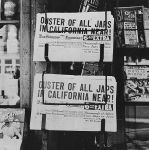
San Francisco Examiner, February 1942.

A Challenge to Democracy.
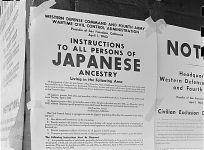
Official notice of exclusion and removal.
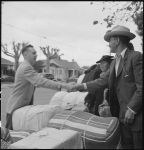
Friends say good-bye as family of Japanese ancestry await evacuation bus. Hayward, California, 8 May 1942.
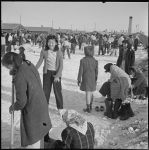
Heart Mountain Relocation Center, January 10, 1943.
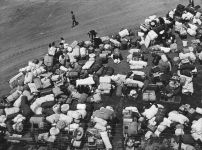
The baggage of Japanese Americans from the west coast, at a makeshift reception center located at a racetrack.
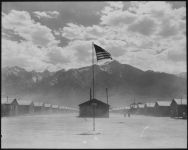
Dust storm at Manzanar War Relocation Center.
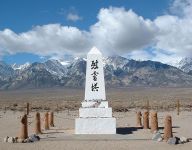
A monument at Manzanar, "to console the souls of the dead.
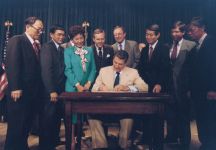
U.S. President Ronald Reagan signs the Civil Liberties Act of 1988, which granted reparations for the internment of Japanese Americans.


Synthesis of the transformations and challenges arising from the war era
The Second World War profoundly transformed the social and economic structure of the United States. Economically, mobilisation for war stimulated industrialisation, creating jobs and boosting growth. This helped to end the Great Depression and usher in a period of unprecedented post-war prosperity. The armaments and manufacturing industries flourished, and the technologies developed during the war laid the foundations for innovation and growth in the post-war period. The war also had a profound impact on the social structure of the United States. It exacerbated racial and ethnic tensions, as evidenced by the internment of Japanese Americans. Yet it also opened up new opportunities for minority groups and women. African Americans and women joined the workforce in unprecedented numbers, challenging traditional roles and laying the foundations for the civil rights and gender equality movements of the following decades. However, the war also left the United States with new challenges and responsibilities. As the world's superpower, the US assumed a leadership role in global affairs, helping to create the United Nations and other international institutions, and initiating the Marshall Plan to help rebuild post-war Europe. The war also ushered in the Cold War, a prolonged period of tension and rivalry with the Soviet Union that would shape American foreign policy for decades to come. Domestically, the economic and social transformation brought about by the war created new challenges. Economic expansion raised high expectations of prosperity and upward mobility, but it also revealed persistent inequalities. The tensions between economic growth and social inequality continued to manifest themselves throughout the post-war era.
The Second World War triggered substantial societal change in the United States, blurring traditional lines of gender and racial roles, and laying the groundwork for the civil rights and gender equality movements in the decades to come. For women, the war represented an unprecedented opening up of employment opportunities. With significant numbers of men at the front, women filled the gap in the workforce, taking on roles in industries and professions previously reserved for men. This change was not limited to white women, but also extended to women of colour, including African-American women. This transition led to a redefinition of women's roles in society, broadening horizons beyond traditional and domestic expectations. For African-Americans, the war served as a springboard for the civil rights movement. Despite facing segregation and discrimination, both within the military and in society at large, African-Americans served their country with distinction. The contradictions inherent in fighting for freedom abroad while being denied fundamental rights at home heightened demands for equality and justice. The "Double V Campaign", for example, symbolised the struggle for victory over fascism abroad and racism at home. The internment of Japanese Americans remains one of the most flagrant injustices of this era. It testifies to deep-seated racial prejudices and wartime fears. However, even in this context, the Nisei, or second generation Japanese Americans, served with honour in the US Army, proving their loyalty and courage.
The war environment demanded an unprecedented mobilisation of resources and coordination to support the war effort, which led to centralisation and an increase in the authority of the federal government. Economic planning and coordination were essential to maximise the efficiency of war production and ensure that troops were well equipped. In addition, financing the war led to a dramatic increase in public debt, forcing the government to play a more active role in the economy to manage this debt and minimise its long-term impact. Post-war policies, including the famous Marshall Plan and the GI Bill, also reinforced this role. The Marshall Plan illustrated the United States' desire to play a central role in the reconstruction and economic stabilisation of post-war Europe. The GI Bill provided educational and economic benefits to war veterans, contributing to unprecedented economic expansion and prosperity in the post-war era. These developments contributed to a permanent shift in expectations about the role of the federal government. They laid the foundations for the welfare state and shaped the government's involvement in areas such as education, housing and general economic well-being. Thus, the Second World War was not only a global military confrontation but also triggered a profound internal transformation in the structure and role of the US government in the economy.
The United States found itself in a unique position, having contributed significantly to the Allied victory while having its infrastructure and economy largely intact. Europe, on the other hand, was deeply affected by the war, with massive destruction and weakened economies.
The rise of the United States and the Soviet Union created a new world order characterised by bipolar rivalry. Ideological, political and military tensions characterised the Cold War, with a nuclear arms race and numerous proxy conflicts. The United States promoted capitalism, democracy and liberalism, while the USSR defended communism and an authoritarian model of governance. The US also put in place initiatives such as the Marshall Plan to help rebuild Western Europe. In return, these rebuilt countries became economic and political allies of the United States. At the same time, the USSR consolidated its influence in Eastern Europe, creating an Iron Curtain that divided the continent. The Cold War also stimulated rapid technological and scientific progress, particularly in the field of aerospace. The space race between the USA and the USSR is a striking example of how bipolar rivalry stimulated innovation. The demise of the Soviet Union in 1991 brought the Cold War to an end, leaving the United States as the world's sole superpower for a considerable period. However, the world has entered a phase of multipolarity with the emergence of new regional and global powers. The legacy of this period continues to influence world politics, economics and international relations. The United States, with its military, economic and cultural power, remains a central player in world affairs, albeit facing new challenges and competitors on the international stage.
Annexes
- History.com Editors. “American Women in World War II.” History.com, A&E Television Networks, 5 Mar. 2010, www.history.com/topics/world-war-ii/american-women-in-world-war-ii-1..
- Executive Order 9024 - Establishing the War Production Board (January 16, 1942)
- Herman, Arthur (2012). Freedom's Forge: How American Business Produced Victory in World War II. New York: Random House. ISBN 978-1-4000-6964-4
- Industrial Mobilization for War: History of the War Production Board and Predecessor Agencies: 1940-1945. United States Bureau of Demobilization, Civilian Production Administration. 1947. pp. 961–962.
- Hall, George J., and Thomas J. Sargent. 2011. "Interest Rate Risk and Other Determinants of Post-WWII US Government Debt/GDP Dynamics." American Economic Journal: Macroeconomics, 3 (3): 192-214.
- Hall, George J., and Thomas J. Sargent. A history of us debt limits. No. w21799. National Bureau of Economic Research, 2015
- Campbell, D'Ann. Women at War with America: Private Lives in a Patriotic Era. Cambridge, Massachusetts: Harvard University Press, 1984.
- Weatherford, Doris. American Women during World War II. United Kingdom, Routledge, 2010.
- nderson, Karen Tucker. "Last hired, first fired: Black women workers during World War II." The Journal of American History 69.1 (1982): 82-97.
- Honey, Maureen, ed. Bitter Fruit: African American Women in World War II. University of Missouri Press, 1999.
- The Soldier Voting Act of 1942 represented the first legislation guaranteeing military members a vote in presidential and congressional elections during wartime, even when away from their homes of record, Brunelli said. It extended that right regardless of registration and poll tax requirements, as long as the voter met state qualifications; Servicemembers to Follow Long Absentee Voting Tradition By Donna Miles American Forces Press Service
- Capeci, Dominic J., Jr., and Martha Wilkerson (1991). Layered Violence: The Detroit Rioters of 1943. Jackson, MS: University Press of Mississippi. ISBN 0-878-05515-0.
- Sitkoff, Harvard. "The Detroit Race Riot 1943," Michigan History, May 1969, Vol. 53 Issue 3, pp 183–206, reprinted in John Hollitz, ed. Thinking Through The Past: Volume Two: since 1865 (Houghton Mifflin Company, 2005) ch 8.
- Fred L. Koestler, "Bracero Program," in Handbook of Texas Online. Texas State Historical Association, February 22, 2010.
- Barbara Driscoll De Alvarado, The Tracks North: The Railroad Bracero Program of World War II. Austin, TX: CMAS Books/Center for Mexican American Studies, the University of Texas at Austin, 1999.
- Otey M. Scruggs, "Texas and the Bracero Program, 1942–1947," Pacific Historical Review (1963) 32#3 pp. 251–264 in JSTOR
- Michael Snodgrass, "The Bracero Program, 1942–1964," in Beyond the Border: The History of Mexican-U.S. Migration, Mark Overmyer-Velásquez, ed., New York: Oxford University Press, 2011, pp. 79–102.
- Michael Snodgrass, "Patronage and Progress: The bracero program from the Perspective of Mexico," in Workers Across the Americas: The Transnational Turn in Labor History, Leon Fink, ed., New York: Oxford University Press, 2011, pp. 245–266.
- Bracero History Archive (Archivo histórico del Bracero)
- Daniel Sabbagh, « Le statut des « Asiatiques » aux États-Unis – L’identité américaine dans un miroir », Critique internationale no 20, juillet 2003, p. 77-78, sur le site ceri-sciencespo.com, consulté le 28 octobre 2009.
- Hirasaki National Resource Center : « Resources – Frequently Asked Questions », sur le site du Japanese American National Museum, janm.org, consulté le 28 octobre 2009.
- Élise Prébin, « Mémoire des camps américains. L’exemple japonais », Ateliers, n° 30, « Ethnographies japonaises », avril 2006, p.251-282, mis en ligne le 8 juin 2007, consulté le 28 octobre 2009.
References
- ↑ Aline Helg - UNIGE
- ↑ Aline Helg - Academia.edu
- ↑ Aline Helg - Wikipedia
- ↑ Aline Helg - Afrocubaweb.com
- ↑ Aline Helg - Researchgate.net
- ↑ Aline Helg - Cairn.info
- ↑ Aline Helg - Google Scholar
- ↑ .Photo : Office for Emergency Management. War Production Board du fonds historique de la National Archives and Records Administration (NARA).